Kale Recharge Salad with Citrus, Blueberries, Sprouts, and Toasted Seeds
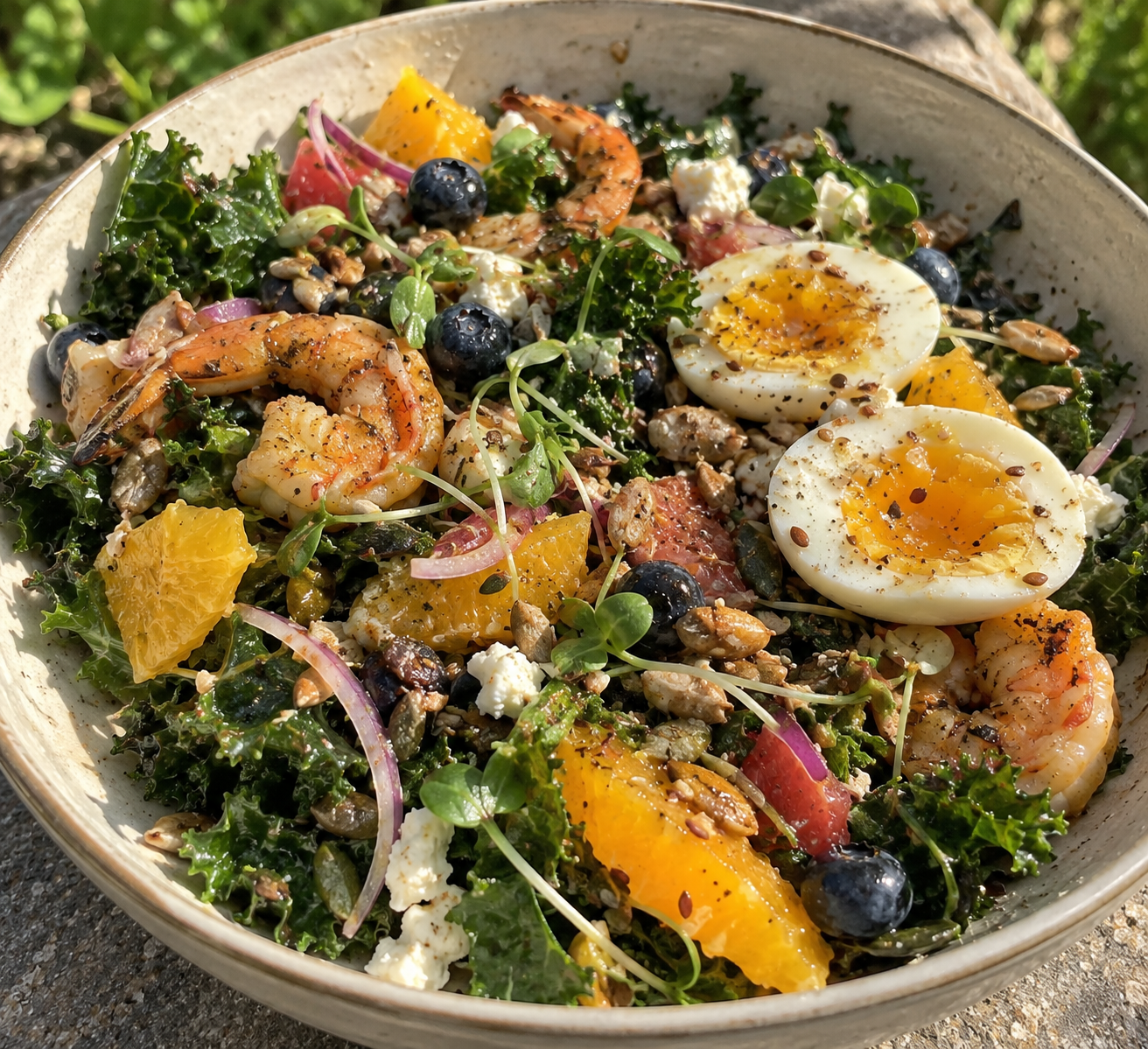
Tender massaged kale tossed with sweet seasonal fruit, tart currants, crisp sunflower sprouts, shaved red onion, and a crunchy trio of toasted seeds, finished with your choice of a bright citrus vinaigrette or a creamy herb dressing. Add a crumble of cheese and your favorite protein for a complete meal.
Yield: Serves 4–6 · Active: 25 min · Total: 45 min (including resting the kale) · Year-round (kale is at its sweetest in North America from fall through spring, after a frost) · Best eaten: midday or early evening
How to Massage Kale
Raw kale can be tough and bitter, but a few minutes of massaging transforms it, making the leaves tender, silky, and sweeter. Here's how:
Prep the kale. Strip the leaves from the stems, then tear or slice them into small, bite-size ribbons.
Add the marinade. Drizzle the kale with good extra virgin olive oil, and sprinkle it with salt and a splash of raw apple cider vinegar or fresh lemon juice.
Massage. With clean hands, squeeze and rub the leaves for 1½–2 minutes, until they darken, turn glossy, and shrink by about a third. Lacinato kale takes a little longer than curly.
Rest 15–20 minutes, so the leaves keep softening.
Salt and acid help break down the kale's tough cell walls, which makes the leaves tender and easier to eat, and the olive oil helps you absorb its fat-soluble vitamins, like vitamin K and beta-carotene.
Ingredients
Massaged kale
6 cups kale (lacinato, curly, or a mix), stems removed, torn or ribboned
3 tbsp extra virgin olive oil
1 tbsp raw apple cider vinegar or fresh lemon juice
1 small garlic clove, grated
½ tsp Baja Gold sea salt
Salad
2 cups sunflower sprouts
½ red onion, very thinly sliced
Seasonal fruit: 1 cup blueberries (summer) or 2 mandarins, segmented (winter)
⅓ cup dried currants
⅓ cup sunflower seeds, toasted
⅓ cup pumpkin seeds, toasted
2 tbsp sesame seeds, toasted
Optional cheese (choose one)
Fresh goat cheese (chèvre), crumbled
Shaved Parmigiano-Reggiano
Fresh ricotta, in dollops
Sheep's milk feta, crumbled
Seasonal fruit swaps:
Spring: sliced strawberries
Summer: blueberries, or sliced peaches
Fall: sliced apples or pears, or pomegranate arils
Winter: mandarins, blood oranges, or pomegranate arils
Method
Massage the kale with the olive oil, vinegar or lemon, garlic, and salt for 1½–2 minutes, until glossy and tender. Let it rest 15–20 minutes.
Toast the seeds. Toast the sunflower and pumpkin seeds in a dry skillet over medium-low heat for 3–4 minutes, until fragrant and lightly golden, adding the sesame seeds for the last minute. Let them cool.
Make your dressing (below).
Toss the kale with the sprouts, onion, currants, and half the dressing. Fold rather than stir, since sprouts collapse if you work them too hard.
Add the fruit last, folding it in gently. Blueberries bleed if you're rough with them, and the salad can turn a strange purple-gray.
Finish with the toasted seeds, your cheese of choice, and more dressing, to taste.
Dressings
Simple Citrus Vinaigrette
¼ cup extra virgin olive oil
2 tbsp fresh lime or lemon juice
2 tbsp fresh mandarin or orange juice, plus a little zest
1 tbsp raw honey
1 tbsp coconut aminos (optional, for savory depth)
Pinch of Baja Gold sea salt
Shake everything together in a jar.
Creamy Herb Dressing
½ cup plain whole-milk yogurt, kefir, or sour cream
2 tbsp extra virgin olive oil
1 tbsp fresh lemon juice
1 small garlic clove, grated
¼ cup mixed fresh herbs (parsley, dill, chives, or basil), finely chopped
¼ tsp Baja Gold sea salt and a pinch of black pepper
1–2 tbsp water, to thin
Whisk everything together, adding water until it's pourable.
Make It a Meal: Protein Pairings
This salad is bright and sweet, with lean sprouts and seeds, so it loves a protein with some richness, char, or crisp skin:
Crispy chicken thighs: Start them skin-side down in a cold cast iron pan, then turn the heat to medium and leave them alone for about 12 minutes, until the skin is crackling. Flip and cook until they reach 175°F.
Seared scallops with brown butter: delicate and sweet, perfect with the citrus vinaigrette.
Wild salmon: pan-seared until the skin is crisp.
Sablefish (black cod): glazed with coconut aminos and honey, and broiled until caramelized.
Grilled mackerel or sardines: rich in omega-3s, and wonderful with the citrus.
Grilled shrimp with garlic and lime: smoky char against the sweet fruit.
Grass-fed steak: seared, rested, and sliced thin.
Soft-boiled pasture-raised eggs: the quickest option of all.
Storage
Massaged kale holds up far better than other greens: undressed, it keeps refrigerated up to 3 days, and it's even more tender the next day. Store the fruit, seeds, sprouts, and dressing separately, and add them just before serving. The citrus vinaigrette keeps up to 1 week, and the creamy herb dressing up to 4 days.
A note on honey: The raw honey in the dressing stays raw, since it's never heated. Honey shouldn't be given to babies under 12 months.
Nourishment Notes
Kale — vitamin K (one of the richest food sources), vitamin C, folate, calcium, and glucosinolates, which are at their most potent raw.
Blueberries and mandarins — anthocyanins in the blueberries, and carotenoids and vitamin C in the mandarins. These vivid pigments are part of the plant's own defense chemistry.
Currants — iron, potassium, and polyphenols.
Sunflower sprouts — vitamin E, folate, and chlorophyll, in a living green with much less fat than the seed. Sprouting begins to break down compounds that can make raw seeds harder to digest.
Pumpkin seeds — one of the best plant sources of zinc and magnesium.
Sunflower and sesame seeds — vitamin E, selenium, calcium, and lignans.
Red onion and garlic — quercetin, allicin, and prebiotic fibers.
Raw honey — enzymes and pollen, kept intact in the uncooked dressing.
Extra virgin olive oil — oleic acid and polyphenols, plus it helps you absorb the kale's fat-soluble vitamins.
Cheese and yogurt — calcium, protein, and vitamin K2, with live cultures in the yogurt dressing.
For your cycle: The pumpkin seeds' zinc and the kale's folate make this salad especially supportive during the follicular and ovulatory phases. Pair it with steak or salmon during your period, for iron and omega-3s.
Sourcing
Kale, sprouts, red onion, garlic, herbs, and lemons or limes — organic, from a farmers' market
Fruit — organic and seasonal (blueberries and strawberries especially, since they're heavily sprayed when grown conventionally)
Dried currants — organic and unsulfured
Sunflower, pumpkin, and sesame seeds — organic and raw, kept in the fridge
Goat cheese — fresh chèvre from Cypress Grove or a local dairy near you
Parmigiano-Reggiano — DOP, aged 24+ months, made from raw milk by law
Ricotta — fresh, whole-milk ricotta from grass-fed milk, with no gums
Sheep's milk feta — traditional feta, brined, from sheep's milk (or a sheep and goat blend)
Yogurt, kefir, or sour cream — raw from a farmer you know and trust, or organic and grass-fed, with live cultures and no gums
Raw apple cider vinegar — organic, with the mother (Bragg)
Raw honey — organic, local, and unfiltered
Coconut aminos — organic and soy-free, like Coconut Secret
Extra virgin olive oil — organic, single-estate, harvest-dated, in dark glass
Salt — Baja Gold sea salt; Maldon for finishing
— Anna aka Food Marshall