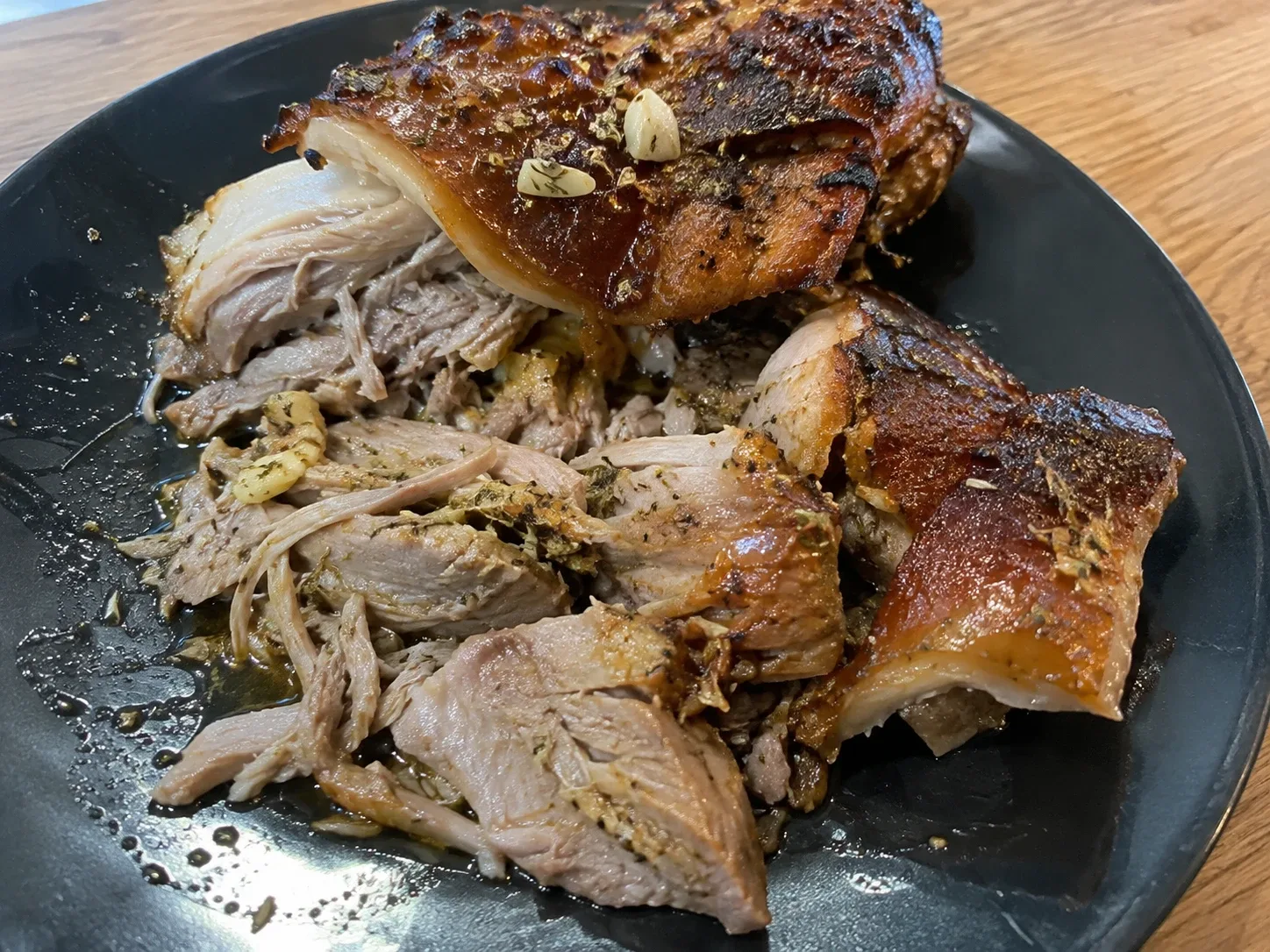
Lechón al Horno: Slow-Roasted Pork with Orange, Garlic, and Oregano
The Latin American and Caribbean New Year’s Eve roast. Pastured pork shoulder marinated in a garlicky sour orange mojo, slow-roasted until it pulls apart, then blasted at the end for a crackling top.
Yield: Serves 8–10 · Active: 40 min · Total: 1–2 days marinating, plus about 7 hr on the day · Season: Best in North America in winter, when oranges and limes are at their peak · Best eaten: early evening
Ingredients
For the pork
- One 5–6 lb boneless pasture-raised pork shoulder (Boston butt), or a skin-on pork leg (pernil)
- 2 tsp sea salt
- 1 tsp freshly cracked black pepper
For the mojo marinade
- ½ cup fresh sour orange juice (or ¼ cup orange juice plus ¼ cup lime juice)
- ½ cup fresh lime juice
- Zest of 2 oranges
- 1 whole head garlic, cloves peeled and smashed (about 12 cloves)
- 2 tbsp dried oregano (Mexican oregano if you can find it)
- 2 tsp ground cumin
- 1 tsp smoked paprika
- 1 tsp sea salt
- 1 tsp freshly cracked black pepper
- ¼ cup extra virgin olive oil
- 1 small yellow onion, roughly chopped
- Small handful of fresh oregano or cilantro
To finish
- ½ red onion, very thinly sliced and rinsed briefly in cold water
- Fresh cilantro leaves
- Lime wedges
- Side ideas: roasted sweet potatoes, sweet plantains fried in lard or coconut oil, sliced avocado, and an arugula salad
Method
For the mojo marinade
- Blend. Put all the marinade ingredients in a food processor and pulse to a rough, salsa-like texture. You want it still a little chunky, not a smooth purée.
For the pork
- Score and marinate (1–2 days ahead). Pat the pork dry and season it with the salt and pepper. Score the fat cap in a diamond pattern with a sharp knife, cutting through the fat but not into the meat. Poke the meat about a dozen times with a paring knife, about 1 inch deep. Work half the mojo into the cuts and rub it all over. Put the pork in a large container or bag with the rest of the mojo and refrigerate 24–48 hours, turning it once or twice.
- Temper. On the day, take the pork out of the fridge 90 minutes before cooking. Heat the oven to 275°F.
- Slow-roast. Set the pork fat side up in a heavy roasting pan. Pour all the marinade over and around it, and add 1 cup water to the bottom of the pan. Cover tightly with parchment and then foil. Roast 5 hours, until the center reads 195°F and a fork slides in with no resistance.
- Crisp. Uncover the pan and turn the oven up to 450°F. Roast 20–30 minutes more, until the top is deeply browned and the fat or skin blisters and crackles. Watch closely in the last 10 minutes.
- Rest. Let the pork rest 30 minutes, loosely tented with foil.
- Pull. Tilt the pan and skim the extra fat from the juices. Pull the meat into large, juicy shreds with two forks, breaking up the crisp top as you go. Toss the meat with a few spoonfuls of the pan juices.
To serve
- Plate. Pile the pork on a platter and top with the red onion, cilantro, and lime wedges. Serve with your choice of sides.
- At midnight. For the Spanish and Latin American tradition of 12 grapes, set out a small bowl of 12 green grapes per person, one for each month’s wish. A little raw cream and a drizzle of raw honey alongside makes it a sweet ending.
Storage
- Pulled pork keeps up to 4 days in the fridge in a covered glass container with some of its juices.
- Freeze in portions with juices for up to 3 months.
- Rewarm in a skillet over medium heat with a splash of the juices or broth. Let it sit undisturbed for a few minutes to re-crisp the edges.
- Save the strained, skimmed pan juices for cooking greens or beans.
Variations
- Lettuce cups: Serve the pork in butter lettuce leaves with avocado, pickled red onion, and salsa.
- Cuban-style plate: Serve with black beans (if you eat legumes), fried sweet plantains, and sliced avocado.
- Bone-in shoulder: Use a 6–7 lb bone-in shoulder and add about 1 hour to the slow roast.
- Smaller crowd: Use a 3 lb boneless shoulder (serves 4–5), halve the mojo, and start checking for tenderness after 3½ hours.
Season & Circadian Timing
Across Cuba, Puerto Rico, the Dominican Republic, Brazil, and much of Latin America, slow-roasted pork is the New Year’s Eve centerpiece. Pigs root forward as they walk, so the pork stands for moving ahead into the new year. Winter is also peak citrus season, which gives the mojo its bright, sour punch. Serve it in the early evening, before the late-night celebrations begin.
Nourishment Notes
- Pasture-raised pork — pigs raised outdoors on pasture tend to have fat richer in monounsaturated fats, vitamin D, and selenium than conventional pork.
- Garlic — a whole head goes into the mojo; crushing it creates allicin, the compound behind its sharp aroma.
- Citrus — sour orange and lime bring vitamin C and acid that brighten the rich meat.
- Oregano and cumin — warm, aromatic spices that carry the classic flavor of Caribbean mojo.
- Raw red onion and cilantro — a fresh, crunchy contrast to the slow-cooked pork.
Sourcing
- Pork — pasture-raised heritage breed, from a local farm (White Oak Pastures). Berkshire and Mangalitsa are wonderful here; US Wellness Meats also carries pastured shoulders.
- Sour orange — also called Seville orange, found in Latin markets in winter. Otherwise, use the orange-lime mix.
- Extra virgin olive oil — organic, single-estate, harvest-dated, in dark glass
- Lard — from pasture-raised animals, from a local farm or butcher
- Spices — organic and non-irradiated
- Oranges / limes — organic (you’re using the zest)
- Raw honey — organic, local, and unfiltered
- Salt — unrefined sea salt (Baja Gold); flaky sea salt for finishing (Maldon)
- Fruits, vegetables, and herbs — organic, from a farmers’ market or local farm
You might also like: Slow-Roasted Pork Shoulder with Caramelized Onions and Herbs · Roasted Pork with Crackling Skin and Clove-Lemon (Plus Sides and Taco Variations) · Yuca Mash
With Love, Light, and Health,
Anna (aka Food Marshall)
Food Marshall Approved. Grain-free, seed-oil-free and refined-sugar-free, made from organic, local and seasonal ingredients. Our standards
More Meat
Get new recipes and essays
Seasonal recipes and writing on light, circadian health, and living with nature.
Subscribe on Substack