Lemon Poppyseed Muffins
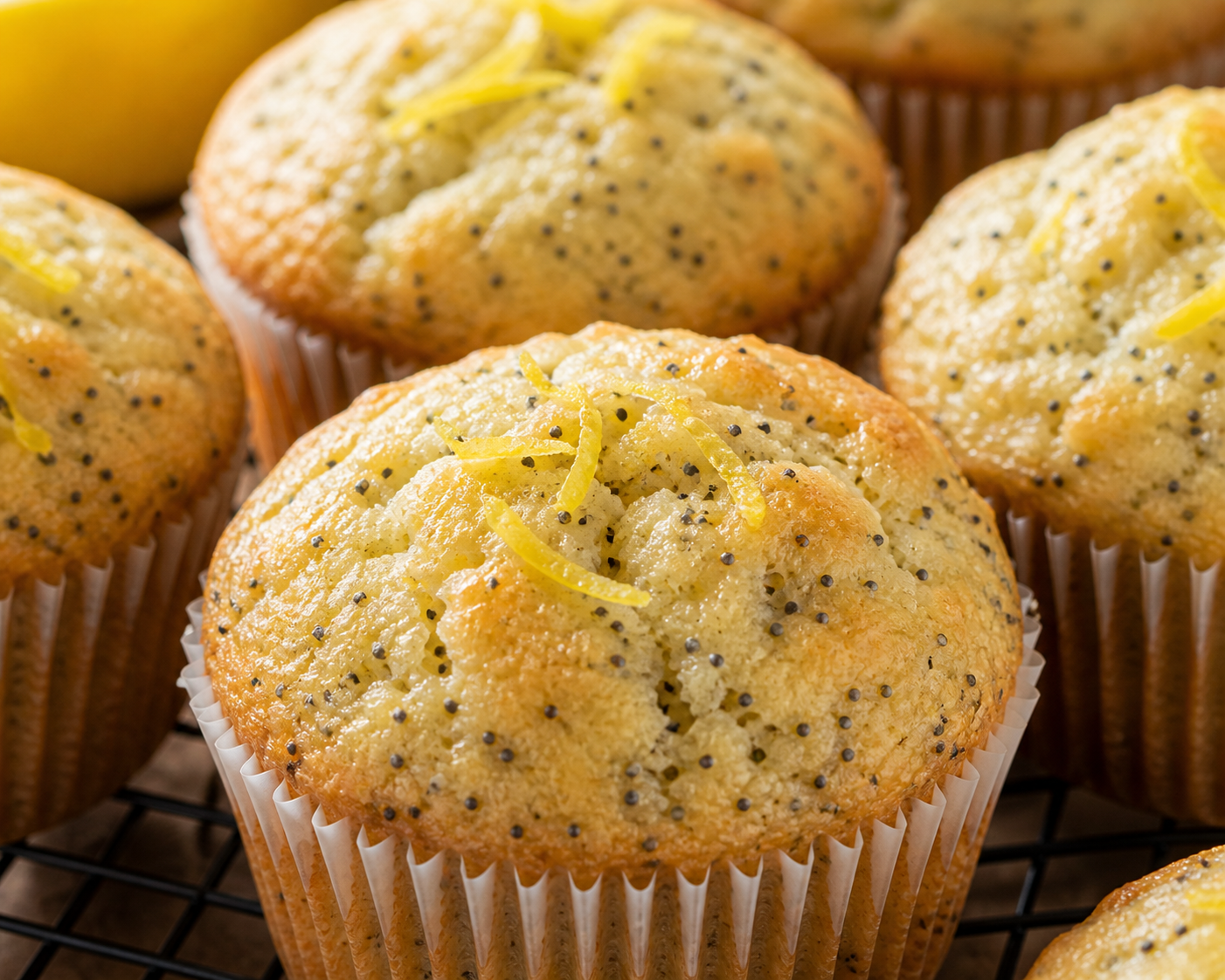
Lemon Poppyseed Muffins
Bright, citrus-forward muffins with a tender coconut-flour crumb
Makes 8 muffins · 15 min active · 35 min total · spring · breakfast or midday
Ingredients
½ cup coconut flour
½ tsp sea salt
¼ tsp baking soda
4 large pasture-raised eggs
⅓ cup coconut oil, melted (or unsalted butter, or olive oil)
½ cup raw honey
1 tbsp vanilla extract
1 tbsp poppyseeds
1 tbsp fresh lemon zest (from 2 lemons)
2 tbsp fresh lemon juice
Method
Preheat the oven to 350°F (175°C). Line a muffin tin with 8 paper liners.
Whisk the coconut flour, salt, and baking soda in a large bowl.
Add the eggs, coconut oil, honey, vanilla, and lemon juice. Mix with a hand or stand mixer until smooth.
Stir in the poppyseeds and lemon zest. Let the batter rest 5 minutes — this allows the coconut flour to fully hydrate.
Divide the batter among the 8 liners, filling each ¾ full.
Bake 20 minutes, until a toothpick inserted in the center comes out clean and the tops are lightly golden.
Cool in the tin 10 minutes before transferring to a rack.
Variation: For lemon-blueberry muffins, omit the poppyseeds and fold in ½ cup fresh or frozen blueberries with the zest.
Nourishment Notes
Poppyseeds are the dried seeds of the opium poppy, used as a baking ingredient across European, Levantine, and Indian cooking for centuries — long before the modern association with the plant's narcotic alkaloids. The seeds carry small amounts of those compounds but the levels in baking are negligible; the real reason poppyseeds appear in baked goods is for the texture, the slight nuttiness, and the aroma they bring when warmed.
Lemon zest is doing more flavor work in this recipe than the juice. Zest contains the essential oils of the lemon — limonene, citral, and the smaller terpenes that give the citrus its bright, aromatic top notes — concentrated in the colored outer layer of the rind. The juice provides acid; the zest provides aroma. Using only juice produces a muffin that tastes vaguely lemony; using zest produces one that smells like a lemon when it cracks open.
The 5-minute batter rest before baking is the small step that separates a coconut-flour muffin that rises evenly from one that bakes lumpy. Coconut flour fiber takes time to hydrate fully, and the batter visibly thickens during the rest as the flour absorbs the liquid. Skipping the rest produces a runny batter that bakes into uneven, dense muffins. This is true for all coconut flour preparations.
Storage: Airtight at room temperature 3 days; refrigerator up to 2 weeks.
Recipe inspired by Comfy Belly (comfybelly.com).