Light Is a Nutrient
Full-spectrum sunlight is a whole, nutrient-dense food. Artificial light is franken-food — junk
“Here she comes breaking through the clouds
Casting her light, believes in what is right
She will be forever watching over me
In this life, to show me what is right
It’s the colourful vibration
That she brings is my salvation
It’s the colourful
Vibration when she sings is our salvation”
— Samuel J, Colourful Vibration
We are all drawn to the beautiful, ever-changing hues of the sky at sunrise and sunset. It’s captivating — mesmerizing, awe-striking, inspiring. Like a moth to a flame, we can’t look away. But one of these lights loves you back. We’re drawn just as helplessly to another glow — the computer, the phone, the laptop — but the light behind it could not be more different. One is nourishment. The other is addictive in the way a candy bar is addictive — a quick hit that leaves you emptier than before.
So let me put it to you straight. The TL;DR of this whole article: full-spectrum sunlight is a real, whole-food nutrient. Artificial light is the fake-sugar version — a franken-food that flips on a quick hit like a drug, spikes you, and then drops you into a slow crash of health effects most of us never think to blame on the light. Below, I’ll show you exactly why.
For 99.9% of human history, your ancestors lived outdoors — waking with the light, working under it, resting when it left. Today, the average person spends roughly 90% of life indoors (EPA), under bulbs and screens that no creature evolved beneath. We’ve become, in the span of a few generations, an indoor species — and we’ve done it without ever asking what we gave up. Because here’s the thing nobody told you: light isn’t just something you see by. Light is something you’re made of, and it’s one of the most powerful nutrients you’ll ever consume — or fail to.
How Light Is a Nutrient — Full-Spectrum Light
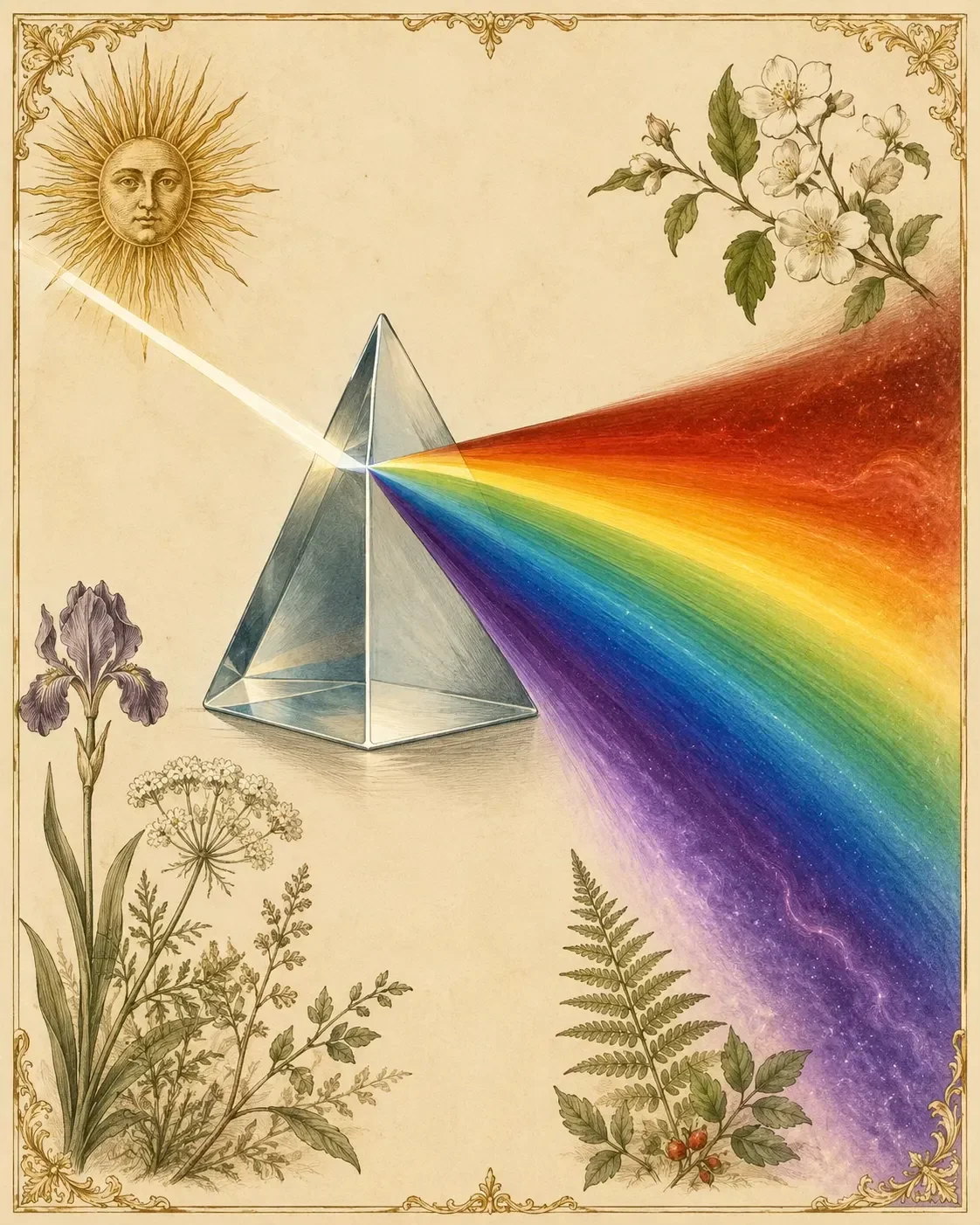
Sunlight is full of nutrients in the form of differently colored wavelengths, each signaling specific tasks inside the body according to the blend of frequencies, the brightness, and the time of day. Natural light is a rainbow — the sun gives the full spectrum. Processed artificial light is more like refined sugar and white flour: narrow, stripped, with the broad spectrum stripped out. Anything processed is suboptimal, and that holds for light as much as for food.
Just as there’s junk food, there’s junk light — light that isn’t from nature and doesn’t deliver electrons, energy, or coherent information. Overhead LEDs, TVs, computer and phone screens all qualify. We rarely hear how the artificial light we let into our eyes and onto our skin might be making us unwell. The good news mirrors the good news about diet: just as we can begin to enhance our wellbeing by eating better, we can profoundly optimize our health by reducing junk light and letting more natural light back in.
We know what nutrient deficiency looks like on the plate. Too little vitamin C and you get scurvy; too little vitamin D and bones go soft into rickets. But we’ve never been taught what light deficiency looks like — and most of us are walking around with a chronic case of it. Modern indoor life is light-malnutrition: we spend the day starved of the bright, full-spectrum sun our biology expects, then binge on the one wavelength it least wants after dark. The symptoms are so common we’ve stopped calling them symptoms — tired but wired, sleep that doesn’t restore, mood gone flat, energy that dips at all the wrong hours. It’s the cluster almost everyone recognizes in themselves, and it rarely occurs to us that the lighting might be the cause.
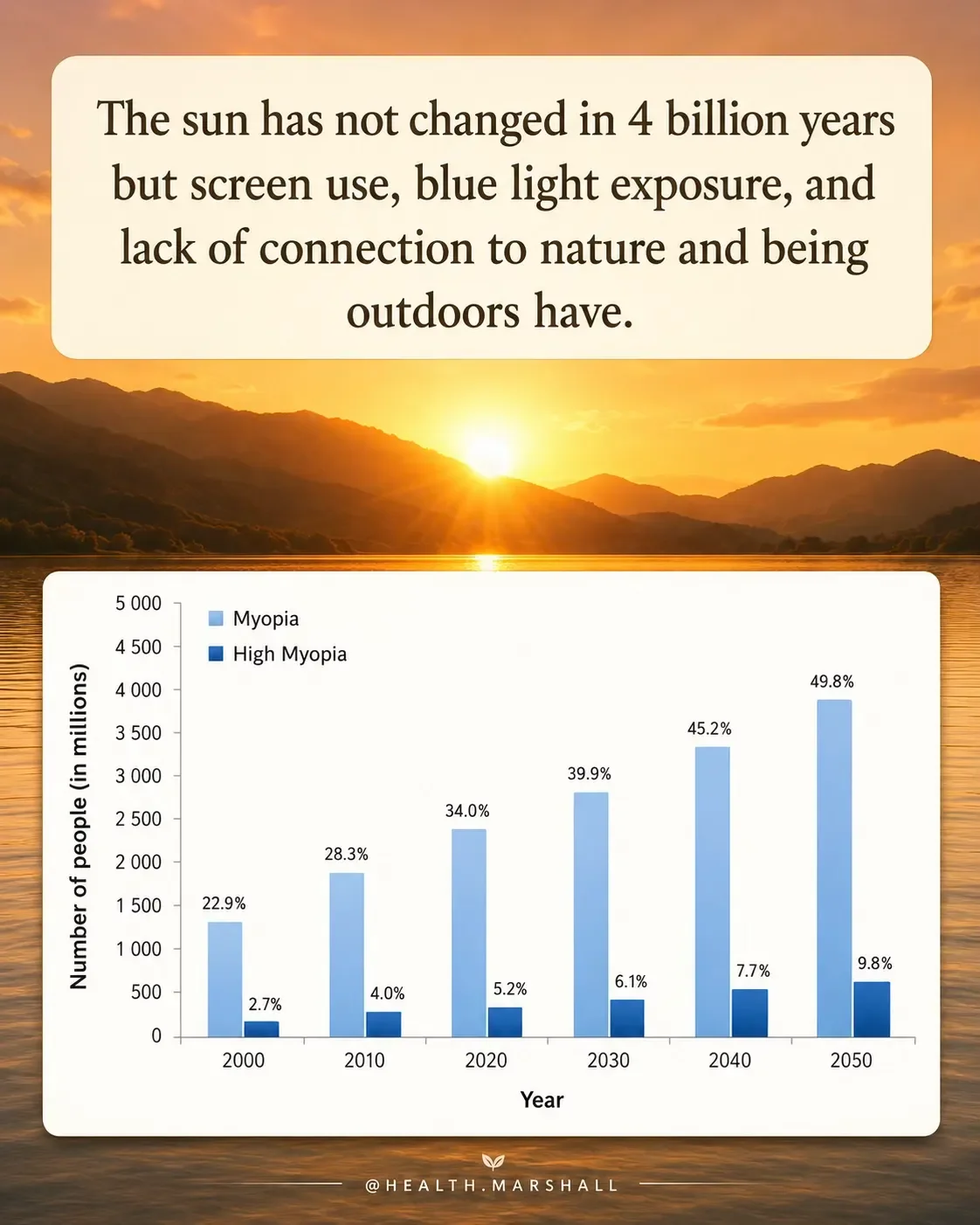
If you want proof that light deficiency is real and measurable, look at your children’s eyes. Myopia — nearsightedness — is exploding across the developed world: it affected under a quarter of people in 2000 and is projected to reach roughly half the global population by 2050. This isn’t a genetics story; genes don’t change that fast. It’s a light story. The strongest protective factor researchers have found isn’t screens avoided or books held farther away — it’s simply time spent outdoors in bright natural light while the eye is still developing. The sun hasn’t changed in billions of years. Our relationship to it has. A child raised indoors, under dim artificial light, is a child whose eyes never receive the signal they evolved to expect — and the growing eye, starved of that signal, literally grows the wrong shape.
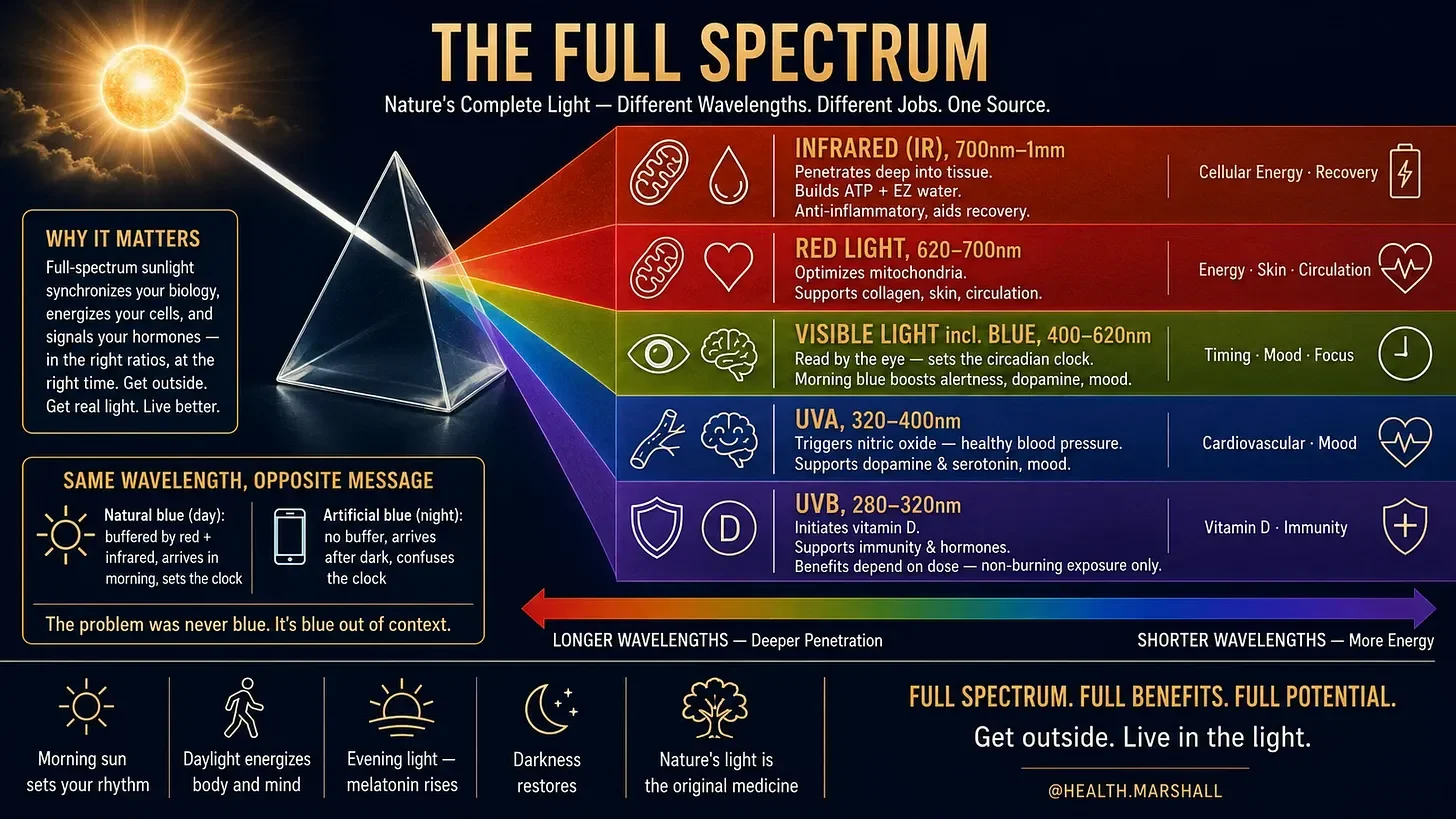
We’re missing a category of nutrient more powerful than anything on the plate: sunlight itself. Split it through a prism and you get the colors of the rainbow — the visible spectrum — but much of the light that matters most for health lies outside that band, in the infrared (IR) and the ultraviolet (UV) we can’t even see. Each “color” optimizes specific functions in living things, and we forfeit those frequencies by living indoors under artificial light that has no IR, no red, and no UV. Worse, the steady, unchanging blue light indoors becomes a kind of toxicity. In nature, blue light never arrives alone — it’s always buffered by IR/red wavelengths, the soothing antidote to high-powered blue (as are UVA and UVB in their own balance). To consume light stripped of its complete package is to eat light the way we eat processed food. Artificial blue light is, in this sense, a highly refined light.
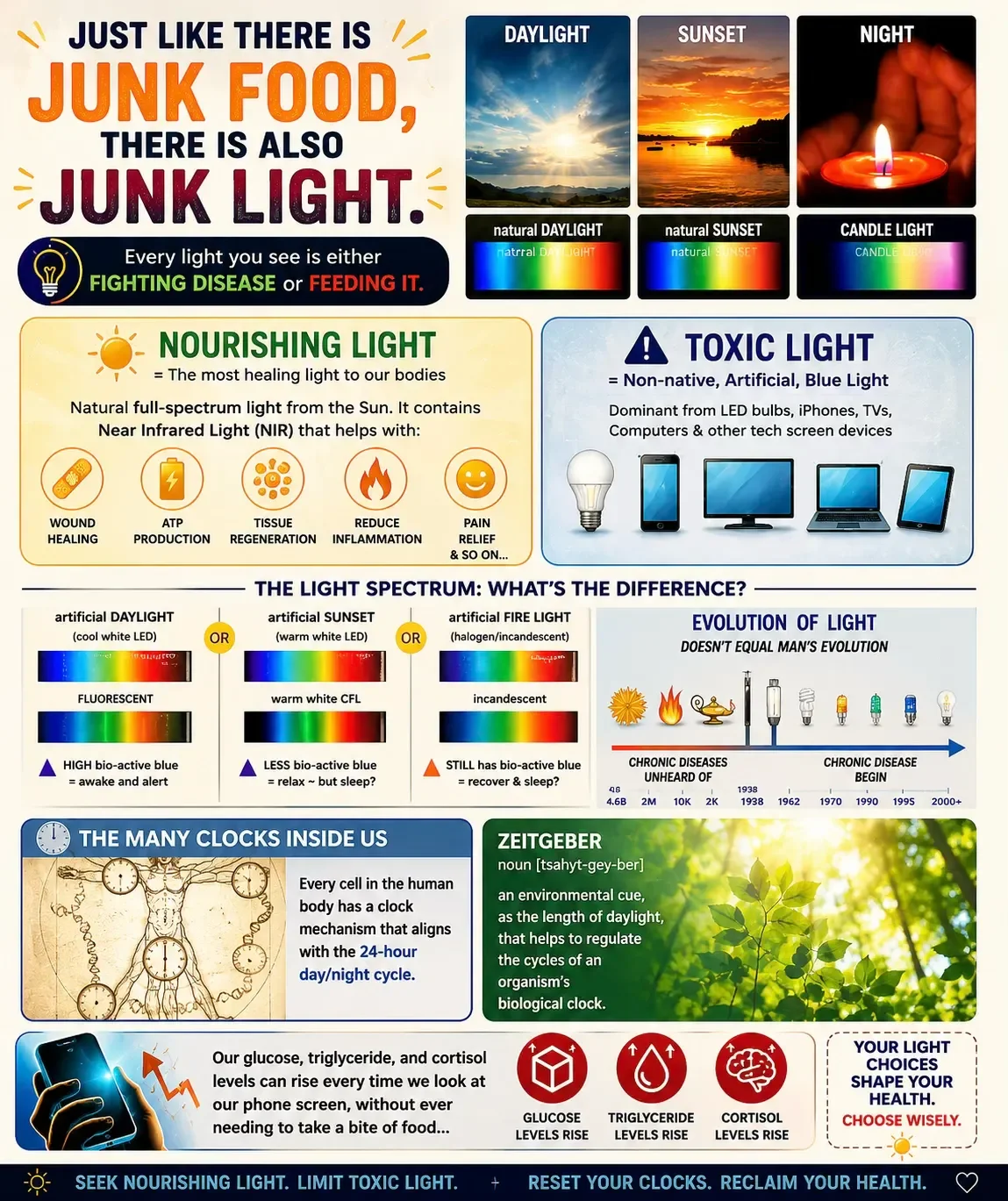
Why processed light is like processed food. Hold the two side by side. A fresh, seasonal apple nourishes you; extract only its sugar and you’ve made something closer to a toxin. Isolate blue light from the full spectrum and you get “refined light” — biologically disruptive, nudging the body toward stress, fatigue, and metabolic dysfunction. Natural sunlight is broad-spectrum and nutrient-dense; artificial light is the stripped-down version, the refined sugar and white flour of the light world. At the wrong time of day, it can spike cortisol, nudge up blood glucose, and feed hormonal chaos.
We Are Designed for Sunlight
Humans evolved under the rhythms of the sun, on a planet whose living systems reach back billions of years. Every biological system we have is tuned to the full spectrum, ultraviolet through infrared (Cajochen et al., 2019).
Infrared light, which we feel as heat, supports mitochondrial ATP production by stimulating ATP synthase and structuring cellular water (Hamblin, 2017). Visible light — especially morning blue — is central to circadian alignment, shaping melatonin, cortisol, and dopamine (Vandewalle et al., 2009). Ultraviolet light contributes to nitric oxide release, which can lower blood pressure and support cardiovascular and metabolic function (Liu et al., 2014). UVB initiates vitamin D production, the beginning of a hormone-signaling cascade far broader than bone health alone (Holick, 2008). And UVA promotes dopamine release and mood stability.
This is where the eye does a job that has nothing to do with seeing. Alongside the rods and cones that build your visual picture of the world sits a separate set of receptors — melanopsin, found in specialized cells of the retina — whose only task is to read light as information and wire it straight to the master clock (Berson et al., 2002). Skin drinks light for energy; the eyes read light for time. This is why a morning walk outdoors does something a bright room never will, and why light in the eyes after dark is uniquely disruptive — it’s speaking directly to the clock in a language it can’t ignore.
Sunlight on the skin is described as generating a plasma of free electrons in the “exclusion zone” (EZ) water network — Gerald Pollack’s model of a fourth, gel-like phase of water lining our cells (Pollack, 2013). UV reaching the skin and eyes prompts more melanin (not only skin pigmentation; it is also found deep in the brain in the substantia nigra — we want our insides “tan” too), which absorbs across the electromagnetic spectrum and is hypothesized to help generate electron donors that may act as selective antioxidants. Red and near-infrared (NIR) light improves water structuring and ATP production in the mitochondria, while exposure to red and IR wavelengths — through saunas, infrared and photobiomodulation (PBM) therapies, quality red-light therapy (RLT), even sweating and skin-to-skin warmth — is proposed to expand this EZ water “battery” throughout the tissues (Hamblin, 2017). A bigger EZ reservoir means more internal charge for lymphatic clearing of wastes and toxins, better circulation, greater mobility, more supple fascia, and cleaner communication between cells.
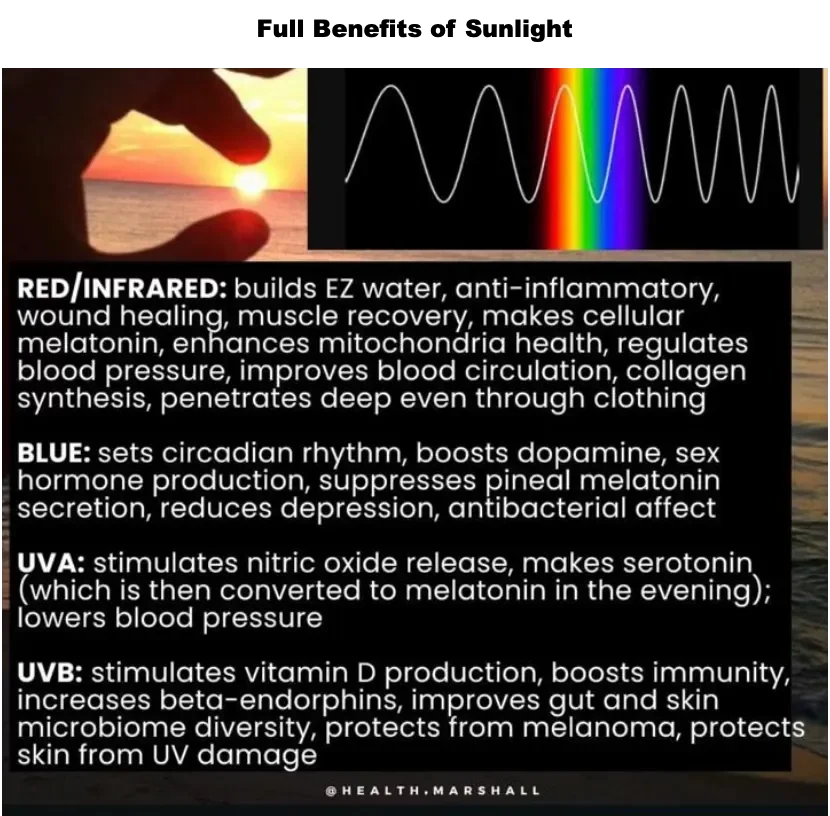
A Field Guide to the Spectrum — What Each Color Does
If sunlight is a nutrient, the spectrum is its label — and each band feeds something different. Think of white light as the whole meal and the individual wavelengths as the macro- and micronutrients within it. Here’s what the sun is actually delivering, longest wavelengths to shortest.
Red and NIR — the recovery wavelengths. These are the long, slow, deep-penetrating waves — the ones you feel as gentle warmth on your skin, and the ones that pass furthest into the body, even through clothing and skin into the tissue beneath. Red and NIR light are spoken to directly by your mitochondria: they ease the traffic jam at cytochrome c oxidase (CCO), the last enzyme in the energy assembly line, so cells produce ATP more cleanly (Hamblin, 2017). This is the band behind so much of what we associate with repair — wound healing, muscle recovery, collagen synthesis, better circulation, and a calming, anti-inflammatory effect. It’s also thought to build EZ water and to prompt cells to make their own melatonin — not the sleep hormone from your brain, but a local, mitochondrial antioxidant that protects the cell’s power plants from their own exhaust. Crucially, infrared is the buffer: it’s the wavelength that softens and balances blue, and it’s almost entirely absent from screens and LED bulbs.
Visible light and natural blue — the timekeepers. The middle of the spectrum is the part we actually see, and its headline job is telling the body what time it is. Morning blue, read by the melanopsin receptors in the eye, is the master signal that sets the circadian clock, lifts cortisol when it should be high, boosts dopamine and alertness, and starts the countdown that releases melatonin roughly fourteen hours later. Natural blue also supports mood and has a mild antibacterial effect on the skin.
But here’s the distinction that matters most in a modern life: natural blue and artificial blue are not the same nutrient. In sunlight, blue never travels alone — it arrives wrapped in a full envelope of red and infrared that balances it, and it comes at the right time of day, building through the morning and fading at dusk. Screens and LEDs strip all of that away. They serve blue naked — no infrared buffer, no red counterweight — and they serve it at the wrong time, after dark, when the body is expecting the signal to be gone. Same wavelength; opposite message. Natural blue at 8 a.m. says wake up, it’s morning. Artificial blue at 11 p.m. says it’s still noon — and the body, having no reason to doubt its oldest and most reliable clock, believes it. This is why blue light gets a bad reputation it doesn’t fully deserve: the problem was never blue. The problem is blue out of context.
UVA — mood and the cardiovascular gift. As the spectrum shortens into the ultraviolet, the signaling shifts. UVA triggers the skin to release nitric oxide, a molecule that relaxes blood vessels and can lower blood pressure — a benefit that has nothing to do with vitamin D and is often overlooked (Liu et al., 2014; Weller, 2016). UVA also supports dopamine and serotonin, feeding mood, motivation, and a sense of wellbeing. It’s part of why sunlight lifts the spirit in a way a vitamin D capsule never quite replicates.
UVB — the vitamin D wavelength (and more). The shortest, highest-energy band that reaches us is UVB, and it’s the one that famously initiates vitamin D production in the skin — the opening move in a hormone-signaling cascade that reaches far beyond bone health into immunity, mood, and cell growth. UVB is also linked to beta-endorphin release (part of that after-sun glow) and appears to support a more diverse skin and gut microbiome. It’s worth sitting with the irony: the wavelength we’ve been most thoroughly taught to fear is also the one our bones, immune system, and hormones most depend on. The dose makes the medicine — a burn helps no one — but total avoidance carries its own cost.
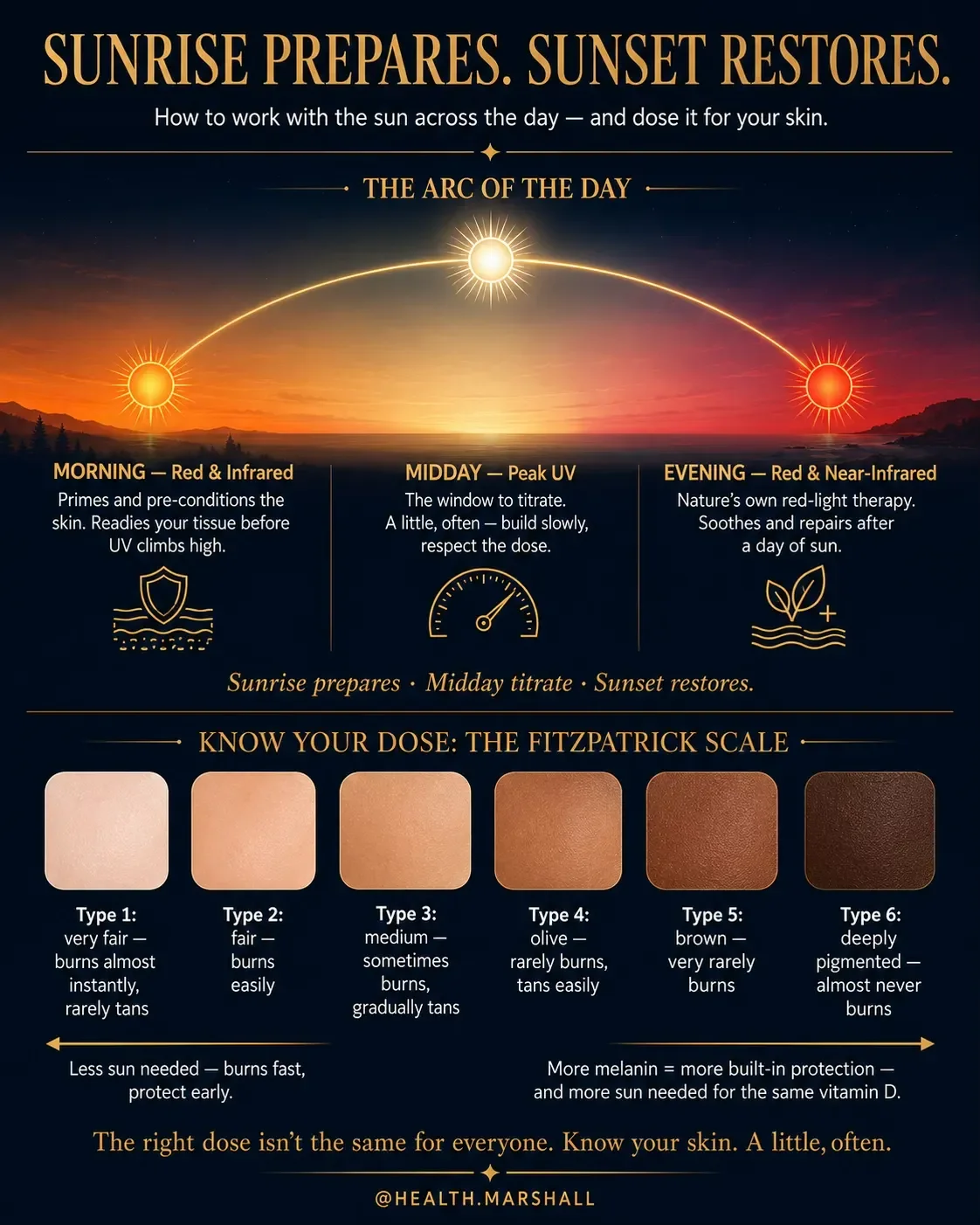
I know how this sounds against everything we’ve been told. For decades the message has been simple: the sun causes cancer, so cover up, slather on SPF, and stay in the shade. And there’s truth worth respecting in it — repeated burning is real damage, especially to skin that rarely sees daylight. But burning isn’t inevitable, and avoiding it doesn’t mean avoiding the sun. The body has a built-in preparation system, if you work with the day rather than against it. Morning sunlight, rich in red and infrared, primes the skin for the stronger UV to come — a kind of natural pre-conditioning that readies your tissue before the sun climbs high. And the sunset delivers its own reward: a final wash of red and near-infrared that acts as nature’s own red-light therapy, soothing and repairing skin after an intense day of UV. Sunrise prepares; sunset restores. The middle is where you titrate.
And titrate is the right word, because the correct dose isn’t the same for everyone — it depends on your skin. Dermatologists use the Fitzpatrick scale, a simple 1-to-6 rating of how skin responds to sun: Type 1 is very fair and burns almost immediately; Type 6 is deeply pigmented and rarely burns. The more melanin you carry, the more built-in sun protection you have — and the more sun you may actually need to make the same vitamin D. Knowing roughly where you fall tells you how long “a little, often” should be for your body.
There’s real craft to this, and it long predates sunscreen. Early sun-therapy physicians — the heliotherapists — had a whole method: start with just a few minutes on a small area like the feet, expose larger areas for shorter times as the skin adapts over days and weeks, keep the head cool and shaded while the body soaks, and stop before any pink appears (redness can surface hours later, so err early). The skin isn’t passive in this — given a gradual on-ramp, it builds its own melanin, its own photoprotection, its own resilience. And you can feed that resilience from the inside. A growing body of research points to “endogenous photoprotection” — the idea that certain nutrients measurably raise the skin’s tolerance to UV. Omega-3s (and a lower omega-6 load) calm the inflammatory response to sun; colorful carotenoids like the lycopene in cooked tomatoes and the astaxanthin in wild salmon and algae act as edible sunscreen from within; polyphenols from tea, cocoa, and deeply pigmented plants support DNA repair; and a well-fed gut and skin microbiome round out the defense. None of this replaces shade and good sense — but it means the sun-resilient body is partly built at the table. You’re not just dosing light; you’re preparing the tissue that receives it.
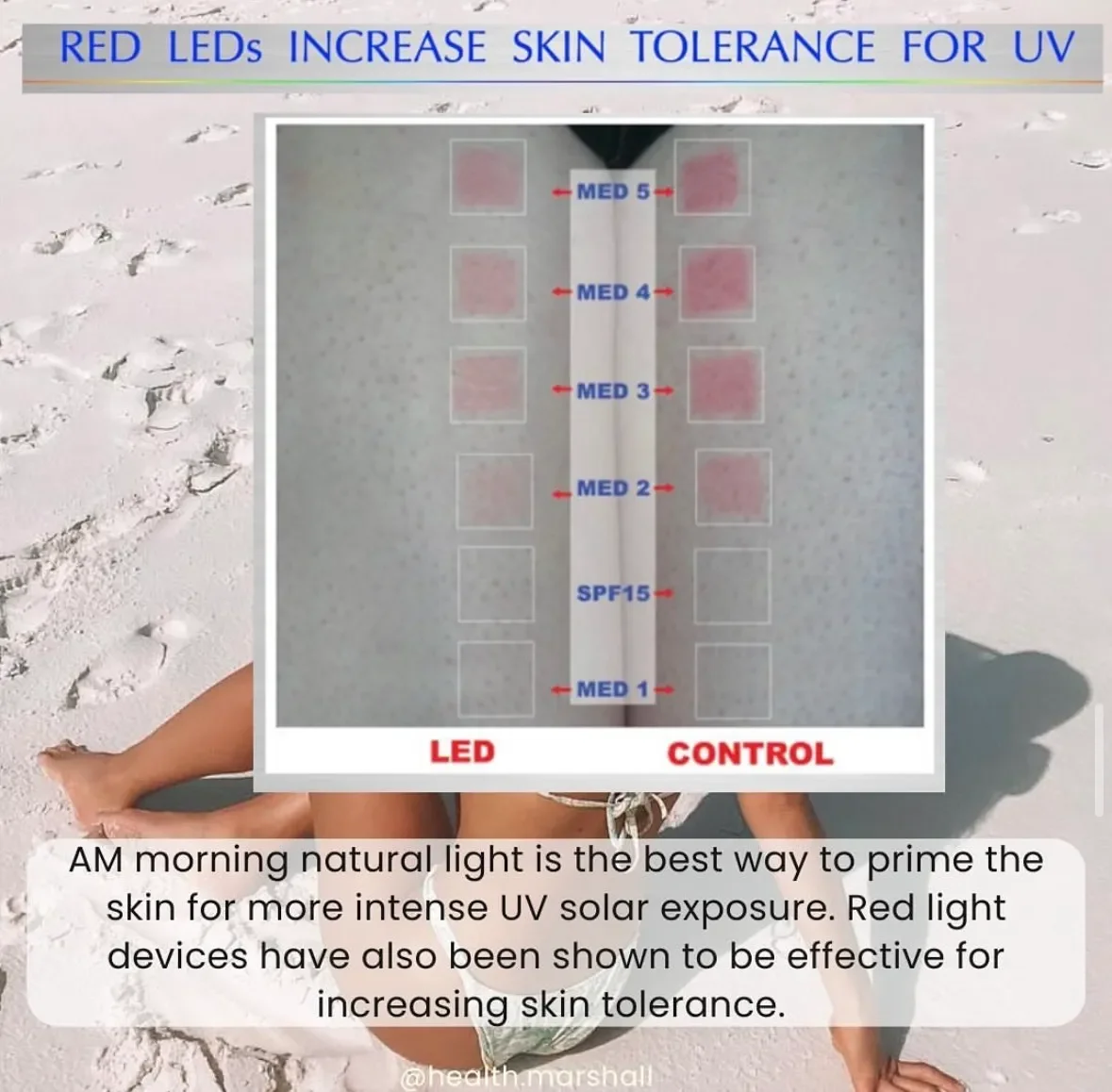
The research is more nuanced than the sunscreen aisle suggests: regular, moderate, non-burning sun exposure looks quite different in the data from the occasional blistering holiday burn, and populations with more lifelong sun often show better overall health outcomes. The goal was never recklessness. Build slowly. Respect the dose.
Different wavelengths, different jobs, one source. You can chase each of these benefits with a drawer full of devices and supplements — and sometimes, in winter or illness, that’s exactly the right move. But the sun delivers all of them at once, in the correct ratios, in the correct order, for free. Nature already solved the formulation problem.
Increasing Our Light — The Little Suns Inside Us
Every one of your cells runs on tiny power plants — mitochondria — and light is one of their fuels. We’ve seen how red and IR ease the traffic jam at CCO; the deeper point is what that makes us. In that sense we carry little suns inside us: not metaphorically warm, but literally light-responsive engines waiting for the right signal. Well — maybe literally warm, too: mitochondria are thought to run hotter than the rest of the body, burning at a temperature all their own.
When you address your health at the electron level, small consistent habits compound into something large. The beautiful thing about circadian signals is that they’re non-linear: a small, well-timed stimulus sets off an amplification cascade out of all proportion to its size. Small hinges swing big doors. The body doesn’t need much — it needs the right signals at the right time.
And “the right time” is the whole game. Timing is everything: the morning blue that sets your clock is the very same wavelength that wrecks your sleep after dark. You don’t have to overhaul your life to answer this. Catch the sun on your skin and in your eyes within an hour of waking. Let your afternoons carry some real daylight. And after dark, dim everything and drop the blue — let the evening be evening. And remember that darkness is not simply the absence of light — it’s a nutrient in its own right. Night is when the body repairs, when melatonin does its quiet antioxidant work, when the system finally powers down to clean house. Protecting your dark is as much a part of this as chasing your light; the two are one rhythm, not two. Small hinges, big doors. Once again, consistency is key. The body craves regularity — and, paradoxically, that steady rhythm is exactly what makes it more resilient and adaptable when change does come. That’s the balancing act.
None of this means you’ve failed every time you open a laptop or flip a switch. Some artificial light is simply the water we swim in now, and a life spent avoiding every screen isn’t the goal — nor is it possible for most of us. But it’s worth becoming more aware of these things, because your biology and health trajectory are at stake; safeguarding your own health — and passing this knowledge on — is how we each become CEO of our own health. You’re just a sun-built animal living in a world evolution never saw coming. Don’t let perfection be the enemy of good. Focus on tilting the balance back toward the light your biology was written for, a little more each day.
And this, believe it or not, only scratches the surface. We haven’t touched on how sunlight shapes your hormones through the season, how it talks to your gut, how the color temperature of a fire at night is its own ancient medicine, or what happens to a body that finally gets its mornings back. This is just the first light through the door.
Thank you for spending this time with me. I hope some of it landed, or lit something up, or gave language to a thing you already felt in your body but couldn’t quite name. And if it did — if it sparked an idea, a question, a disagreement, a memory, a “wait, what about…” — I want to hear it. This work grows in conversation, as we are all coexisting and growing and learning together. I don’t want to be just writing this out into the Substack void of the internet space ether. Let’s make it a conversation.
Soak up the rays —
With Love and Light,
Anna (Health Marshall)