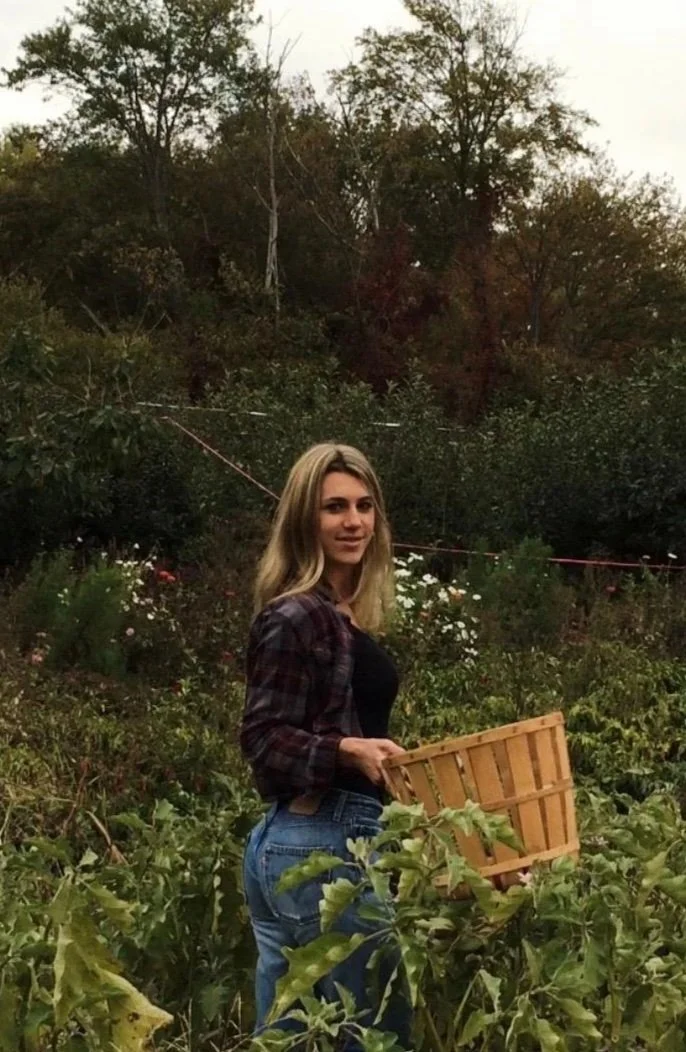
The Marshall Philosophy: The foundation of Food Marshall and Health Marshall

A Morning on the Farm
I make homemade raw cheeses from the Jersey cow I milk in the morning. The milk comes in still warm. I let it sit out overnight to clabber, or I culture it with homemade kefir grown from the wild yeasts and bacteria of this place. The cheese that results is not a generic dairy product. It is a fermented concoction from the local microbes in this environment — a record of the soil the cow grazed, the air she breathed, the bacterial community I share with her. It is congruent with the microbial community I am living inside. The body recognizes it, and once you start eating that way, it becomes very hard to go back.

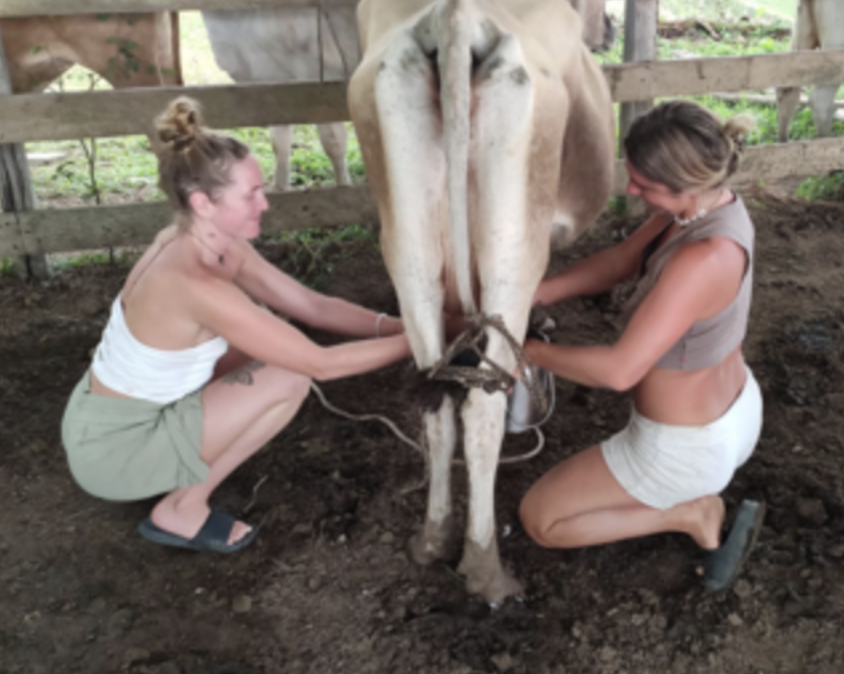
Milking the Jersey Mama! And then we make kefir, cheese, and butter!
This is what the philosophy below is pointing toward. Not a protocol; not a brand of supplement. It is a way of eating that is in active conversation with the actual place and the actual season your body lives inside.
Food as Information
"Food is the most intimate thing you can buy. Unlike clothes and shoes that dress the outside, food goes into your body and builds who you become." — Ani Phyo
Food is not just fuel. Food is information. Every bite carries a stream of biological signals — light, minerals, fats, proteins, hormones, and microbes — that tell the body's cells where they are, what season it is, what the local environment requires of them, and whether the conditions are right to thrive. The body listens to these cues. The trouble is that for most of modern life, what we eat no longer carries any coherent signal at all.
Real food, grown in living soil, eaten close to the place and season in which it was grown, sends the body a signal the body knows how to read. Industrial, processed food does not. The difference matters at every level of biology — from the gut microbes that ferment what we eat, to the mitochondria that turn that food into energy, to the genes that switch on or off in response to nutrients and light. To eat well is not to follow a diet. It is to recognize our place in the natural world and to be in fluent conversation with the environment we have always evolved inside.
Become the CEO of Your Own Health
Food Marshall exists to inspire you to take control of your own health. Not to follow another expert. Not to subscribe to another protocol. To become the person inside your own life who is paying attention, asking the right questions, and making the daily choices that compound, over years, into vitality or its absence.
The questions are simple, and the body has been waiting for you to ask them. “What is going on inside? What do I need? What do I need to change? What feels good to me?”
Use diet and lifestyle to achieve and support your optimal self. When we maintain our own health, we are more fit to serve and help the people we love. Self-care, in this framing, is not indulgence, nor is it virtue signaling. It is the prerequisite for showing up the way you want to show up — for your family, your work, your community, your purpose.
There is no single correct diet for every person. Every body has its own constitution, its own history, its own season of life, its own environment. The body is an innate genius — a source of deep wisdom that will guide you and never let you down if you really tune in and listen. It is stronger and wiser than you may realize, and improving its ability to self-heal is within your control. So tune into the natural state of well-being that flows within you and through you. Listen to your gut, trust your feelings, and do what feels best for you.
The principles below are a compass, not a rule book. They point you toward food that is real, alive, local, and seasonal. The work of finding the specific foods that nourish your specific body in this specific season is yours to do.
Food = Light
To illustrate, consider what an apple actually is. The carbohydrates, polyphenols, vitamins, and fragrance compounds in that fruit are the result of a living tree converting solar photons into matter through photosynthesis. Apples don't just grow anywhere. They require the right solar stimulus via the photosynthetic web to produce seed → sprout → fruit. The same is true of tropical fruits like mangoes and bananas — you don't see those growing in New York or Canada or other northern latitude climates, but you see them prolifically in the tropics (Costa Rica, Panama, and beyond). Fruits and vegetables are quite literally a stable form of stored sunlight, packaged with the minerals the tree pulled from the soil and the volatile compounds it produced in response to its specific microclimate. When you eat the apple, you are taking on a record of the sun that fell on that tree, the soil that fed it, the air that surrounded it, and the season it ripened in.
While this is true of every plant food, it is also true, one step removed, of the animals that eat plants. Grass-fed beef carries a different fatty acid profile, a different vitamin profile, and a different mineral content than grain-finished beef because the cow was eating different solar information in the grass it grazed. Wild salmon's flesh is colored by astaxanthin, a carotenoid produced by the algae and crustaceans the salmon eats — itself a downstream product of marine photosynthesis. Pasture-raised eggs from hens that forage outdoors carry richer carotenoid content and different vitamin D and omega-3 levels than confined-house eggs because the hens are eating a different light-and-soil signature.
You are what you ate has eaten.
Food does not just feed you. It speaks to you. The components of what you eat actively communicate with your DNA, switching genes on and off, shaping the proteins your body builds, influencing the hormones your body releases. This is the territory of nutrigenomics and epigenetics — the daily, meal-by-meal conversation between what you put on your fork and how your genetic potential is expressed. Take control of your destiny is not a slogan. It is a literal description of what you are doing every time you choose pasture-raised over factory-farmed, wild over farmed, in-season over flown-in, real over industrial.
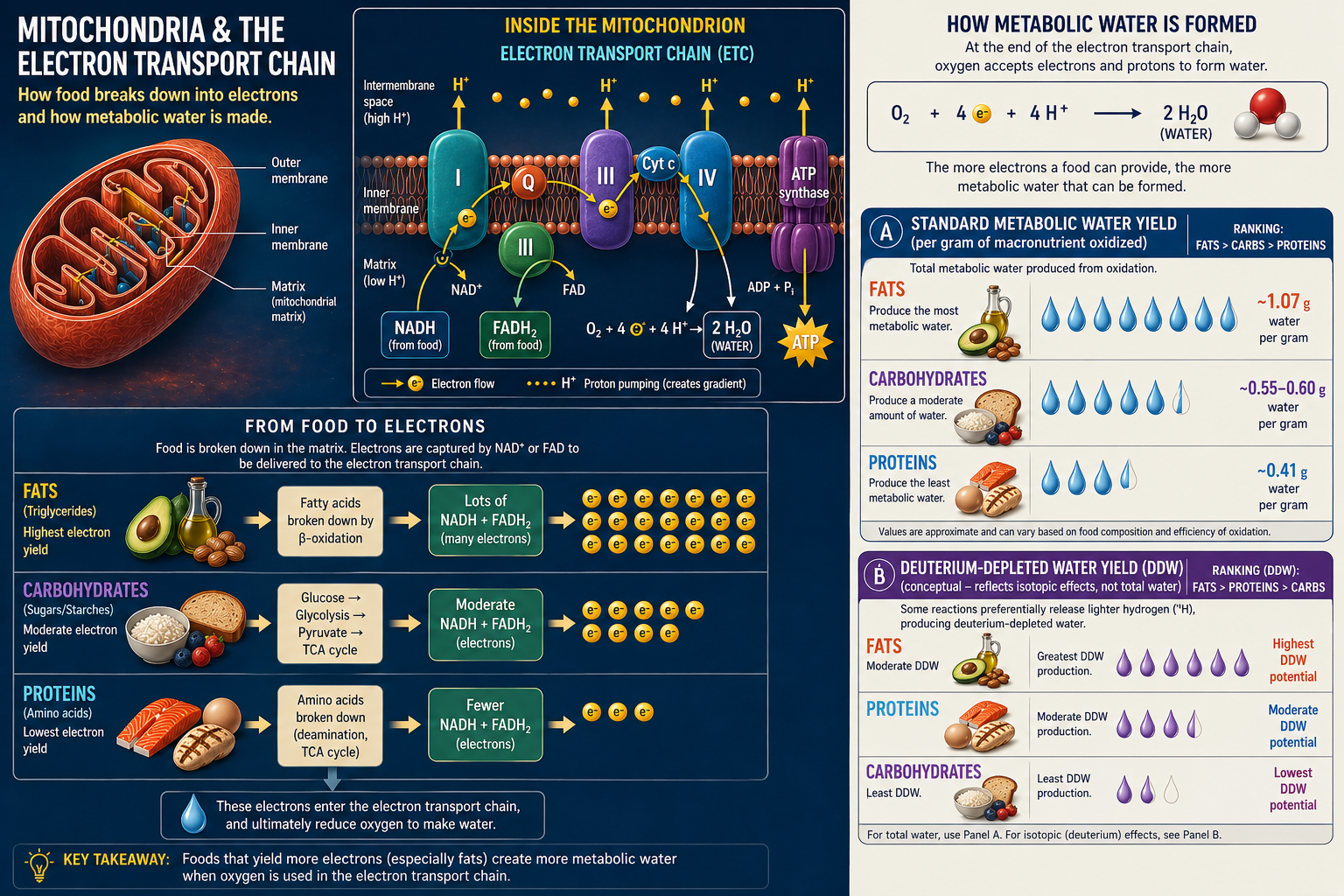
The body — the mitochondria in particular — evolved to read these signals. Mitochondria are not passive engines. They are light-responsive organelles whose own ancestors were free-living bacteria, and they retain a remarkable sensitivity to the wavelengths and chemical composition of what we eat.
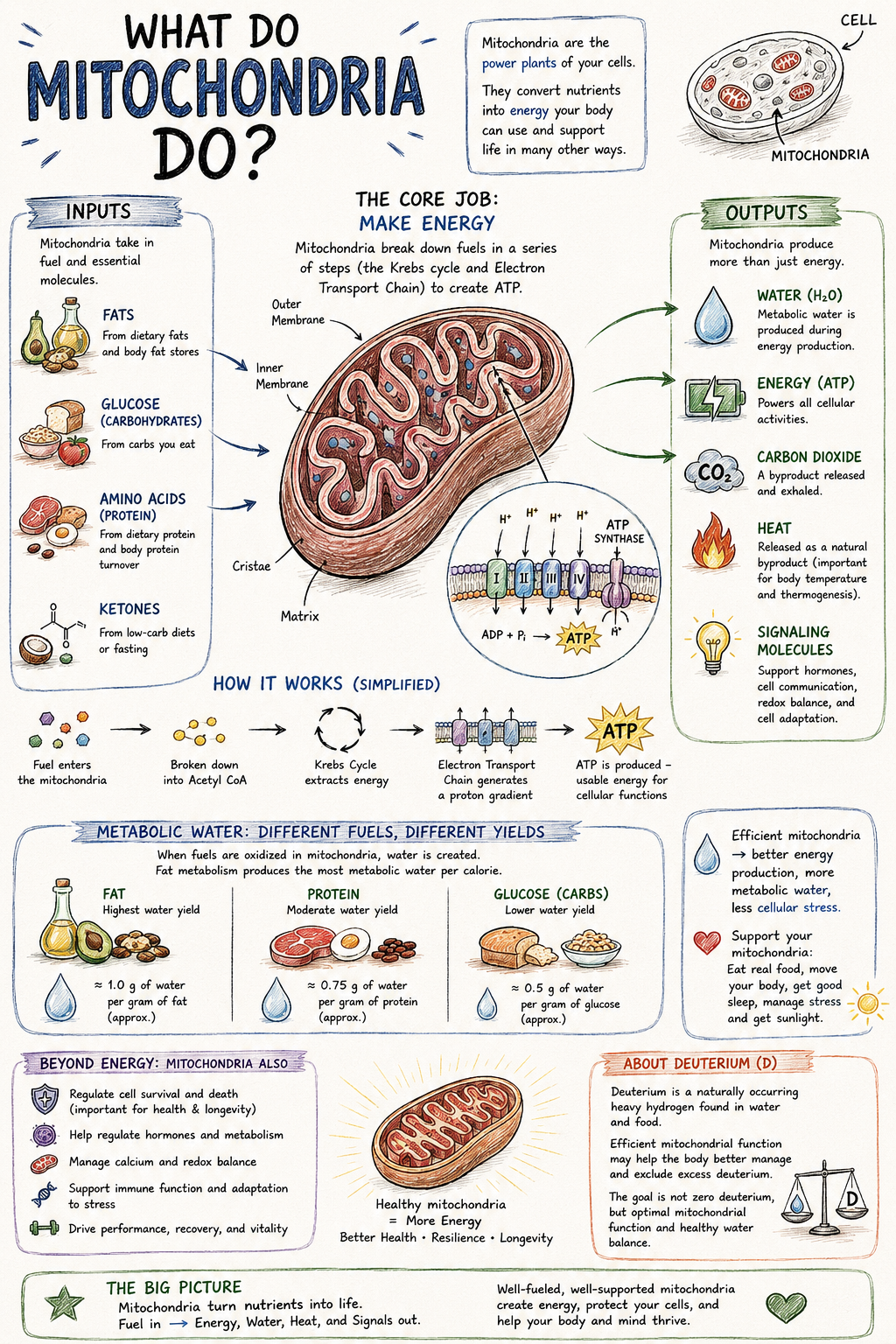
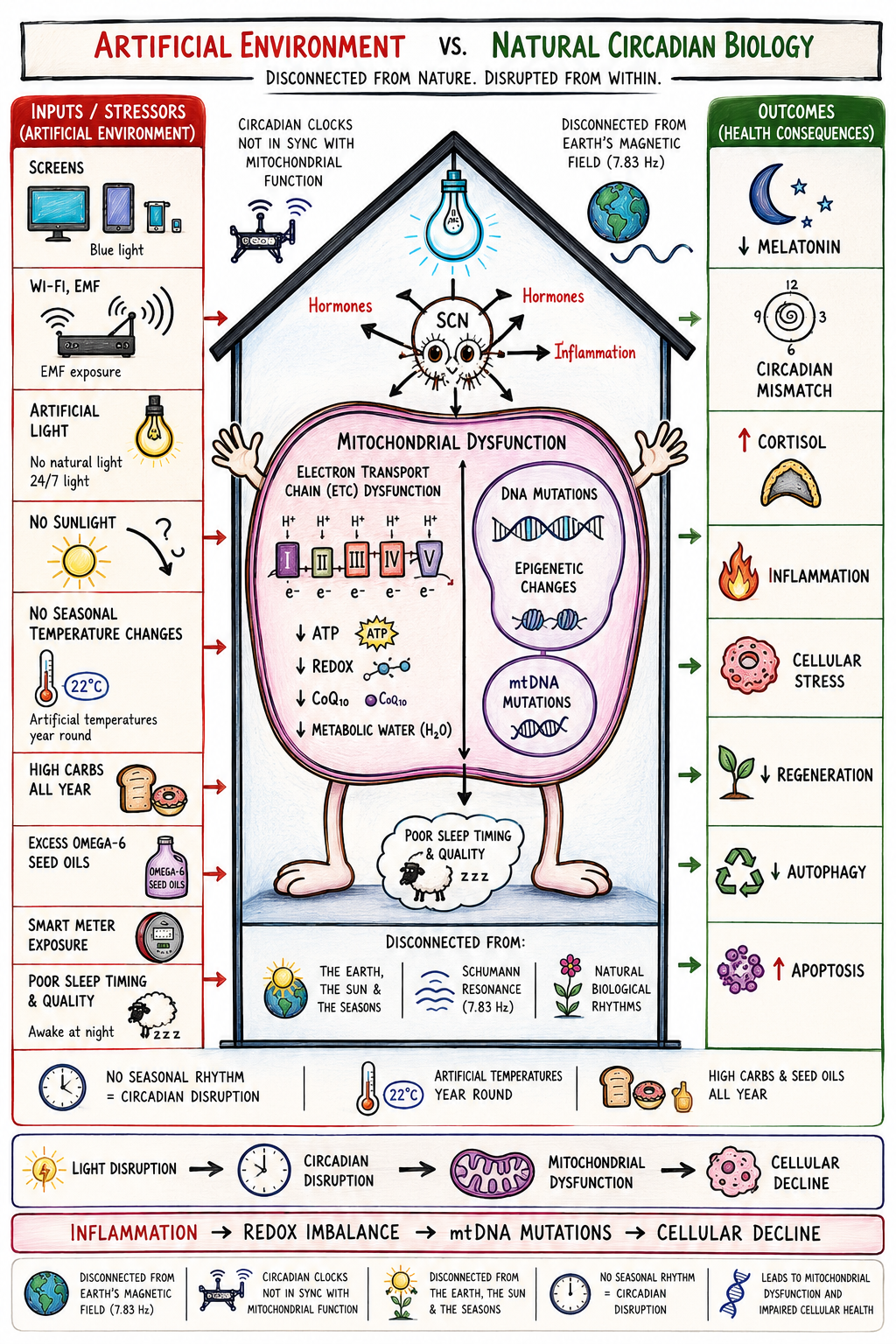
When mitochondria do their work, they produce water. Not the water you drink, but water generated inside the cell — at the very end of the electron transport chain, where electrons stripped from food meet oxygen at Complex IV and become H₂O. This is what I mean when I refer to metabolic water: not the total volume of water the body produces from oxidizing food (the textbook definition), but the specific water generated at this terminal step of mitochondrial respiration. It is the water your mitochondria make for themselves — and it is, by the way mitochondria preferentially handle hydrogen, the lightest water your body knows how to produce.
Lightest, here, has a precise meaning. Hydrogen comes in two forms — the common, light form (protium) and a heavier form (deuterium). Mitochondria handle protium with elegance and stumble on deuterium. The matrix preferentially channels protium toward Complex IV, leaving the water made there deuterium-depleted by design. This is the cleanest, most efficient water the cell can generate — and the fuel that produces the most of it, and the lightest of it, is fat.
Different foods break down into different streams of electrons, and different fuels yield different amounts of this metabolic water — fats produce the most, then proteins, with carbohydrates a distant third. Carbohydrates also produce water that is heavier, higher in deuterium, harder for the mitochondria to use efficiently. This is not a moral statement about carbohydrates. The brain still needs glucose. Tropical fruits and ancestral tubers have nourished humans for millennia. But the quality of the water your mitochondria generate from each fuel matters, and fat is the fuel that gives them the cleanest output.
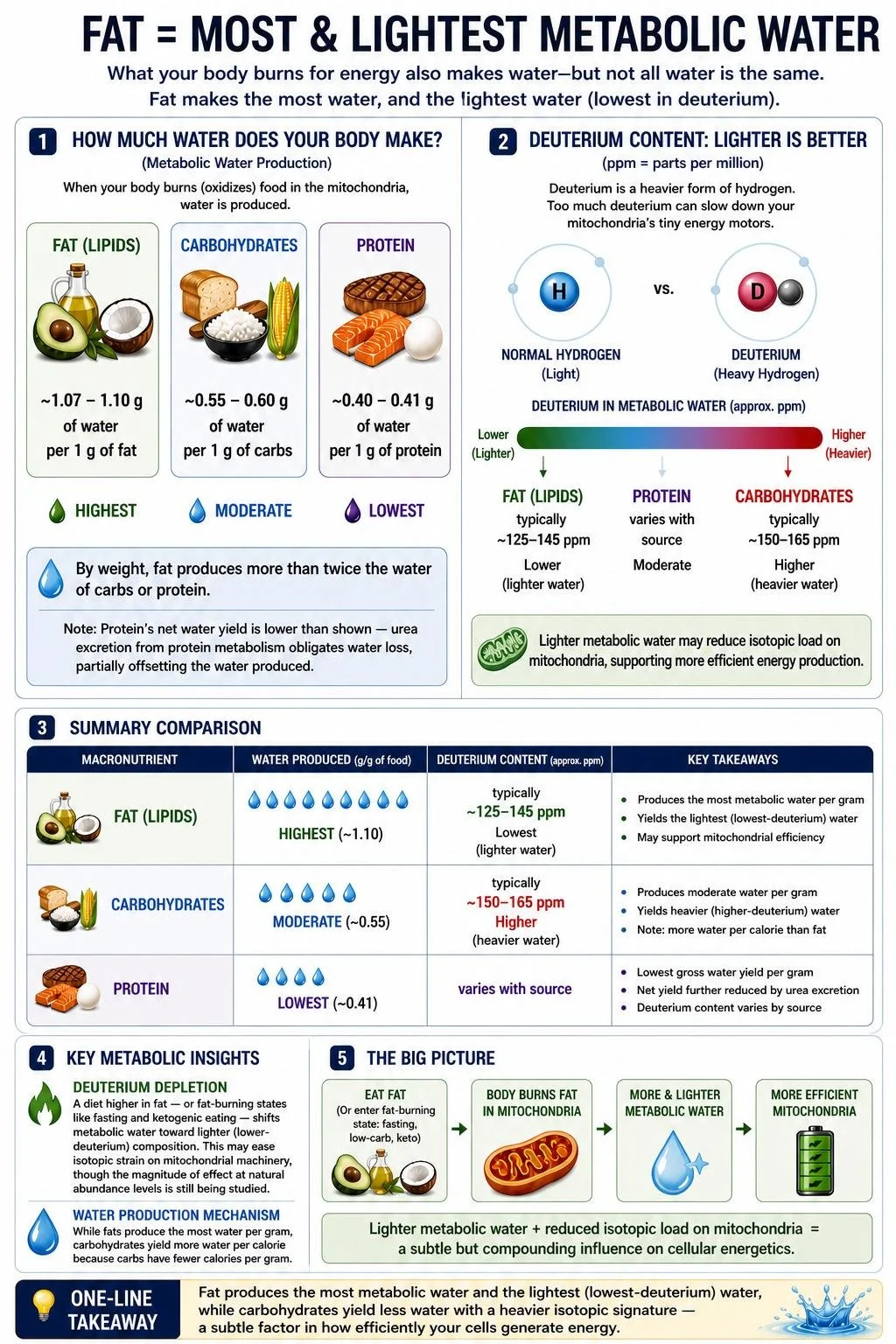
Fat produces the most metabolic water — and the lightest (lowest-deuterium) water. The science is real. The takeaway is not "keto everywhere, always."
The deuterium picture is contextual, and context is shaped by latitude, season, and the light environment you actually live in.
Near the equator, where the sun is intense and stable year-round, UVA exposure activates the skin's nitric oxide stores and supports the body's ability to process carbohydrates. People have eaten mango, papaya, banana, plantain, and starchy roots in the tropics for thousands of years — and thrived. The strong solar input is part of the metabolic equation. The carbs aren't the villain. The carbs without the sun are.
At higher latitudes, the picture shifts. As days shorten and the sun weakens through autumn and winter, the body shifts naturally toward fat-dominant fuel — pasture-raised meats, traditional fats, fermented vegetables, root vegetables, fewer carbohydrates. Every traditional cold-climate cuisine in the world reflects this. Stews, lard, butter, bone broth, sauerkraut, animal protein, slow fires — sacred fertility foods too like fish roe and organ meats. The cold-and-dark season asks a different question of the body, and the body has always known the answer.
The seasons were never optional. Your latitude is part of your Rx. Eat with where you are, when you are, and eat outside grounded in natural daylight.
When the food we consume reflects the actual conditions of our environment, our mitochondria can match their output to the demands of the moment. When the food is industrial — stripped of its informational content, drenched in compounds the body has no evolutionary memory of — the signal becomes noise.
Some of what follows — food as electromagnetic information, mitochondria as light-receptive organelles, the role of metabolic water in cellular function — sits at the leading edge of quantum biology and circadian science rather than in the textbooks of conventional nutrition. I name that openly. The framework I work within integrates cellular biology, ancestral nutrition, light and circadian science, electromagnetic field (EMF) awareness, biomechanics and fascial integration, osteopathy, breath and nervous-system regulation, Internal Family Systems (IFS), the ancient embodied traditions of yoga and qigong, and modern movement philosophies like Foundation Training, Functional Patterns, and Bowspring. It draws on the work of researchers, physicians, clinicians, and movement teachers across each of these fields including (to name a few) Dr. Jack Kruse, Dr. Martin Picard, Dr. Robert O. Becker, Dr. Gábor Somlyai, Dr. Weston A. Price, Dr. Natasha Campbell McBride, Dr. Alexander Wunsch, Dr. Jacob Liberman, and many others. If their work has shaped a deeper understanding of human health over the past century, it has likely shaped mine. The science is alive and still being written. What I share here is the practical, actionable face of it.
The Seasons Were Never Optional
Eating with the seasons is the only kind of eating the human body was ever designed to do. Across most of human history, the foods available in any given month were a direct readout of where the sun was in the sky. Long days and abundant warmth meant fruit, leafy greens, and the higher carbohydrate load that supports more activity and more daylight movement. Short days and cold meant fewer carbohydrates, more fat, more dense protein — the kinds of foods that support the body's natural shift toward warmth, slowness, and recovery. The reason traditional cultures ate this way was based on reality. The food simply was not there in any other form.
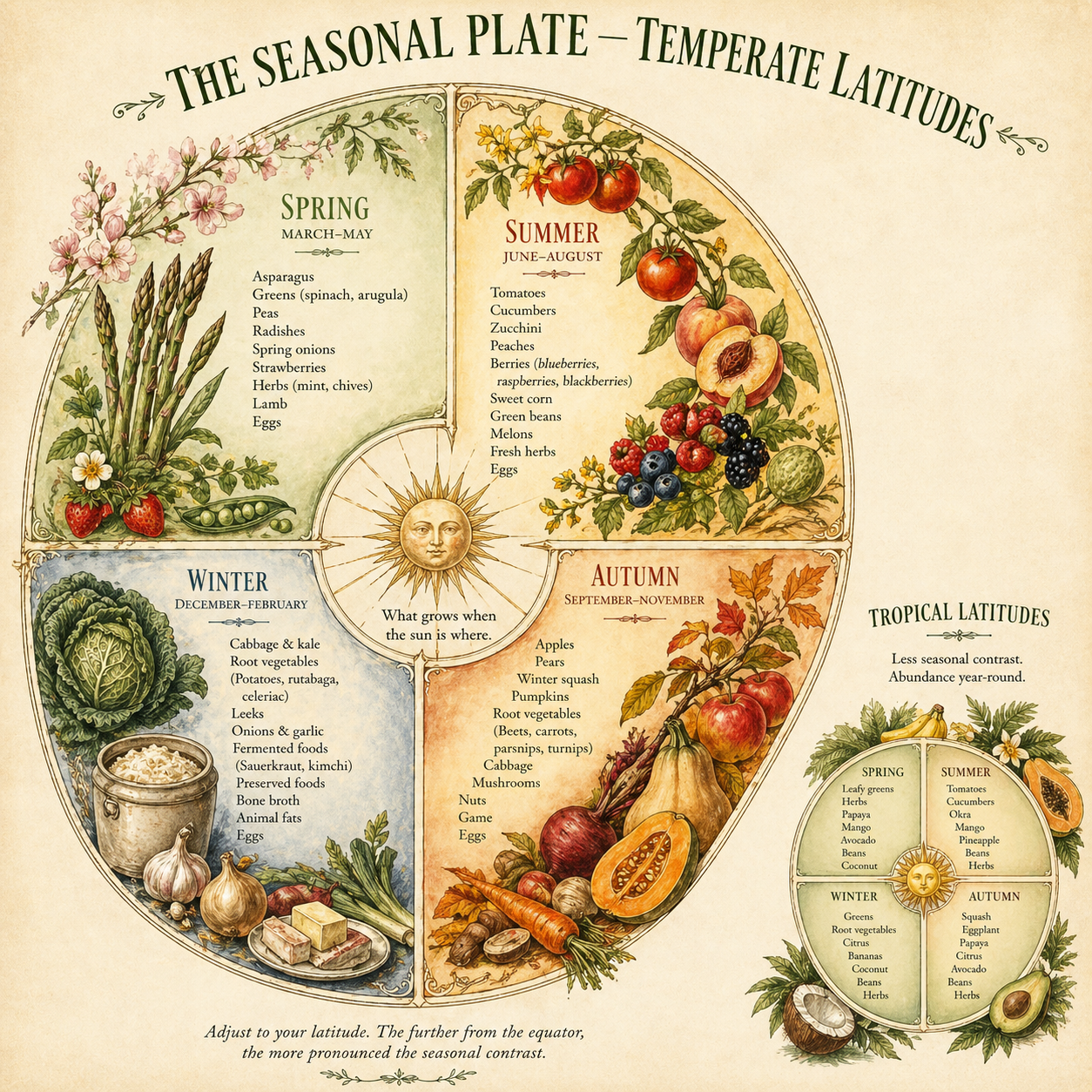
More seasonal variance occurs further from the equator; less seasonal variance occurs closer to the equator. With less seasonal variance comes more light stability — roughly 12 hours of daylight and 12 hours of darkness regularly and consistently throughout the year — which means the body's metabolic and hormonal rhythms in tropical regions cycle differently than in temperate zones.
Modern industrial agriculture and global supply chains have erased this seasonal information almost entirely. A grocery store in February in a northern climate will sell you pineapples flown from the tropics alongside asparagus that should not exist outside of spring. The body still expects winter — shorter days, colder air, dense fats and proteins, fermented vegetables, root vegetables, slower digestion. When it gets summer fruit instead, the signals contradict each other. The blood sugar response is built for a season that isn't happening. The hormonal pattern that should be supporting recovery is interrupted by carbohydrate loads designed for activity. Our metabolism is optimized for different seasons — blood lipid levels vary across the year, and the body's ability to process and respond to carbohydrates is meaningfully higher under strong sunlight, in part because UVA exposure triggers nitric oxide release and modulates insulin sensitivity in ways that low winter sun does not.
The same principle that explains why nighttime light exposure disrupts melatonin synthesis explains why eating tropical fruit in the dead of winter quietly stresses metabolic flexibility. The body is asking the environment what time of year it is — through zeitgebers (time-givers): sunlight, temperature, food — and the environment is giving three contradictory answers. Over years and decades, the cumulative cost of this mismatch is real. Eating seasonally re-aligns the conversation. It does not require purity or perfection. It requires only that, more often than not, the food on your plate reflects the actual conditions of the place you live and the time of year you are in.
Living Soil, Living Food
The food on your plate is only as nutrient-dense as the soil it grew in. This sounds obvious until you look at the numbers. Studies tracking the mineral content of common vegetables and fruits across the twentieth century have documented significant declines in calcium, iron, magnesium, vitamin C, and other essential nutrients in conventionally farmed produce — declines attributed to a combination of soil depletion, varietal selection for yield, and accelerated growth cycles. The reason is straightforward: industrial agriculture has been mining the topsoil for decades, replacing the complex microbial ecosystem that converts soil minerals into plant-available form with synthetic nitrogen, phosphorus, and potassium. The plants grow. They look the same. But they are growing in a chemically simplified medium, and they reflect that simplification in their nutrient content.
The soil microbiome is the unseen partner in plant nutrition. A healthy soil contains billions of bacteria, fungi, archaea, protists, and microscopic invertebrates per gram — a community as complex and irreplaceable as the human gut microbiome, performing analogous functions. Mycorrhizal fungi form symbiotic networks with plant roots, exchanging mineral nutrients and water for carbohydrates from the plant. Bacteria fix atmospheric nitrogen, solubilize phosphorus, and produce plant hormones. The plant produces secondary metabolites — the polyphenols, terpenes, and bitter compounds that define real flavor — in response to its conversation with this microbial community.
When the soil is alive, the food is alive. When the soil is dead, the food is calorie-rich and mineral-poor — regardless of how it looks at the market.
This is why regenerative farming matters in a way that goes well beyond environmental ethics. A farm built on cover cropping, rotational grazing, no-till practices, and the integration of animals into pasture is not just sequestering carbon — though it is doing that. It is rebuilding the microbial substrate that produces nutrient-dense food. The vegetables, eggs, and meat that come out of a regenerative farm are measurably different from their industrial counterparts in vitamin, mineral, and bioactive compound content. You can taste it. The body recognizes it.
Glyphosate, Deuterium, and the Quiet Erosion
The other half of this story is what we are putting on the soil and into the food directly.
Glyphosate is the active ingredient in Roundup, one of the most widely used herbicides in the world. It has also been patented as a chelator and as an antimicrobial — and both of those functions matter. As a chelator, glyphosate binds essential mineral nutrients — manganese, zinc, copper, iron — and pulls them out of biological availability. As an antimicrobial, it disrupts the shikimate pathway, a metabolic route that humans don't have but that the bacteria in our gut do have. The shikimate pathway produces the aromatic amino acids — phenylalanine, tyrosine, tryptophan — that gut bacteria need to function and that we, downstream, depend on them to deliver. Every time we eat food contaminated with glyphosate residue, we are consuming a compound that disrupts the gut microbiome and reduces our access to minerals.
Glyphosate use accelerated dramatically with the adoption of GMO crops engineered to tolerate it, and the chemical is now found, at varying concentrations, in conventional wheat, oats, soy, corn, legumes, and many other staple foods — including foods marketed as "healthy" granolas, plant-based burgers, and protein powders. It is also used as a pre-harvest desiccant on non-GMO crops like wheat and oats, sprayed directly onto the food just days before harvest. Several countries have banned or severely restricted glyphosate. The United States has not.
Industrial processed food is the other side of the same coin. The dominant industrial fats — soybean oil, canola oil, corn oil, sunflower oil, cottonseed oil — are extracted from seeds using high heat and chemical solvents (typically hexane), and they arrive on the shelf as polyunsaturated fats that have already begun to oxidize. When you eat them, those oxidized fats integrate into cell membranes, including mitochondrial membranes, where they alter membrane fluidity and reduce electron transport efficiency for as long as those fats remain in tissue — which, for linoleic acid in adipose, can be measured in years. Refined sugars, emulsifiers, artificial colors, and synthetic flavorings each carry their own cost. Linoleic acid in particular displaces healthy fats in cardiolipin, the signature lipid of the inner mitochondrial membrane, where it directly compromises electron transport.
The mitochondria run dirty for years on a single bad fat.
These processed foods often coincide with high-deuterium inputs — grain-fed animal products, conventional grains, refined sugar — and the combined load matters. Deuterium is the heavy isotope of hydrogen — and this matters more than most people realize. ATP synthase, the rotating nanomotor at Complex V of the mitochondrial electron transport chain, spins at roughly 90,000 RPM — about 1,500 revolutions per second — funneling protons through its rotor with extraordinary precision. Deuterium, with twice the mass of regular hydrogen, behaves like a heavier weight in a system tuned for the lighter one. Picture a precision-engineered turbine designed to spin on a specific isotope of fuel: the rotor still turns when you feed it the heavier version, but it turns more slowly, less efficiently, and with more wear on every component. The result is sluggish ATP production and significant cellular exhaust in the form of free radicals. Foods with naturally lower deuterium content — fats from grass-fed animals, wild seafood, foods grown at higher altitudes, foods from desert and mountain regions — give the mitochondria a cleaner fuel. Industrial processed foods, particularly those built on grain-fed animals and high-deuterium plant sources, run the engine dirty.
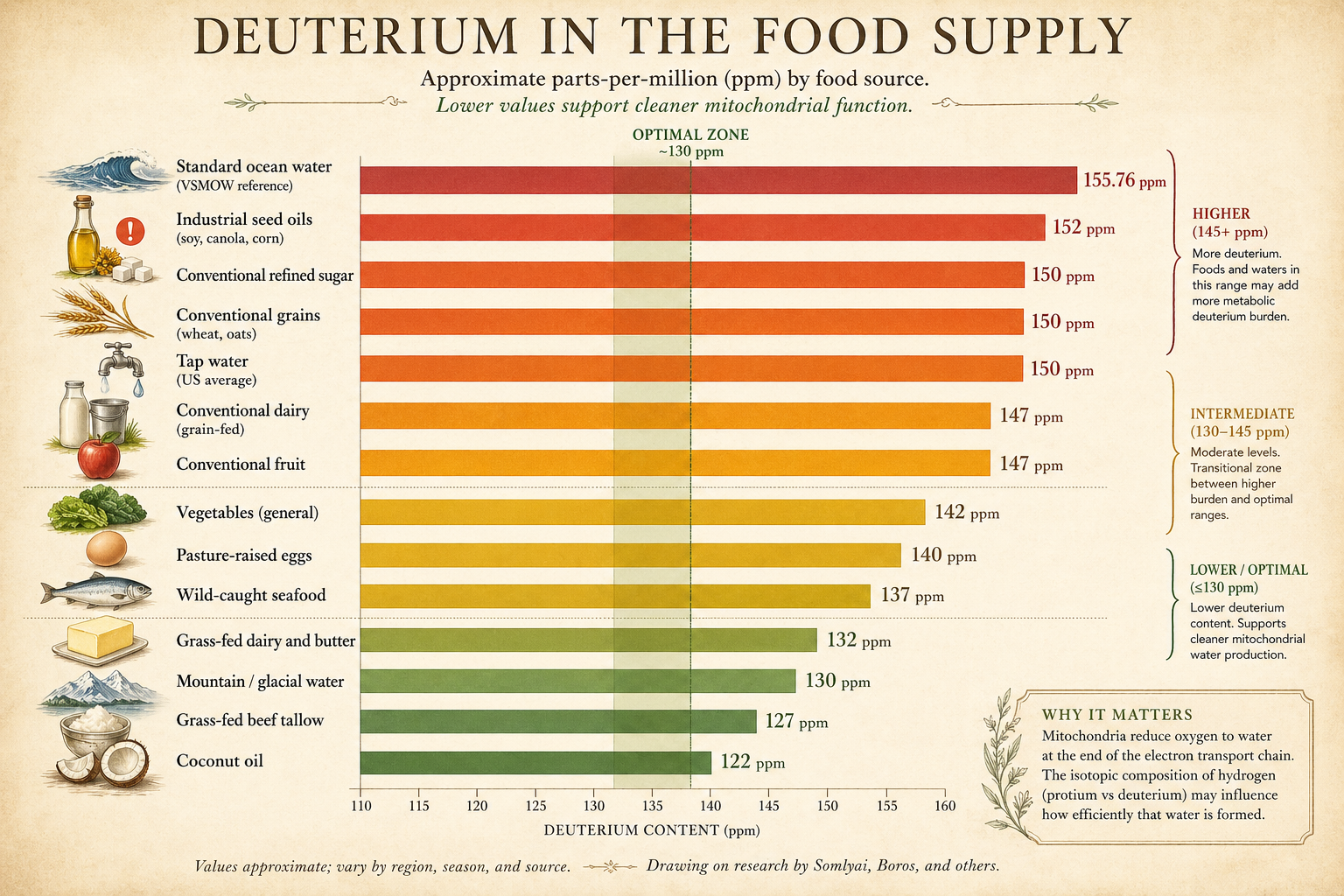
The cumulative effect of an industrial diet is not a single dramatic injury. It is a slow, quiet erosion of the body's ability to read and respond to its environment.
Your Zip Code Trumps Your Genetic Code
Your zip code is a more powerful predictor of your health than your genetic code. The science behind it is unambiguous. Twin studies, migration studies, and epigenetic research have all converged on the same conclusion — environment, far more than genetics, determines how a person ages, metabolizes food, sleeps, and gets sick. Zip code is shorthand for the entire environmental signal a body receives: the local sun, the local water, the local food, the local soil, the EMFs of the place. The microbial flora of the air, the surfaces, and the inhabitants. The language people speak. The hours they keep. The food they share. All of it is information, and all of it is decoding genetic potential into actual phenotypic expression.
What this means in practice is that the food grown closest to where you live carries the most relevant biological signal for the body that lives there. A tomato grown two miles from your home, in soil exposed to the same sun, watered by the same rain, populated by the same regional microbes, is a more complete piece of environmental information for your body than a tomato shipped from another hemisphere. The vitamin and mineral profile reflects your local soil. The polyphenol composition reflects your local sun. The microbial community on the surface of the fruit reflects the microbial community of your local air. The body recognizes the signal because the body is built from that same signal.
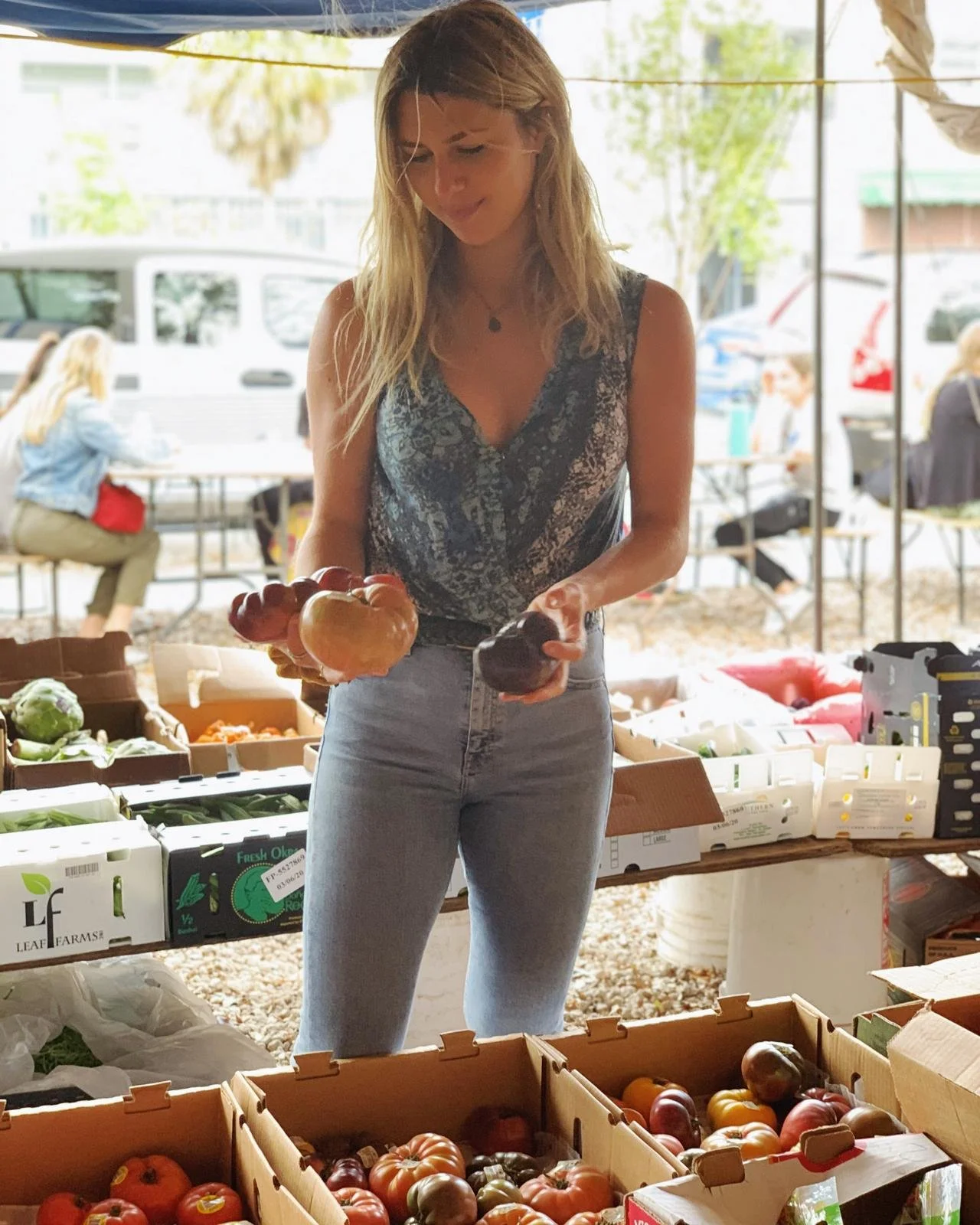
This is why farmers' markets, community-supported agriculture, and locally raised meat and eggs are not a stylistic preference but a practical biological alignment. They are also, not coincidentally, the foundation of resilient local economies and the only viable answer to the question of how a community feeds itself when the global supply chain breaks down. Eating locally is good for the body that eats. It is also good for the place that body lives in. The two are the same thing.
A Symbiotic Body
The human body is not a single organism. It is a colony — a walking ecosystem of human cells, mitochondria, gut microbes, skin microbes, oral microbes, and the trillions of viral and fungal companions that share our tissues. The number of microbial cells in a human body is roughly equivalent to the number of human cells. The metabolic activity of those microbes contributes meaningfully to digestion, immunity, neurotransmitter production, and the manufacture of vitamins (K2, B12, biotin, folate) that our own cells cannot make.
Our stomach is, in a real sense, our inner sanctuary. We each have different microbial communities and produce different metabolites that flow into the bloodstream and shape disease risk — which is one of the deepest reasons there is no one-size-fits-all diet, and the same food will impact each of us in different ways. The food you eat feeds these trillions of bacterial companions, and they have a tremendous influence on your health: your ability to synthesize nutrients, your mood, your immune resilience, your hunger signals, your cravings. Consuming a variety of nutrient-dense, real-food sources — across the full spectrum of plants, animals, fermented preparations, and ancestral fats — is the way to feed these microbes well and cultivate a stable, resilient inner ecosystem.
The connection runs both ways. Roughly 95% of the body's serotonin is made in the gastrointestinal tract, where it regulates motility, immune function, and digestive rhythm. Gut-derived serotonin doesn't cross directly into the brain — but the gut-brain conversation runs through the vagus nerve, microbial metabolites, and the steady supply of tryptophan, the amino acid precursor the brain depends on to make its own serotonin. The neurotransmitter responsible for regulating happiness, anxiety, sleep, and emotional resilience is not produced in isolation by the brain. It is shaped, daily, by what is happening in the gut. The vagus nerve, in fact, carries information from the gut to the brain at a higher volume than it carries information back.
We are, in a real biological sense, fermented by our microbes more than we are fed by our food.
Knowing this, wouldn't it make sense to fuel the body with ingredients that fuel elevated emotions — the foods of love, joy, compassion, and clarity? Real food sends a clear message to the cells in the body: support the immune system, strengthen antioxidant defenses, protect against damaged cells, remove toxins, reduce inflammation, lift the mood. Industrial food sends the opposite message — and the gut, the brain, and the heart all hear it.
Mitochondria are the other half of this story. The mitochondria in our cells are descended from free-living bacteria that were absorbed into ancestral eukaryotic cells more than a billion years ago. They retain their own DNA, their own membranes, and many of their own ancestral metabolic functions. They are exquisitely sensitive to light, to nutrients, to oxygen, and to the rhythmic signaling of the circadian system. When we eat real food in seasonal alignment with the local environment, our mitochondria respond by producing energy efficiently, maintaining membrane integrity, and coordinating with the rest of the body's clocks. When we eat industrial food out of season, our mitochondria struggle.
Real food feeds both of these symbiotic communities. Fermented vegetables, raw and cultured dairy, bone broth, and pasture-raised meats provide the substrates the microbiome thrives on. Wild fish, pasture-raised eggs, dark leafy greens, and whole-food saturated and monounsaturated fats provide the building blocks the mitochondrial membranes require. Industrial food does the opposite — it starves the beneficial microbes and feeds the opportunistic ones, and it loads the mitochondrial membranes with oxidized polyunsaturated fats that compromise their function for years.
The shorthand: when you eat real food from real places, you are feeding two separate ecosystems — the one inside you and the one outside you — and both ecosystems thrive. When you eat industrial food, both ecosystems decline.
Eat the Full Spectrum
The bright pigments in real food are not only captivating, they are biologically active compounds — carotenoids, anthocyanins, polyphenols, chlorophylls, flavonoids — produced by plants and concentrated by animals in response to sunlight, stress, soil, and season. They are, in essence, a plant's chemical answer to a challenging life: the UV its leaves had to absorb, the cold snap it had to endure, the pest it had to repel, the altitude it had to climb. When we eat these compounds, we inherit that information. Our cells receive the plant's stress signal and respond by upregulating their own defense and repair machinery — a phenomenon known as xenohormesis. The pigments are not merely antioxidants, but rather hormetic messengers. A small, well-timed dose of stress strengthens the organism. The bright colors of real food are a direct visual readout of how alive — and how challenged — that food has been. A wild blueberry foraged from a windswept hillside contains many times the anthocyanins of its cultivated cousin grown in a sheltered field; an arugula leaf grown in volcanic soil under intense mountain sun is more pungent, more bitter, more medicinal than one raised in a hydroponic greenhouse. Difficulty is part of the nutrition. Nature needs to struggle, and through that it grows. Plants can survive — and even sweeten — through frost and ice.
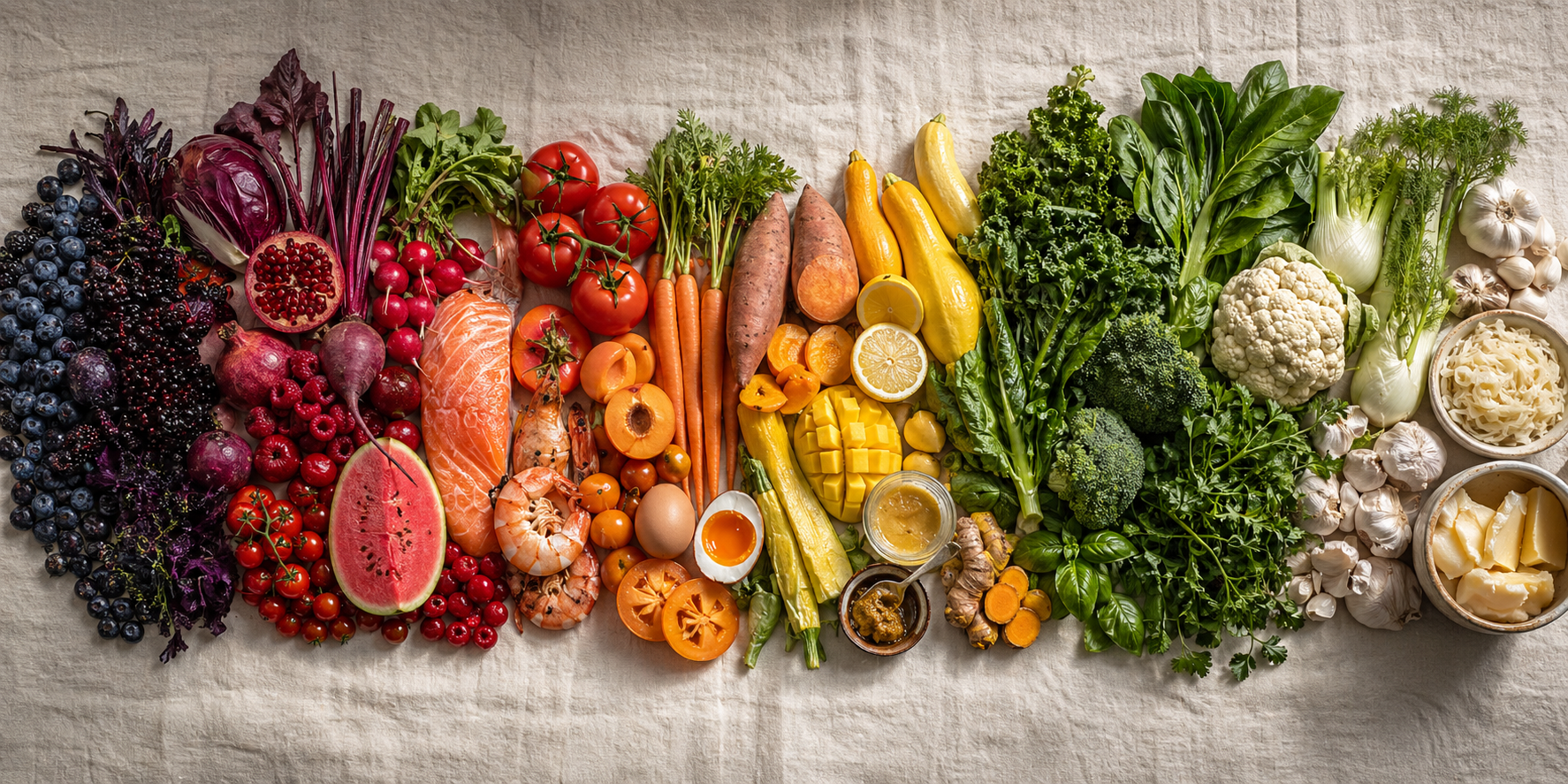
The full spectrum lives across both plant and animal foods:
anthocyanins in wild blueberries and elderberries
beta-carotene in pastured egg yolks bright orange from the carotenoid-rich grasses the hens forage on
astaxanthin in wild salmon; lycopene in summer tomatoes
lutein and zeaxanthin in dark leafy greens, also concentrated in the yolks of eggs from foraging hens
resveratrol in grape skins
sulforaphane in cruciferous vegetables
conjugated linoleic acid (CLA) and vitamins A, D, E, and K2 in grass-fed butter and tallow
the omega-3 fats and astaxanthin in wild seafood
the polyphenols in extra-virgin olive oil
the catechins in green tea
the essential fatty acids in nuts and seeds, and the monounsaturated fats in olives and avocados, all of which support brain health and protect against degenerative brain conditions
Size and age also matter, in a way modern eating has forgotten. The smaller and younger the food, the lower its deuterium content. As mentioned, deuterium is a heavy isotope of hydrogen, naturally present in all water and food but concentrated unevenly across the food web. It gums up the tiny rotary engines inside our mitochondria — the ATP synthase nanomotors that generate cellular energy — and so the body works best on a naturally deuterium-depleted diet. Photosynthesis itself discriminates against deuterium: young leaves, fresh shoots, sprouts, and microgreens are isotopically lighter than mature plants, and the fats they help produce are lighter still. Small, fast-growing animals feeding on fresh greens and live insects carry that lightness forward. Wild-caught small fish, young lamb (rather than mutton, the meat of sheep older than one year), eggs from foraging hens, the first sweet milk of spring, and the fats of animals raised on living pasture are all naturally lower in deuterium than their industrial counterparts. By contrast, older animals, oversized livestock fattened on grain, and crops bred for sheer size — especially GMO monocultures grown with glyphosate and synthetic fertilizers — carry a heavier isotopic signature. The chemistry of how a food was grown, what it ate, how long it lived, and how disrupted its metabolism became all leave a quiet fingerprint we eat into ourselves. Ancestral eating intuitively favored the small and the young: spring shoots, microgreens, baby greens, young animals, small fish, fresh-laid eggs. There is metabolic wisdom in that pattern that we are only beginning to measure.
Eating the spectrum is not the same as eating maximally. Paracelsus put it five hundred years ago: the dose makes the poison — and the same dose, in the same compound, also makes the medicine. Kale is a beautiful food — bitter, mineral-rich, sulfur-laden — but it was never meant to be the green base of a daily smoothie consumed 365 days a year, shipped from California to an organic juice bar in Manhattan in February. In its native rhythm kale is a cool-season green: sweetened by frost, eaten in spring and autumn, set aside in the heat of summer when tomatoes, cucumbers, and tender lettuces take its place. Raw kale every morning of every season is not ancestral or logical in nature; it is our fitness- and “health”-culture invention, and at that scale its goitrogens and oxalates begin to matter in ways they never would in a traditional diet. The same can be said of almost any food consumed identity-first rather than seasonally. Neither sainthood nor exile — neither the daily green smoothie nor the lifelong avoidance of cruciferous vegetables — is how human beings have ever actually eaten.
This is also part of why traditional cuisines pair the high-oxalate foods with cultured dairy or rich fats. Think beets with goat cheese, spinach with ricotta or feta, chard with parmesan and butter, rhubarb with cream, or sorrel with crème fraîche. These pairings evolved because they taste right, and they taste right because they are biochemically right. The calcium in the dairy binds the oxalates in the plant inside the digestive tract, forming an inert complex that is harmlessly excreted — a built-in safety mechanism that lowers oxalate absorption and softens the astringency on the palate. The fats in the cheese or cream also carry the fat-soluble pigments — beta-carotene, lutein, chlorophyll — across the gut wall, where without fat they would mostly pass through unused. Modern nutrition research has caught up to the kitchen: adequate dietary calcium has been shown to reduce the risk of calcium-oxalate kidney stones rather than increase it. Traditional food combining understood this long before we measured it.
Eat across the spectrum, but eat with the seasons and within the pairings that have already worked out the math. Sprouts and tender greens in spring; tomatoes and stone fruit in summer; cruciferous greens, roots, and squashes in autumn; broths, fats, ferments, and what has been preserved in winter. Pair leafy greens with cultured dairy or bone broth, roots with butter, sour fruits with cream, bitter greens with olive oil and salt. Variety across the year is what protects you; variety within a single meal is what nourishes you. The body has evolved over hundreds of thousands of years to expect a broad informational input from a broad range of foods. Give it the spectrum it has been waiting for. Just as the body needs the full spectrum of natural sunlight — not just one wavelength — it needs the full spectrum of nourishment from the natural world, not a single ideologically chosen slice of it.
Food as Medicine, Food as Mood, Food as Spirit
When you understand the power of food, you make a conscious choice. You decide to consume foods that nourish and energize the body for health rather than deplete it and create an internal environment that drifts toward disease. You begin to use food as a tool to manifest your highest self. When you take care of the body, you take care of the spirit. Nourishing your body with real food becomes a beautiful form of self-love.
There is an energy to food. Some foods calibrate low — industrial, oxidized, depleted, traveled long distances under fluorescent light, sprayed and stored and handled by hands that did not love them. Some foods calibrate high — grown in living soil under real sun, harvested at peak ripeness, prepared with care, eaten in good company. The body knows the difference. The body always knew.
Eat what is high-vibration: real food, prepared with intention and care. All of this is common sense, biologically sound, and evolutionarily consistent. The food you eat is the matter from which you build the next version of your body. The thoughts you carry while you eat it shape the message your body receives. The hands that prepared it, the soil it came from, the season you are in — all of it becomes you.
Sustainability starts on the plate. To attain optimal health — for yourself, for the people you love, and for the world that grew the food — you have to live and breathe a conscious lifestyle, and that begins with what you put into your mouth daily. What we eat does not only affect our physical, mental, emotional, and spiritual health. It also shapes how farm animals are treated, the conditions of our soil, the quality of our water, and the state of our planet. There is a connection between how we eat and the way animals are raised; how we eat and the integrity of the soil; how we eat and the cleanliness of the water; how we eat and the resilience of the world we are passing forward.
Now is the time to take charge of your health and make mindful food choices so you can be of service to others and protect the planet that holds you. Our original nature is reverence — for the animals that nourish us, the plants that feed us, the soil that grows them, and the people we share the table with. By approaching life with deep respect for all beings and expressing gratitude to the earth, our experiences become compassionate and caring.
There is nothing more important than feeling good. Instead of asking yourself, “Do I look good?” ask yourself, “Do I feel good?”
By focusing inward and tuning in to your own thoughts and feelings, you become conscious of the things that nourish you on a physical, mental, emotional, and spiritual level. You will begin to see a shift in your energy, your mood, and your life.
How I Got Here
I dealt with my fair share of diet cults and rabbit holes — five years of veganism, a couple of which were raw vegan, and a stretch in the middle when I was eating almost nothing but fruit. I came to veganism the way many people do. I had read the compelling literature. My grandfather had died of colon cancer, and I had decided his red meat consumption was responsible. I was looking for a system that promised health, ethics, and simplicity in a single move. A plant-based diet offered all three. It also offered an identity, which I did not realize at the time was part of its appeal.
The progression went as follows: Gluten-free first. Then dairy-free. Then grain-free. Pescatarian. Vegan. Soy-free. Raw vegan, and eventually fruitarian. What would have been next — breatharian and luxatarian?! The box kept getting smaller and tighter, and I kept telling myself — and anyone who would listen — that what I was doing was the most refined and sophisticated form of self-care available. My mother called me a "Food Snob" and, on my extra snobby days, a "Food Nazi." She was not entirely wrong.
By the second year, my menstrual cycle had stopped. I had lots of energy and stamina, going on long runs and bike rides, but I developed social anxiety, self-isolation, and depressive symptoms. I was bloated almost constantly from the volume of fiber I was consuming. I went to live on a permaculture farm in Kauai for a summer and ate fruit straight from the trees (literally dozens of bananas a day, along with papaya, jackfruit, and lilikoi/passion fruit). The farm owner caught an amazingly nutritious wild fish one afternoon off the shore and offered me some. I refused. I was listening to The China Study on audio while I weeded the turmeric and ginger fields. In retrospect to my younger self — what was I thinking? Salmon is one of my favorite foods.
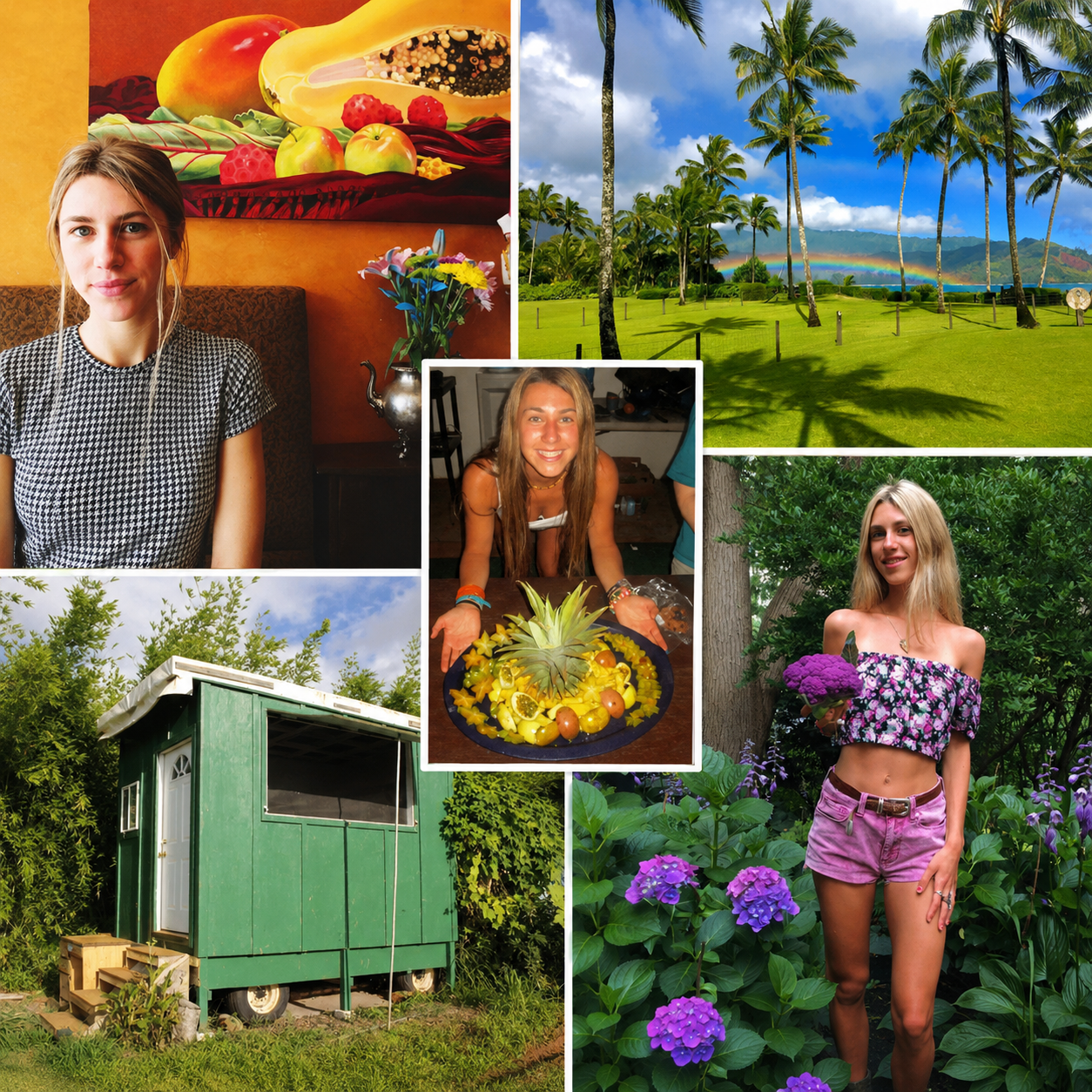
Little cabin on wheels! — Kauai, Hawaii
(Side note for the women reading: my depressive symptoms also coincided with being on the contraceptive pill — a story for another time, but worth knowing that women can track their cycles naturally using basal body temperature and cervical fluid, without the need for hormonal birth control. Empowering, accurate, and entirely free.)
Looking back, I can see that what I was doing was not, fundamentally, a pursuit of health. It was a pursuit of control. The body was asking me, very clearly, for something I was unwilling to give it, and I was overriding the request through ideology. Every restriction added another layer to a self-image I had built around dietary purity. Letting go of that self-image felt less like changing a diet and more like an identity crisis. I felt, for a period, that I was betraying myself — my work ethic, my ability to stick things through.
Someone once told me that eating animals on all fours was more grounding, while plants reach up into the heavens — more ethereal, more airy — and to feel more rooted I could honor the animals that graze and the root vegetables that anchor in the soil. Differing perspectives and diet dogma aside, looking from a purely evolutionary perspective, Homo sapiens have evolved as omnivores, fluctuating their diets based on what was available in the region they resided in (during the agricultural era), or whatever they came across in their roaming (during the hunter-gatherer phase). Our entire brain, musculoskeletal system, and development depend on the quality of nutrition — we need a full spectrum of nutrients, just as we need a full spectrum of sunlight.
A full spectrum, not stripping anything out. White bread is to whole wheat what artificial blue light is to natural sunlight: stripped of the bran and fiber that make whole wheat actually nutritious, just as artificial blue light is the peak high-energy visible wavelength of CFLs and fluorescent bulbs stripped of the UV and infrared that exist in natural sunlight. Both are the same kind of mistake — extracting a single component from a complex natural whole and presenting it as the thing itself.
When I began eating animal foods again, it felt like turning on a light in a dark room. It was not a flavor experience. It was a physiological recognition — a kind of cellular “oh, that's what was missing”— that I have come to trust as one of the most reliable signals the body produces when given the chance. My brain lit up. And then, when I went to the opposite extreme — eating mainly meat and playing around with a ketogenic, carnivore-style diet — I began to feel slow, inflamed, heavy, but not fully myself. Food alone was never going to be the sole culprit or the rescue valve. Nervous-system regulation, learning to self-soothe, widening the lens beyond food — that was the next layer of the path. Life-affirming, uplifting, and the thing that finally got me out of the food-focused approach into a much more holistic understanding of health.
Honoring bioindividuality, honoring the season of life you are in, and being aware of the other variables in your environment that play a role in your wellbeing — not just food — are critical to consider. Do not solely blame a poor diet without taking into account one's mental, spiritual, emotional, and physical health. Each of those tiers encompasses a deeper range of variables. Physical health alone involves your light environment, EMF environment, exposure to toxins and chemicals, and physical activity, all of which impact the other tiers.
What I have come to believe, after years of working with my own body and the bodies of clients, is that there is no single correct diet for every person. There is a set of principles — real food, real soil, real season, real place — and there is the work of listening to your own biology within those principles. Some bodies need more red meat. Some need more raw vegetables. Some thrive on fermented dairy. Some don't (for one reason or another), but that doesn't make that food bad or forbidden. The framework is not a rule book. It is a compass. It depends on past health history, microbiome, the season of life, and the environment a person lives in.
I have also come to believe that fear-based eating, in any direction, is its own form of harm. The dogma I had absorbed about meat as poison was mirrored, in other communities, by an equally rigid dogma about plants as poison, or carbohydrates as poison, or any number of foods cast as the single villain. The pattern is the same regardless of the food in question. It is a control reflex, dressed up as a health practice. Orthorexia at its finest.
Real nourishment requires letting go of the reflex.
When I reach for a new dietary framework now — and I still reach for them; the impulse hasn't fully gone away — I try to ask myself a few questions first. Am I afraid of something? Am I reaching for an intervention? Do I just want a rule book to follow? Do I want a quick fix? What is the actual motive here?
Most of the time, when I sit honestly with those questions, the impulse softens. What I want, underneath the reach for a new framework, is to feel well, to think clearly, to honor myself. Feeling well is much more reliably produced by the basics — real food, real sun, real movement, real sleep, real human connection — than by any new system I might adopt.
This is the journey. It is ongoing. I don't expect to ever be entirely done with it. Health takes new form as we keep excavating the parts of ourselves that no longer serve us — continuing to sculpt the David that Michelangelo always saw inside the marble.
What This Looks Like in Practice
The principles translate into a simple operating framework for the kitchen. Buy the highest-quality versions of foundational foods you can access — pasture-raised, grass-fed meat and eggs, wild-caught fish, raw or minimally processed dairy from grass-fed animals, organic vegetables and fruits ideally grown locally, and traditional fats (grass-fed butter, ghee, beef tallow, coconut oil, extra-virgin olive oil, avocado oil). Avoid industrial seed oils with the same vigilance you would apply to any other questionable ingredient. Eat what is in season where you live, more often than not. Visit farmers' markets. Get to know one or two farmers whose practices you trust. Cook at home. Soak and sprout your nuts, seeds, grains, and legumes when you use them. Ferment what you can. Treat refined sugar and ultra-processed food as rare, occasional exceptions rather than daily realities.
Beyond the kitchen, the practice extends into the rest of your daily life. Drink clean, unfluoridated water. Spend time in real sunlight — setting your circadian rhythm with sunrise, consistent natural light throughout the day, and avoiding artificial light at night. Move daily, outdoors, in fresh air. Reduce exposure to non-native EMFs. Regulate your nervous system. Connect with the people you love. Engage in the activities that bring you alive. Sleep in genuine darkness. The body is reading every one of these signals — alongside the food. Together, they form the complete picture of what it means to live in conversation with the natural world.
Always choose organic, local ingredients when you can. The optimal health they provide for you and for the environment is the same health — they are not separate things.
None of this is about purity. It is about the cumulative direction of your choices over the long term. A meal here or there outside the framework matters far less than the steady, mostly-consistent pattern of eating real food from real places.
An Invitation
You do not need to follow a particular system. You need to eat food that came from a place you can name, in a season that is actually happening, prepared with care, and shared with people you love. The body knows the difference. Your microbes know the difference. Your mitochondria know the difference.

A farm-to-table beach sunset dinner from a recent Mexico retreat — every plate a transmission of the philosophy in edible form
Where to Begin
If this philosophy resonates and you want to bring it into your life, there are four ways to begin:
Work with me one-on-one. Through Health Marshall, I work with clients ready to apply this framework to their own bodies and environments — examining your light environment, food sourcing, circadian rhythm, nervous system regulation, and the specific seasonal and constitutional needs of your particular body. This is for people ready to take real ownership of their own health, with a guide who has walked the long path through the dogma and back to the basics. [Book a discovery call→]
Hire me to cook for you. Food Marshall is my farm-to-table private chef and retreat catering service. I bring this philosophy directly to your table — sourcing locally, cooking seasonally, preparing meals that align with your circadian rhythm and the nutritional needs of your specific season of life. Whether you're hosting a dinner party, planning a wellness retreat, or want to deepen the nourishment of your daily life, every meal is a transmission of these principles in edible form. [Inquire about catering→]
Read the books. A book series is in the works — going significantly deeper into the science of seasonal nourishment, the role of light in human health, and the practical framework for living in conversation with your environment. The comprehensive companion to this philosophy: the kitchen as the most powerful pharmacy in your home, and the body as a mitochondrial garden tended by light. [Join the waitlist for early access and updates →]
Or simply start cooking. Browse the recipes, choose one that calls to you, and begin. Cook a meal from real ingredients. Notice how your body feels when you eat it. The body has been waiting for the signal for a long time. Real food is how you send it. [Browse the recipe library→]
This philosophy is the foundation of both Food Marshall — the farm-to-table private chef and retreat catering service that puts these principles on the plate — and Health Marshall, the wellness coaching practice where I work one-on-one with people ready to apply this framework to their own bodies and environments.
The recipes on this site are built on a foundation of pasture-raised animals, wild-caught fish, organic produce, traditional fats, and fermented and sprouted ancestral preparations — but the recipes are downstream of the philosophy. The philosophy is what matters.
Feel free to adjust any recipe by replacing or adding ingredients and modifying the quantity. Listen to your intuition. Have a joyous time creating love on a plate. And remember — lead with your heart, trust your gut, and always be kind to yourself.
Wherever you begin, begin.
Peace, Love, Light, and Bon Appetit,
The Food Marshall / Health Marshall