Beef Liver Pâté with Sage, Nutmeg & Egg (or half beef, half chicken)
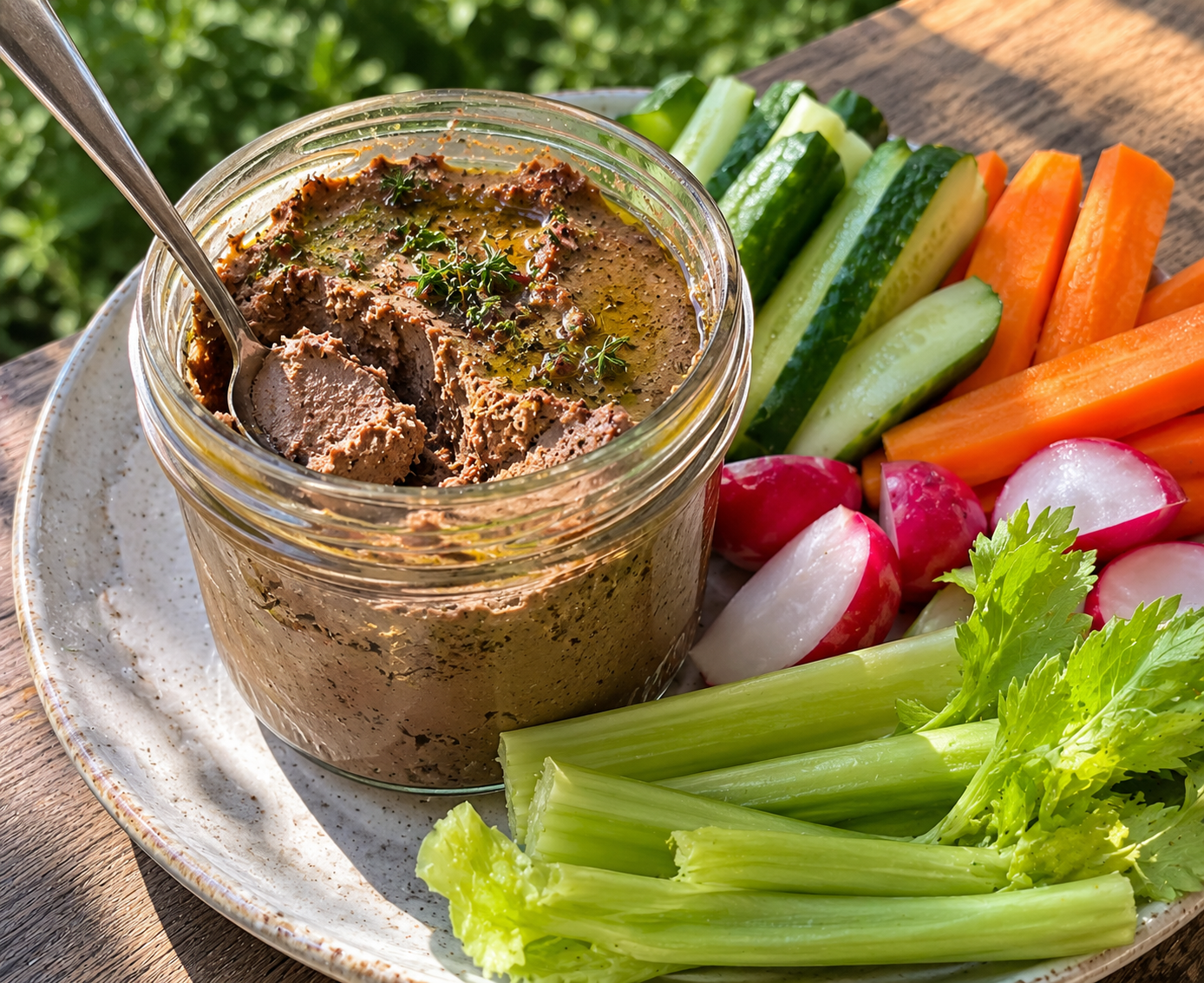
A rich, silky pâté made with pasture-raised beef liver, soaked in milk to mellow it, cooked gently with onion, sage and nutmeg, and blended with ghee and a hard-boiled egg. Or make it half beef, half chicken for the best of both.
Yield: about 2 cups (serves 8–12 as an appetizer) · Active: 30 min · Total: 2 hr 30 min, plus chilling overnight · Season: year-round, especially fall and winter, when the dark months call for rich, fat-soluble nourishment · Cuisine: French country · Best eaten: late afternoon, or as a starter before dinner
Chicken liver pâté is the gentle introduction to liver. Beef liver pâté is the deeper, richer, more iron-forward version, and it’s for people who’ve come to love it (or are ready to). Beef liver goes into a milk bath to mellow its flavor, then gets cooked gently with onion, garlic, fresh sage, nutmeg and bay, and blended with ghee and a hard-boiled egg until velvety.
A 50/50 mix of beef and chicken livers gives you the depth of beef with the silkiness and milder flavor of chicken, which is a great middle ground. Lamb liver works too.
Even people who think they don’t like liver are often won over when it’s spread on a crisp endive leaf with capers and a little diced red pepper. For the milder classic, see my Chicken Liver Pâté.
Ingredients
Pâté
1 lb pasture-raised beef liver (or ½ lb beef liver + ½ lb chicken livers, or lamb liver)
1 cup raw whole milk or cream, for soaking (or 1 cup water with 2 tbsp lemon juice, for dairy-free)
½ cup grass-fed ghee or butter, divided (¼ cup for cooking, ¼ cup for blending)
1 medium yellow onion, finely chopped
2–3 cloves garlic, minced
3 bay leaves
1½ tsp fresh sage, finely chopped (or ½ tsp dried)
½ tsp freshly grated nutmeg
1 tsp Baja Gold sea salt
½ tsp freshly cracked black pepper
2 tbsp brandy or Madeira (optional, for a classic French finish)
1 tbsp fresh lemon juice
⅛ tsp cayenne (optional)
1 hard-boiled pasture-raised egg (optional, for extra richness)
To seal (optional)
2–3 tbsp melted ghee, plus a few sage leaves or peppercorns
To serve
Endive leaves, cucumber rounds or grain-free crackers
Capers, diced red bell pepper, fresh herbs and flaky salt
Fermented vegetables or cornichons on the side
Method
Trim. Rinse the liver and pat it dry. Peel off any thin outer membrane and cut away visible veins or tough bits. Beef liver has more of these than chicken. Cut into 1-inch pieces.
Soak. Put the liver in a bowl, cover with the milk (or lemon water) and refrigerate 2 hours. This mellows the strong, iron-forward flavor, so don’t skip it if you’re new to beef liver. Drain and pat dry.
Cook the aromatics. Melt ¼ cup ghee in a large skillet over medium heat. Cook the onion 5 minutes, until soft and translucent. Add the garlic and cook 30 seconds, until fragrant.
Cook the liver. Add the liver, bay leaves, sage, nutmeg, salt and pepper. Cook 6–8 minutes, turning the pieces, until browned outside and just cooked through, with no pink in the center: 160°F for beef or lamb and 165°F for chicken. Don’t go much further, or the liver turns grainy.
Finish the pan. Add the brandy, if using, and let it bubble until almost gone. Remove the bay leaves. Stir in the lemon juice and cayenne. Cool 10 minutes.
Blend. Scrape everything, pan juices included, into a food processor. Add the remaining ¼ cup ghee and the hard-boiled egg. Blend until completely smooth and silky, scraping down the sides. Taste and adjust the salt and pepper.
Set. Spoon the pâté into a crock, ramekins or a small terrine and smooth the top. For longer keeping and a pretty finish, pour a thin layer of melted ghee over the top and press in a few sage leaves or peppercorns. Cover and refrigerate at least 4 hours, ideally overnight, until firm.
Serve. Let it sit at room temperature 15 minutes to soften slightly. Serve on endive leaves, cucumber rounds or crackers, topped with capers, diced red pepper and fresh herbs, with fermented vegetables or cornichons alongside.
Storage: Refrigerate up to 5 days with the surface pressed with parchment, or up to 1 week under a ghee seal. Freeze in small portions up to 3 months. The flavor deepens by day 2. For a crowd of 24+, double or triple the recipe and set it in one large terrine as a centerpiece appetizer.
Alcohol note: most of the brandy cooks off, but a little remains. Skip it for kids, pregnancy or anyone avoiding alcohol.
A note on portions and pregnancy: liver is one of the richest sources of vitamin A in its preformed form (retinol), which the body can’t easily get rid of if you have too much. A couple of tablespoons of pâté a few times a week is a nourishing amount for most adults, and it’s a better habit than eating large servings often. Beef and lamb liver are especially high in vitamin A. If you’re pregnant or trying to conceive, talk with your provider before eating liver, since high intakes of preformed vitamin A are linked to birth defects and many health agencies advise avoiding or strictly limiting it during pregnancy.
Nourishment Notes
Beef liver is one of the most nutrient-dense foods there is, packed with preformed vitamin A, B12, folate, copper, iron, choline and riboflavin in forms the body uses directly. A single tablespoon of this pâté can cover a day’s B12. Plant foods give you carotenoids that the body has to convert into vitamin A, and some people convert them poorly because of common genetic variations (in the BCMO1 gene), which makes liver’s ready-made retinol valuable. Livers from pasture-raised animals tend to carry more fat-soluble vitamins, since what the animal eats and how it lives concentrates in this organ.
Chicken liver is milder and creamier, with a little less iron and B12 than beef, which is why a 50/50 mix makes a great starter pâté. Lamb liver is close to beef in nutrients, with a slightly more pronounced flavor.
Grass-fed ghee is nearly pure butterfat with the milk proteins removed, so it blends silky smooth and is often easier for people who are sensitive to dairy. It brings fat-soluble vitamins and butyrate. The hard-boiled egg adds extra richness, choline and protein.
Sage, nutmeg and bay are the classic warming herbs and spices for liver, adding depth and aroma. Onion and garlic bring sweetness and sulfur compounds, and lemon adds brightness and vitamin C, which helps you absorb the liver’s iron.
For your cycle: liver is one of the best foods for the menstrual phase, when its heme iron, B12, folate and copper help replenish what you lose. It’s also deeply supportive postpartum and for anyone with low iron or B12. Pair it with something rich in vitamin C, like red bell pepper or a squeeze of lemon, to boost iron absorption.
Sourcing
Liver: pasture-raised beef, lamb or chicken liver from a local farm, US Wellness Meats, White Oak Pastures or Northstar Bison. Frozen liver is often the freshest option; thaw it in the fridge overnight.
Ghee and butter: grass-fed ghee from Pure Indian Foods or 4th & Heart, or grass-fed butter
Raw milk: realmilk.com
Eggs: pasture-raised, from a local farm or Pete & Gerry’s
Fresh sage: a farmers’ market or a windowsill pot
Nutmeg: whole nutmeg, freshly grated
Sea salt: Baja Gold
— Anna aka Food Marshall