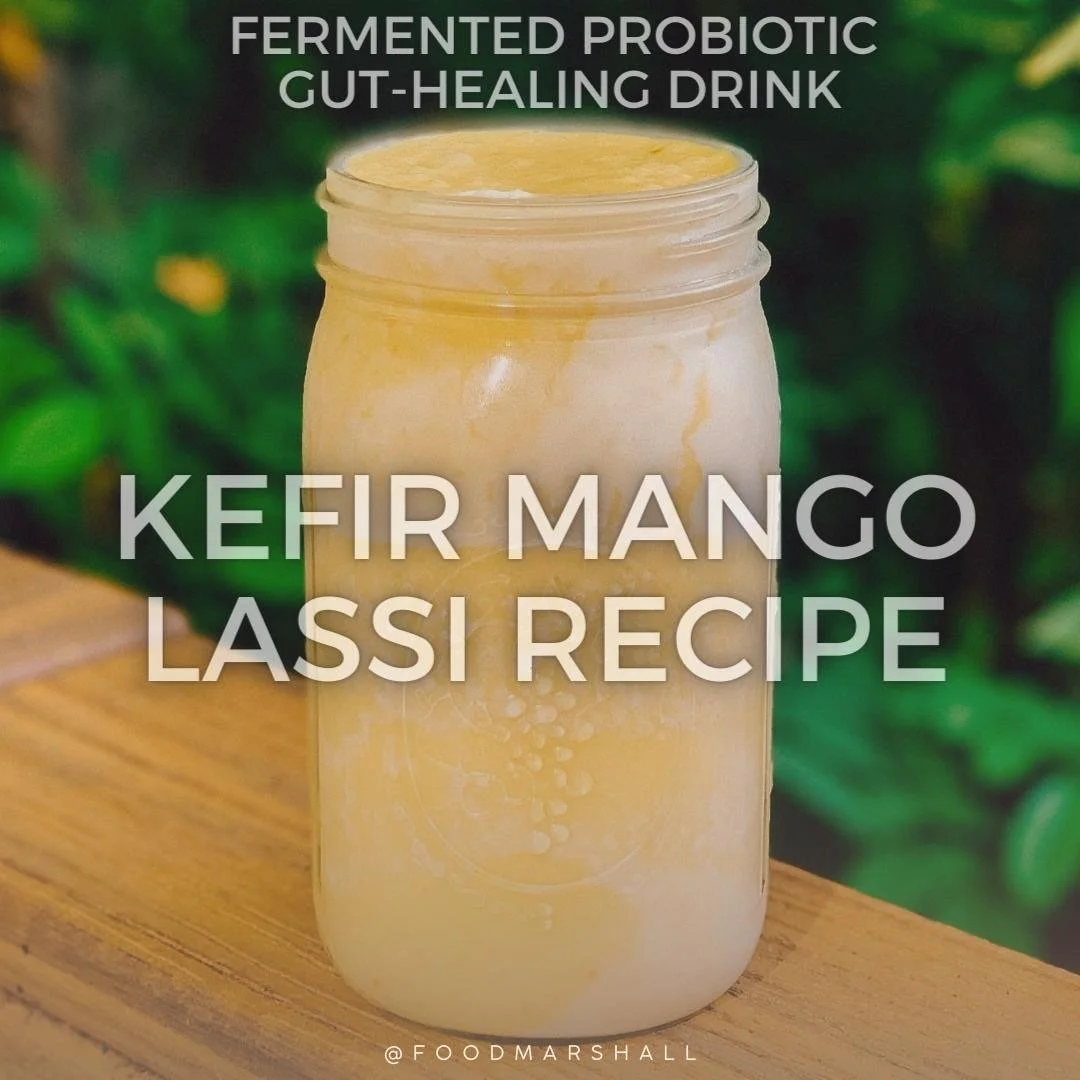
Mango Kefir Lassi with Cardamom
Check out my Substack Article: Raw Milk Kefir: The Living Daily Ferment
A summer drink that pairs raw milk kefir with fresh mango and cardamom
Yield: 2 servings
Active: 5 min · Total: 5 min
Best in mango season: Mexican mangoes like Ataulfo peak from spring through summer, and Indian Alphonsos peak in spring (about April through June)
Best eaten: midday, or alongside a meal
Ingredients
2 cups raw milk kefir (or A2/A2 yogurt thinned with milk)
1 large ripe mango, peeled, pitted, and chopped (about 1½ cups flesh)
2 tbsp local raw honey (optional)
¼ tsp ground cardamom
pinch of Baja Gold sea salt
¼ tsp rose water (optional)
1 cup ice cubes (optional)
Garnish
crushed pistachios
an extra pinch of cardamom
fresh mint or rose petals
a sprinkle of bee pollen
Method
Blend. Combine the kefir, mango, honey, cardamom, salt, and rose water (if using) in a high-powered blender and blend on high until completely smooth, about 30 seconds.
Chill (optional). Add the ice and blend again briefly to chill and slightly thin it.
Taste and adjust the honey, cardamom, or salt.
Pour into two tall glasses.
Garnish with crushed pistachios, a pinch of cardamom, and a few rose petals or a mint sprig.
Nourishment Notes
Lassi is a beloved beverage in South Asian cooking: a yogurt-based drink traditionally served alongside spicy, rich meals. It's long been enjoyed to help with digestion, and its cool, creamy tang soothes the heat of warming spices. The mango lassi peaks in summer, when ripe mangoes arrive with the hottest weather of the year.
Raw milk kefir is different from yogurt: it carries a wider variety of bacteria and yeasts, including Lactobacillus kefiri, Lactococcus lactis, Leuconostoc, and beneficial yeasts like Saccharomyces and Kluyveromyces. This produces a thinner, more effervescent fermented dairy with a more complex flavor and a slight champagne-like fizz, which comes from the carbon dioxide the yeasts make as they ferment. For a lassi, kefir's thinner consistency and tangier flavor make it especially well suited, while thick yogurt needs thinning to reach a drinkable texture.
Cardamom is one of the cornerstones of Indian sweets. Its aromatic oils (eucalyptol, alpha-pinene, and sabinene) pair beautifully with mango's sweetness and the tang of cultured dairy.
Mango brings beta-carotene, vitamin C, and folate.
Pistachios add vitamin B6, copper, and lutein, a carotenoid that supports eye health.
Storage
Best made fresh and served right away.
Refrigerated: up to 24 hours in a sealed glass jar. Re-blend briefly before serving, since natural separation will occur.
Frozen (for popsicles or a smoothie base): Pour into popsicle molds or ice cube trays and freeze up to 1 month. Use the cubes in future smoothies.
Pairs Well With
Serve it alongside spicy South Asian meals like Tikka Masala over Cilantro Coconut Cauliflower Rice, tandoori-style chicken, or grain-free chicken curry. It's also beautiful as a standalone afternoon snack with fresh fruit (sliced mango, papaya, or pineapple), a small handful of raw pistachios or almonds, and quality dark chocolate, or as a digestive companion after a heavy meal. For breakfast, serve it with a small bowl of fresh berries, a soft-boiled egg, and a small portion of grain-free granola or coconut flakes.
Sourcing
Raw kefir. Look for traditional raw milk kefir from a local raw dairy producer or Amish creamery: cow's milk kefir (the most common), goat's milk kefir (often easiest to digest), or sheep's milk kefir all work beautifully. Find it through a cow share, local farm, or the realmilk.com directory, or make your own (see my Raw Milk Kefir post). For store-bought pasteurized kefir, choose plain, whole-milk, organic kefir from grass-fed cows, such as Alexandre Family Farm.
A2/A2 yogurt (alternative). If using yogurt instead of kefir, look for organic, whole-milk yogurt from A2/A2 cows, or sheep's or goat's milk yogurt (naturally A2-type). Bellwether Farms, Maple Hill, or local farmers' market dairies are good choices. Thin with raw whole milk to reach a lassi consistency.
Fresh ripe mangoes. Choose organic Alphonso, Ataulfo (also sold as Honey or Champagne), Kesar, or Manila varieties. The skin should yield slightly to gentle pressure, and the stem end should smell sweet and floral. Avoid stringy, fibrous mangoes. Indian or South Asian grocers carry the best mangoes in peak season. Mexican Ataulfo mangoes are excellent and widely available. Off-season, organic frozen mango chunks work well.
Ground cardamom. Freshly ground from green cardamom pods is far better than pre-ground. Choose organic, non-irradiated green cardamom pods; Burlap & Barrel and Diaspora Co. source single-origin cardamom directly from farms in India. Crack the pods and grind the seeds in a spice grinder or mortar and pestle.
Raw honey. Organic, local, unfiltered, and single-origin when possible. For a lassi, a lighter honey (orange blossom, wildflower, or acacia) works beautifully. Avoid heated or pasteurized honey, which loses the enzymes.
Rose water. Pure, steam-distilled rose water made from just roses and water, from a Middle Eastern or Indian grocer, organic when you can find it. Many brands add flavorings or alcohol, so check the label.
Raw pistachios. Organic raw pistachios with no salt or oil. Sicilian Bronte pistachios are the benchmark when you can find them, or choose organic California-grown raw pistachios, such as Terrasoul's. Store them in the refrigerator or freezer.
Bee pollen. Fresh, aromatic, local raw bee pollen from a beekeeper or farmers' market. Avoid bee pollen with no traceable source. Eat it sparingly, since bee pollen is potent.
Fresh mint or edible rose petals. Organic, from a windowsill pot, farmers' market, or organic produce section. Edible rose petals must be pesticide-free, not from florist roses.
Sea salt. Baja Gold mineral sea salt: even in a sweet drink, a pinch brings out the flavor of the mango and cardamom.
— Anna aka Food Marshall