Meat Ragù Bolognese
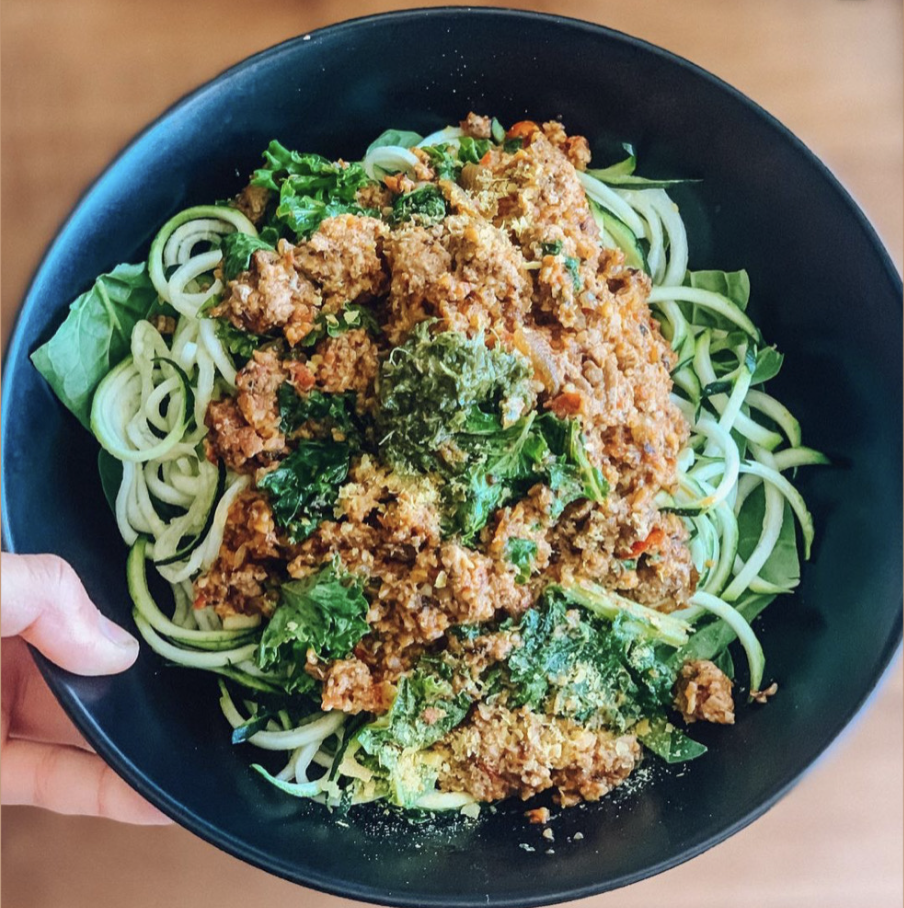
The slow-cooked winter sauce that earns its place with three hours and a little milk.
Season: Autumn · Winter
Cuisine: Italian · Emilian · Tuscan
Yield: Serves 8–10 Active: 30 min · Total: 3½–4 hr (mostly passive)
Best eaten: Sunday afternoon lunch or 5–6 p.m. dinner
Ingredients
Ragù
2 tbsp extra virgin olive oil, plus more as needed
1 medium onion, finely diced (about 1 cup)
3 medium carrots, finely diced (about 1 cup)
3 stalks celery, finely diced (about 1 cup)
1 lb ground bison or grass-finished beef (or elk, venison, or lamb)
1 lb ground pasture-raised pork
1 tsp sea salt, ½ tsp freshly ground black pepper
¼ cup quality tomato paste
1 cup (8 oz) dry red wine — Sangiovese, Barbera, or Nebbiolo
2 bay leaves
2 sprigs each fresh rosemary, sage, and thyme
1 tbsp juniper berries, lightly crushed (optional but traditional in Tuscan preparations)
2 quarts (8 cups) homemade beef or chicken bone broth
¾ cup (6 oz) raw goat milk (or raw cow milk, or raw almond milk for dairy-free)
To Serve — Choose One
Fresh tagliatelle or pappardelle (traditional)
Spiralized zucchini noodles (grain-free)
Spaghetti squash strands (grain-free, sweeter)
Cauliflower purée (silky, low-glycemic)
Roasted broccoli florets (adds char and texture)
Garnish — freshly grated Parmigiano-Reggiano (24+ month aged, real DOP), chopped fresh parsley, flaky sea salt, freshly ground black pepper, a final drizzle of your best olive oil
Sub: the meat blend works with any pasture-raised ground combination — beef, bison, elk, venison, or lamb. Bison is the cleanest commercial meat option (it cannot be confined and grain-finished the way cattle can). Pork is essential for the fat content; without it, lean meats produce a thin sauce.
Method
Choreography: brown the meat. Soften the vegetables separately. Combine with tomato paste. Deglaze with wine. Add broth and herbs. Long slow simmer. Finish with milk. Each stage is short; the patience is in the simmer.
Brown the meat. In a large heavy Dutch oven (at least 6-quart) over medium-high, heat 1 tbsp olive oil. Add the bison and pork together, breaking up with a wooden spoon. Cook undisturbed 3–4 minutes to develop browning, then stir and continue 6–8 minutes until all the meat is deeply golden-brown — not just grey-cooked. Season with salt and pepper. If excessive liquid has accumulated, drain off most (reserve 1 tbsp of the rendered fat in the pot).
Soften the soffritto. While the meat browns, heat another tablespoon of olive oil in a wide skillet over medium-low. Add the diced onion, carrots, and celery with a pinch of salt. Cook gently 12–15 minutes, stirring occasionally, until soft, fragrant, and lightly golden at the edges. Do not aggressively brown — you want softened and sweet, not caramelized.
Combine and caramelize. Add the soffritto to the meat. Stir together. Add the tomato paste and stir continuously 2–3 minutes — the paste should darken from red to deeper brick-red and coat everything. This caramelization is essential for proper ragù depth.
Deglaze with wine. Pour in the red wine, scraping the bottom of the pot thoroughly with a wooden spoon to lift any browned bits. Simmer 3–4 minutes, until reduced to a thick glaze coating the meat.
Add broth and aromatics. Pour in the bone broth until the meat is just covered (about 6 cups). Add bay leaves, rosemary, sage, thyme, and juniper berries (if using). Bring to a gentle simmer.
Long slow simmer. Reduce heat to the lowest setting that maintains a gentle simmer — small bubbles occasionally breaking the surface, not a rolling boil. Cover partially (lid slightly off-center). Cook 3 hours, stirring every 30–40 minutes. If the sauce reduces below the level of the meat, add more broth or water. Over the three hours the sauce will transform: the meat becomes tender and breaks down, the vegetables dissolve, the liquid intensifies, the color deepens from red-brown to deep mahogany.
The milk stage. After 3 hours, warm the milk gently in a small saucepan over low heat — just warm, not boiling. Stir into the ragù. This late-stage milk addition is the defining technique of traditional Bolognese cooking — it adds richness and rounds out the acid of the tomato and wine. Do not skip it.
Cook an additional 30–45 minutes uncovered, stirring occasionally, until the milk integrates fully and the sauce thickens to a proper coating consistency — thick enough to coat the back of a spoon without dripping.
Remove the herb stems, bay leaves, and any whole juniper berries you can find. Taste and adjust salt and pepper.
Serve. Prepare your chosen base: fresh tagliatelle (3–4 minutes in well-salted boiling water); spiralized zucchini (30 seconds in a hot skillet with a splash of olive oil); spaghetti squash (halved, roasted cut-side down at 400°F for 40 minutes, then scraped into strands); cauliflower purée (boiled cauliflower blended with raw butter, cream, and salt until silky); or roasted broccoli (florets at 425°F with olive oil and salt for 20 minutes until charred at the edges). Mound the base on a platter or in wide bowls. Spoon the ragù generously over — or, more traditionally, toss the pasta directly with the ragù in the pot for a few seconds before serving. Top with grated Parmigiano-Reggiano, chopped parsley, a grind of pepper, and a thread of olive oil.
Nourishment Notes
This is the slow-simmered meat sauce of northern Italian cooking — specifically Emilia-Romagna and most specifically Bologna, which lends its name to the most famous version. Ragù alla Bolognese has been made in Bolognese kitchens for at least three hundred years, and in 1982 the Accademia Italiana della Cucina formally registered an official recipe at the Bologna Chamber of Commerce — one of the few dishes to earn such recognition — in response to decades of increasingly untraditional "bolognese" preparations served outside Italy. American-style spaghetti bolognese, with its bright red tomato-heavy sauce over long strands of pasta, bears almost no resemblance to the real dish; the Bolognese serve their ragù over fresh tagliatelle, not spaghetti, and the sauce is deeply brown-mahogany, not red. What makes real ragù distinctive is not complexity but patience. The genius is in three hours of gentle simmering taking rough ingredients and producing something with genuine depth.
The long slow simmer itself is doing real nutritional work. When meat and connective tissue cook together in liquid for hours, the collagen breaks down into gelatin — a form of protein carrying glycine and proline in high concentrations. These amino acids are increasingly recognized as critically important for skin, joint, and gut health, and the modern Western diet runs depleted in them — we eat more muscle meat and less collagen-rich meat than traditional cultures did. A three-hour slow simmer of ground meat and bone broth is essentially a gelatin-extraction process, and using bone broth as the cooking liquid layers two forms of collagen extraction into one sauce. Bison specifically deserves a note: it is one of the cleanest meat options in the modern American food system because bison cannot be industrially confined and grain-finished the way cattle can. All commercial bison is effectively grass-fed by default, with a more favorable fat profile than even quality grass-fed beef (more omega-3s, more conjugated linoleic acid). The pork provides the saturated fat that makes a ragù rich rather than lean. Tomato paste carries lycopene at concentrations roughly ten times that of fresh tomato, with absorption increasing meaningfully in the presence of fat and heat — making this slow-cooked, fat-rich sauce one of the most bioavailable lycopene deliveries in the kitchen.
The late-stage milk addition is the defining Bolognese technique, and it is doing several things at once: slightly tenderizing the meat further, adding creaminess and body, rounding the acid of tomato and wine, and contributing its own nutritional load. Raw goat milk specifically is meaningfully easier to tolerate than cow milk for many dairy-sensitive eaters — naturally lower in lactose, with a different protein structure (more A2 beta-casein) and smaller fat globules. Red wine contributes polyphenols and resveratrol; about 95% of the alcohol cooks off in the first 30 minutes of simmering, leaving the flavor compounds intact. As a circadian and seasonal food, ragù is winter food in the truest sense. The slow simmer fills the kitchen with warmth for hours on a cold afternoon; the dense, fat-forward meat fills the body in a way summer cooking does not and should not. The Italian family tradition of making a large pot of ragù on a Sunday and living off the leftovers through most of the week is a practical expression of the old truth that slow food delivers both nourishment and time. As a fat-forward meal, eat it during peak daylight digestive hours — Sunday lunch is ideal; if served at dinner, begin the meal with light still on the table.
Storage: Ragù tastes dramatically better the day after it is made — the flavors have 24 hours to integrate and deepen. Refrigerated, it keeps 4–5 days; frozen in 2-cup portions, 3 months. Reheat gently on the stovetop with a splash of water or broth. The cauliflower purée holds 3 days; spaghetti squash and roasted broccoli are best within 2 days. Pasta bases are always best fresh.