OXTAIL WITH FINGERLING POTATOES & HERB GREMOLATA
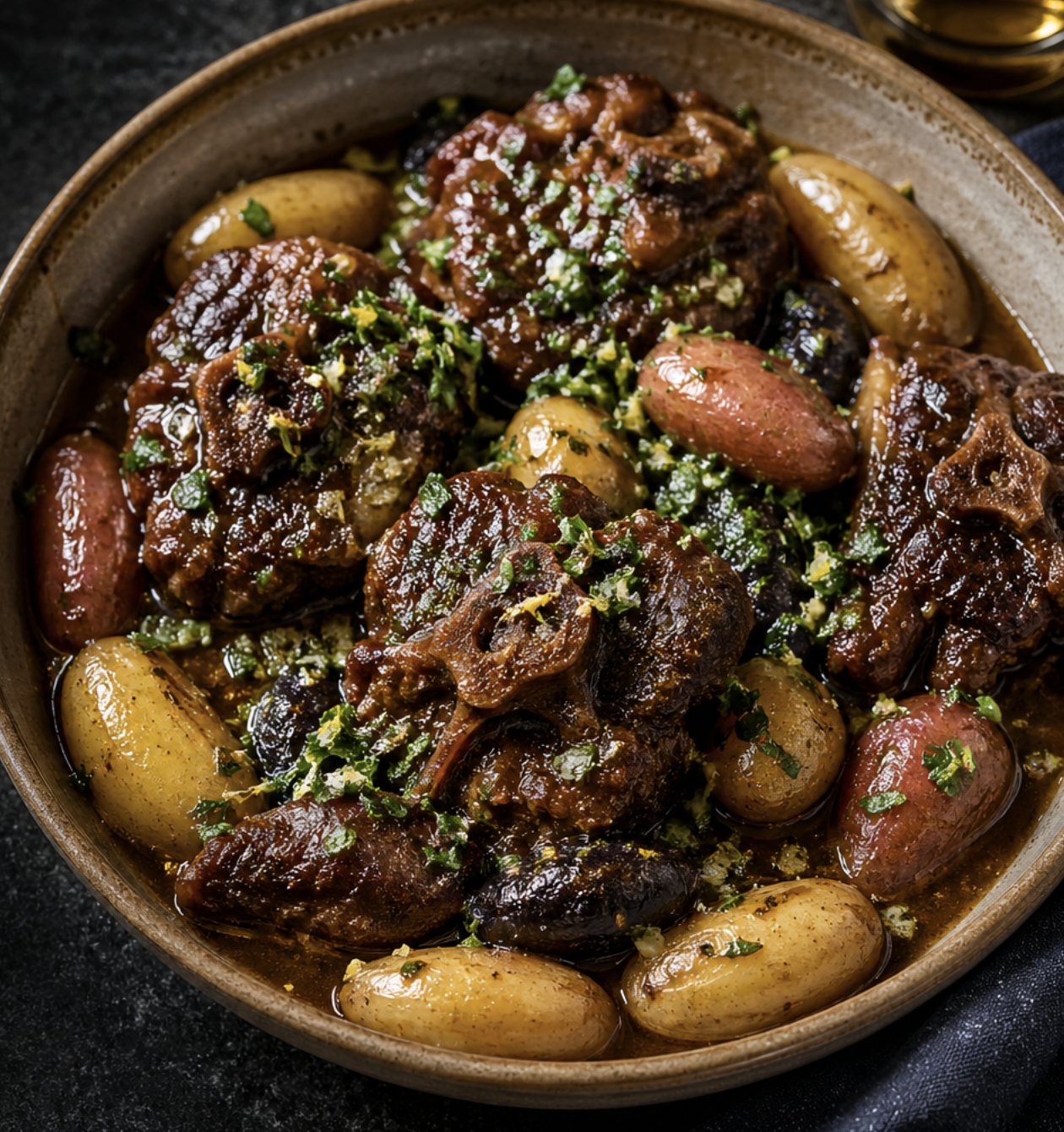
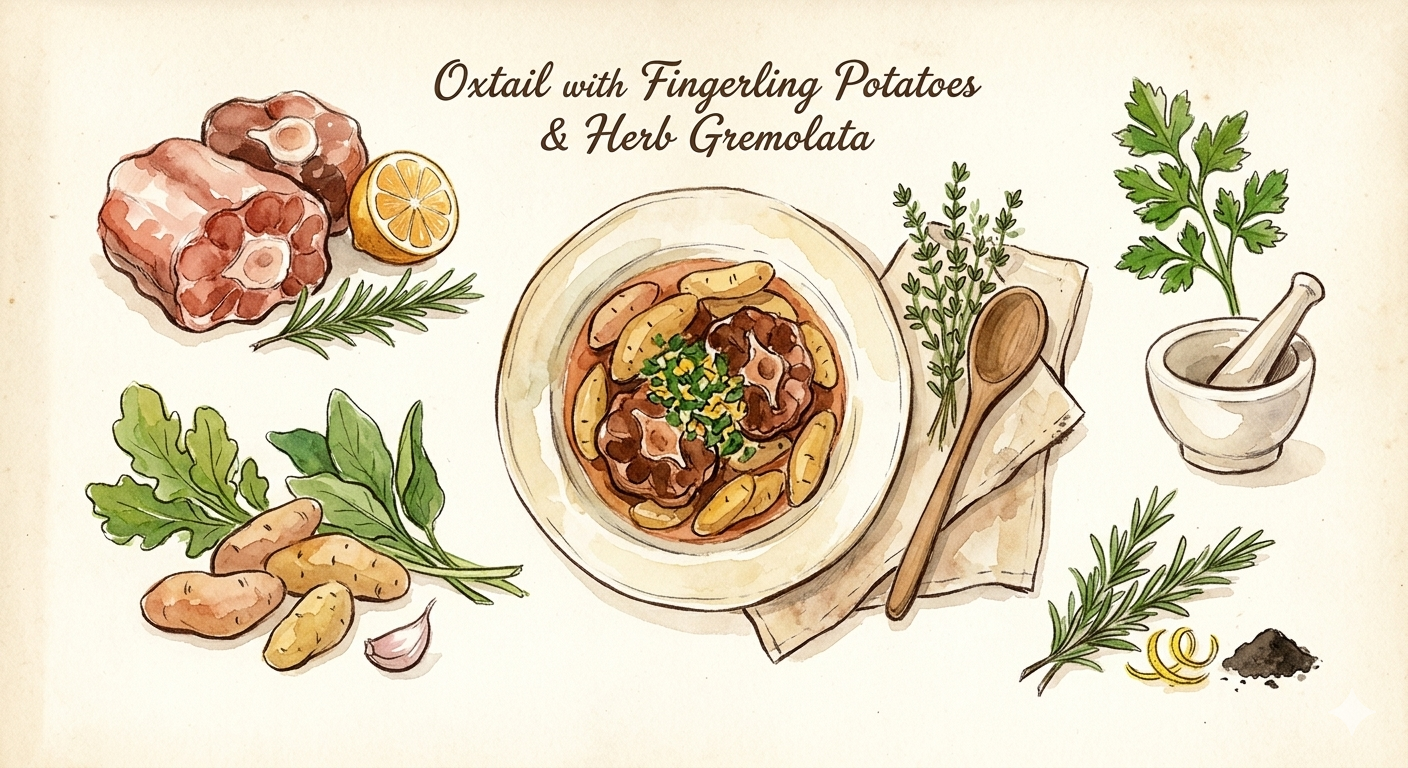
A long winter braise, gelatin-rich, finished with a bright herb scatter.
Season: Winter
Cuisine: French · Italian Heritage
Yield: Serves 4–6
Active: 45 min · Total: 8–10 hr (overnight braise)
Best eaten: as a winter weekend centerpiece, 5–7 p.m.
INGREDIENTS
Oxtail Braise
4 lbs grass-fed oxtail (or oxtail + 1 lb brisket)
Sea salt and freshly cracked black pepper
3 tbsp grass-fed butter
2 large yellow onions, sliced
6 garlic cloves, smashed
4 sprigs fresh thyme
4 sprigs fresh rosemary
3 cups homemade beef bone broth
1 cup red wine (optional)
Crispy Fingerling Potatoes
2 lbs heirloom fingerling potatoes, halved lengthwise
3 tbsp grass-fed ghee or duck fat (or rendered fat reserved from the braise)
4 garlic cloves, smashed
2 tbsp fresh thyme
Sea salt and black pepper
Herb Gremolata
1 cup fresh parsley, finely minced
Zest of 2 organic lemons
4 garlic cloves, minced
¼ cup extra virgin olive oil
Sea salt
METHOD
Start the night before or early in the day. Salt the oxtail generously and let rest at room temperature 30 minutes.
Heat butter in a Dutch oven over medium-high. Sear the oxtail in batches on all sides, about 8 minutes total per batch. Remove.
Add the onions with a pinch of salt. Cook over medium-low 15–20 minutes until deeply caramelized.
Add the smashed garlic, thyme, and rosemary; cook 30 seconds until fragrant.
Return the oxtail to the pot. Add red wine if using and reduce by half. Add the bone broth.
Cover and transfer to a 250°F oven.
Slow-cook 8–10 hours, until the meat is falling off the bone and the cooking liquid is deeply flavorful and gelatinous.
In the last hour: preheat a second oven (or wait until the braise is done) to 425°F. Toss the fingerlings cut-side down with ghee, garlic, thyme, salt, and pepper. Roast 30–35 minutes until deeply golden and crispy.
Gremolata: combine all ingredients in a small bowl. Let rest 10 minutes for the flavors to open.
To serve: shred the oxtail meat off the bones. Spoon over the crispy potatoes. Drizzle generously with the reduced cooking liquid. Top with herb gremolata.
NOURISHMENT NOTES
Oxtail is among the most collagen-dense cuts on the cow. The long bones with substantial connective tissue release massive amounts of gelatin into the cooking liquid during the slow braise — gelatin that, when consumed, the body breaks down further into glycine, proline, and hydroxyproline, the amino acids that build the cellular structure of skin, joints, and gut lining. Glycine specifically is the rate-limiting amino acid for glutathione production and balances the methionine load of muscle meat. A modern diet of muscle meat alone runs chronically low in these connective-tissue amino acids; oxtail restores the missing half. Grass-fed beef delivers heme iron, zinc, B12, B6, and creatine in their most bioavailable forms, and the marrow within the oxtail bones contributes additional fat-soluble vitamins, oleic acid, and conjugated linoleic acid.
Fingerling potatoes are heritage varieties with denser nutrient profiles than commercial russets — they bring potassium, vitamin C, B6, and resistant starch, which forms when starches are cooked and cooled (and can be reactivated by reheating in fat). Crisping them in rendered duck fat or ghee from the braise creates one of the most flavor-dense and metabolically clean potato preparations possible — saturated fat is stable under high heat, and the fat-soluble vitamins of grass-fed butter or duck fat are absorbed alongside the potato's water-soluble nutrients. The gremolata is doing structural work, not garnish work: parsley brings vitamin K, vitamin C, and apigenin; raw garlic adds allicin; lemon zest contributes d-limonene, which supports phase-two liver detoxification of the rich braise. Olive oil's oleocanthal compounds the anti-inflammatory effect.
As a seasonal dish, oxtail belongs to deep winter. The body's pull toward saturated fat, dense protein, and long-cooked food reaches its annual peak during the cold and dark months — and a slow braise like this answers that ask completely. Long simmering converts tough connective tissue into the collagen-rich liquid the body recognizes as deeply nourishing food, the kind of preparation traditional cultures relied on through every cold season before refrigeration and global supply chains made warm-weather eating possible year-round. Eaten earlier in the evening rather than late, the heavy protein and gelatinous fat stabilize blood sugar through the night without disrupting the body's cooling and melatonin curve.
Storage: refrigerate up to 4 days; the braise improves dramatically overnight as the gelatin firms and the flavors deepen. Reheat gently on the stovetop with a splash of broth. Freezes beautifully up to 3 months — portion into glass containers with the cooking liquid covering the meat. The reduced braising liquid can be frozen as ice cubes for instant sauce-making, one cube per pan deglaze.