Pastured Pork with Roasted Red Pepper, Tomato, and Garlic Confit Sauce
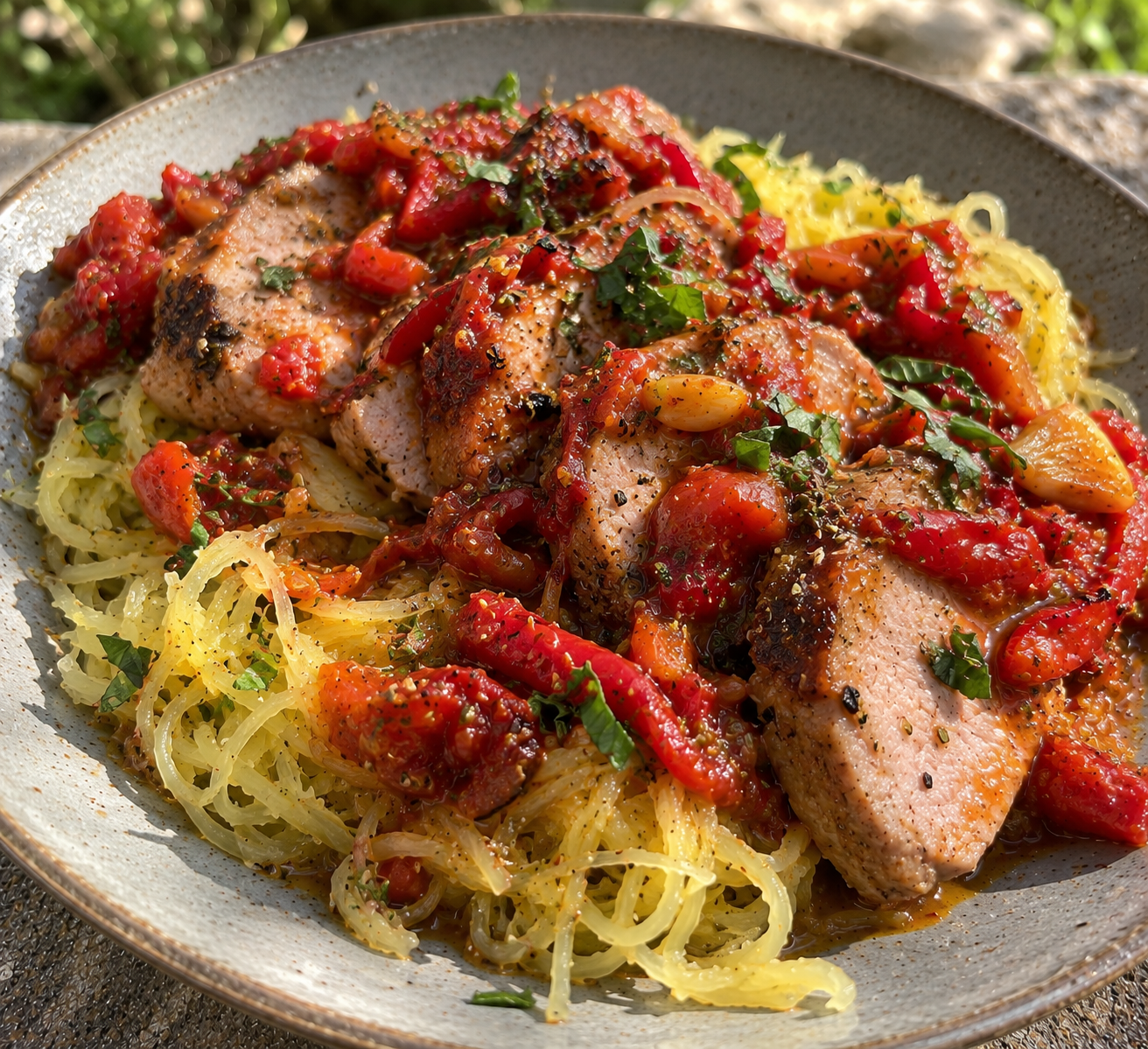
Juicy bone-in pork chops or tender pork medallions, marinated in onion, garlic, smoky paprika, and white wine, seared until golden, and served with a jammy sauce of red peppers, tomatoes, and whole garlic cloves slowly roasted in olive oil until meltingly sweet. Serve it over spaghetti squash or zucchini noodles for a cozy pork-and-"pasta" dinner.
Yield: Serves 4 · Active: 30 min · Total: 1 hr 45 min (plus 4–24 hours marinating) · Year-round (red peppers and tomatoes peak in North America from late summer into fall) · Best eaten: early evening
Why Quality Pork Matters
Pork is one of the meats where sourcing matters most. Pigs have a single stomach, like we do, so unlike cows and lambs, their fat directly reflects what they eat. Pigs raised in confinement on corn and soy produce fat that's very high in omega-6 linoleic acid. Pigs raised on pasture, rooting and foraging outdoors in the sun, produce pork with more vitamin D, a more balanced fat profile, and a richer, deeper flavor.
Here's what to look for:
Pasture-raised: pigs living outdoors, with room to roam, root, and forage.
Heritage breeds: older breeds like Berkshire, Mangalitsa, Red Wattle, Tamworth, and Gloucestershire Old Spots, raised for flavor and marbling rather than speed. Their meat is darker, juicier, and more flavorful than conventional pork, which has been bred so lean that it dries out easily.
What they're fed: even pastured pigs eat supplemental feed. Ask your farmer whether it's soy-free or lower in seed-based grains, since that makes the biggest difference to the fat.
Your farmer: the best pork comes from a small farm you can visit and ask questions. It's worth the conversation.
Ingredients
Onion, paprika, and white wine marinade
1 medium yellow onion, grated (juice and all)
6 garlic cloves, grated
1 tbsp smoked paprika, plus 1 tsp sweet paprika
½ cup dry white wine (or ¼ cup raw apple cider vinegar plus ¼ cup bone broth, for an alcohol-free version)
⅓ cup extra virgin olive oil
1 tsp dried oregano
2 bay leaves, crumbled
2 tsp Baja Gold sea salt
1 tsp freshly cracked black pepper
The pork: choose one, or make both
Bone-in pork chops: 4 pasture-raised bone-in chops, about 1–1¼ inches thick
Pork tenderloin medallions: 2 pasture-raised pork tenderloins (about 1 lb each), silver skin trimmed, sliced into 1-inch-thick rounds
Lard, tallow, or ghee, for searing
Red pepper, tomato, and garlic confit sauce
3 red bell peppers, seeded and cut into strips
1 pint cherry tomatoes
1 head garlic, cloves peeled
½ cup extra virgin olive oil
1 tsp smoked paprika
1 tsp Baja Gold sea salt
1 tbsp sherry vinegar or raw apple cider vinegar
A handful of fresh parsley, chopped
Serving it over spaghetti squash or zucchini noodles? Double the confit sauce, so there's plenty for both the pork and the "pasta."
Method
Marinate (4–24 hours ahead). Whisk the marinade ingredients together, pour it over the pork, and turn to coat. Cover and refrigerate 4–24 hours. (Tenderloin medallions are small and tender, so 4–12 hours is plenty.)
Make the confit sauce (about 1½ hours ahead). Heat the oven to 300°F. Toss the peppers, tomatoes, and garlic cloves with the olive oil, paprika, and salt in a baking dish, and roast, stirring once or twice, for 1–1¼ hours, until the peppers are silky, the tomatoes have burst, and the garlic is golden and spreadable. Stir in the vinegar, then crush everything lightly with a fork, keeping it chunky. For a smoother, more pasta-like sauce, blend about half of it. Finish with parsley.
Prep the pork. Take the pork out of the fridge 30 minutes before cooking, lift it out of the marinade, and pat it dry. A dry surface browns best.
Cook the pork.
Bone-in chops: Heat a cast iron skillet over medium-high heat with a spoonful of lard. Sear the chops 4–5 minutes per side, until deeply golden and they reach 145°F. Use tongs to hold them fat-side down for a minute, to render and crisp the fat cap. (Or grill them over medium-high heat for the same time.) Rest 5 minutes.
Tenderloin medallions: Press each round gently with your palm to flatten it to about ¾ inch. Sear in a hot cast iron skillet with lard, in batches so they don't crowd, for 2–3 minutes per side, until golden and they reach 145°F. Rest 3–5 minutes.
Serve. Arrange the pork on a warm platter (or over spaghetti squash or zucchini noodles), spoon the warm confit sauce generously over and around it, and finish with flaky salt and fresh parsley.
About pork doneness: 145°F, followed by a short rest, gives you juicy pork with a blush of pink in the center, the USDA's recommendation for whole cuts of pork. Pastured heritage pork is especially good this way.
Serve It With
Spaghetti squash "pasta" (fall and winter): Halve 1 large spaghetti squash lengthwise and scoop out the seeds. Brush the cut sides with olive oil, season with salt, and roast cut-side down at 400°F for 35–45 minutes, until tender. Scrape the flesh into strands with a fork, then toss with a few spoonfuls of the confit sauce, a little grated Parmigiano-Reggiano, and fresh parsley.
Zucchini noodles (summer): Spiralize 3–4 medium zucchini. Toss them with a pinch of salt and let them sit in a colander 10 minutes, then pat dry, so they don't turn watery. Sauté in olive oil over medium-high heat for just 1–2 minutes, until barely tender, then toss with the confit sauce and fresh basil.
Crispy smashed potatoes or roasted fingerlings, roasted in lard
Garlicky greens, like kale, chard, or escarole
A crisp, bitter salad of arugula, radicchio, and shaved fennel with lemon
Roasted cauliflower or broccolini
Crusty sprouted sourdough, for those who eat grains, to soak up the sauce
Timing tip: The spaghetti squash can roast at 400°F while the confit sauce finishes at 300°F, on separate racks, or roast the squash first and keep it warm. Zucchini noodles take just a few minutes, so cook them while the pork rests.
Storage
Cooked pork: refrigerated up to 3 days. It's delicious sliced cold over greens with the sauce.
Uncooked marinated pork: refrigerated up to 24 hours.
Confit sauce: refrigerated up to 4 days. Because the garlic is cooked in oil, keep it in the fridge and use it within 4 days, or freeze it up to 3 months.
Roasted spaghetti squash: refrigerated up to 4 days. Reheat it in a skillet with a little olive oil.
Zucchini noodles: best cooked fresh, since they turn watery as they sit. Raw spiralized zucchini keeps refrigerated up to 3 days.
Nourishment Notes
Pastured pork — complete protein, thiamine (B1, which pork is one of the richest sources of), zinc, selenium, and B12, plus more vitamin D when the pigs live outdoors in the sun.
Red peppers — vitamin C (more than a day's worth in a single pepper), beta-carotene, and capsanthin.
Tomatoes — lycopene, made more absorbable by slow-roasting in olive oil.
Garlic and onion — allicin, quercetin, and prebiotic fibers. Slow-roasting turns the garlic sweet and mellow.
Paprika — carotenoids and a warm, smoky depth.
Spaghetti squash — vitamin C, B6, potassium, fiber, and beta-carotene, with a light, noodle-like texture.
Zucchini — vitamin C, potassium, and lutein.
Parmigiano-Reggiano (if using) — calcium, vitamin K2, and protein.
Extra virgin olive oil — oleic acid and polyphenols.
For your cycle: The pork's thiamine, zinc, and B12 support steady energy in every phase, and this warming, satisfying meal is especially grounding in the luteal phase. The peppers' vitamin C helps your body absorb the iron in the pork.
Sourcing
Pork chops and tenderloin — pasture-raised heritage breeds (Berkshire, Mangalitsa, Red Wattle, Tamworth, or Gloucestershire Old Spots), from a local farm you can ask about feed, Heritage Foods USA, or US Wellness Meats
Lard — rendered from pasture-raised pigs, or tallow or grass-fed ghee
Dry white wine (optional) — organic, with no added sulfites if possible
Red peppers, cherry tomatoes, onions, garlic, parsley, and basil — organic, from a farmers' market in season
Spaghetti squash and zucchini — organic, from a farmers' market in season
Smoked and sweet paprika — organic and non-irradiated (Pimentón de la Vera DOP for the smoked)
Dried oregano and bay leaves — organic and non-irradiated
Sherry vinegar — DOP, aged in oak, or raw apple cider vinegar (Bragg)
Bone broth (for the alcohol-free marinade) — homemade, or Bonafide Provisions (organic, sold frozen)
Parmigiano-Reggiano (optional) — DOP, aged 24+ months, made from raw milk by law
Extra virgin olive oil — organic, single-estate, harvest-dated, in dark glass
Salt — Baja Gold sea salt; Maldon for finishing
— Anna aka Food Marshall