Raw Lemon Coconut Cream Pie with Turmeric & Macadamia Crust
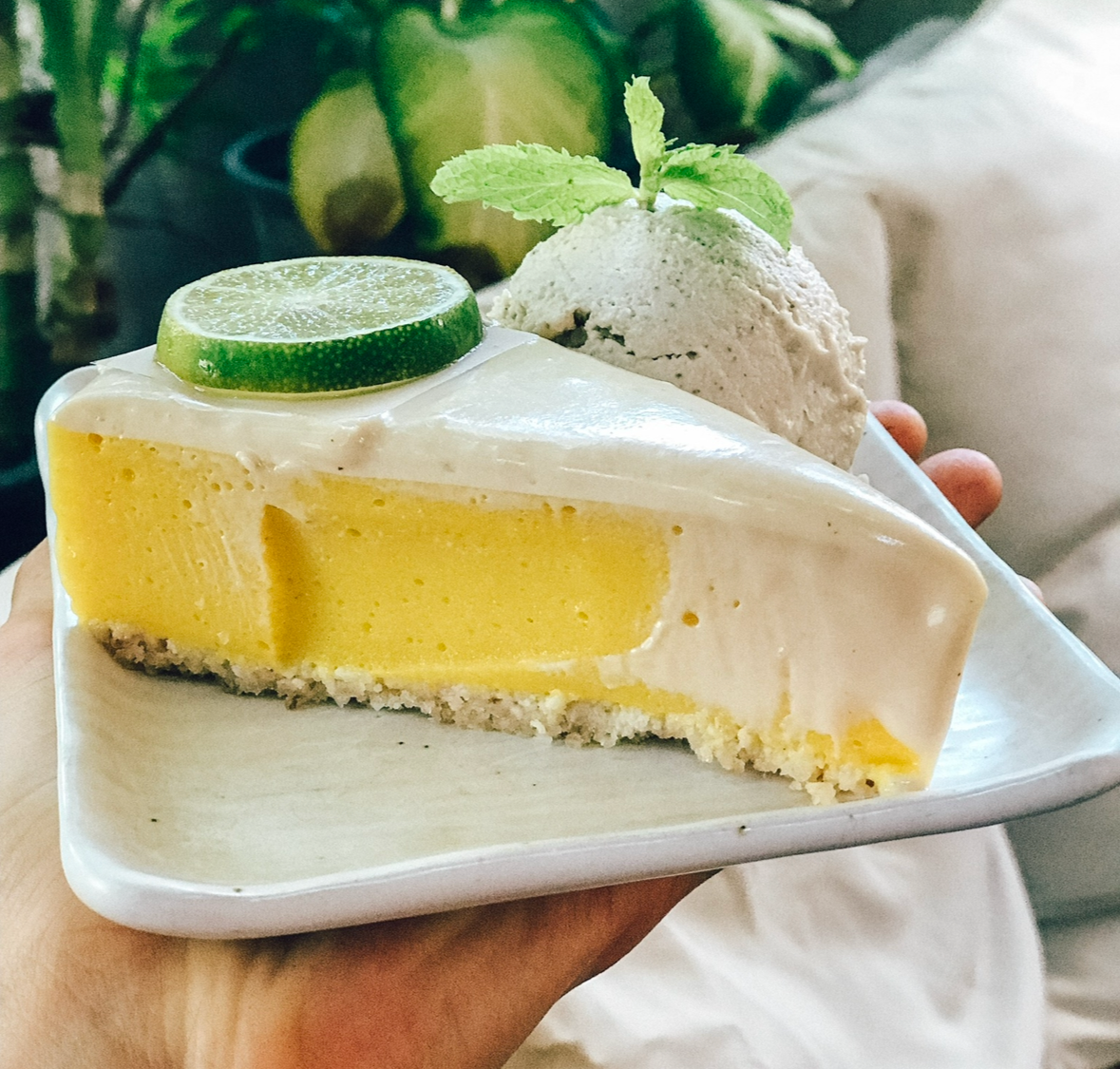
Inspired by a small raw food restaurant in South East Asia— a zingy, happy combination of fresh citrus, turmeric, and light cashew cream on a soft macadamia-coconut crust, finished with a thick layer of whipped coconut cream and lemon zest.

Season: Late spring through summer

Cuisine: Raw · Plant-based · Refined-sugar-free · Grain-free · Tropical-inspired

Yield: One 9-inch round pie (serves 8–10)

Active: 35 min Total: 4 hours, including setting time

Best eaten: Late morning or early afternoon, slightly chilled

A note from the kitchen

When I was raw vegan, one of the rituals I developed in my travels was seeking out the best raw vegan restaurants in whatever city I landed in. I was the person Googling "raw plant-based restaurants Chiang Mai," "raw food Bali," "raw vegan Auckland" the moment I cleared customs.

Some of the most extraordinary desserts I have ever eaten happen to be raw vegan — and many of them, I encountered in Southeast Asia. There's also something quietly genius about how raw vegan desserts come together: aside from the setting time, the actual labor is simple. If you have a decent food processor, you're set.

One of my favorites was a lemon coconut cream pie I had at a small restaurant in Southeast Asia. Bright, zingy, alive with citrus and turmeric, layered with the lightest cashew cream on a soft macadamia coconut crust. So many of my travels have shaped my understanding of food, health, cultural cuisines, and ancestral ways of living — inspiring my own kitchen experiments for years afterward.

While I no longer pigeon-hole myself into the camp of strict raw food enthusiast, I still love making delicious, healthy desserts — many of them raw or no-bake.

This recipe uses a small amount of turmeric, just enough to deepen the yellow color and add the subtle warmth that turmeric brings to anything citrus-forward. The coconut cream layer on top is light, almost cloud-like, dotted with lemon zest. Together they produce a dessert that tastes like the tropics: bright, happy, restorative, and deeply nourishing.

I'm no longer raw vegan, but recipes like this one are why I'll always be grateful for that period. They taught me what real food could become when treated with care and creativity. This pie is a small thank-you to my South East Asian travels, and to the version of me who hunted for raw vegan restaurants in every city she traveled to. — Anna aka Food Marshall

Ingredients

For the crust:

  • 1½ cups raw macadamia nuts

  • 1 cup unsweetened desiccated coconut (finely shredded, not flakes)

  • 8 Medjool dates, pitted

  • 2 tbsp coconut sugar

  • 1 tbsp coconut oil, melted

  • 1 tsp pure vanilla extract

  • ½ tsp lemon zest

  • Pinch sea salt

For the lemon turmeric cashew cream filling:

  • 2.5 cups raw cashews, soaked in filtered water for 4–8 hours, then rinsed and drained

  • ½ cup full-fat coconut cream (use the thick cream from the top of a chilled can, make sure no stabilizers such as guar gum are added)

  • ½ cup fresh lemon juice (about 4–5 lemons) — or use a mix of lemon and lime for added brightness

  • Zest of 2 organic lemons

  • ½ cup pure maple syrup (more or less to taste depending on lemon tartness)

  • ⅓ cup coconut oil, melted

  • 1 tsp ground turmeric (or 1 inch fresh turmeric root, peeled and grated)

  • ½ tsp pure vanilla extract

  • Pinch sea salt

  • Pinch ground black pepper (optional — increases turmeric absorption; flavor is undetectable at this dose)

For the whipped coconut cream topping:

  • 2 (13.5 oz) cans full-fat coconut milk or coconut cream, chilled overnight

  • 2 tbsp pure maple syrup (or 1 tbsp raw honey)

  • ½ tsp pure vanilla extract (or seeds from ¼ vanilla bean)

  • Pinch sea salt

To finish:

  • Zest of 1 organic lemon (reserved for topping)

  • A few thin lemon slices or curls of lemon zest

  • Optional: edible flowers for spring/summer presentation — pansy, violet, calendula, or chamomile

  • Optional: a sprinkle of unsweetened toasted coconut flakes

  • Optional: a few fresh mint leaves

A Note on Substitutions

  • For lime instead of lemon: Substitute fresh lime juice 1:1, and use lime zest instead of lemon zest. The result is a slightly more tropical, slightly more herbaceous version, where the citrus was likely a lime variety from Southeast Asia.

  • For a lemon-lime hybrid: Use ¼ cup lemon juice + ¼ cup lime juice for the filling. Best of both worlds.

  • For nut-free: Replace macadamias in the crust with sunflower seeds and shredded coconut. Replace cashews in the filling with soaked sunflower seeds — the texture will be slightly different but works.

  • For deeper turmeric color: Use fresh turmeric root (1-inch piece, peeled and grated). The color will be more golden and the flavor slightly more peppery.

  • For a ginger + cardamom variation: 2 tsp freshly grated ginger (or up to 1 tbsp, depending on your love for ginger) + ½-1 tsp cardamom — turmeric, ginger, and cardamom are a classic warming Ayurvedic trio, and ginger naturally pairs with citrus.

Method

1. Soak the cashews and chill the coconut cream.

Place 2 cups raw cashews in a bowl, cover with filtered water, and soak 4–8 hours (or overnight in the refrigerator). Drain and rinse before using.

Place 2 cans of full-fat coconut milk in the refrigerator overnight (or at minimum 8 hours). This is critical — the cream needs to fully separate from the water for the whipped topping to work.

2. Make the crust.

Line a 9-inch round springform pan or tart pan with a removable bottom with parchment paper on the base.

In a food processor, pulse the macadamia nuts and desiccated coconut until you have a coarse crumb texture — keep some larger pieces for textural variation. Add the dates, coconut sugar, coconut oil, vanilla, lemon zest, and salt. Process until the mixture sticks together when pressed between your fingers — add 1–2 tsp water if needed.

Press the crust evenly into the bottom of the pan, working it slightly up the sides for a structural lip. Compact firmly with the back of a spatula or the bottom of a flat glass. Place in the freezer while you make the filling.

3. Make the lemon turmeric cashew cream filling.

In a high-speed blender, combine the soaked and rinsed cashews, coconut cream, lemon juice, lemon zest, maple syrup, turmeric, vanilla, and salt. Blend on high until completely smooth and creamy — at least 2–3 minutes, scraping down the sides as needed. The texture should be silky, glossy, and a vibrant golden-yellow.

Add the melted coconut oil and blend another 30 seconds until fully incorporated.

Taste and adjust: The filling should be assertively tart with bright citrus brightness. If too tart, add 1–2 more tbsp maple syrup. If not bright enough, add 1–2 more tbsp lemon juice. Don't be timid with the lemon — the coconut cream layer on top will balance it.

4. Pour the filling.

Pour the cashew cream into the chilled crust and smooth into an even layer with an offset spatula. Tap the pan gently against the counter to release any air pockets. Refrigerate for at least 3 hours (or freeze 1 hour) until completely set and firm to the touch.

5. Whip the coconut cream topping.

Just before serving, remove the chilled cans of coconut milk from the refrigerator. Carefully open and scoop only the thick cream from the top into a chilled mixing bowl, leaving the watery liquid behind (save it for smoothies).

Add the maple syrup, vanilla, and salt. Whip with a hand mixer or stand mixer on high for 2–3 minutes until light and fluffy with soft peaks — like whipped dairy cream.

6. Top the pie.

Once the lemon filling is fully set, spread or dollop the whipped coconut cream evenly over the top. You can smooth it into a clean layer with an offset spatula for a polished look, or leave it in soft cloud-like dollops for a more rustic, abundant feel.

7. Finish and serve.

Sprinkle the reserved lemon zest generously over the coconut cream — the bright yellow flecks against the white cream are visually stunning and signal the citrus dimension immediately.

Add thin lemon slices arranged in a circular pattern, or curls of lemon zest, or a scattering of edible flowers (pansy, violet, calendula, chamomile) for a spring/summer presentation. Optional toasted coconut flakes around the edges add textural contrast. A few fresh mint leaves complete the look.

Slice with a sharp knife dipped in hot water and wiped between cuts. Serve cool but not frozen — the texture is at its best when slightly soft, like a frozen mousse just barely thawed.

Nourishment Notes

This is one of the most genuinely restorative desserts in the raw kitchen. The lemon juice delivers a serious dose of vitamin C — meaningfully supporting collagen synthesis, iron absorption, and immune function. Lemon and lime are also among the most alkalizing fruits in the diet despite their acidic taste — they support liver phase II detoxification and bile production. The fresh zest contains d-limonene, a phytochemical concentrated in citrus peel oils with documented effects on liver enzyme activity and digestive support.

Turmeric is the unsung hero of this pie. Curcumin (the bright yellow pigment in turmeric) is one of the most studied anti-inflammatory compounds in nutritional medicine, with documented effects on joint health, brain function, and cellular detoxification pathways.

Side-Note: a small pinch of black pepper added to the filling can activate curcumin: piperine (the active compound in black pepper) increases curcumin bioavailability by roughly 2,000%. Without the pepper, most of the curcumin passes through undigested. Indian Ayurvedic tradition has known this for thousands of years. Citrus + turmeric + black pepper is one of the most elegant culinary trios. A true pinch of black peper will not change the flavor, but you don't have to use pepper to get the benefit — fresh ginger does similar work, and the recipe is genuinely fine without either. Trust your gut on this one. If the pepper feels weird in a citrus dessert, leave it out.

Cashews and macadamias deliver substantial mineral content. Cashews contribute magnesium, copper, manganese, zinc, and complete plant protein. Macadamia nuts — native to tropical and subtropical climates — are unusually rich in monounsaturated fats (the same fat profile as olive oil) along with palmitoleic acid, a fatty acid associated with metabolic flexibility and skin barrier function. Macadamias also carry the highest mineral density among common nuts, with significant manganese, thiamine, and calcium.

Coconut cream and coconut oil contribute medium-chain triglycerides (MCTs) — fats the body uses efficiently for energy without the spike-and-crash pattern of refined carbohydrates. The lauric acid in coconut has documented antimicrobial properties, particularly against candida and various viruses. The fat structure of the cream filling and topping anchors the natural sugars from dates and maple syrup, producing a dessert that genuinely satisfies and delivers steady energy without the conventional crash.

As a circadian and seasonal food, this is late-morning or early-afternoon eating during the warm months. The bright citrus and tropical inspiration make this a dessert that fits naturally into spring brunches, summer afternoons, or the kind of late-morning gathering where a richer dessert would feel heavy. Make this for a Mother's Day brunch, a summer birthday, a poolside afternoon, or any warm-weather gathering that wants something celebratory without the weight of a richer cold-month dessert.

Sourcing

Lemons and limes: Local citrus from a regenerative farm during peak season. Frog Hollow Farm ships organic lemons nationwide. Friend's Ranches in Ojai, California for exceptional Meyer lemons (sweeter, more aromatic). For limes, look to local farmers' market sources. Avoid waxed conventional lemons — the wax interferes with zesting and contains residues you don't want on the dessert. If only conventional lemons are available, scrub thoroughly with a little baking soda and warm water before zesting.

Raw macadamia nuts: Hamakua Macadamia Nut Company (Hawaii, regenerative), Kapua Orchards (Hawaii, single-origin), Ho Farms (Hawaii). Hawaiian macadamia is genuinely better than commercial Mauna Loa supermarket macadamias — smaller, more flavorful, less processed. MacFarms (Hawaii) ships nationwide. Raw only — never roasted or salted for this recipe.

Raw cashews: Big Tree Farms organic, Anthony's Goods raw organic, or Terrasoul Superfoods. Look for whole, unbroken cashews. Raw only.

Desiccated coconut: Let's Do Organic unsweetened desiccated coconut, Big Tree Farms organic, or Anthony's Goods organic. Look for finely shredded (not flakes — desiccated is ground much finer for the proper crust texture). Unsweetened only.

Coconut cream / coconut milk: Native Forest Organic Simple is the gold standard — full-fat, in BPA-free cans, no gums or thickeners. Aroy-D is an excellent alternative in cartons (no gums, just coconut and water). For the whipped topping specifically, look for cans with the highest fat content (at least 22% fat) — the thicker the cream layer, the better the whipped topping. Avoid lite coconut milk and brands with guar gum or carrageenan.

Coconut oil: Nutiva organic virgin, Dr. Bronner's fair-trade organic, or Garden of Life raw extra-virgin. Cold-pressed, unrefined.

Coconut sugar: Big Tree Farms, Madhava, or Wholesome organic.

Medjool dates: Joolies (organic California), Natural Delights, or local farmers' market sources.

Maple syrup: Grade A dark or amber from a Northeastern producer — Crown Maple, Coombs Family Farms, or local farmers' market sources.

Raw honey: Local apiarist whenever possible. Really Raw Honey, Bee Raw, or Savannah Bee Company for shipped raw honey.

Turmeric: Fresh whole root from a local farmers' market or Asian grocery store is genuinely best — peel and grate just before using. For ground, Diaspora Co. Pragati turmeric is the gold standard (single-origin from regenerative farms in India, with curcumin content significantly higher than commercial turmeric). Burlap & Barrel Sun-Dried Turmeric is also exceptional. Avoid commercial supermarket turmeric — it's typically irradiated and old.

Black pepper: Burlap & Barrel Tellicherry pepper from Kerala (India) for the highest piperine content. Freshly ground from whole peppercorns is dramatically more potent than pre-ground.

Vanilla:Heilala Vanilla for whole beans, Singing Dog Vanilla for organic extract, or Nielsen-Massey for premium pure vanilla.

Edible flowers: Local farmers' market or Marx Foods for shipped edible flowers. Avoid grocery store decorative flowers — they may have been sprayed with pesticides not approved for food contact. Common safe edible flowers: pansy, violet, calendula, chamomile, nasturtium, rose petal, lavender.

Storage

Refrigerated up to 4 days, lightly covered with parchment to allow air circulation. The whipped coconut cream topping is at its visual peak within 24 hours — slightly less photogenic on day 3 but still delicious. The lemon filling actually improves after 24 hours as the citrus and turmeric flavors marry.

The lemon filling base (without the whipped topping) freezes well up to 1 month. To freeze for later assembly: complete through step 4, freeze tightly wrapped, then thaw 4 hours in the refrigerator before adding the whipped coconut cream and finishing toppings fresh.

The whipped coconut cream is best made and used within 24 hours. It will hold its shape in the refrigerator for up to 3 days, but the texture is at its peak the day it's whipped.

Pairs Well With

For the table: A pot of fresh-brewed loose-leaf tea — peppermint, chamomile, jasmine green, or a tropical herbal blend. A glass of fresh-pressed lemonade (just lemon, water, a touch of raw honey) or coconut water for a casual brunch presentation. For adults, a small pour of crisp white wine (Sauvignon Blanc, Albariño, or a dry Riesling) is a lovely pairing — the wine's acidity echoes the lemon while the cool temperature suits the mood. A glass of cold pressed coconut milk for children.

For the gathering: A platter of additional fresh fruit alongside the pie — sliced mango, papaya, pineapple, dragon fruit, kiwi. A bowl of fresh berries (strawberries, raspberries, blackberries) for color contrast. A pot of jasmine rice or coconut rice if continuing a Southeast Asian-inspired theme.

For the meal context: This is the perfect spring or summer dessert. It pairs beautifully after a light Mediterranean meal — grilled fish with herbs, a Greek salad, summer vegetable crudités. For a Southeast Asian-inspired dinner: pair with green papaya salad, summer rolls, a coconut-curry vegetable dish. For a brunch: alongside a frittata, fresh fruit salad, and herbal tea. The bright citrus notes wake up the palate after a meal — making this a particularly good warm-weather dessert that doesn't feel heavy.

Why This Pie

Conventional lemon meringue pie is built on white flour, refined sugar, eggs, butter, cornstarch, and a meringue made from refined sugar and egg whites. Even a single slice delivers a sugar load that triggers the classic spike-and-crash pattern. The filling itself is typically yellow from artificial food coloring — the actual lemon content is minimal.

This pie is is the same architecture, built from real ingredients. Macadamia nuts and desiccated coconut instead of refined wheat flour. Maple syrup and dates instead of refined sugar. Real lemon — fresh-pressed juice and zest, in abundance. Real turmeric for the golden color and the deep anti-inflammatory benefit. Whipped coconut cream instead of meringue. Edible flowers and lemon zest instead of artificial garnish.

A great raw dessert isn't a poor substitute for a conventional dessert. It's its own thing entirely — bright where conventional desserts are heavy, alive where conventional desserts are flat, restorative where conventional desserts are depleting. A genuinely great raw vegan dessert can change how you think about food.

Previous
Previous

Almond-Buckwheat, Raspberry-Rose Honey Cake

Next
Next

Brazil Nut Mascarpone Cheesecake with Cinnamon Apple Butter & Raw Cacao Drizzle