Roasted Cauliflower Two Ways, with Chermoula
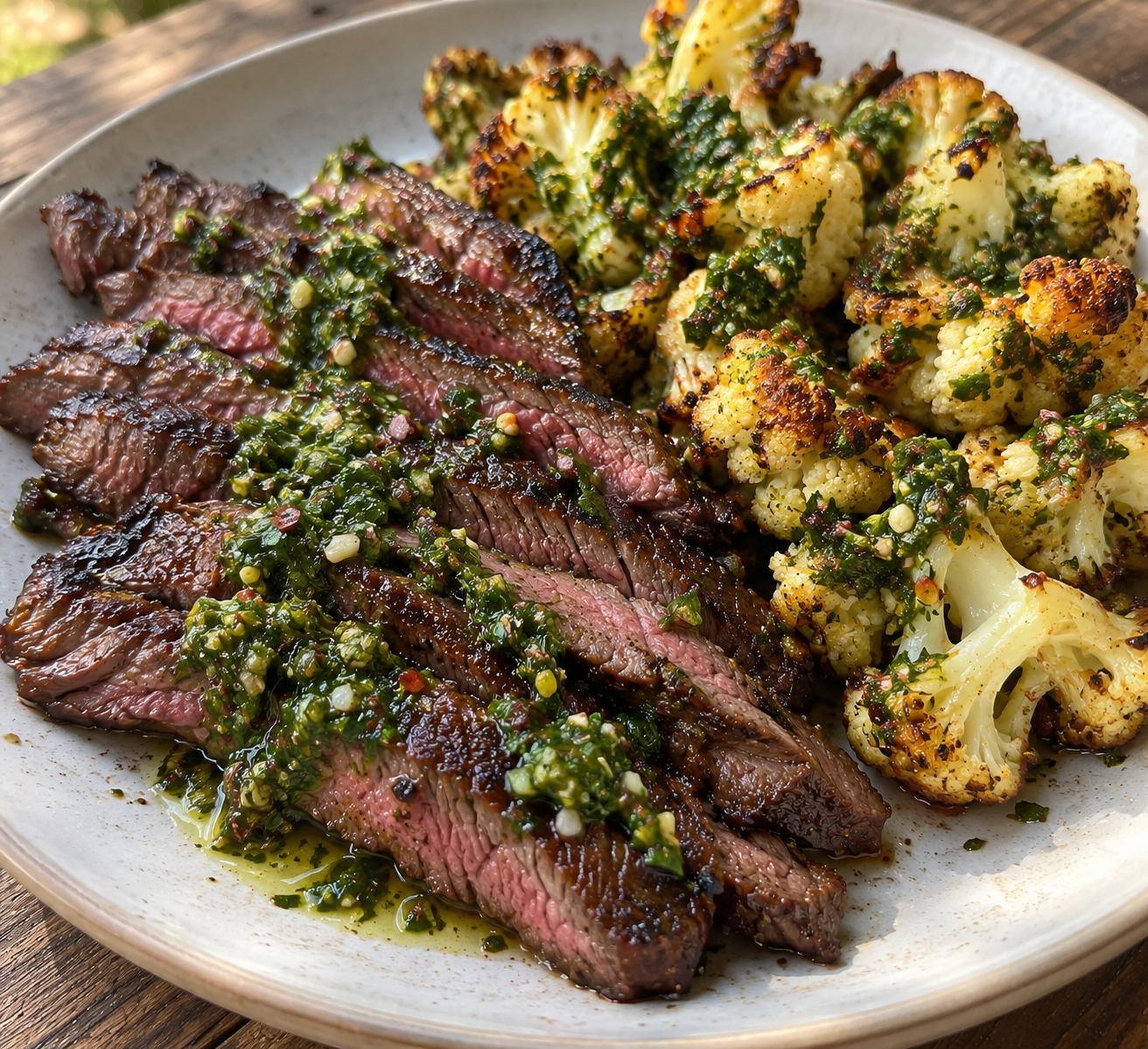
The Moroccan-inspired showpiece: deeply caramelized cauliflower dressed with a vibrant chermoula, served two ways. Version 1 is topped with a crunchy pistachio-parsley crumble, and Version 2 sits on a glossy smoked paprika tomato butter.
Yield: Version 1 serves 12; Version 2 serves 6 · Active: 25 min · Total: 55 min · Year-round (cauliflower is at its best in North America from fall through spring, and the tomato butter in late summer) · Best eaten: midday or early evening
There are two ways to serve it.
Version 1 layers the chermoula with a crunchy pistachio-parsley crumble, for color and texture: the lighter, platter-style version.
Version 2 sets the chermoula-dressed cauliflower over a roasted tomato butter, for a richer plate in late summer and fall. Both share the same cauliflower and chermoula; the difference is what surrounds them.
The Roasted Cauliflower
The same for both versions.
2–3 large heads cauliflower (a mix of white, purple, and romanesco, if you can find them), cut into florets (or 1 large head, for Version 2)
3 tbsp extra virgin olive oil (or 2 tbsp for 1 head)
Baja Gold sea salt and cracked black pepper
Heat the oven to 425°F. Toss the florets with the olive oil, salt, and pepper, and spread them on parchment-lined sheet pans without crowding (use two pans, if needed). Roast 30–35 minutes, tossing once halfway, until the edges are deep golden and the centers are tender.
Chop and wait: Cut the cauliflower 30–40 minutes before roasting. It gives the enzyme that creates sulforaphane time to work before the oven’s heat slows it down.
The Chermoula
The shared sauce for both versions.
1 cup packed fresh parsley
1 cup packed fresh cilantro
Optional: ½ cup packed fresh mint
3 garlic cloves
1 tsp cumin seeds, lightly toasted and freshly ground
1 tsp sweet or smoked paprika (Pimentón de la Vera is the gold standard)
Optional: ¼ tsp mustard powder
½ cup extra virgin olive oil
2 tbsp fresh lemon juice
Zest of 1 lemon
½ tsp Baja Gold sea salt and black pepper
Pulse everything in a food processor until vibrant and rough-textured, not a smooth paste. Taste, and adjust the salt and lemon. It keeps refrigerated up to 4 days.
Version 1: With Pistachio-Parsley Crumble
Lighter and brighter, for a platter. Year-round.
Pistachio-parsley crumble
1 cup shelled pistachios
½ cup packed fresh parsley
Zest of 1 lemon
Pinch of Baja Gold sea salt
Pulse the pistachios, parsley, lemon zest, and salt in short bursts, until coarsely chopped. Stop before it turns into a paste; you want texture. Arrange the roasted cauliflower on a wide platter, spoon the chermoula generously over it (let it pool), and scatter the pistachio crumble over the top. Serves 12.
Version 2: With Smoked Paprika Tomato Butter
Richer, for late summer and fall.
Smoked paprika tomato butter
2 cups cherry tomatoes
4 garlic cloves, smashed
2 tbsp extra virgin olive oil
4 tbsp grass-fed butter
1 tsp smoked paprika
Juice of ½ lemon
Baja Gold sea salt and black pepper
Roast the cherry tomatoes and garlic with the olive oil, salt, and pepper at 425°F for 20–25 minutes, alongside the cauliflower, until burst and jammy. Move them to a bowl while hot, and stir in the butter, smoked paprika, and lemon juice; the heat melts the butter into a glossy sauce. Spread the tomato butter over a serving platter, pile the roasted cauliflower on top, and drizzle generously with chermoula. Serve the extra chermoula alongside. Serves 6.
Ways to Make It Your Own
Roast it whole, for a showstopper: Trim the base so it sits flat, cut a deep cross into the stem, and rub it all over with olive oil, salt, and spices. Roast at 425°F for 60–75 minutes, until tender all the way through, then spoon the chermoula over it, and carve it at the table.
Drizzle with tahini sauce, for a creamy counterpoint to the bright herbs.
Scatter with pomegranate arils, for tart sweetness and jewel-like color.
Stir finely minced preserved lemon into the chermoula, for a classic Moroccan touch.
Dust with sumac, for a bright, tart finish.
Add roasted chickpeas, to turn it into a hearty vegetarian main.
Storage
The chermoula keeps refrigerated up to 4 days, the pistachio crumble up to 2 days, and the tomato butter up to 4 days. The roasted cauliflower keeps up to 3 days. Assemble both versions within 2 hours of serving.
Nourishment Notes
Cauliflower belongs to the brassica family, along with broccoli, kale, cabbage, and Brussels sprouts. Its glucosinolates turn into sulforaphane when an enzyme called myrosinase goes to work, as the cauliflower is cut and chewed. High-heat roasting slows that enzyme down, so cutting the cauliflower ahead (and a pinch of mustard powder in the chermoula, since mustard seed contains the same enzyme) helps you get more of it. Sulforaphane is one of the most studied plant compounds there is: it activates the Nrf2 pathway, which supports the body’s own antioxidant defenses and detoxification. Cauliflower also brings vitamin C, vitamin K, folate, and choline.
The chermoula brings fresh herbs, garlic, and spices. Parsley is one of the richest food sources of vitamin K, with apigenin and vitamin C. Cilantro brings vitamin K and aromatic compounds. Garlic brings allicin, especially when it’s raw, as it is here. Cumin and paprika bring warming aromatics and carotenoids, traditionally used to support digestion. And extra virgin olive oil brings oleic acid and oleocanthal, a polyphenol with anti-inflammatory effects similar to ibuprofen’s.
Pistachios (Version 1) have the most lutein and zeaxanthin of any nut. These yellow carotenoids collect in the macula of the eye, where they help filter blue light. Pistachios also bring vitamin B6, copper, and potassium.
The tomato butter (Version 2) brings lycopene from the roasted tomatoes, the carotenoid studied for heart health, which becomes much easier to absorb when tomatoes are cooked and paired with fat. The smoked paprika adds its own carotenoids, and grass-fed butter brings vitamins A, D, E, and K2.
As a circadian food, both versions are best at midday or in the early evening, alongside a good protein: roasted lamb, Moroccan-spiced chicken, grilled fish, or Persian jeweled rice. The chermoula is the thread, so make extra, and use it on eggs, bowls, and roasted vegetables through the week.
For your cycle: The cauliflower’s glucosinolates support estrogen metabolism, which makes this especially supportive in the follicular and luteal phases.
Sourcing
Cauliflower — organic, from a farmers’ market (white, purple, orange, and romanesco are all beautiful), at its best from fall through spring
Parsley, cilantro, mint, garlic, and lemons — organic, from a farmers’ market or your windowsill
Cherry tomatoes — organic heirloom varieties, at their best from July through September
Pistachios — organic, Sicilian Bronte pistachios (Gustiamo) or California pistachios (Santa Barbara Pistachio Company or Fiddyment Farms)
Cumin seeds, smoked paprika, mustard powder, and sumac — organic and non-irradiated (Pimentón de la Vera DOP, like La Chinata)
Preserved lemons (optional) — homemade, or organic, with just lemons and salt
Tahini (optional) — organic and stone-ground, made from just sesame
Grass-fed butter — organic, cultured butter from 100% grass-fed cows
Extra virgin olive oil — organic, single-estate, harvest-dated, in dark glass
Salt — Baja Gold sea salt; Maldon for finishing
— Anna aka Food Marshall