Tuna Ceviche: Japanese-Latin Fusion
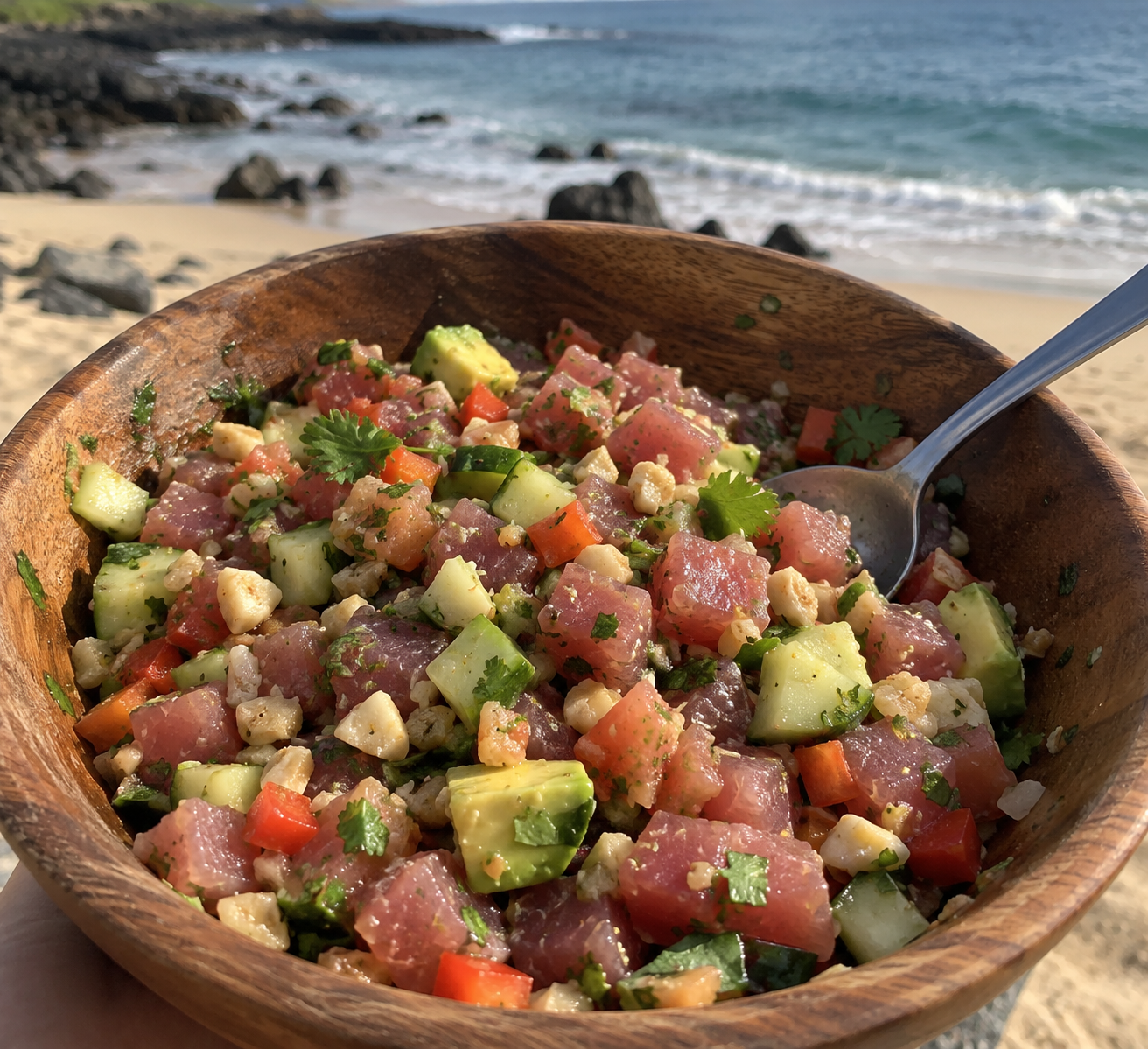
Raw tuna at its freshest, with two paths into two hemispheres: Peruvian Nikkei, or Mexican.
Yield: Serves 4 (or 6 as a small plate) · Active: 20 min · Total: 35 min · Best in North America in summer and early fall · Best eaten: midday or early evening, the day it’s made
A note on food safety: Citrus juice doesn’t kill bacteria the way heat does. In ceviche, the acid firms the surface of the raw fish, which is beautiful and traditional, but it means the dish depends on very fresh, high-quality fish, kept cold and handled carefully. “Sushi-grade” isn’t a regulated label in the U.S., so ask your fishmonger whether the tuna is meant to be eaten raw, and how it was handled. (Tuna is low-risk for parasites, which is part of why it’s so beloved raw.) Make it and eat it the same day.
Ingredients
Ceviche
1 lb sushi-grade yellowfin tuna (ahi), pole- or troll-caught
3 tbsp coconut aminos
3 tbsp extra virgin olive oil
3 tbsp fresh lemon or lime juice (or a mix)
Zest of 1 lemon or lime
½ tsp Baja Gold sea salt and ¼ tsp freshly ground black pepper
2 tbsp fresh cilantro, finely chopped (tender stems included)
2 tbsp fresh mint, finely chopped
1 tbsp white sesame seeds, lightly toasted
Optional additions (choose any or all)
1 tsp toasted sesame oil, for a deeper Japanese note
1 tsp fresh ginger, finely grated
¼ cup macadamia nuts or peanuts, chopped
1 small ripe avocado, diced
¼ small red onion, thinly sliced into rings
½ cup ripe mango (Ataulfo, if you can find it), diced
1 small jalapeño, thinly sliced (seeded, for less heat)
Mexican variation
Use 3 tbsp fresh lime juice plus 2 tbsp fresh orange juice in place of the lemon juice
Add 1 Roma tomato (seeded and diced), ½ English cucumber (diced), ¼ cup diced mango, ¼ small red onion (finely diced), and 1 small jalapeño (seeded and minced)
Leave out the coconut aminos and sesame, and add a pinch of smoked paprika, for depth
To serve: fresh cilantro sprigs, lime or lemon wedges, flaky sea salt, extra toasted sesame seeds, and, optionally, plantain chips or nixtamalized corn tortilla chips (fried in coconut oil, avocado oil, or tallow), or butter lettuce leaves, for scooping
Method
Prep the fish. Trim any sinew from the tuna. The dark bloodline along one side has a stronger flavor, so trim it for a milder ceviche, or keep it. Cut the tuna into ½-inch cubes. Keep it cold the whole time: if your kitchen is warm, set the bowl of cubed tuna over a bowl of ice while you work.
Make the marinade. Whisk the coconut aminos, olive oil, citrus juice and zest, salt, and pepper in a medium bowl, along with the sesame oil and ginger, if using.
Marinate. Add the tuna, and toss gently to coat, then add the cilantro, mint, and sesame seeds. Refrigerate 10–15 minutes, and no more than 20. The citrus keeps “cooking” the surface of the tuna, so a short marinade leaves the inside rosy and silky, while a long one turns it opaque and firm.
Finish. Just before serving, fold in your choice of avocado, red onion, mango, nuts, and jalapeño. Taste, and add more salt, lime, or ginger, as needed.
For the Mexican variation: Make the lime-orange marinade in place of the coconut aminos marinade, and add all the vegetables (tomato, cucumber, mango, red onion, and jalapeño) with the tuna at once. It’s chunkier and more vegetable-forward than the Nikkei version.
Serve in a shallow bowl or small individual bowls, garnished with cilantro, extra sesame seeds, a pinch of flaky salt, and citrus wedges, with chips or lettuce leaves alongside.
Storage
Ceviche should be eaten the day it’s made. Raw fish isn’t a food for leftovers, so make just what you’ll eat. You can cube the fish and keep it well chilled up to 4 hours before marinating, whisk the marinade the morning of, and chop the herbs up to 2 hours ahead. Don’t marinate the fish more than 20 minutes before serving, or the texture turns too firm.
Nourishment Notes
Tuna brings about 25 grams of complete protein per 4-ounce serving. It’s also one of the best food sources of selenium (a 4-ounce serving has more than a full day’s worth), plus B12, B6, niacin, and some vitamin D and iodine. Yellowfin is a lean tuna, so it has fewer omega-3s than salmon or sardines, but the EPA and DHA it does have are ready for your body to use, unlike the plant omega-3s in walnuts and flax, which the body converts only in small amounts. Eating fish raw preserves its delicate B vitamins, like thiamine, and from Japanese sashimi and Peruvian ceviche to Hawaiian poke and Tahitian poisson cru, coastal cultures around the world have long eaten fresh raw fish.
A note on mercury: Large predatory fish, including tuna, accumulate mercury from the smaller fish they eat. It’s a real concern, especially for pregnant women, nursing mothers, and children, but the risk depends on how much and how often. Yellowfin has less mercury than bluefin, and skipjack less still. Small fish, like sardines, mackerel, and anchovies, have the least mercury and the most omega-3s, so lean on them for everyday eating, and save tuna for an occasional treat. Tuna’s high selenium also binds mercury and may lessen its effects, an area of research that’s still evolving.
Coconut aminos are a soy-free, gluten-free alternative to soy sauce, made from coconut sap aged with sea salt into a slightly sweeter, less salty sauce with savory depth.
Cilantro and mint — vitamin K and aromatic compounds traditionally used to support digestion.
Ginger (if using) — gingerols, well studied for their anti-inflammatory and digestion-supporting effects.
Citrus — vitamin C, flavonoids, and d-limonene, concentrated in the zest (so don’t skip it).
Avocado (if using) — monounsaturated fats, fiber, potassium, and phytosterols, plus a creaminess that doesn’t overpower the fish.
Sesame seeds and oil — calcium, magnesium, zinc, and sesamin, a lignan studied for its antioxidant effects. Sesame has been grown in Asia and Africa for thousands of years.
Mango (if using) — beta-carotene (the source of its golden-orange color), vitamin C, and vitamin E, plus a floral sweetness against the salty, tangy marinade.
As a circadian and seasonal food, this is midday or early-evening eating at its best, when your digestion is strongest. Summer into early fall is its natural season, when you crave cold, bright food, and a citrusy raw fish dish is cooling and hydrating in the heat.
For your cycle: The tuna’s selenium and iodine support thyroid health and a healthy cycle in every phase, and this light, bright dish is especially lovely in the follicular and ovulatory phases. (If you’re pregnant, check with your practitioner about raw fish and tuna.)
Sourcing
Tuna — fresh yellowfin (ahi), pole- or troll-caught, from a trusted fishmonger with high turnover, a Japanese market (like H Mart, Mitsuwa, or Nijiya), or a local fisherman. It should be a deep, even red-pink with a glossy sheen, with no brown or gray patches, no soft or mushy texture, and no fishy smell; fresh tuna smells almost sweet, like the ocean. Skip bluefin, which is overfished and higher in mercury. If in doubt, don’t buy it.
Coconut aminos — organic and soy-free, like Coconut Secret
Toasted sesame oil — organic, in glass, like Eden Foods
Sesame seeds — organic, from a source with good turnover
Limes, lemons, and oranges — organic (you’re using the zest)
Cilantro, mint, ginger, red onion, jalapeños, tomatoes, and cucumbers — organic, from a farmers’ market
Avocados and mangoes — organic and ripe (Ataulfo mangoes are especially sweet)
Macadamias or peanuts (optional) — organic
Chips (optional) — plantain or nixtamalized corn tortilla chips fried in coconut oil, avocado oil, or tallow, with no seed oils
Extra virgin olive oil — organic, single-estate, harvest-dated, in dark glass
Salt — Baja Gold sea salt; Maldon for finishing
— Anna aka Food Marshall