Salmon, Scallop, Shrimp & Mussel Cioppino over Zucchini Noodles
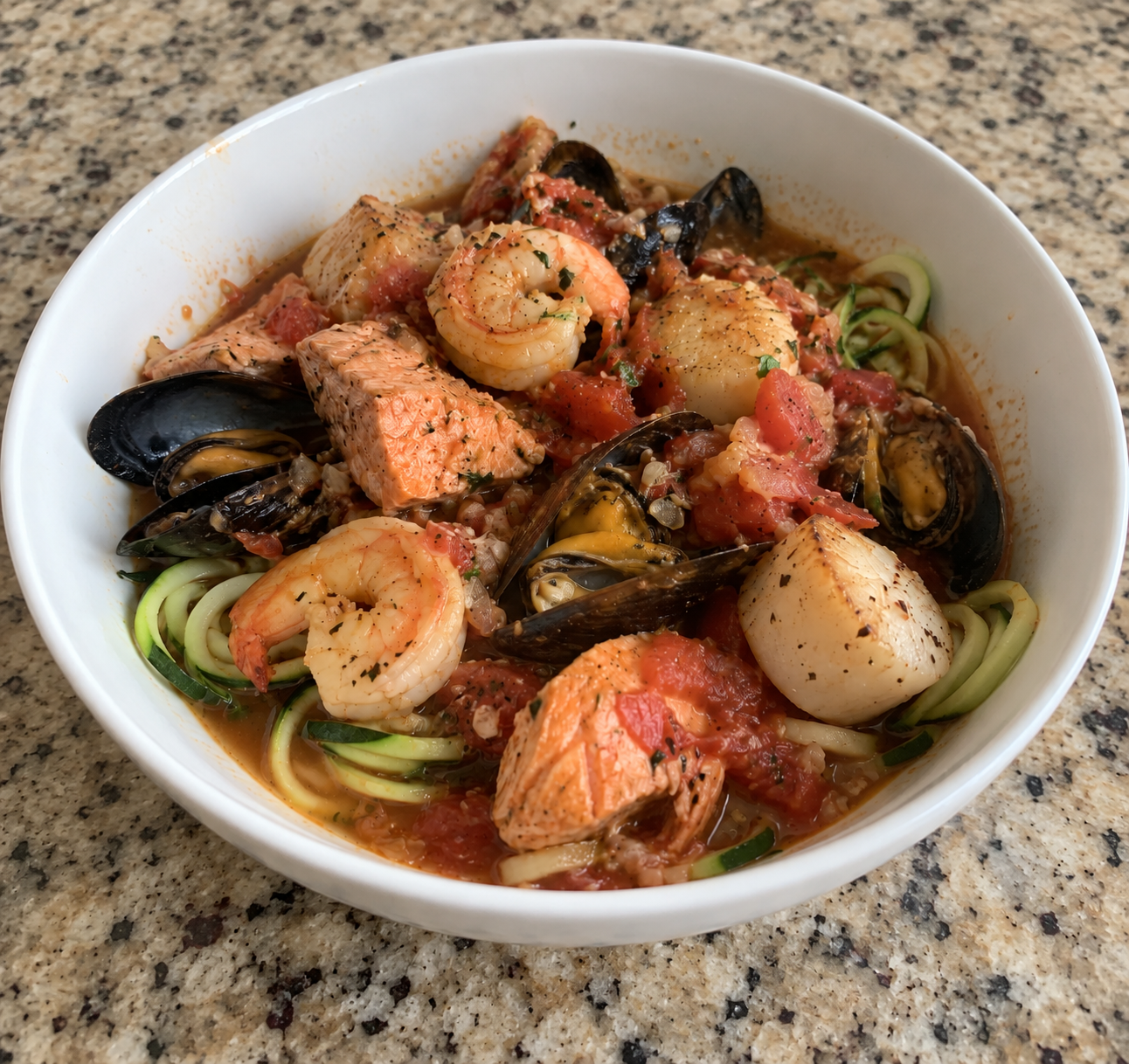
A light, bright seafood stew made with a fresh tomato sauce instead of canned: ripe Roma tomatoes, garlic, and basil pulsed together, simmered with white wine, then filled with mussels, wild salmon, shrimp, and sweet sea scallops. Spooned over tender zucchini noodles and finished with fresh herbs and olive oil, it's a seaside feast in a bowl.
Yield: Serves 4 · Active: 30 min · Total: 40 min · Best in North America from late summer into early fall, when Roma tomatoes and zucchini are at their peak (farmed mussels are available year-round) · Best eaten: early evening
Ingredients
Fresh tomato sauce
4 ripe Roma tomatoes, quartered
2 garlic cloves
A handful of fresh basil (about ½ cup)
2 tbsp extra virgin olive oil
½ tsp Baja Gold sea salt
Cioppino
2 tbsp extra virgin olive oil
1 shallot, thinly sliced
2 garlic cloves, thinly sliced
Optional: a pinch of red pepper flakes and ½ tsp fennel seed, lightly crushed
½ cup dry white wine
Optional: ½ cup fish stock or bone broth, for a brothier stew
½ lb mussels, scrubbed and debearded
½ lb wild salmon, skin removed, cut into 1½-inch chunks
½ lb large wild shrimp, peeled and deveined
½ lb dry-packed sea scallops, side muscles removed
Baja Gold sea salt and freshly cracked black pepper, to taste
Zucchini noodles
4 medium zucchini, spiralized
1 tbsp extra virgin olive oil
Pinch of Baja Gold sea salt
To finish
Fresh basil and flat-leaf parsley, torn
Your best extra virgin olive oil
Lemon wedges
Method
Make the fresh tomato sauce. Pulse the tomatoes, garlic, basil, olive oil, and salt in a food processor until you have a coarse, chunky sauce. Set it aside.
Check the mussels. Scrub them under cold water and pull off the stringy "beard." Tap any open mussels on the counter; if they don't close, discard them, along with any with cracked shells.
Start the broth. Heat the olive oil in a wide, deep pan over medium heat. Add the shallot, garlic, and optional red pepper flakes and fennel seed, and cook 2-3 minutes, until soft and fragrant but not browned.
Reduce the wine. Pour in the wine and simmer until reduced by half, about 2 minutes.
Simmer the sauce. Add the fresh tomato mixture (and the optional stock) and simmer 10 minutes, until the tomatoes soften and the broth turns a rosy pink.
Cook the mussels. Add the mussels, cover the pan, and cook 3-4 minutes, until they begin to open.
Add the rest of the seafood. Nestle in the salmon, shrimp, and scallops. Cover and simmer very gently 3-5 minutes, just until the salmon flakes, the shrimp are pink, and the scallops are opaque. Don't let it boil hard, or the seafood will toughen. Discard any mussels that stay closed. Season with salt and pepper.
Cook the zucchini noodles. While the seafood simmers, heat the olive oil in a separate skillet over medium-high heat and toss the zucchini noodles 1-2 minutes, just until warmed and barely tender. Season with salt at the very end, so they don't turn watery.
Serve. Divide the zucchini noodles among shallow bowls, then spoon the seafood and rosy tomato-wine broth over the top. Finish with torn basil and parsley, a drizzle of your best olive oil, and a lemon wedge.
Storage
Cioppino is best eaten right away, while the seafood is tender. Leftovers keep refrigerated up to 2 days; rewarm gently over low heat just until warmed through, and remove the mussels from their shells first. Zucchini noodles are best cooked fresh. The fresh tomato sauce keeps refrigerated up to 3 days, so you can make it ahead.
Leftover transformations: Fold leftover seafood and broth into a quick soup with bone broth and greens, or toss leftover seafood into a salad with fresh tomatoes and herbs.
Support for the Female Infradian Rhythm
This bowl supports every phase of your cycle. Wild salmon and mussels bring omega-3s (EPA and DHA), which help calm menstrual inflammation and cramps. Mussels are also an excellent source of heme iron (the body absorbs about 15-35% of heme iron, compared with roughly 2-20% of the iron in plants), plus B12 and zinc, all important for menstrual replenishment. The seafood brings iodine and selenium for thyroid health, and the tomatoes and fresh herbs add vitamin C, which helps your body absorb iron.
Nourishment Notes
Wild salmon — omega-3s (EPA and DHA), vitamin D, selenium, B12, and astaxanthin, the antioxidant behind its rosy color.
Mussels — among the most nutrient-dense foods in the sea, with exceptional B12, heme iron, zinc, selenium, and omega-3s. Farmed mussels are also one of the most sustainable seafood choices you can make, since they filter-feed on plankton and need no added feed.
Sea scallops — lean complete protein, B12, selenium, zinc, and magnesium.
Shrimp — selenium, B12, iodine, and astaxanthin.
Tomatoes — lycopene, vitamin C, and potassium. Simmering them with olive oil makes the lycopene more absorbable.
Garlic and shallot — allicin, quercetin, and organosulfur compounds.
Basil and parsley — eugenol from basil, plus vitamin K, chlorophyll, and apigenin from parsley.
Zucchini — potassium, vitamin C, and a light, grain-free base.
White wine — adds depth and brightness to the broth. Much of its alcohol cooks off as it simmers, though not all of it.
Extra virgin olive oil — oleic acid and polyphenols.
Sourcing
Wild salmon — wild Alaskan sockeye, coho, or king, from Vital Choice or a trusted fishmonger
Sea scallops — dry-packed (never "wet" or treated with STP); hand-harvested diver scallops from Maine in season, or farmed scallops year-round
Shrimp — wild-caught U.S. or Argentine red shrimp, with no added sodium tripolyphosphate
Mussels — farmed, rope-grown mussels from cold, clean waters, such as Prince Edward Island, Maine, or Washington's Penn Cove; they should smell fresh like the ocean
Wild seafood can't be certified organic, so look for sustainable, traceable sources
Roma tomatoes — organic, ripe, and in season from a farmers' market
Dry white wine — organic and dry, low in added sulfites
Fish stock or bone broth (optional) — homemade, or Bonafide Provisions (organic, sold frozen)
Zucchini — organic, firm, and medium-size (big ones are watery)
Shallot and garlic — organic, hardneck garlic
Fresh basil and parsley — organic
Fennel seed and red pepper flakes (optional) — organic and non-irradiated
Lemons — organic
Extra virgin olive oil — organic, single-estate, harvest-dated within the past year, in dark glass
Baja Gold sea salt
— Anna aka Food Marshall