Raw Salty Caramel Cheesecake slices
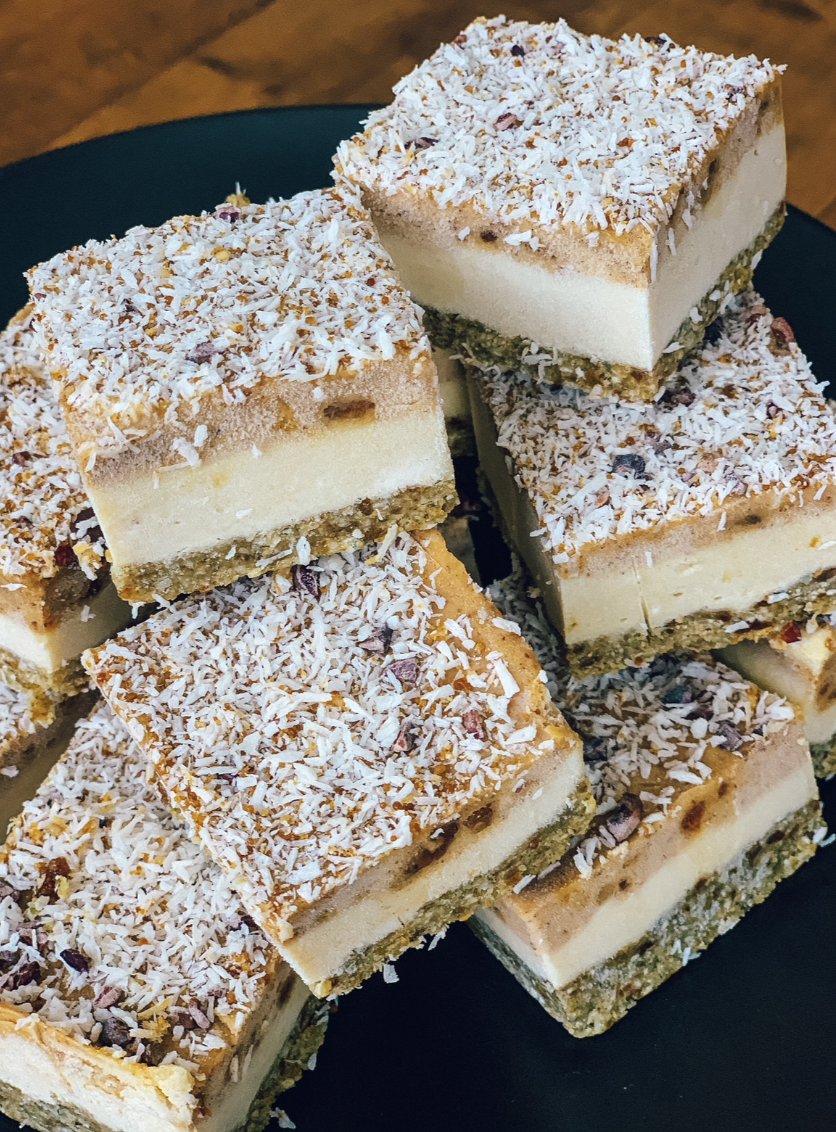
Vanilla and salted caramel cheesecake slices — a raw, refined-sugar-free, grain-free dessert built on the same architecture as many of the raw cheesecakes within the Food Marshall recipe library: nut-and-date crust, cashew-based vanilla cheesecake layer, sticky medjool date caramel, and a finishing dark chocolate drizzle with shredded coconut. Made in a slab, sliced into clean rectangles.
Yield: 16–20 slices (one 9×13 pan) · Active: 1 hr · Total: 6–8 hr (mostly freezing) · Year-round
A note from the kitchen
This is the slab format of a raw caramel cheesecake (easier to portion, easier to serve), but it can also be made in a round springform version. The architecture follows the structural principles of every great raw cheesecake: a deeply flavored nut-and-date crust, a creamy cashew-based vanilla cheesecake that mimics a baked custard, a layer of sticky medjool date caramel that holds the whole thing together, garnished with shredded coconut and a dark chocolate drizzle on top.
The format here is sliced rectangles — about 2×3 inches each — which makes this perfect for catering events, brunch boards, or holiday gatherings. The recipe scales beautifully and freezes for up to 3 months.
The crust is grain-free, refined-sugar-free, and built entirely from nuts, coconut, and medjool dates. Pre-soaking the cashews for the cheesecake layer is essential — at least 4 hours. Skipping this step produces a grainy, separated cheesecake rather than a silky one. The caramel is real medjool date caramel — softened pitted dates blended with almond butter, coconut oil, and a touch of maple syrup or honey. The chocolate drizzle is built from cacao butter and raw cacao powder — the structural foundation of any real raw chocolate.
Ingredients
For the crust (1 large slab base):
1 cup raw cashews
1 cup raw macadamia nuts (or substitute with raw almonds or pecans)
½ cup raw walnuts (or substitute with raw pecans)
1 cup unsweetened shredded coconut (desiccated, not the moist sweetened kind)
10 medjool dates, pitted (soak 15 min in warm water if dry, then drain)
2 tbsp unrefined coconut oil, melted
¼ tsp sea salt
½ tsp Ceylon cinnamon (optional, adds warm depth)
1 tsp pure vanilla extract
For the vanilla cheesecake layer:
3 cups raw cashews, soaked at least 4 hours (preferably overnight) and drained
¾ cup full-fat coconut cream (or raw heavy cream from grass-fed cows)
½ cup raw honey (or pure maple syrup)
½ cup unrefined coconut oil, melted
¼ cup raw cacao butter, melted (optional — adds creaminess and helps the cheesecake set firmer)
2 tbsp fresh lemon juice
2 tsp pure vanilla extract (or 1 vanilla bean, scraped)
¼ tsp sea salt
For the salted caramel layer:
1½ cups medjool dates, pitted and soaked in warm water 30 minutes, then drained
½ cup raw almond butter (or cashew butter)
¼ cup pure maple syrup (Grade A Dark Robust)
¼ cup unrefined coconut oil, melted
1 tsp pure vanilla extract
½ tsp fleur de sel (or coarse sea salt)
1–2 tbsp warm filtered water (as needed to blend)
Optional: 1 tsp mesquite powder (adds a deeper caramel-malt note)
For the chocolate drizzle:
½ cup raw cacao butter (about 4 oz), gently melted
½ cup raw cacao powder
⅓ cup pure maple syrup (or raw honey)
1 tsp pure vanilla extract
¼ tsp sea salt
For finishing:
Fleur de sel for sprinkling
Shredded coconut
Optional: ¼ cup chopped raw pistachios, hazelnuts, or pecans for additional garnish
Optional: edible flowers (rose petals, lavender, pansies) for spring/summer slices
Method
Prepare the pan. Line a 9×13-inch baking dish with parchment paper, leaving overhang on two sides to lift the slab out later. Lightly grease the parchment with a thin film of coconut oil.
Make the crust. In a food processor, pulse the cashews, macadamias, walnuts, and shredded coconut until they form a coarse, sandy meal. Don't over-process into nut butter — you want texture. Add the pitted medjool dates, melted coconut oil, sea salt, optional cinnamon, and vanilla. Pulse until the mixture clumps and holds together when squeezed between your fingers.
Press the crust. Press the crust mixture firmly and evenly across the bottom of the prepared pan. Use a flat-bottomed glass to compact it densely — this is structurally important; a loose crust will crumble when sliced. Freeze 20 minutes while you prepare the next layer.
Make the vanilla cheesecake layer. In a high-speed blender (Vitamix, Blendtec, or similar), combine the drained soaked cashews, raw heavy cream (or coconut cream), raw honey, melted coconut oil, optional cacao butter, lemon juice, vanilla, and sea salt. Blend on high for 2–3 minutes, scraping down the sides as needed, until completely smooth, silky, and warm to the touch.
Pour and set. Pour the cheesecake mixture over the frozen crust. Smooth the top with an offset spatula. Tap the pan gently on the counter a few times to release any air bubbles. Return to the freezer for at least 2 hours, until the surface is firm but the interior is still slightly soft.
Make the salted caramel layer. In a food processor or high-speed blender, blend the soaked drained medjool dates, almond butter, maple syrup, melted coconut oil, vanilla, fleur de sel, and optional mesquite powder until completely smooth and silky. Add warm water 1 tablespoon at a time only if needed to achieve a smooth, spreadable consistency. The caramel should look glossy and pour-able but thick — about the consistency of warm caramel sauce.
Spread the caramel layer. Pour the caramel mixture over the cheesecake layer. Use an offset spatula to spread it evenly across the surface, working from the center outward. Return to the freezer for at least 2 hours, until the caramel layer is firm to the touch.
Make the chocolate drizzle. In a heatproof bowl set over a small saucepan with 1 inch of gently simmering water (a stovetop double boiler — never use a microwave), melt the cacao butter until liquid. Off heat, whisk in the cacao powder, maple syrup, vanilla, and sea salt until completely smooth and glossy. The mixture should be pourable but not watery.
Drizzle the chocolate. Working quickly (the chocolate will firm up fast in cold environments), drizzle the chocolate over the frozen caramel layer using a spoon, fork, or piping bag. Create a dramatic crosshatch or zigzag pattern. Don't aim for full coverage — you want the caramel layer visible underneath.
Finish and final freeze. Sprinkle fleur de sel and optional chopped nuts over the chocolate drizzle while it's still slightly tacky. Return to the freezer for at least 2 more hours (or overnight) to fully set.
Slice and serve. Lift the slab out of the pan using the parchment overhang. Place on a cutting board. Using a sharp knife dipped in hot water and wiped clean between cuts, slice into 16–20 rectangles (4 rows × 4 or 5 columns). Serve directly from the freezer (firm, ice-cream-like) or let stand at room temperature 10–15 minutes for a softer texture.
Variations
White caramel cheesecake variation: Replace the medjool date caramel with a white caramel — blend ½ cup raw almond butter, cashew butter, or macadamia butter, ¼ cup coconut butter, ½ cup pure maple syrup (Grade A Amber/Light for the palest result; Grade A Dark Robust will produce a slightly darker caramel), 2 tsp pure vanilla extract, and ⅛ tsp sea salt until smooth. Slightly sweeter, paler, more delicate.
Snicker's-inspired variation: Add a chopped peanut butter layer between the cheesecake and caramel — blend 1 cup soaked cashews + ½ cup pasture-raised peanut butter + ¼ cup coconut oil + ¼ cup maple syrup + pinch salt. Top the finished slab with crushed raw peanuts (or substitute pecans for a nut-allergy-friendly version).
Pecan variation: Substitute the macadamia nuts in the crust with pecans for a more autumnal, more deeply nutty crust. Beautiful for fall and winter slices.
Brazilian nut variation: Substitute half the cashews in the cheesecake layer with Brazil nuts for selenium density and a slightly more earthy flavor.
Coffee-cacao variation: Add 1 tbsp instant espresso powder (or 1 shot cooled espresso) to the cheesecake layer. Substitute the vanilla in the chocolate drizzle with an additional ½ tsp espresso. Beautiful for a "mocha" version.
Lemon-vanilla variation: Increase the lemon juice in the cheesecake layer to ¼ cup. Add 2 tbsp finely grated lemon zest. Skip the caramel layer entirely and finish with a simple raspberry-chia compote on top.
Berry-swirled variation: Before freezing the cheesecake layer, swirl in 1 cup fresh berries (raspberries, blackberries, blueberries) blended with 2 tbsp raw honey. Skip the caramel layer for a cleaner berry version.
Chocolate-cheesecake variation: Add ½ cup raw cacao powder to the cheesecake layer. The base becomes a rich chocolate cheesecake; the caramel and drizzle remain the same. Beautiful with crushed hazelnuts on top.
Mini slab format: Halve all ingredients and use an 8×8 pan for 9–12 smaller slices. Beautiful for a smaller gathering or for portioning into containers for the week.
Sourcing
Raw cashews:
Raw, unsalted, recently harvested. Should smell sweet and faintly creamy, never rancid or musty.
Organic when possible.
Whole pieces are structurally preferred over broken/split cashews (better texture in the final cheesecake).
From a bulk source you trust — cashews go rancid fast once exposed to air. Stored cool in a glass container.
Raw macadamia nuts:
Raw, unsalted. Should smell faintly nutty and sweet.
From Hawaiian or Australian sources when possible.
Organic when available.
Stored cool in a sealed glass container — macadamias are high in monounsaturated fats and go rancid quickly.
Raw walnuts and pecans:
Raw, unsalted, fresh-tasting.
Recently harvested — both nuts go rancid faster than most other nuts due to their high omega-3 content.
Refrigerator or freezer storage is structurally best.
Unsweetened shredded coconut:
100% coconut — the only ingredient should be coconut.
Desiccated (dried) and unsweetened — not the moist sweetened coconut from baking aisles.
Organic when possible.
Avoid coconut with added sulfites, preservatives, or anti-caking agents.
Medjool dates:
Soft, plump, sticky — not the smaller, drier dates (Deglet Noor are too firm for this recipe).
Pitted at home is structurally cleaner than pre-pitted, which often contains broken pieces.
Organic when possible.
Stored at room temperature for short-term use, refrigerated for longer storage.
Raw cacao butter:
100% cacao butter (no soy lecithin, no emulsifiers, no added fats).
Pure white-yellow color.
Cold-pressed and unrefined.
From ethical, often single-origin sources (Peru, Ecuador, Dominican Republic).
Stored cool in a sealed container.
Raw cacao powder:
Raw or low-temperature processed (under 115°F) — preserves the antioxidants and minerals that conventional cocoa powder loses through heat processing.
100% cacao — the only ingredient should be cacao.
Organic, fair-trade, single-origin when possible.
Raw heavy cream (or full-fat coconut cream):
Raw heavy cream — from cows on pasture year-round when legally available. State-by-state legal availability varies; check realmilk.com.
If unavailable: full-fat coconut cream from a glass jar or BPA-free can. Look for the shortest possible ingredient list — ideally just coconut and water.
Raw honey:
Light, raw honeys for this recipe — orange blossom, acacia, wildflower, or clover.
100% raw honey — should crystallize over time (a sign of structural integrity).
From a small local apiary when possible.
Avoid commercial filtered honey with extended shelf-life.
Pure maple syrup:
Grade A Dark Robust (formerly called 'Grade B') for deeper flavor and the main caramel layer; Grade A Amber/Light for the white caramel variation.
From small-batch producers in Vermont, New Hampshire, Maine, Quebec, or Ontario.
100% maple — the only ingredient should be maple.
Unrefined coconut oil:
100% coconut oil. Cold-pressed, unrefined, organic.
White when solid, clear when liquid.
Smells distinctly coconutty.
In a glass jar.
Raw almond butter (and cashew butter):
100% nuts — the only ingredient should be the nut itself.
Raw or low-temperature processed.
Organic when possible.
Stored in a glass jar.
Sea salt:
Baja Gold mineral sea salt (third-party tested at 29.5–31.5% sodium, harvested from the Sea of Cortez, solar-dried) or any equivalent unrefined mineral-rich sea salt for the cheesecake and caramel layers.
Fleur de sel for finishing — hand-harvested by skimming the delicate top layer of French salt pans. The finishing salt that defines this dessert.
Storage
Freezer: Up to 3 months, well-sealed in a glass container with parchment between layers. The cheesecake slices are best stored frozen — they hold their texture beautifully.
Refrigerator: Up to 1 week, well-sealed. The cheesecake gets slightly softer in the refrigerator (more like a traditional baked cheesecake texture).
Room temperature: Best eaten within 30 minutes once removed from the freezer — the coconut oil softens at room temperature and the structure begins to lose its definition.
To serve: Remove from the freezer 10–15 minutes before serving for the most beautiful texture — slightly firm but creamy, with the caramel layer just yielding to a knife.
To gift: Wrap individual slices in parchment paper and store in a glass container in the freezer. Slip into a small linen bag or cellophane wrap for hostess gifts, holiday boxes, or thank-you presents. Real food gifts that don't look or taste like industrial dessert.
Pairs Well With
For the table: A strong cup of pour-over coffee, an espresso, herbal tea (chamomile, rooibos, lemon balm, peppermint), sparkling water with a slice of lemon, or warm cacao made with raw heavy cream + raw cacao + raw honey.
For a complete dessert course: Serve alongside fresh seasonal fruit — sliced figs in late summer, fresh berries in spring/summer, sliced apples in autumn, citrus segments in winter. The bright fresh fruit balances the richness of the slice beautifully.
For the gathering: These slices are structurally engineered for hospitality. Cut into squares or rectangles, arrange on a serving platter or wooden board with fresh herbs and edible flowers, and serve as the dessert course at a Sunday lunch, brunch, holiday gathering, or birthday celebration. They look as beautiful as anything you'd find in a high-end pastry shop.
For seasonal context: Seasonal finishing touches shift the feeling — fresh figs and rose petals in summer, candied pecans and cinnamon in autumn, citrus zest and pomegranate in winter, edible flowers in spring.
Why These Slices
Real caramel doesn't come from corn syrup and refined white sugar — it comes from medjool dates and pure maple syrup. Real cheesecake doesn't need to be flour-bound or grain-laden — it can be built from soaked cashews, raw cream, and raw honey. Real chocolate doesn't come from candy bars — it's cacao butter and raw cacao and maple syrup, made fresh in your own kitchen. This is what dessert looks like when you remove the industrial shortcuts and rebuild from real ingredients.
— Anna aka Food Marshall