Seaweed Salad with Tahini-Sesame Dressing
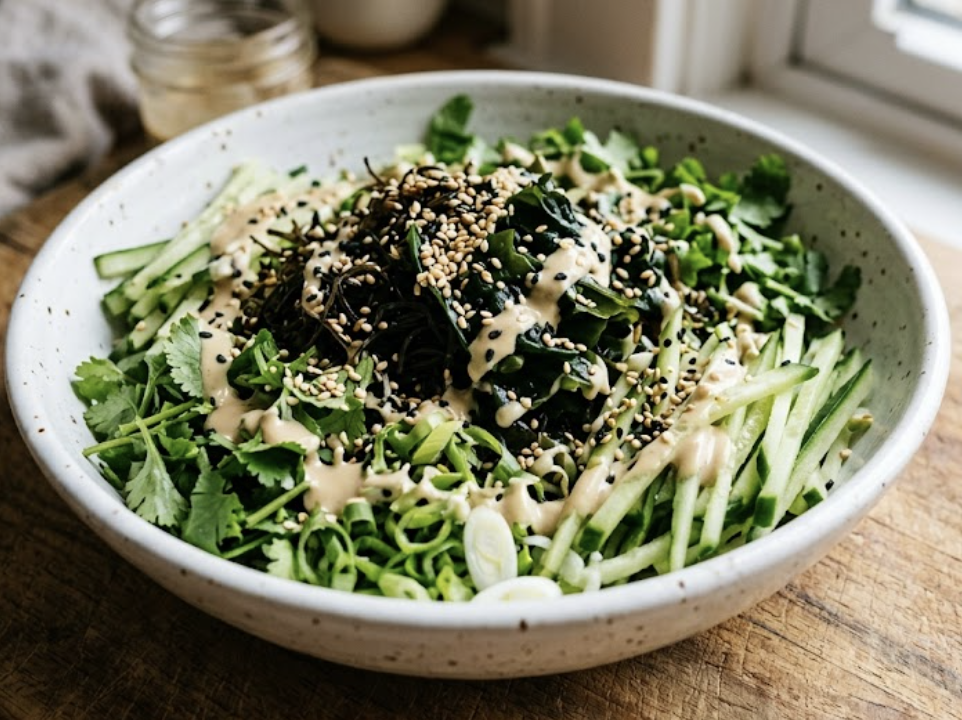
The 10-minute Japanese-inspired side. Significant iodine in a single bowl.
Season: Year-round · spring and summer at peak
Cuisine: Japanese-Inspired Fusion
Yield: Serves 4
Active: 10 min · Total: 25 min
Best eaten: as a starter or alongside grilled fish
Ingredients
¼ cup dried wakame seaweed
¼ cup dried arame seaweed
1 large cucumber, thinly sliced or julienned
4 scallions, thinly sliced
¼ cup fresh cilantro, finely chopped
2 tbsp sesame seeds, toasted
Tahini-Sesame Dressing
3 tbsp raw tahini
2 tbsp coconut aminos
1 tbsp toasted sesame oil
1 tbsp raw apple cider vinegar
1 tsp ume plum vinegar
1 tsp red pepper flakes (or to taste)
¼ tsp sea salt
2–3 tbsp filtered water (to thin)
Method
Soak the wakame and arame in cool water for 5-10 minutes. Strain, rinse, and gently squeeze out excess water. Roughly chop.
Whisk all dressing ingredients in a small bowl, adding water as needed for a pourable consistency.
Combine the rehydrated wakame and arame with cucumber, scallions, cilantro, and sesame seeds in a large bowl.
Pour the dressing over and toss thoroughly.
Serve immediately, or chill 15 minutes for the flavors to meld.
Nourishment Notes
This is a quick mineral and iodine delivery in side-dish form. Wakame is a brown sea vegetable bringing iodine, calcium, magnesium, and the sulfated polysaccharides unique to marine algae — the trace mineral profile that traditional Japanese cooking has built into nearly every meal for centuries. Cucumber delivers structured water, silica, and trace minerals concentrated by its growth in mineral-rich soil. The combination is one of the simpler examples of food-as-medicine in the Japanese kitchen: hydration, minerals, and gentle digestive support in ten minutes.
The dressing is doing meaningful work alongside the vegetables. Tahini contributes calcium, magnesium, copper, and the lignans sesamin and sesamolin — compounds studied for their antioxidant and lipid-supportive effects. Toasted sesame oil and toasted sesame seeds layer in additional sesamin alongside the warm-nutty character that defines the Japanese aesthetic. Ume plum vinegar is a traditional Japanese ferment with a salty-tart character that contributes lactic acid and live cultures supporting gut flora — an ingredient with no good substitute outside the Japanese pantry. Coconut aminos provide fermented umami depth without the soy, gluten, or denatured proteins of conventional shoyu.
As a side dish, this salad pairs naturally with grilled or baked fish (especially wild salmon or mackerel), where the iodine of the seaweed and the omega-3s of the fish reinforce each other across the same meal.
Storage: dressed seaweed salad keeps 1 day refrigerated, though the texture softens. The dressing alone keeps up to 1 week refrigerated — a useful pantry staple for quick salads, roasted vegetables, or grain bowls.
Sourcing:
Dried wakame and arame: Eden Foods (the genuinely high-quality widely-available option — wild-harvested off the coast of Ise, Japan, sun-dried, no additives) or Maine Coast Sea Vegetables (small-batch, sustainably hand-harvested off the Maine coast — particularly worth supporting for North American sourcing). Avoid mass-market wakame and arame which is often dyed green and harvested from polluted coastal waters.
Cucumber from a local farmers' market or backyard garden at peak season — heirloom varieties (Lemon, Armenian, Persian Beit Alpha) carry significantly more flavor than commodity supermarket cucumbers; Persian and Beit Alpha varieties have particularly thin skin and minimal seeds, ideal for this preparation.
Scallions from a local farmers' market or windowsill regrowing (the white root ends regrow in water on a windowsill within a week — one of the easiest "free greens" projects).
Fresh cilantro from a windowsill pot grown at home or a farmers' market herb vendor.
Sesame seeds: small specialty importer like Burlap & Barrel (single-origin, exceptional quality), Diaspora Co. (single-origin from regenerative farms), or Kevala (genuinely small-batch, properly stored to prevent rancidity); avoid bulk-bin sesame seeds which are often rancid by the time they reach the store.
Raw stone-ground tahini: Soom (Israeli small-batch, single-origin Ethiopian sesame) or Seed + Mill (Brooklyn small-batch, single-origin) — both restaurant-quality stone-ground tahini that's dramatically more flavorful than mass-market brands.
Coconut aminos: Coconut Secret (the original small-batch brand) or Big Tree Farms — avoid mass-market versions with added sugars or thickeners.
Toasted sesame oil: Properly toasted sesame oil is dark amber, fragrant, and pressed within months of bottling; rancid sesame oil is a real problem with bulk and discount brands. Recommended brand: Eden Foods (organic, traditionally pressed from organic sesame seeds)
Raw apple cider vinegar: small-batch from a local farmers' market vendor, or Bragg's (one of their genuinely high-quality products) — look for "with the mother" cloudy sediment which contains the live cultures.
Ume plum vinegar: Eden Foods (the genuinely high-quality widely-available option, traditionally fermented with Japanese plums and shiso leaves; no good substitute exists outside the Japanese pantry).
Sea salt: small-batch hand-harvested option like Jacobsen Salt Co. (Oregon) or Maldon flaky sea salt for finishing.