Slow-Roasted Herb-Dijon Chicken with Seasonal Vegetables, Arugula, Goat Cheese, and Rosemary Olive Oil
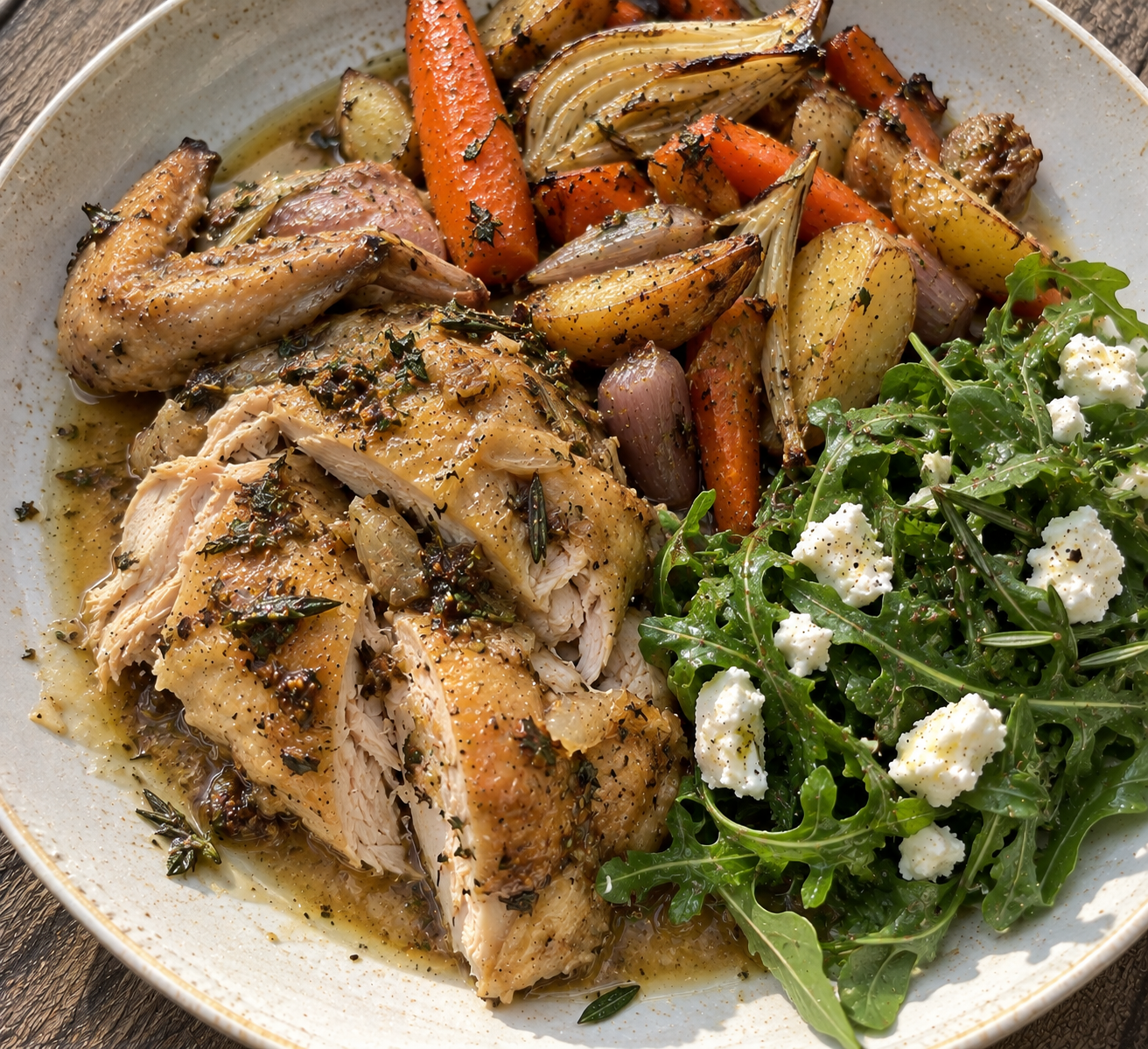
A whole pasture-raised chicken (or turkey breast), rubbed with Dijon, garlic, lemon, and fresh herbs, slow-roasted on a bed of seasonal vegetables until tender and juicy, then crisped at the end. It's served with a peppery arugula salad with goat cheese, shaved fennel, and citrus, all finished with a drizzle of fragrant rosemary olive oil. In winter, the salad gets a sweet mandarin vinaigrette.
Yield: Serves 4–6 · Active: 30 min · Total: 2 hr 15 min (plus an optional 2–24 hour dry brine) · Year-round, with seasonal vegetables and citrus · Best eaten: early evening
About Slow-Roasting
Most home cooks roast chicken at high heat, which works, but the meat can dry out before the inside is done. Roasting low and slow, at 300°F, cooks the meat more gently and evenly, so it stays juicy and tender, and there's a much wider window before it overcooks. A blast of high heat at the end gives you crisp, golden skin, for the best of both worlds. The Dijon adds a gentle warmth and helps the coating cling and caramelize.
Recipe 1: Slow-Roasted Herb-Dijon Chicken with Pan-Roasted Vegetables
Ingredients
Choose your protein
1 whole pasture-raised chicken (3½–4 lb), for a family meal
Or 1 pasture-raised bone-in, skin-on turkey breast (3–4 lb)
Or 6–8 pasture-raised bone-in, skin-on chicken thighs (about 2½ lb), for a weeknight version
Herb-Dijon coating
3 tbsp Dijon mustard
3 tbsp extra virgin olive oil
Optional: 2 tbsp raw honey, to balance the mustard
4 garlic cloves, finely minced
2 sprigs fresh rosemary, leaves finely chopped
6 sprigs fresh thyme, leaves stripped
Optional: 4 sprigs fresh oregano, leaves stripped
Zest of 1 lemon, plus 1 tbsp juice
1½ tsp Baja Gold sea salt, divided
½ tsp freshly cracked black pepper
Optional: ½ tsp red pepper flakes
Seasonal pan vegetables (choose about 2½ lb)
Fall and winter: carrots, fennel wedges, shallots, parsnips, and delicata squash or small potatoes
Spring and summer: baby potatoes, fennel, spring onions, and carrots, with a handful of cherry tomatoes added in the last 20 minutes
2 tbsp extra virgin olive oil or chicken fat, plus ½ tsp salt
For the pan
3 garlic cloves, smashed
2 sprigs fresh rosemary, 4 sprigs fresh thyme, and 1 bay leaf
½ cup chicken bone broth
1 tbsp grass-fed butter, for finishing
Method
Dry-brine (ideally 2–24 hours ahead). Pat the chicken dry, rub it with 1 tsp of the salt, and refrigerate it uncovered on a rack for 2–24 hours. It's one of the simplest ways to improve the flavor and crisp the skin.
Make the coating. Whisk the Dijon, olive oil, honey (if using), garlic, rosemary, thyme, oregano, lemon zest and juice, the remaining salt, pepper, and chili flakes.
Prep. Heat the oven to 300°F, and take the chicken out of the fridge 30–45 minutes ahead. Rub the herb-Dijon coating all over the chicken, under the skin, and inside the cavity.
Prep the vegetables. Cut them into large chunks (they'll cook a long time), toss them with the olive oil and salt, and spread them in a large roasting pan with the smashed garlic, herb sprigs, and bay leaf. Pour the broth around them.
Roast. Set the chicken on top of the vegetables, and roast uncovered until it reaches temperature:
Whole chicken: 1 hour 45 minutes to 2 hours, until the thigh reaches 175°F
Turkey breast: 1 hour 30 minutes to 1 hour 45 minutes, until it reaches 160°F at the thickest part (it will rise to 165°F as it rests)
Bone-in thighs: 45–55 minutes, until they reach 175°F
Crisp the skin. Raise the oven to 425°F for the last 10–12 minutes, until the skin is golden and crisp. Watch closely, since the mustard and honey can burn. Dot the chicken with the butter in the last 5 minutes.
Rest 10–15 minutes for a whole chicken or turkey breast, or 5–8 minutes for thighs, so the juices settle. Toss the vegetables in the pan juices while it rests.
Make a pan sauce (optional). Skim the fat from the pan juices, then simmer them in a small saucepan until reduced by half, 5–7 minutes. Whisk in 1 tbsp cold butter, for a glossy finish.
Recipe 2: Arugula Salad with Goat Cheese, Fennel, and Citrus
Ingredients
Salad
5–6 cups baby arugula
1 small fennel bulb, shaved paper-thin
4 radishes, thinly sliced
½ cup fresh goat cheese (chèvre), crumbled
Seasonal fruit: mandarin or tangerine segments (winter), sliced pears or apples (fall), or sliced strawberries (spring)
Optional: 2 tbsp unfortified nutritional yeast, for a nutty, cheesy depth
Optional: ¼ cup toasted almonds, hazelnuts, or pine nuts
Citrus vinaigrette: choose one
Lemon (year-round): ¼ cup extra virgin olive oil, 2 tbsp fresh lemon juice, 1 tsp Dijon, 1 small garlic clove (grated), 1 tsp raw honey (optional), ½ tsp salt, and ¼ tsp black pepper
Mandarin (December–February): ¼ cup extra virgin olive oil, 3 tbsp fresh mandarin or tangerine juice, 1 tbsp fresh lemon juice, the zest of ½ mandarin, 1 tsp Dijon, 1 small garlic clove (grated), 1 tsp raw honey (optional), ½ tsp salt, and ¼ tsp black pepper
To finish: 2–3 tbsp rosemary olive oil, flaky sea salt, and shaved Parmigiano-Reggiano (optional)
Method
Whisk your vinaigrette in a jar.
Toss the arugula, fennel, and radishes with just enough vinaigrette to lightly coat them, since arugula wilts quickly.
Finish. Scatter with the goat cheese, fruit, nutritional yeast, and nuts (if using), then drizzle with rosemary olive oil and sprinkle with flaky salt. Serve right away.
Rosemary Olive Oil
Makes 1 cup
1 cup extra virgin olive oil
4–6 sprigs fresh rosemary (or 2 tbsp dried rosemary, for a long-keeping oil)
Optional: 2 sprigs fresh thyme, 1 dried Calabrian or Aleppo chili, and 3 peppercorns
Quick method (fresh rosemary): Warm the oil with the rosemary and aromatics over the lowest possible heat, keeping it below 180°F, for 15–20 minutes, just until fragrant. Don't let it simmer, which would damage the olive oil's polyphenols. Let it cool, then strain it into a clean glass jar.
Slow method (dried rosemary only): Combine the oil and dried rosemary in a clean jar, and let it steep in a cool, dark cupboard for 1–2 weeks. Strain.
Storage (important): Fresh herbs in oil can create the low-oxygen conditions where botulism grows, and it can't be seen, smelled, or tasted. So:
Oil made with fresh rosemary: refrigerate and use within 4 days, or freeze it in an ice cube tray for up to 3 months.
Oil made with dried rosemary: keeps in a cool, dark cupboard up to 1 month.
Other uses: Drizzle it over roasted vegetables, grilled fish or lamb, spaghetti squash, eggs, soups, or a cheese board.
To Serve
Arrange the carved chicken (or turkey) and the roasted vegetables on a warm platter, with the arugula salad alongside. Drizzle rosemary oil over the salad and around the chicken, scatter with citrus segments or lemon slices, and finish with flaky salt. Serve the pan sauce and extra citrus wedges at the table.
More Sides
Crispy roasted fingerling potatoes with Parmigiano
Roasted cauliflower or Brussels sprouts (see my Roasted Brassicas: A Foundation Guide)
Garlicky sautéed greens, like kale or chard
A golden beet salad with sheep's milk feta and sherry vinaigrette
Storage
Cooked chicken or turkey: refrigerated up to 4 days. It's excellent shredded over salads or sliced for lunches.
Roasted vegetables: refrigerated up to 4 days.
Pan sauce: refrigerated up to 3 days.
Dressed salad: best within an hour.
Leftover transformations:
Shred leftover chicken over the arugula salad, for a next-day lunch.
Simmer the pan sauce with extra bone broth, for a quick soup.
Scramble leftover chicken with pastured eggs, herbs, and a drizzle of rosemary oil.
A note on honey: The honey in the coating is cooked, but the honey in the vinaigrette stays raw. Honey shouldn't be given to babies under 12 months.
Nourishment Notes
Pasture-raised chicken — complete protein, B12, choline, selenium, and glycine from the skin and bones. Pasture-raised birds also have more omega-3s and vitamin D than conventional chicken.
Pasture-raised turkey (if using) — lean protein, zinc, B6, and selenium.
Roasted root vegetables and fennel — beta-carotene, potassium, fiber, and anethole from the fennel.
Dijon mustard — compounds from the mustard seed that give it its pungent heat.
Rosemary and thyme — rosmarinic acid, carnosic acid, thymol, and carvacrol, among the most studied culinary herbs.
Garlic — allicin and organosulfur compounds, which mellow into sweetness with long roasting.
Arugula and radishes — glucosinolates, folate, and vitamin K.
Goat cheese — calcium, protein, and mostly A2-type casein, which many people find easier to digest than conventional cow's milk.
Nutritional yeast (unfortified) — protein, naturally occurring B vitamins, and beta-glucans.
Lemon and mandarins — vitamin C and hesperidin.
Bone broth — gelatin, glycine, and minerals.
Extra virgin olive oil — oleic acid and polyphenols, plus it helps you absorb the vegetables' fat-soluble vitamins.
For your cycle: This warming, protein-rich meal is especially grounding in the menstrual and luteal phases, and the chicken's skin and bones bring glycine for restful sleep. The arugula and radishes support estrogen metabolism, and the citrus brings vitamin C.
Sourcing
Chicken — pasture-raised, from a local farm or White Oak Pastures
Turkey breast — pasture-raised, from a local farm, White Oak Pastures, or Diestel Turkey Ranch
Dijon mustard — organic, with no preservatives or sugar; Delouis Fils or Maison Orphée
Vegetables, arugula, fennel, radishes, herbs, garlic, and lemons — organic, from a farmers' market
Mandarins or tangerines (winter) — organic Satsumas, Clementines, or Honey mandarins, in season
Goat cheese — fresh chèvre from Cypress Grove or a local dairy near you
Nutritional yeast — unfortified, like Sari Foods
Nuts (optional) — organic; Mediterranean pine nuts (some imported pine nuts can cause a temporary bitter taste called "pine mouth")
Bone broth — homemade from pasture-raised chicken bones, or Bonafide Provisions (organic, sold frozen)
Grass-fed butter — organic, cultured butter from 100% grass-fed cows
Raw honey (optional) — organic, local, and unfiltered
Parmigiano-Reggiano (optional) — DOP, aged 24+ months, made from raw milk by law
Extra virgin olive oil — organic, single-estate, harvest-dated, in dark glass; save your best bottle for the rosemary oil
Spices (red pepper flakes, black peppercorns, dried rosemary) — organic and non-irradiated
Salt — Baja Gold sea salt; Maldon or fleur de sel for finishing
— Anna aka Food Marshall