Stuffed Lamb Meatballs with Mozzarella, Arrabbiata Sauce, and Fresh Chives
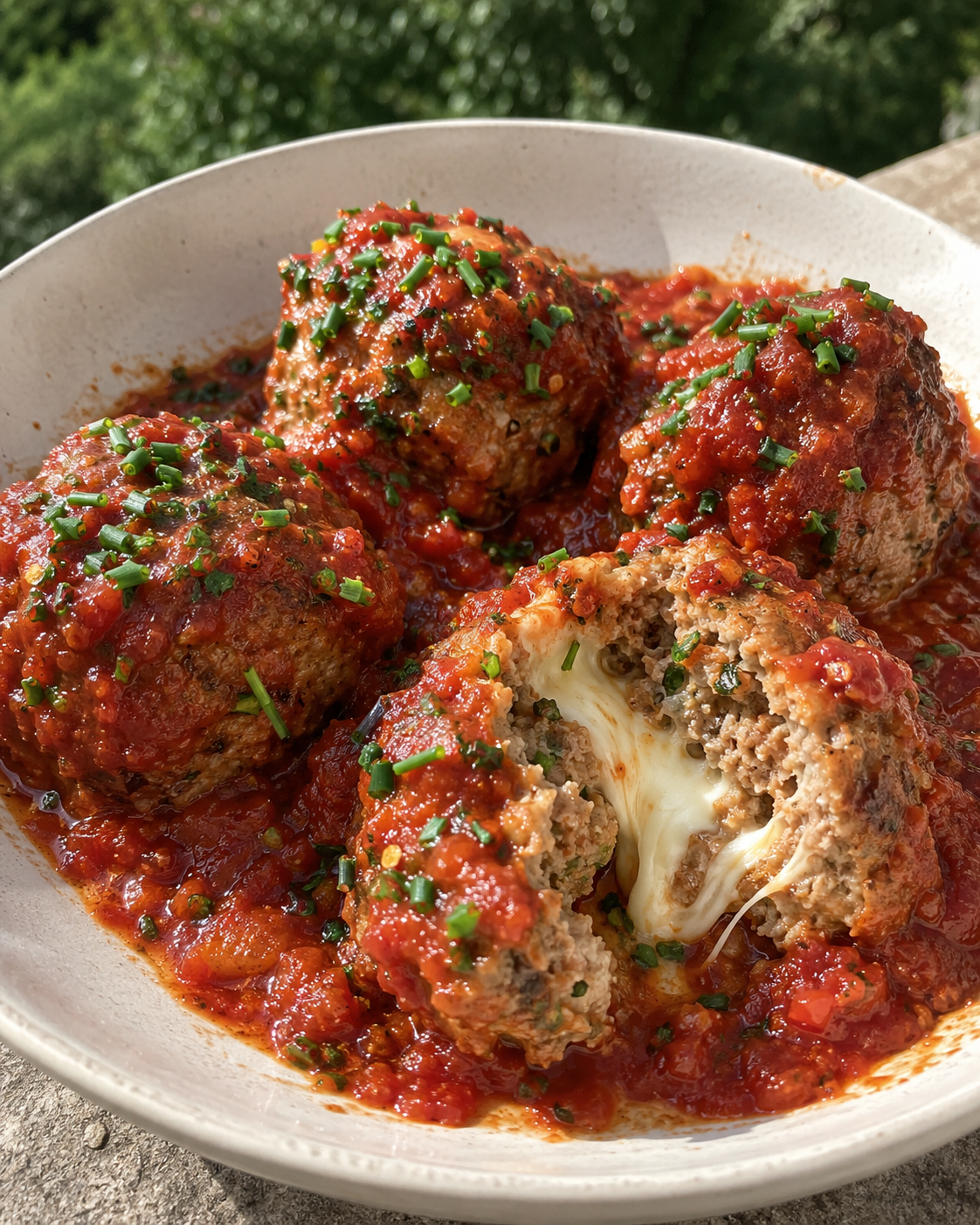
Pasture-raised lamb meatballs fragrant with mint, fennel, and Parmigiano, each hiding a molten center of mozzarella, simmered in a fiery arrabbiata sauce made with summer tomatoes (preserved in passata), garlic, and Calabrian chilies, and finished with fresh chives. Deeply satisfying, and beautiful on the plate.
Yield: Serves 4–6 (12–16 meatballs) · Active: 35 min · Total: 1 hr 15 min · Year-round · Best eaten: early evening
Ingredients
Lamb meatballs
1½ lb pasture-raised ground lamb
8 oz low-moisture whole-milk mozzarella (or buffalo mozzarella, patted very dry), cut from a block into ½-inch cubes
1 large pasture-raised egg
½ cup grated Parmigiano-Reggiano
3 garlic cloves, finely minced
3 tbsp fresh flat-leaf parsley, chopped
2 tbsp fresh mint, chopped
1 tsp dried oregano
1 tsp fennel seeds, freshly ground
1 tsp Baja Gold sea salt
½ tsp freshly cracked black pepper
2 tbsp extra virgin olive oil, for searing
Arrabbiata sauce
3 tbsp extra virgin olive oil
6 garlic cloves, thinly sliced
2 tbsp Calabrian chili paste, packed in olive oil (or 1–2 tsp red pepper flakes)
1 tbsp tomato paste
24 oz tomato passata, with no added sugar
1 tsp Baja Gold sea salt
½ tsp freshly cracked black pepper
1 tbsp honey (to balance the tomatoes' acidity)
2 tbsp fresh basil leaves, torn
1 tsp fresh oregano leaves
To finish
¼ cup fresh chives, thinly sliced
Extra grated Parmigiano-Reggiano
Fresh basil leaves
Extra virgin olive oil, for drizzling
Flaky sea salt
Why low-moisture mozzarella? It melts into a beautiful, molten center without leaking water inside the meatballs, which fresh mozzarella tends to do. Buy it in a block and cut it yourself, since pre-shredded cheese is coated in anti-caking starches.
Method
Make the arrabbiata sauce. Heat the olive oil in a large, deep skillet over medium heat. Add the garlic and cook 30–45 seconds, until fragrant but not browned. Stir in the chili paste and tomato paste and cook 1 minute. Add the passata, salt, pepper, and honey, bring it to a simmer, then lower the heat to medium-low and simmer 20–25 minutes, until thickened. Stir in the basil and oregano at the end.
Make the meatball mixture. Combine the lamb, egg, Parmigiano, garlic, parsley, mint, oregano, ground fennel, salt, and pepper, mixing gently with your hands just until combined. Don't overwork it, or the meatballs will be tough.
Stuff the meatballs. Divide the mixture into 12–16 portions, about 2 oz each. Flatten each one into a disc, set a cube of mozzarella in the center, and wrap the meat around it, sealing it completely. Roll into a smooth ball.
Sear. Heat the olive oil in a large skillet over medium-high heat. Sear the meatballs 2–3 minutes per side, until deeply golden all over. They'll finish cooking in the sauce.
Simmer. Nestle the seared meatballs into the arrabbiata sauce, and simmer gently 12–15 minutes, spooning the sauce over them occasionally, until cooked through (160°F in the center).
Serve. Move the meatballs to a warm platter and spoon the sauce generously over them. Scatter with chives, extra Parmigiano, and torn basil, and finish with a drizzle of olive oil and flaky salt.
Serve With
A simple arugula salad with lemon vinaigrette
Spaghetti squash or cauliflower rice
Crusty sprouted sourdough, for those who eat grains
Storage
Cooked meatballs in sauce: refrigerated up to 4 days (they're even better the next day), or frozen up to 3 months.
Uncooked stuffed meatballs: refrigerated up to 24 hours, or frozen up to 2 months.
Arrabbiata sauce: refrigerated up to 1 week, or frozen up to 3 months.
Leftover transformations:
Spoon the meatballs and sauce over spaghetti squash, for a next-day lunch.
Slice cold meatballs over a bowl of fresh greens.
Tuck them into lettuce wraps or grain-free wraps with arugula and fresh mozzarella.
Nourishment Notes
Pasture-raised lamb — complete protein, heme iron, B12, zinc, and CLA, with more omega-3s than feedlot lamb.
Mozzarella — protein and calcium, plus mostly A2-type casein if you choose buffalo mozzarella.
Tomato passata — concentrated lycopene, vitamin C, and potassium. Cooking tomatoes in olive oil makes their lycopene much easier to absorb.
Calabrian chilies — capsaicin and vitamin C.
Chives, parsley, mint, basil, and oregano — vitamin K, folate, and aromatic compounds.
Fennel seeds — anethole, traditionally used to support digestion.
Parmigiano-Reggiano — calcium, vitamin K2, and protein.
Pasture-raised egg — choline and fat-soluble vitamins.
Extra virgin olive oil — oleic acid, hydroxytyrosol, and polyphenols.
For your cycle: The lamb's heme iron, B12, and zinc make this especially restorative during the menstrual phase (days 1–5), and its warmth is grounding in the luteal phase. The bright, tomato-forward sauce is lovely around ovulation, too.
Sourcing
Ground lamb — pasture-raised and grass-fed, from a farmers' market, US Wellness Meats, or White Oak Pastures
Mozzarella — low-moisture whole-milk mozzarella in a block, from grass-fed milk if you can find it, or fresh buffalo mozzarella (mozzarella di bufala), with no added starches
Calabrian chilies — packed in extra virgin olive oil rather than sunflower or other seed oils (check the label)
Tomato passata and tomato paste — organic, in glass, with no added sugar (Bionaturae and Jovial both make them)
Parmigiano-Reggiano — DOP, aged 24+ months, made from raw milk by law; grate it fresh
Eggs — organic and pasture-raised
Parsley, mint, chives, basil, oregano, and garlic — organic, from a farmers' market
Fennel seeds and dried oregano — organic and non-irradiated; grind the fennel fresh
Honey — organic, local, and unfiltered
Extra virgin olive oil — organic, single-estate, harvest-dated, in dark glass
Salt — Baja Gold sea salt; Maldon for finishing
— Anna aka Food Marshall