Tender Beef Tongue Stew with Cauliflower Mash
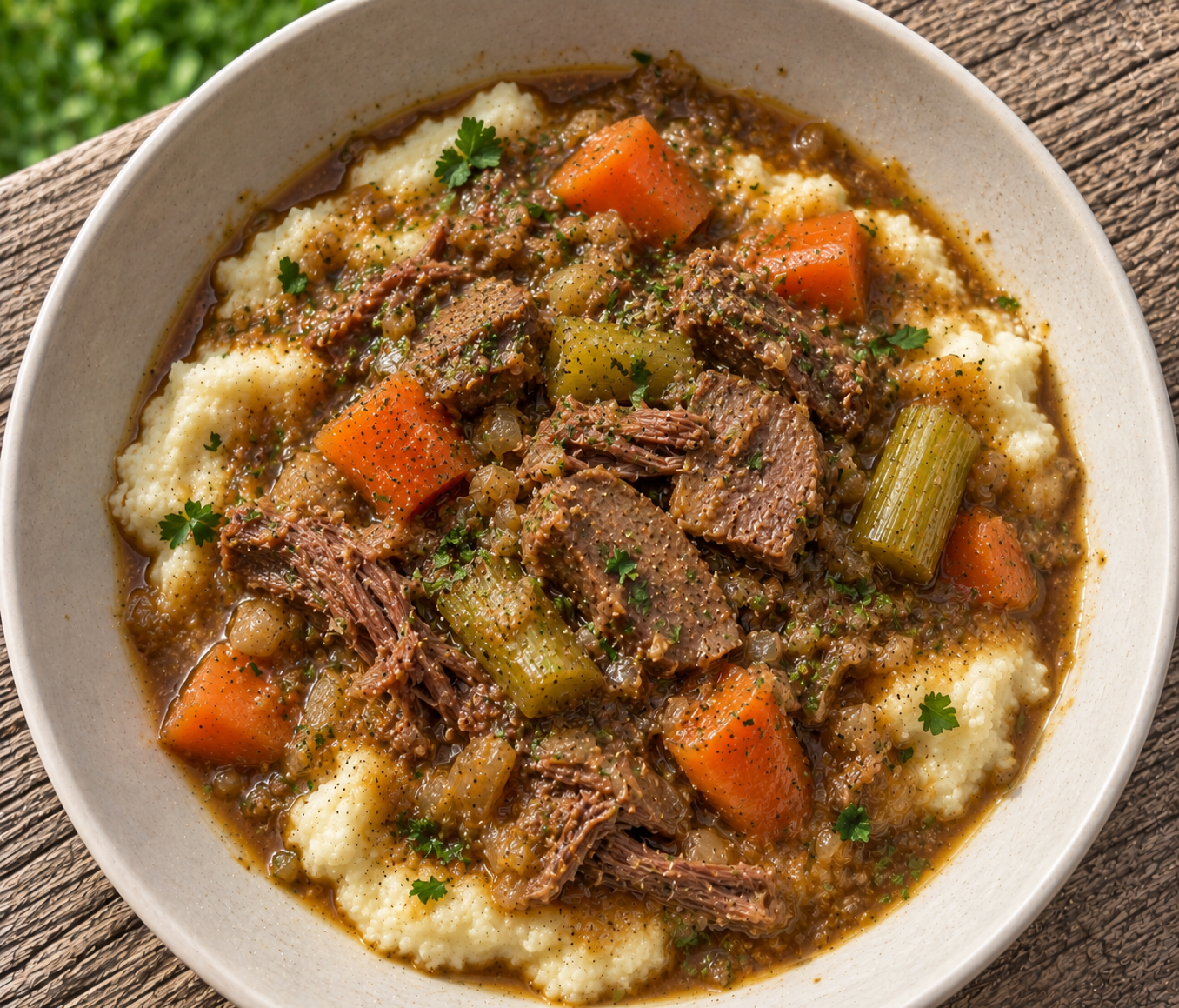
Grass-fed beef tongue studded with garlic and slowly braised with onions, carrots, celery, allspice, bay, and marjoram until meltingly tender, then sliced and served over silky cauliflower mash with a quick horseradish cream and fresh dill.
Yield: Serves 4–6 · Active: 30 min · Total: 4–4½ hours, mostly hands-off · Best in North America in fall and winter · Best eaten: early evening
Ingredients
Tongue
1 grass-fed beef tongue (about 2½ lb), or 2–3 lamb tongues
4–6 garlic cloves, peeled, for studding
2½ tsp Baja Gold sea salt
Braise
4 tbsp pasture-raised lard, grass-fed butter, or ghee
2 yellow onions, chopped
1 cup carrots, chopped
1 cup celery, chopped
4 garlic cloves, minced
1 tsp dried thyme
1 tsp dried marjoram
6 allspice berries
8 black peppercorns
½ tsp caraway seeds
2 bay leaves
4 cups beef bone broth, plus water as needed
Silky cauliflower mash
1 large head cauliflower, cut into florets
2 tbsp grass-fed butter or ghee
Optional: ¼ cup raw cream, for a richer mash
Baja Gold sea salt and white pepper
Horseradish cream
½ cup crème fraîche or sour cream
1–2 tbsp freshly grated horseradish (or prepared horseradish with no additives)
Squeeze of lemon and a pinch of salt
To finish: fresh dill and parsley, chopped
Method
Stud the tongue. Rinse the tongue and pat it dry. With a small sharp knife, make 4–6 small slits in it, and push a garlic clove into each. Season it all over with the salt.
Build the braise. Heat the oven to 300°F. Melt the fat in a Dutch oven over medium heat, and sauté the onions 8 minutes, until soft and translucent. Add the carrots, celery, and minced garlic, and cook 5 minutes more. Stir in the thyme, marjoram, allspice, peppercorns, caraway, and bay leaves.
Add the tongue. Set the tongue on top of the vegetables, and pour in the broth. It should come at least halfway up the tongue, so add water if needed.
Braise. Cover and braise in the oven for 3–4 hours (2–3 hours for lamb tongues), turning the tongue once halfway, until a fork slides into the thickest part with no resistance. Check now and then, adding water if the liquid gets low. (Or use a slow cooker: cook on low for about 8 hours.)
Peel. Lift out the tongue, and dip it in cold water just until you can handle it. Peel it while it's still warm, when the tough outer skin slips off most easily: make a shallow cut along the length, then pull the skin away. Trim any gristle from the base.
Slice and return. Slice the tongue into ¼-inch slices, and return them to the pot to warm through in the stew. Taste and adjust the salt and pepper.
Make the cauliflower mash. Steam the cauliflower 10–12 minutes, until very tender. Drain it very well, so the mash isn't watery. Blend it with the butter, cream (if using), salt, and white pepper until completely smooth.
Make the horseradish cream. Stir the crème fraîche, horseradish, lemon, and salt together.
Serve. Spoon the cauliflower mash into warm bowls, top with slices of tongue and plenty of the vegetables and broth, and finish with a dollop of horseradish cream and fresh dill and parsley.
Swaps:
Lamb tongues are smaller, milder, and cook faster (about 2–3 hours).
Mashed roasted parsnips or buttery mashed potatoes make a heartier base.
For those who eat grains, serve it over soaked brown rice or with crusty sourdough.
Storage
The tongue and stew keep refrigerated up to 4 days, and they're even better the next day. They freeze well up to 3 months. The cauliflower mash keeps up to 4 days, and the horseradish cream up to 1 week.
Nourishment Notes
Beef tongue is one of the great traditional "variety meats," prized across Eastern European, Mexican, and Jewish kitchens for its rich flavor and incredibly tender texture after a long, slow braise. It's also one of the most affordable cuts from a grass-fed animal, and a wonderful way to eat nose to tail.
Beef tongue — protein, zinc, iron, and an especially rich supply of vitamin B12, with a generous amount of fat that makes it tender and satisfying.
Bone broth — gelatin, glycine, and minerals, which deepen as the tongue braises.
Onions, carrots, celery, and garlic — quercetin, beta-carotene, allicin, and prebiotic fibers.
Allspice, caraway, marjoram, and bay — warming aromatics traditionally used to support digestion.
Cauliflower — vitamin C, vitamin K, folate, choline, and glucosinolates.
Horseradish — glucosinolates, which give it its sinus-clearing heat.
Grass-fed butter and cream — vitamins A and K2, CLA, and butyrate.
For your cycle: The tongue's iron, zinc, and B12 make this especially restorative during the menstrual phase, and the warm, slow-braised broth is grounding in the luteal phase.
Sourcing
Beef tongue — 100% grass-fed and grass-finished, from a local farm or butcher, US Wellness Meats, or White Oak Pastures (lamb tongues from a local pasture-raised lamb farm)
Bone broth — homemade from grass-fed beef bones (see my Broths 101), or Bonafide Provisions (organic, sold frozen)
Onions, carrots, celery, garlic, cauliflower, dill, and parsley — organic, from a farmers' market
Fresh horseradish root — organic, from a farmers' market (or prepared horseradish made with just horseradish, vinegar, and salt)
Crème fraîche or sour cream — raw from a farmer you know and trust, or organic and grass-fed, with no gums
Spices and dried herbs (allspice, black peppercorns, caraway, thyme, marjoram, and bay) — organic and non-irradiated
Lard, butter, ghee, and cream — lard from pasture-raised pigs; organic, cultured butter from 100% grass-fed cows; grass-fed ghee; raw or organic grass-fed cream
Salt — Baja Gold sea salt
— Anna aka Food Marshall