Whole Chicken and Vegetables: From Coop to Kitchen to Feast
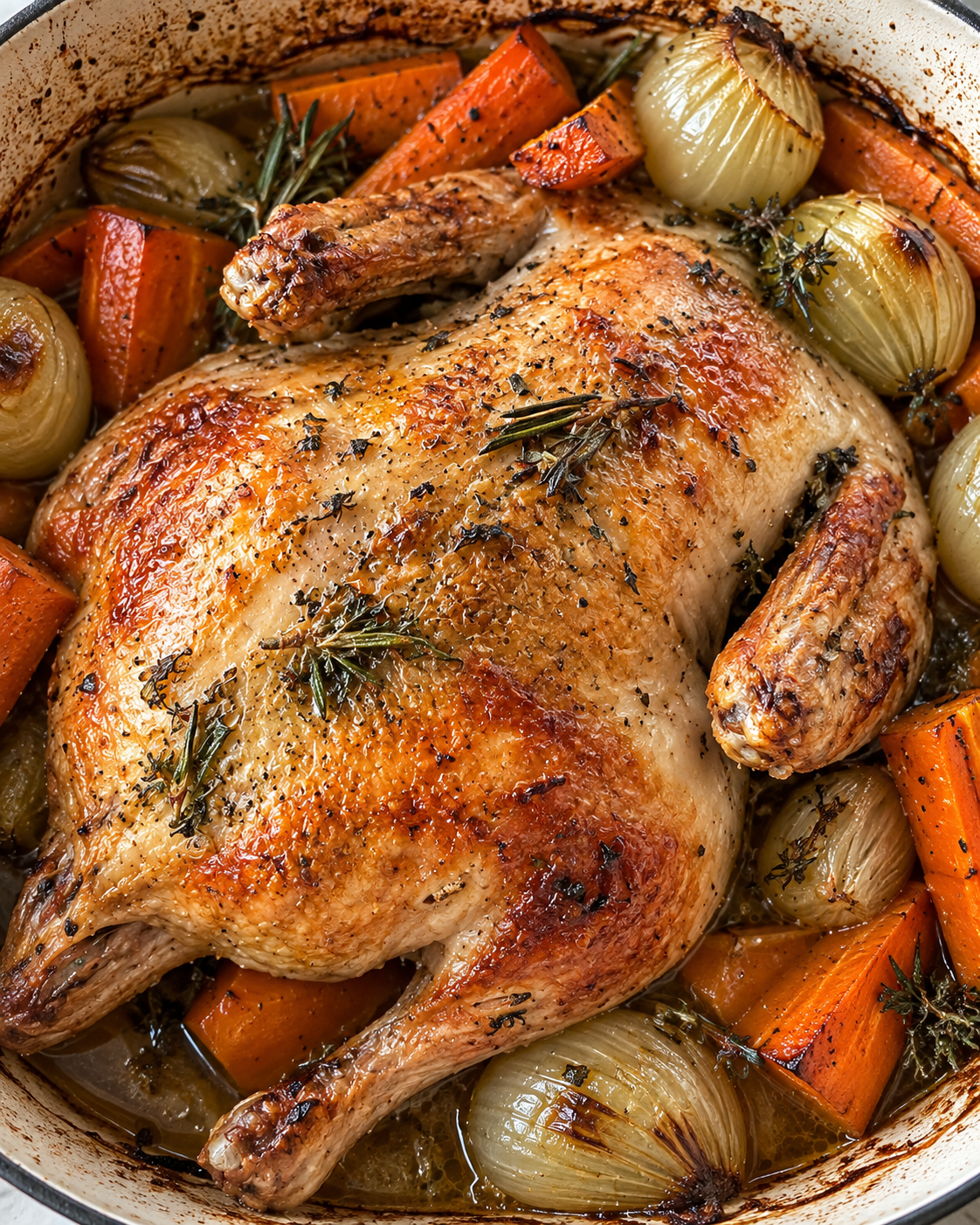
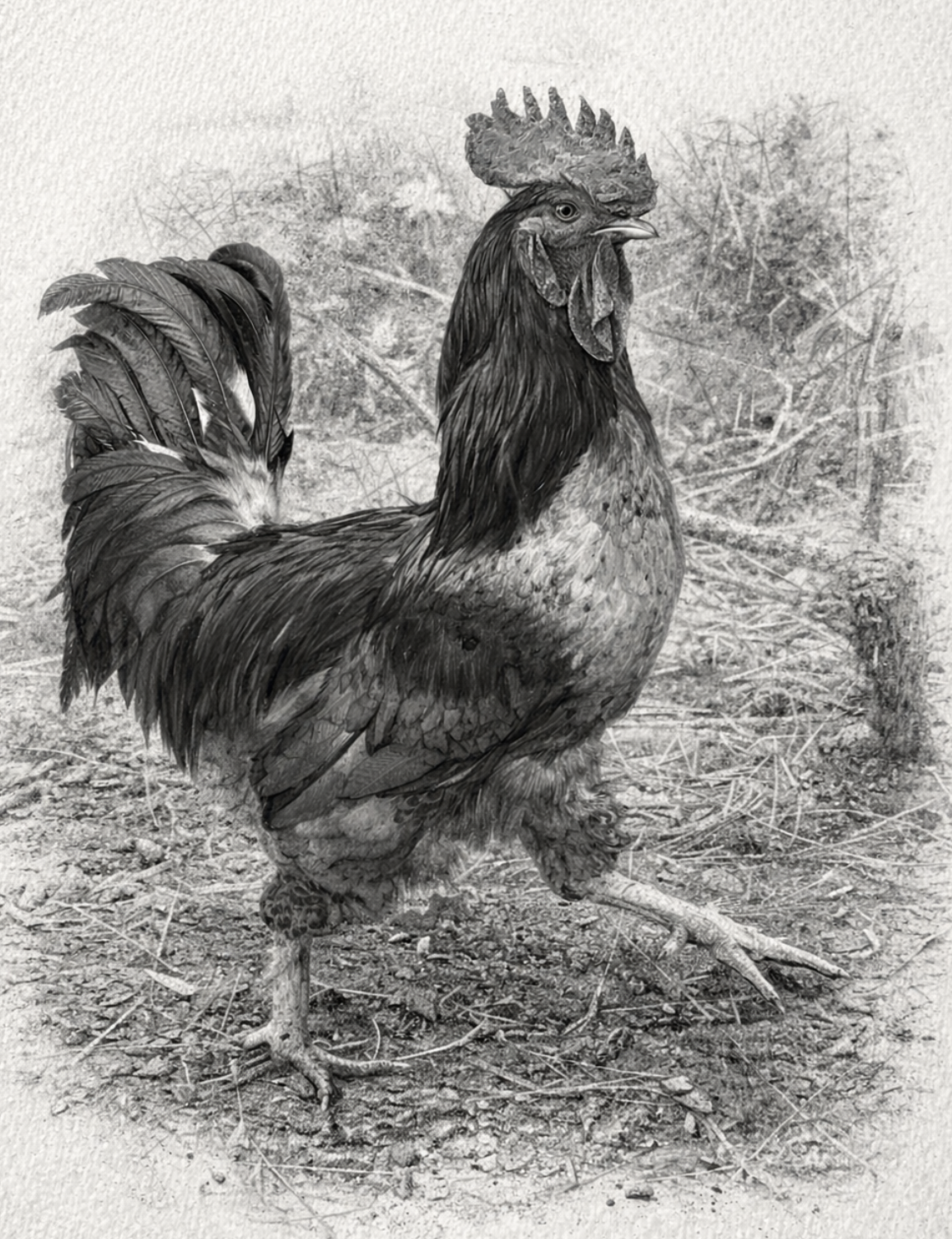
A whole-animal journey: raising a healthy flock, processing a bird with calm and care, roasting it with garden vegetables for a family feast, and simmering the bones into a mineral-rich broth that returns, at the end, to the soil. This is how our ancestors ate chicken: nothing wasted, everything honored.
Yield: Serves 4–6 (roast chicken), plus about 3–4 quarts broth · Year-round (broth is especially nourishing in fall and winter) · Best eaten: early evening
Part 1: Raising the Flock
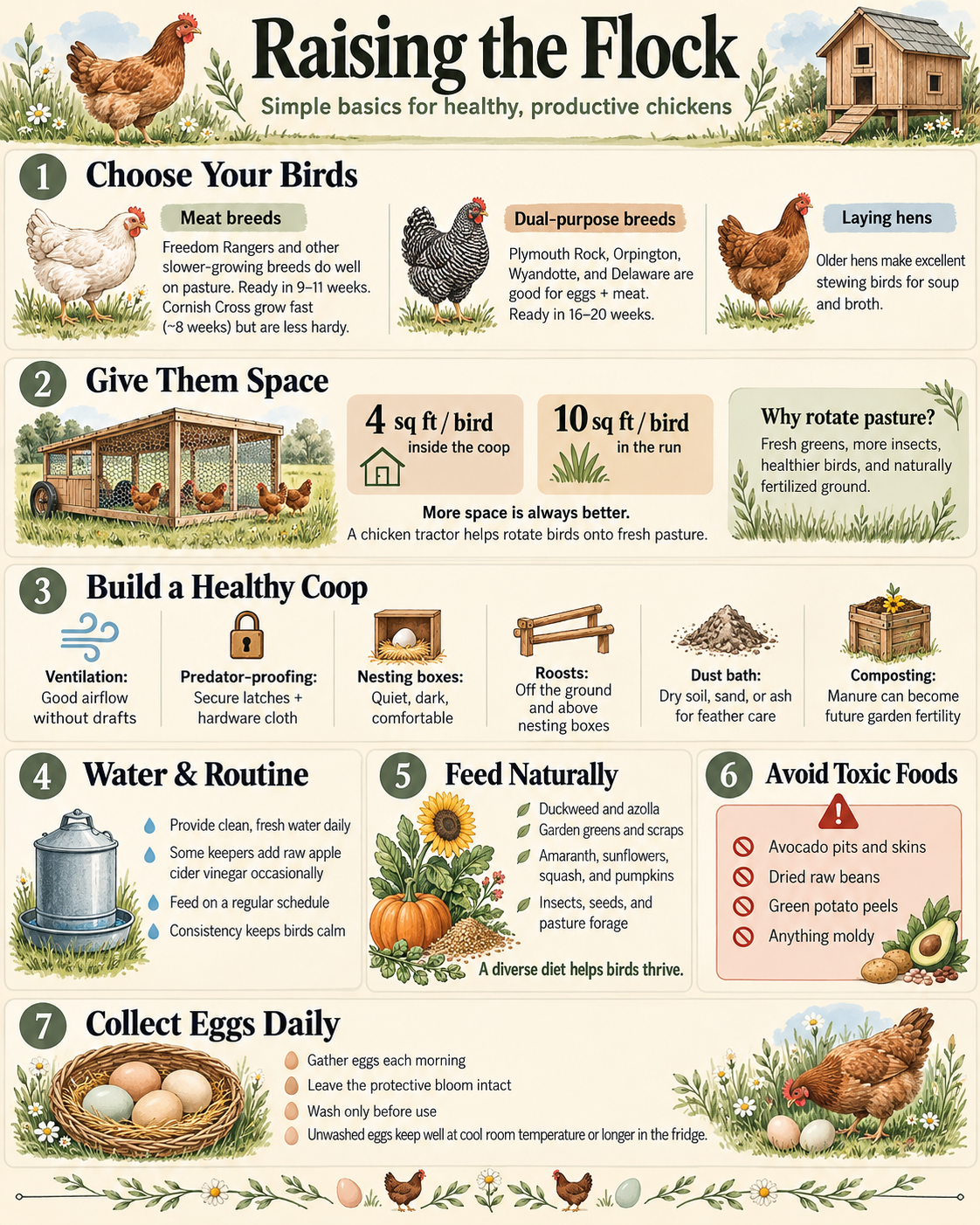
Choosing Your Birds
Meat breeds: Freedom Rangers and other slower-growing breeds thrive on pasture and are ready to process at about 9–11 weeks. The common Cornish Cross grows very fast (about 8 weeks), but it's prone to leg and heart problems and is less suited to foraging.
Dual-purpose heritage breeds: Plymouth Rocks, Orpingtons, Wyandottes, and Delawares lay eggs and make good meat birds. They grow more slowly, ready at about 16–20 weeks, with richer, firmer meat.
Laying hens: When older hens stop laying, they become wonderful stewing birds for soup and broth (see Part 3).
Space and Pasture
Give each bird at least 4 square feet inside the coop and 10 square feet in the run, and more is always better. A chicken tractor, a movable, bottomless pen, lets you rotate the flock onto fresh grass every day or two. The birds get fresh greens and insects, and the pasture gets fertilized and rests before they return.
Coop Design
A well-designed chicken coop balances ventilation, protection, and comfort, creating an environment that supports the flock's health, productivity, and natural behavior.
Ventilation: Good airflow prevents moisture buildup and respiratory illness, especially in humid climates. Vents should let stale air escape near the roof without creating drafts at roost level.
Predator-proofing: Use secure latches, hardware cloth (not chicken wire, which raccoons can tear through), and an enclosed sleeping area to protect the birds overnight, when they're most vulnerable.
Nesting boxes: Keep them quiet, dark, and comfortable, lined with wood shavings or straw to keep eggs clean and prevent breakage. Many keepers tuck in dried lavender or mint, which are traditionally used to calm hens and deter pests, and a ceramic or wooden "dummy" egg encourages hens to lay in the right place.
Roosts: Place them off the ground, above the nesting boxes, and sized for the birds' feet, so they can perch naturally and stay away from damp floors.
Dust-bathing area: Chickens clean themselves by bathing in dry soil, sand, or wood ash, which helps them control mites and lice and keep their feathers healthy, no chemical treatments needed.
Built-in composting: Design the coop or run so manure can be raked or dropped straight into a compost bin. It keeps living spaces clean and dry, and turns waste into future garden fertility. (Raw chicken manure is too "hot" for garden beds, so let it fully compost first.)
Water and Feed
Water: Clean, fresh water every day is essential. Many keepers add a splash of raw apple cider vinegar to the waterer now and then, a traditional practice for gut health (use plastic or glass waterers, since vinegar corrodes metal).
Parasites: A light dusting of food-grade diatomaceous earth in the nesting boxes is a traditional way to deter mites. Use it sparingly, since the fine dust can irritate the lungs of both birds and people.
Routine: Feed at the same time each day, ideally as part of your morning animal-care rhythm. A consistent routine keeps the flock calm and settled.
A diverse, natural diet:
Duckweed and azolla, grown in a pond or tub, provide protein and some omega-3s, which helps balance the omega-6-heavy profile of most commercial chicken feed.
Garden greens and scraps, like lettuce, outer leaves, bananas, and plantains. The birds don't need the best leaves, just the extras.
Amaranth, sunflowers, squash, and pumpkins, grown near the coop, let the birds harvest their own seeds for energy and minerals.
Insects, seeds, and greens together make a balanced, natural diet, so let them forage whenever you can.
Skip these: avocado pits and skins, dried raw beans, green potato peels, and anything moldy, all of which can be toxic to chickens.
Collecting Eggs
Collect eggs every day, ideally in the morning. Don't wash them until just before you use them: hens coat each egg with a natural protective layer called the "bloom," which seals the shell. Unwashed eggs keep for weeks at cool room temperature, and even longer in the fridge.
Part 2: From Coop to Kitchen
Processing your own birds is one of the most meaningful skills a homesteader can learn, and one of the most humbling. It's best learned hands-on, alongside an experienced farmer, before you try it alone. Check your local regulations, too.
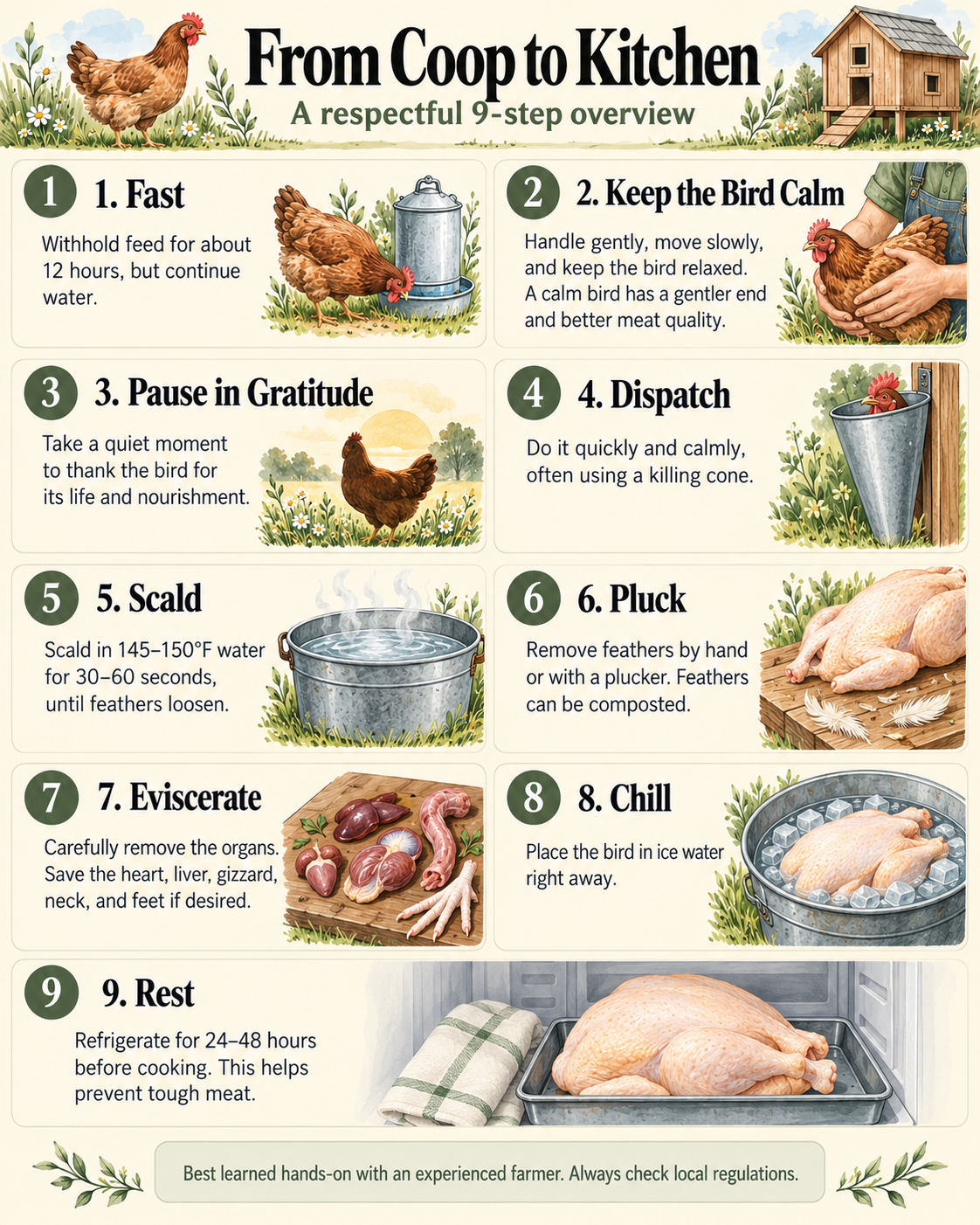
An overview of the process:
Fast the bird for about 12 hours beforehand (with water), so its digestive tract is empty.
Be a chicken whisperer. This is the most important step. Pick the bird up gently, holding its wings snugly against its body, and cradle it in your arms against your chest. Walk slowly, speak softly, and stroke its back until it relaxes and settles. Chickens are naturally calmer in low light, so early morning or dusk is a peaceful time. A calm, unhurried bird has a gentler end, and it makes better meat, too, since stress just before processing can make the meat tougher.
Pause in gratitude. Many homesteaders take a quiet moment to thank the bird for its life and the nourishment it will give. It's a practice found in traditional cultures around the world.
Dispatch it calmly and quickly, most often with a killing cone, which keeps the bird still and calm.
Scald the bird in water at about 145–150°F for 30–60 seconds, until the feathers pull out easily.
Pluck the feathers by hand or with a mechanical plucker. Feathers are rich in nitrogen, so bury them in the compost pile, where they'll break down over a few months.
Eviscerate carefully, saving the heart, liver, gizzard, neck, and feet, which are some of the most nourishing parts.
Chill the bird in ice water right away.
Rest it in the fridge for 24–48 hours before cooking, until rigor mortis passes. Skipping this step is the most common reason home-raised chicken turns out tough.
For step-by-step guidance, these two books by butcher Adam Danforth are the best resources available:
Butchering Poultry, Rabbit, Lamb, Goat, and Pork
Butchering Beef
Part 3: The Feast
Whole Roast Chicken with Garden Vegetables
Serves 4–6 · Active: 20 min · Total: 1 hr 45 min, plus an overnight dry brine
1 whole pasture-raised chicken (4–5 lb)
1 tbsp Baja Gold sea salt, for the dry brine
3 tbsp grass-fed butter or ghee, softened
4 garlic cloves, grated
1 tbsp fresh thyme leaves, plus 1 tbsp chopped fresh rosemary
1 lemon, halved
2 lb mixed seasonal vegetables (potatoes, carrots, onions, beets, parsnips, or winter squash), cut into large chunks
2 tbsp tallow, lard, chicken fat, or olive oil
Freshly cracked black pepper
Dry-brine overnight. Salt the chicken all over, inside and out, and leave it uncovered on a rack in the fridge overnight. The skin dries out, and the meat seasons all the way through.
Prep. Heat the oven to 425°F. Mix the butter with the garlic and herbs, and rub it all over the chicken and under the breast skin. Tuck the lemon halves into the cavity, and tie the legs together.
Add the vegetables. Toss the vegetables with the fat, salt, and pepper, and spread them in a roasting pan. Set the chicken on top, breast-side up.
Roast 1 hour 15 minutes to 1 hour 30 minutes, until the skin is deeply golden and the thigh reaches 175°F.
Rest 15–20 minutes, then carve. Toss the vegetables in the pan juices, and serve everything together.
Save the carcass, neck, and feet for broth.
Cooking an older hen? Older laying hens and roosters are too tough to roast, but they make the most flavorful soup and broth. Simmer the whole bird gently with vegetables and herbs for 3–4 hours, until the meat falls from the bones.
Render the Fat (Schmaltz)
Home-raised birds often carry a generous layer of fat, especially around the cavity. Trim it and the extra skin, chop them small, and cook them slowly in a skillet with a splash of water over low heat until the fat melts out and the skin turns into crisp, golden cracklings. Strain the fat into a jar and refrigerate it for up to 3 months. It's wonderful for roasting vegetables and frying eggs.
Part 4: Chicken Bone Broth (Foundational)
A mineral-rich base for soups, stews, sauces, fasting days, and recovery.
Makes about 3–4 quarts · Active: 15 min · Total: 12–24 hours
1–2 chicken carcasses (roasted or raw), plus necks and feet, if you have them (feet make the broth especially gelatinous)
1–2 onions, halved
Optional: 2 carrots and 2 celery stalks
2 tbsp raw apple cider vinegar
1–2 bay leaves
Garden herbs, like thyme sprigs and parsley stems
Filtered water, to cover
Baja Gold sea salt, added at the end
Combine. Place the bones and vegetables in a large pot.
Soak. Cover with cold water, add the vinegar, and let it rest 30 minutes. The traditional thinking is that the acid helps draw minerals from the bones.
Simmer gently. Bring it slowly to a gentle simmer, skimming off any foam that rises.
Cook low and slow for 12–24 hours on very low heat, with just a few bubbles breaking the surface. Add the herbs in the last hour.
Strain, salt, and cool. Strain the broth, season it with salt, and cool it quickly: set the pot in a sink of ice water, or divide it into smaller containers, so it chills within a couple of hours.
Store. Refrigerate up to 5 days, or freeze up to 6 months. The fat that rises to the top seals the broth underneath; lift it off when you're ready to use the broth, and save it for cooking.
For more broth recipes, see my Broths 101: A Foundation.
Part 5: Back to the Soil
When the broth is done, the bones have one more gift to give. Cooked bones attract rodents in a regular compost pile and break down slowly, so bury them deep in your garden beds, or dry them in a low oven, crush them, and work the bone meal into the soil. Either way, the calcium and phosphorus return to the earth to feed next season's garden, which feeds the flock, which feeds you. The circle closes.
Nourishment Notes
Pasture-raised chicken — complete protein, B12, choline, selenium, and glycine from the skin and bones. Birds that forage outdoors, on a diverse diet of greens, insects, and seeds, produce meat and eggs with more omega-3s and vitamins than conventional birds.
Pasture-raised eggs — choline, lutein, and vitamins A, D, E, and K2, with deeper orange yolks from foraged greens and insects.
Chicken bone broth — gelatin, glycine, proline, and minerals, which support the gut lining, joints, skin, and restful sleep.
Organ meats (heart, liver, and gizzard) — vitamin A, B12, iron, CoQ10, and folate.
Chicken fat — a stable, flavorful cooking fat, with more vitamin D when the birds live outdoors in the sun.
Root vegetables — potassium, fiber, and carotenoids, roasted in the chicken's own juices.
For your cycle: Bone broth's glycine and minerals are soothing in every phase, especially during the menstrual phase, and the chicken's B12, choline, and iron (especially from the liver) help replenish what's lost during your period.
Sourcing
Chicks — Freedom Rangers or heritage breeds, from a reputable hatchery or a local breeder
Chicken — raised yourself, or pasture-raised from a local farm you can visit (ask for the necks, feet, fat, and organs, too)
Feed — organic and soy-free, supplemented with pasture, garden greens, and insects
Vegetables and herbs — from your garden, or organic from a farmers' market
Grass-fed butter, ghee, tallow, or lard — organic, cultured butter from 100% grass-fed cows; grass-fed ghee; tallow rendered from grass-fed suet; or lard from pasture-raised pigs
Raw apple cider vinegar — organic, with the mother (Bragg)
Diatomaceous earth (for the coop) — food-grade only
Salt — Baja Gold sea salt
— Anna aka Food Marshall