Wild Salmon with Watermelon-Arugula-Sumac and Golden Beet-Pomegranate Salad
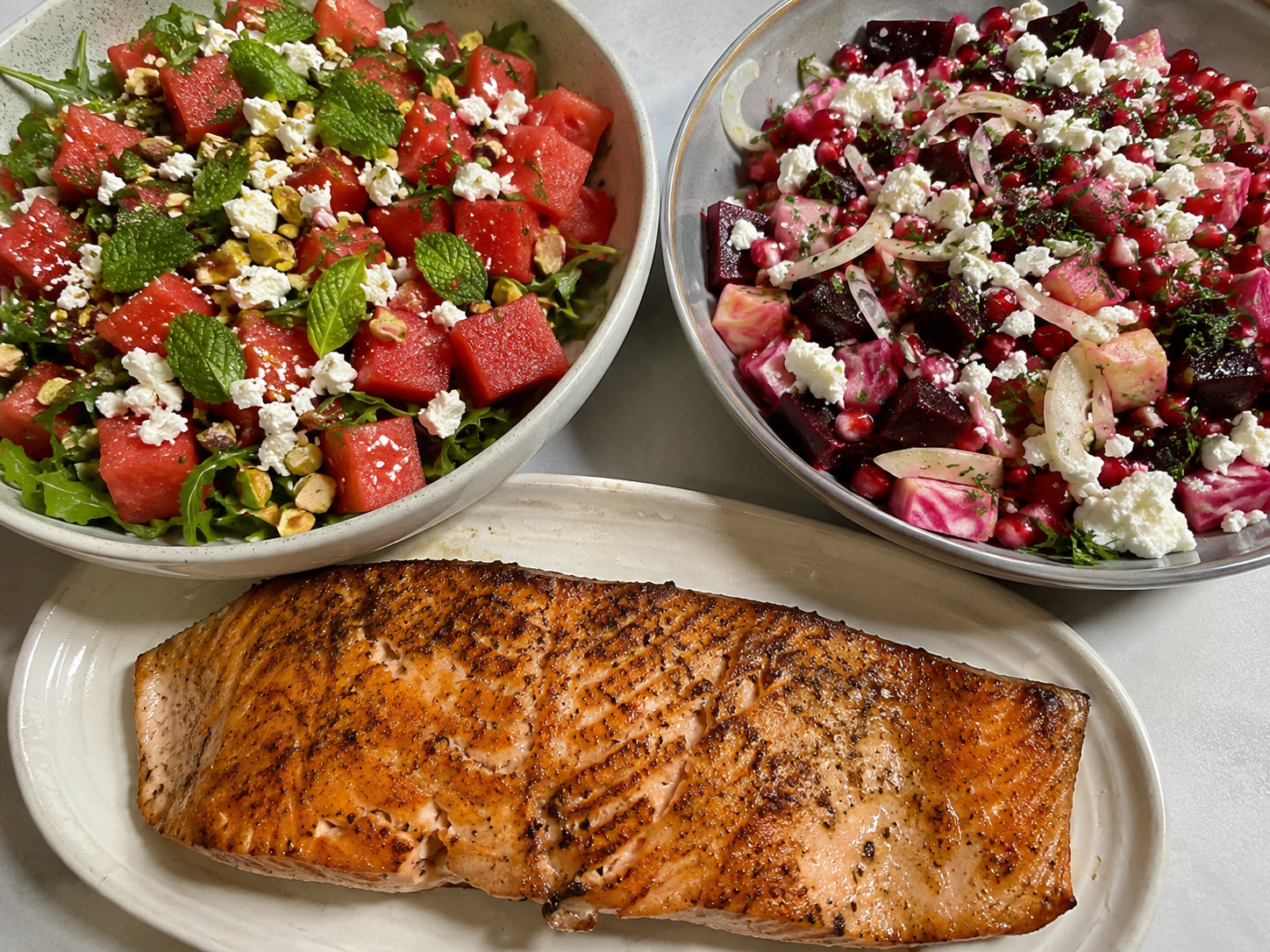
Yield: 4 servings · Active: 40 min · Total: 1 hr 15 min (including beet roasting) · Peak summer (July-August, when watermelons and pomegranates overlap; use frozen pomegranate arils for other seasons) · Best eaten: midday or early evening
Complete Menu
Pan-Seared Wild Salmon with Lemon and Butter
Watermelon-Arugula Salad with Sumac, Pistachios, Feta, and Lime
Golden Beet, Fennel, and Pomegranate Salad with Coriander-Orange Vinaigrette
Optional accompaniments: extra torn mint, additional pomegranate arils, sliced avocado, lemon wedges, fresh cilantro, flaky sea salt.
Recipe 1 — Pan-Seared Wild Salmon
Yield: 4 servings · Active: 15 min · Total: 20 min
Ingredients
4 wild-caught salmon fillets (about 6 oz each, skin on) — sockeye, king, or coho
2 tbsp extra virgin olive oil
1 tsp sea salt
½ tsp freshly cracked black pepper
Zest of ½ lemon
1 tbsp grass-fed butter (for finishing)
Fresh lemon wedges
Method
Pat the salmon dry. With paper towels. Season both sides with salt, pepper, and lemon zest.
Heat the skillet. Heat 2 tbsp olive oil in a heavy stainless steel or cast iron skillet over medium-high heat until shimmering.
Sear skin-side down. Place salmon skin-side down. Press gently with a spatula for the first 30 seconds so the skin stays flat against the pan. Cook 4-5 minutes without moving until the skin is deeply crispy and golden.
Flip and finish. Flip the salmon. Add 1 tbsp grass-fed butter to the pan. Cook 2-3 more minutes, basting occasionally with the melted butter. Internal temperature should read 125°F for medium (the salmon will continue cooking slightly during resting).
Rest. Transfer to a warm plate. Rest 3-4 minutes before serving.
Recipe 2 — Watermelon-Arugula Salad with Sumac, Pistachios, Feta, and Lime
Yield: 4-6 servings · Active: 15 min · Total: 15 min
Ingredients
Salad
4 cups seedless watermelon, cut into ½-inch cubes or thin triangles (about ½ small watermelon)
4 cups baby arugula (about 4 oz)
3 Persian cucumbers, thinly sliced (or 1 English cucumber)
½ small red onion, very thinly sliced
1 small jalapeño, thinly sliced (seeds removed for less heat)
½ cup crumbled sheep's milk feta (Bulgarian or Greek)
½ cup shelled raw pistachios (unsalted), roughly chopped
¼ cup fresh mint leaves, torn
2 tbsp fresh basil leaves, torn (optional)
Sumac-lime dressing
3 tbsp extra virgin olive oil
2 tbsp fresh lime juice
1 tbsp raw apple cider vinegar
1 tsp ground sumac
1 small garlic clove, finely grated
½ tsp sea salt
¼ tsp freshly cracked black pepper
Zest of ½ lime
To finish
Additional ground sumac
Flaky sea salt
A drizzle of high-quality olive oil
Method
Prep the vegetables and fruit. Cube the watermelon; slice the cucumbers, red onion, and jalapeño. Torn the mint.
Toast the pistachios (optional but recommended). Spread pistachios on a small dry skillet. Toast over medium heat for 2-3 minutes, tossing frequently, until fragrant. Roughly chop.
Combine base. In a large serving bowl or on a platter, combine watermelon, arugula, sliced cucumbers, red onion, and jalapeño.
Whisk the dressing. In a small jar, whisk together olive oil, lime juice, apple cider vinegar, sumac, grated garlic, salt, pepper, and lime zest.
Dress just before serving. Pour the dressing over the salad. Toss gently — watermelon is delicate.
Add finishing garnishes. Scatter crumbled feta, chopped toasted pistachios, torn mint, and optional basil leaves.
Plate. Finish with a light dusting of additional sumac, flaky sea salt, and a drizzle of high-quality olive oil. Serve immediately — the watermelon releases water quickly.
Recipe 3 — Golden Beet, Fennel, and Pomegranate Salad with Coriander-Orange Vinaigrette
Yield: 4-6 servings · Active: 20 min · Total: 1 hr (including beet roasting)
Ingredients
Roasted golden beets (can be done 24 hours ahead)
4 medium golden (yellow) beets, scrubbed
1 tbsp extra virgin olive oil
Pinch of sea salt
Salad
1 large fennel bulb, thinly shaved (mandoline works best); reserve fronds
1 small red onion, thinly sliced
1 cup fresh pomegranate arils (from ½-1 pomegranate; or frozen thawed arils)
¼ cup fresh cilantro, roughly chopped
2 tbsp fresh mint leaves (optional)
2 tbsp fresh flat-leaf parsley, chopped
Coriander-orange vinaigrette
¼ cup extra virgin olive oil
3 tbsp fresh orange juice
1 tbsp raw apple cider vinegar (or golden balsamic)
1 tbsp fresh lemon juice
1 tsp ground coriander
1 tsp Dijon mustard
1 tsp raw honey (optional)
Zest of ½ orange
1 small garlic clove, finely grated
½ tsp sea salt
¼ tsp freshly cracked black pepper
To finish
Additional pomegranate arils
Reserved fennel fronds
Fresh cilantro leaves
Flaky sea salt
A drizzle of high-quality olive oil
Optional: crumbled goat cheese or shaved Parmigiano
Method
Roast the golden beets first (can be done 24 hours ahead):
Preheat oven to 400°F.
Wrap and roast. Scrub beets. Wrap each in parchment paper. Place on a sheet pan. Roast 45-60 minutes, until a knife slides in with no resistance.
Cool and peel. Let cool 10-15 minutes. Rub off the skins with paper towels (they slip off easily when warm).
Slice. Cut peeled beets into thin wedges or ½-inch dice.
Prep pomegranate arils (if starting with a whole pomegranate):
Seed the pomegranate. Cut the pomegranate in half. Hold the cut side down over a large bowl of water. Tap the outside firmly with a wooden spoon — the arils release into the water while the bitter white pith floats. Skim off pith and drain arils.
Assemble the salad:
Shave the fennel. Trim the fennel bulb (reserve fronds). Shave into paper-thin slices with a mandoline or sharp knife.
Combine base. In a large bowl, combine shaved fennel, sliced red onion, roasted beets, pomegranate arils, chopped cilantro, and optional mint and parsley.
Make the vinaigrette. In a small jar, whisk together olive oil, orange juice, apple cider vinegar, lemon juice, ground coriander, Dijon mustard, optional honey, orange zest, grated garlic, salt, and pepper.
Dress. Pour vinaigrette over the salad. Toss gently.
Rest briefly. Let sit 5-10 minutes for flavors to meld.
Plate. Transfer to a serving platter. Scatter reserved fennel fronds, additional pomegranate arils, fresh cilantro leaves, and optional crumbled goat cheese or shaved Parmigiano. Finish with flaky sea salt and a drizzle of high-quality olive oil.
Plating the Complete Meal
Build in shallow bowls or on individual plates: place a section of watermelon-arugula-sumac salad on one side; pile the golden beet-pomegranate salad alongside; place the pan-seared salmon across the center of the plate or nestled between the two salads.
Serve with additional lime and lemon wedges, extra pomegranate arils for scattering, and single-estate olive oil at the table for drizzling.
Sourcing
Wild-caught Alaskan salmon — sockeye, king (chinook), or coho. Peak season April-September; frozen-at-sea excellent year-round. Look for wild-caught with deep red-orange color (not pale pink)
Fresh seedless watermelon — heavy for size, symmetrical, hollow-sounding when tapped, with a yellow "field spot" indicating ripe on the vine. From a farmers' market at peak summer
Fresh baby arugula — vibrant green, tender leaves. Organic when possible
Persian or English cucumbers — organic, thin-skinned, unwaxed
Fresh mint, basil, parsley, cilantro — Italian flat-leaf parsley (not curly), vibrant green, from a farmers' market or windowsill pot
Fresh red onion, jalapeño, garlic — organic; hardneck garlic for more complex flavor
Sheep's milk feta — traditional Bulgarian or Greek 100% sheep's milk feta with A2 casein. Look for Dodoni, Mt. Vikos, or Valbreso as widely accessible options. Avoid cow's milk "feta"
Raw shelled pistachios (unsalted) — organic, single-ingredient. From a specialty nut supplier, Middle Eastern grocer, or Turkish/Iranian market. Look for Sicilian Bronte pistachios if available (exceptional flavor)
Ground sumac — from a Middle Eastern grocer, specialty spice supplier, or high-quality online source. Look for single-ingredient (just ground sumac berries), no added salt or fillers. The deep magenta-red color and lemony aroma indicate quality
Golden (yellow) beets — organic, firm bulbs with fresh green tops attached (indicates recent harvest). The tops are excellent sautéed like Swiss chard
Fresh fennel — firm bulb, no browning at the base, fresh green fronds attached
Fresh pomegranates — heavy for size, firm skin, no soft spots. Peak season October through January. Frozen organic pomegranate arils (like POM Wonderful) work year-round when fresh isn't available
Fresh oranges — organic when using zest, at peak flavor during winter months
Fresh limes and lemons — organic when using zest
Raw apple cider vinegar — with the mother
Golden balsamic vinegar or white balsamic (optional) — traditional Italian producers
Dijon mustard — single-ingredient
Raw honey (optional) — local, unfiltered, single-origin
Grass-fed butter — European-style cultured butter is exceptional
Optional goat cheese (chèvre) — from a small dairy
Optional Parmigiano-Reggiano DOP — 24+ month aged
Single-estate extra virgin olive oil — Portuguese, Italian, Spanish, Greek, or Levantine. This meal uses substantial olive oil throughout — quality but accessible for the dressings, reserve your best for finishing
Baja Gold sea salt for cooking; fleur de sel or Maldon for finishing
Whole and ground spices (organic, non-irradiated, single-origin) — sumac, coriander. Ground fresh from whole seeds for meaningfully brighter flavor and bioactive compound retention
Storage
Cooked salmon: Refrigerated up to 2 days. Best eaten fresh — reheating dries out the salmon. Excellent cold flaked over greens for a next-day lunch
Watermelon-arugula salad (dressed): Best eaten within 2 hours of dressing. The watermelon releases water quickly and the arugula wilts
Undressed watermelon-arugula components: Refrigerated up to 24 hours
Golden beet-pomegranate salad (dressed): Refrigerated up to 2 days. Actually improves after several hours as flavors meld
Roasted golden beets alone: Refrigerated up to 5 days
Pomegranate arils: Refrigerated up to 5 days in a sealed container. Frozen up to 6 months
Sumac-lime dressing: Refrigerated up to 1 week in a sealed jar
Coriander-orange vinaigrette: Refrigerated up to 1 week
Leftover transformations: Flake cold salmon over the leftover golden beet-pomegranate salad for a next-day lunch bowl; use leftover watermelon in a smoothie with fresh mint and lime; combine leftover pomegranate arils with pastured yogurt and honey for a Middle Eastern-inflected breakfast; blend the leftover coriander-orange dressing into a marinade for grilled chicken or fish.
Support for the Female Infradian Rhythm
This bowl is beautifully suited to follicular, ovulatory, and luteal phases of the female cycle. Wild salmon delivers exceptional omega-3 fatty acids (EPA and DHA — essential for hormonal balance and reducing menstrual inflammation), astaxanthin (the pink-orange carotenoid with documented antioxidant effects), vitamin D, and complete protein. Cruciferous arugula delivers sulforaphane for estrogen metabolism through Phase 2 liver detoxification. Watermelon delivers exceptional lycopene (surprisingly, more per ounce than tomatoes) plus citrulline (an amino acid that supports blood flow and cardiovascular function) — meaningful during ovulatory phase. Fennel's anethole supports estrogen modulation and female cycle balance. Golden beets deliver betalains (betaxanthins) and nitrates supporting nitric oxide production and healthy blood flow — particularly meaningful during heavier menstrual bleeding. Pomegranate delivers punicalagins with documented antioxidant effects — traditional across Middle Eastern cultures for female health and fertility support. Pistachios deliver magnesium and vitamin B6 (essential for progesterone synthesis and luteal-phase mood). Sheep's milk feta delivers calcium and A2 casein. Fresh mint delivers menthol (traditional Middle Eastern digestive support during PMS). Sumac's tannins deliver gentle astringent and antioxidant support. The whole bowl is a full-spectrum antioxidant, protein, and mineral delivery — deeply supportive across the entire cycle.
Nourishment Notes
Wild-caught salmon — omega-3 fatty acids (EPA and DHA), astaxanthin, vitamin D, complete protein. Wild salmon delivers a fundamentally different fatty acid profile than farmed — meaningfully more bioavailable omega-3s, and astaxanthin from natural krill and shrimp food sources rather than synthetic canthaxanthin added to farmed feed.
Watermelon — lycopene, citrulline, potassium, vitamin C. Watermelon delivers exceptional lycopene (concentrated in the deep red flesh — meaningfully more per ounce than tomatoes), citrulline (an amino acid that supports blood flow and cardiovascular function), potassium, vitamin C, and hydration. Peak-season sun-ripened watermelon develops the fullest lycopene profile.
Sumac — hydrolyzable tannins, gallic acid, and traditional Middle Eastern polyphenols. Ground sumac berries deliver hydrolyzable tannins, gallic acid, and other polyphenols with documented anti-inflammatory and antioxidant effects. Traditional across Middle Eastern cultures for centuries as both food and medicine. Sumac's distinctive tart lemony flavor is a real editorial touch.
Baby arugula — sulforaphane, folate, vitamin K. Peppery cruciferous compound supports estrogen metabolism and delivers folate and vitamin K.
Fresh mint — menthol, vitamin K, and traditional digestive support. Mint is one of the most useful digestive herbs across Middle Eastern and Ayurvedic traditions.
Cucumber — silica, hydration, potassium.
Red onion and garlic — quercetin, allicin, and organosulfur compounds. Cardiovascular and anti-inflammatory support.
Sheep's milk feta — calcium, K2, A2 casein. Concentrated calcium and vitamin K2 in an easily digestible cheese.
Pistachios — magnesium, vitamin B6, vitamin K, monounsaturated fats. Pistachios deliver magnesium (essential for luteal-phase mood and cramp prevention), vitamin B6 (essential for progesterone synthesis), vitamin K, and monounsaturated fats. Traditional across Middle Eastern and Persian cooking as a nutritional powerhouse.
Golden beets — betalains (betaxanthins), nitrates, folate. Golden beets deliver the yellow betaxanthin pigments with documented antioxidant effects, plus dietary nitrates supporting nitric oxide production and healthy blood flow.
Fresh fennel — anethole, vitamin C, digestive support. Anethole delivers estrogen-modulating and digestive-soothing effects.
Pomegranate — punicalagins, vitamin C, potassium. Pomegranate delivers exceptional punicalagins (unique polyphenol compounds concentrated in pomegranates with documented antioxidant and anti-inflammatory effects), vitamin C, potassium, and folate. Traditional across Middle Eastern and Persian cultures for female health and fertility support.
Fresh coriander (from seed and cilantro) — linalool, alpha-pinene, chlorophyll. Coriander seeds deliver aromatic oils supporting digestion; cilantro leaves bind heavy metals. Both traditional across Middle Eastern cooking.
Fresh lime, lemon, orange — d-limonene, vitamin C, hesperidin. Citrus supports liver detoxification and delivers a full range of flavonoids.
Raw apple cider vinegar — acetic acid and live cultures. Blood-sugar regulation.
Dijon mustard — glucosinolates and pungent aromatics.
Grass-fed butter — CLA, K2, butyrate.
Extra virgin olive oil — oleic acid, hydroxytyrosol, oleuropein, and oleocanthal. Amplifies absorption of the fat-soluble lycopene, carotenoids, and vitamins throughout the meal.
Raw honey — trace minerals and gentle sweetness.
— Anna aka Food Marshall