Wild Fish and Vegetable Wraps (Four Ways)
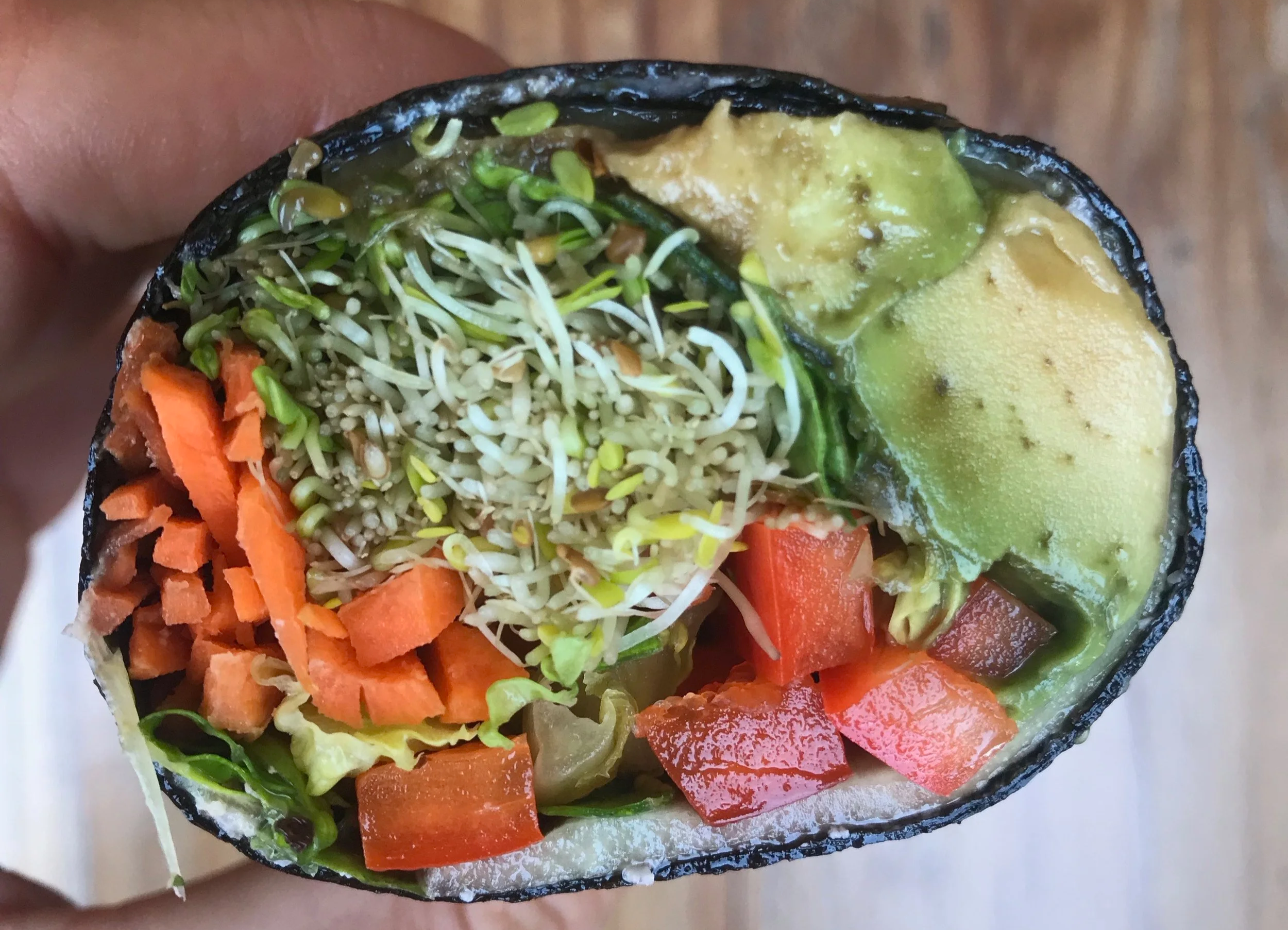
Four grain-free wrap formats — wild salmon and shrimp, rainbow raw vegetables, and sea vegetables — for hand-held lunches, dinner-party appetizers, and retreat-style interactive dinners. Naturally grain-free, refined-sugar-free, dairy-free, and built around mineral-dense whole foods.
Yield: 4–24 wraps depending on format
Active: 20–25 min per format · Total: 25–35 min per format
Year-round: (peak summer for raw vegetables)
Wrap 1 — Salmon Collard Green Wraps with Ginger Nut Sauce
Wild salmon and rainbow raw vegetables wrapped in blanched collard leaves.
Yield: 4 wraps · Active: 25 min · Total: 35 min
Ingredients
For the wraps
4 large organic collard green leaves
2 (6 oz) wild-caught salmon fillets, boneless and skinless
1 tbsp high-quality extra-virgin olive oil
Sea salt and freshly cracked black pepper
Juice of ½ lemon
Vegetable filling (mix and match — about 3–4 cups total)
1 cup carrots, shredded
1 cup beets, shredded
1 cup cucumber, cut into thin strips
1 cup organic bell pepper (red, orange, or yellow), thinly sliced
½ cup radishes, thinly sliced
½ cup sunflower sprouts or pea shoots
1 ripe avocado, sliced
2 tbsp fresh cilantro, chopped
2 tbsp fresh parsley, chopped
2 tbsp green onion, chopped
1–2 tbsp raw sauerkraut or kimchi per wrap
Ginger nut sauce
¼ cup raw cashew or almond butter (single-ingredient, no oils or sweeteners)
1 tbsp fresh ginger, finely diced
1 tbsp coconut aminos
1 tbsp ume plum vinegar
2 tbsp filtered water (more as needed to thin)
Pinch of chili flakes
Optional: 1 tsp raw honey
Method
Cook the salmon. Preheat the oven to 350°F. Place the salmon fillets on a parchment-lined sheet pan, drizzle with olive oil, and season with sea salt and black pepper. Bake 12–15 minutes until just cooked through and flakes easily. Squeeze fresh lemon juice over. Cool slightly, then flake into small pieces with a fork.
Blanch the collards. Bring a large pot of water to a boil. Blanch the collard leaves one at a time for 20–30 seconds — just until vibrant green and pliable. Remove with tongs and lay flat on a clean dish towel; pat dry. Slice off the bulky stem end. Use a sharp knife to carefully shave down the thickness of the remaining stem so the leaf folds and wraps easily.
Make the sauce. Whisk all sauce ingredients in a small bowl until smooth. Add filtered water as needed to reach a creamy, drizzling consistency.
Assemble. Lay a collard leaf flat on a cutting board, smooth side down. Spread 1–2 tbsp ginger nut sauce in the bottom third of the leaf. Layer the salmon, then distribute vegetables, sprouts, avocado, fresh herbs, and a spoonful of sauerkraut.
Roll. Carefully fold the base of the leaf over the filling, tuck in the sides, and roll up tightly like a burrito. Slice in half for serving, or eat whole. Serve with extra sauce for dipping.
Wrap 2 — Shrimp Nori Hand Rolls
The Japanese-leaning hand-roll version — wild shrimp, rainbow vegetables, sesame, and pickled ginger in a cone of crisp nori. Beautiful as a dinner-party appetizer.
Yield: 12 wraps · Active: 25 min · Total: 30 min
Ingredients
For the shrimp and wraps
1 lb wild-caught shrimp, peeled and deveined
2 tbsp grass-fed butter or virgin coconut oil
1 tbsp fresh ginger, minced
12 sushi nori sheets, halved (24 half-sheets)
Vegetable filling
4 cups mixed garden lettuces, butter lettuce, or arugula
1 large cucumber, julienned
1 ripe avocado, sliced
2 carrots, julienned
¼ cup pickled ginger (homemade or quality store-bought)
2 tbsp toasted sesame seeds
Dipping sauce
¼ cup coconut aminos
1 tbsp toasted sesame oil
1 tsp grated fresh ginger
1 tsp raw honey
Optional: squeeze of fresh lime juice, dash of fish sauce
Method
Cook the shrimp. Heat butter in a large skillet over medium-high heat. Add the minced ginger and cook 30 seconds until fragrant. Add the shrimp; cook 2–3 minutes per side until just opaque and pink. Remove from heat. Cool slightly, then slice each shrimp in half lengthwise.
Make the dipping sauce. Whisk all sauce ingredients in a small bowl. Adjust honey and lime to taste.
Assemble each wrap. Lay a half-sheet of nori on a flat surface with the rough side facing up. Place a small amount of garden lettuce at one corner as the base layer (this prevents the nori from getting soggy). Top with sliced shrimp, julienned cucumber and carrot, sliced avocado, and a few pieces of pickled ginger. Sprinkle with toasted sesame seeds.
Roll. Start at one corner of the nori and roll diagonally into a cone shape, leaving the open end at the top. Use a tiny dab of water on the corner to seal if needed.
Serve immediately with dipping sauce alongside. Critical: make and serve the wraps within 15 minutes — nori loses its crisp texture quickly when exposed to moisture.
Wrap 3 — No-Rice Sushi Rolls
The rice-free maki — nori-wrapped wild salmon or shrimp with rainbow vegetables and a dollop of avocado-mayo or cashew cream, sliced into traditional sushi rounds. Beautiful for party platters.
Yield: 4 rolls (24–32 pieces) · Active: 20 min · Total: 25 min
Ingredients
4 sushi nori sheets (toasted, sushi-grade)
6 oz cooked wild salmon or shrimp (or canned wild salmon), finely chopped
1 organic bell pepper (red, orange, or yellow), seeded and julienned
1 cucumber, sliced into thin strips
1 carrot, sliced into thin strips or shredded
1 ripe avocado, sliced
1 scallion, finely sliced
4 tbsp homemade avocado-oil mayo or cashew cream
Toasted sesame oil, for drizzling
2 tbsp toasted sesame seeds
Coconut aminos, for dipping
Optional add-ins (mix and match)
Pickled ginger
Sautéed shiitake mushrooms
Sunflower sprouts or pea shoots
Mung bean sprouts
Fresh cilantro or shiso leaves
Raw sauerkraut or kimchi
Method
Prep the surface. Place a nori sheet on a flat clean surface (a bamboo sushi mat or just a clean cutting board), shiny side down, with the lines running horizontally.
Layer the filling. About one inch from the bottom edge, place 2–3 tbsp of the salmon or shrimp in a horizontal line. Layer strips of bell pepper, cucumber, carrot, and avocado over the salmon. Add a small dollop of mayo or cashew cream. Sprinkle with sesame seeds and a tiny drizzle each of coconut aminos and toasted sesame oil.
Roll. Carefully lift the bottom edge of the nori over the filling, tucking it in tightly. Continue rolling forward, using your fingers to keep the roll firm. Toward the end, lightly wet the top edge of the nori with a teaspoon of water to seal.
Slice. With a very sharp knife (wet between cuts), slice each roll into 6–8 pieces. Wipe the knife clean between every cut for sharp edges.
Serve. Sprinkle with additional sesame seeds. Serve with coconut aminos for dipping.
Wrap 4 — Raw Rainbow Veggie Nori Rolls with Cashew-Ginger Pâté
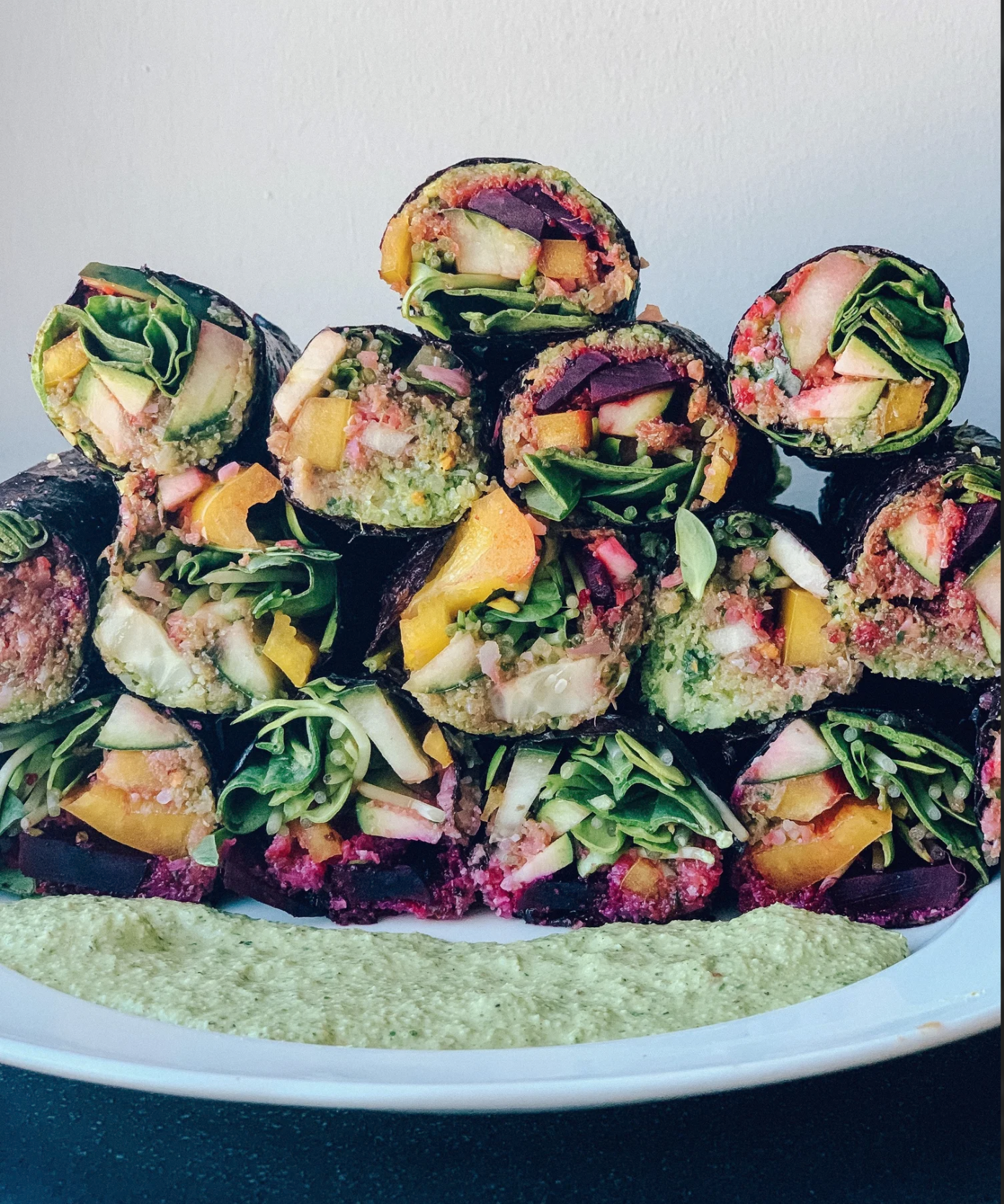
Rainbow vegetables and a savory cashew-ginger pâté in nori, with optional smoked salmon or other protein.
Yield: 4 rolls (24–32 pieces) · Active: 25 min · Total: 30 min (including cashew soak)
Ingredients
For the wraps
4 sushi nori sheets (toasted, sushi-grade)
1 cup cucumber, julienned
1 cup carrot, julienned
1 ripe avocado, sliced
1 cup purple cabbage, finely shredded
1 organic bell pepper, julienned
½ cup shiitake mushrooms, sliced (raw or lightly marinated in coconut aminos + sesame oil)
½ cup mixed greens or sprouts
Optional: 4 oz wild-caught smoked salmon
Cashew-ginger pâté
1 cup raw cashews, soaked 2+ hours and drained
1 tbsp fresh ginger, grated
2 tbsp coconut aminos
1 tbsp toasted sesame oil
1 clove garlic
2 tbsp fresh lemon juice
1 tbsp chickpea miso (optional, for fermented depth)
2–3 tbsp filtered water (to blend)
½ tsp sea salt
Optional: 1 tbsp dulse or kelp flakes (for added minerals)
To finish
2 tbsp toasted sesame seeds
Coconut aminos for dipping
Method
Make the pâté. Blend all pâté ingredients in a high-speed blender or food processor until smooth and creamy, scraping down the sides as needed. Add water 1 tbsp at a time to reach a thick spreadable consistency. Adjust salt and lemon to taste.
Prep the surface. Place a nori sheet on a clean flat surface, shiny side down.
Spread the pâté. Spread 2–3 tbsp pâté in a horizontal line about an inch from the bottom edge.
Layer the vegetables. Layer cucumber, carrot, cabbage, bell pepper, mushrooms, greens, avocado, and salmon (if using) over the pâté. Sprinkle with sesame seeds.
Roll. Carefully lift the bottom edge over the filling, tucking it in firmly. Continue rolling, sealing the top edge with a teaspoon of water.
Slice and serve. Slice with a sharp wet knife into 6–8 pieces. Serve with coconut aminos for dipping.
Variations Across All Four Formats
With tinned wild fish: Substitute the cooked salmon or shrimp with quality tinned wild sardines, anchovies, or mackerel (drained and flaked). Tinned fish is genuinely excellent for these wraps and adds depth.
With other proteins: Cooked shredded chicken, cooked pulled duck, or thinly sliced pasture-raised steak all work beautifully in the collard wraps and no-rice sushi rolls.
For traveling or lunchboxes: Salmon collard wraps hold best — the blanched collard is more moisture-resistant than nori. Pack with a small jar of dipping sauce alongside.
For interactive retreat dinners (8–12 guests): Prepare all components ahead and lay them out on a large platter or board. Set out small bowls of dipping sauces, pickled ginger, sauerkraut, and herbs. Guests assemble their own wraps at the table. Particularly beautiful for the no-rice sushi rolls and shrimp hand rolls.
With miso paste for the salmon collard wraps: Add 1 tbsp chickpea miso to the ginger nut sauce for additional fermented depth.
For dipping sauce variety: Make 2–3 different dipping sauces (the ginger nut sauce, the simple coconut aminos sauce, plus a homemade avocado-mayo with smoked paprika) and let people taste across all four formats.
Pairs Well With
A clear bone broth or miso soup as a warming accompaniment to the raw cold elements. A small platter of pickled vegetables (radish, cucumber, daikon) alongside. For a fuller meal, follow with a small portion of the slow-roasted duck, slow-roasted pork ribs, oven baked miso cod, baked salmon, or a shrimp stir-fry.
Sourcing
Wild salmon. Look for Pacific salmon (king, sockeye, coho) or wild Alaskan salmon — never Atlantic farmed salmon. Frozen-at-sea wild salmon is genuinely fresher than "fresh" salmon that's been on ice for days. Reliable sources: Vital Choice, Sea to Table, Wild Alaskan Company, Patagonia Provisions. Wild Alaska Seafood and Bristol Bay sockeye are gold-standard options. The flesh should be deep pink-orange (the astaxanthin signature of wild salmon).
Wild shrimp. Wild Gulf of Mexico shrimp or wild Alaskan/Pacific spot prawns. Avoid imported farmed tropical shrimp from Southeast Asia (Thailand, Vietnam, Bangladesh) — these are genuinely problematic for sustainability, antibiotic use, and contamination. Reliable sources: Wild Gulf Shrimp, Carolina Cape Shrimp, Vital Choice, or local fishmongers carrying domestic wild shrimp.
Wild-caught smoked salmon. Look for cold-smoked wild salmon (Pacific king, sockeye, or coho). Avoid commercial cold-smoked Atlantic farmed salmon. Vital Choice or local artisan smokehouses.
Sushi-grade nori. Look for organic, single-ingredient (just seaweed) nori sheets. Eden Foods organic sushi nori, Emerald Cove, or Japanese/Korean grocery markets. Toasted nori is generally preferable for sushi rolls; the rough side faces inward toward the filling.
Collard greens. Look for fresh, dark green, large leaves. From a farmers' market or organic produce section. Smaller leaves work for smaller wraps but the larger ones are easier to roll without tearing.
Raw cashews. Look for truly raw cashews — not "raw" labeled cashews that have been steam-pasteurized at high temperatures. Living Tree Community Foods, Big Tree Farms, Terrasoul Superfoods, or Asian or Latin American grocers carrying true raw cashews.
Raw almond butter or cashew butter. Single-ingredient nut butter — just nuts, no oils or sweeteners. Artisana, Once Again, or MaraNatha Raw.
Ume plum vinegar. A traditional Japanese ferment made from umeboshi plums. Eden Foods Ume Plum Vinegar is the benchmark. Salty, tart, and live-cultured — no good substitute outside the Japanese pantry. Should be unpasteurized when possible.
Coconut aminos. Coconut Secret raw coconut aminos. Soy-free, lower-sodium alternative to soy sauce. Single-ingredient — no added cane sugar or preservatives.
Toasted sesame oil. A small amount goes a long way — this is a finishing oil. Eden Foods organic or a specialty Asian grocer. Should smell deeply nutty and roasted.
Chickpea miso (for the cashew pâté). Soy-free fermented miso made from chickpeas. Adds live cultures and the slightly sweeter umami of legume-based fermentation.
Pickled ginger (gari). Look for unsweetened, no-artificial-color versions. Eden Foods or homemade (slice fresh ginger thin, salt briefly, then steep in rice vinegar with a small amount of raw honey for 24 hours). Most commercial pickled ginger is dyed pink and sweetened — avoid those.
Raw sauerkraut and kimchi. Look for refrigerated, unpasteurized varieties in glass jars — live cultures only. Mother in Law's Kimchi or local fermentation companies. Shelf-stable sauerkraut and kimchi are dead — they're missing the entire point.
Fresh herbs (cilantro, parsley, scallion, mint). From a windowsill pot or farmers' market for the freshest flavor.
Fresh organic vegetables. Carrots, beets, cucumber, bell pepper, radishes, cabbage, mushrooms — from a farmers' market or organic produce section. Rainbow varieties (purple carrots, golden beets, etc.) add beautiful visual contrast.
Avocado. Should yield slightly to gentle pressure but not be mushy. Hass avocados are the most reliable.
Sea salt. Baja Gold mineral sea salt for cooking, fleur de sel for finishing.
Storage
Assembled wraps: Best eaten the day they're made — nori softens within 1–2 hours of contact with moisture. The salmon collard wraps hold longest (blanched collard is more moisture-resistant than nori) — they're the choice for travel lunches or pre-made lunchboxes.
Components prepped separately:
Cooked salmon and shrimp: refrigerated up to 2 days, sealed.
Cashew-ginger pâté: refrigerated up to 4 days in a sealed glass jar.
Pickled ginger (homemade): refrigerated up to 2 weeks.
Blanched collard leaves: refrigerated up to 2 days, wrapped in a damp towel.
Cut vegetables: refrigerated up to 2 days, sealed.
Dipping sauces: refrigerated up to 5 days.
For interactive retreat dinners (8–12 guests): Prepare all components 1–4 hours ahead and refrigerate separately. Lay out on a large platter or board just before serving — guests assemble their own wraps as they eat.
Why These Wraps
Wild salmon and shrimp — EPA, DHA, and astaxanthin. Wild-caught salmon (Pacific or Alaskan) delivers EPA and DHA omega-3 fatty acids — the long-chain marine fatty acids critical for brain, retinal, and mitochondrial membrane function. Wild salmon also delivers astaxanthin (the carotenoid responsible for the pink-red flesh), vitamin D₃, selenium, and B12. Wild shrimp delivers complete protein, selenium, B12, and iodine. The wild-caught designation matters meaningfully — farmed Atlantic salmon and farmed tropical shrimp carry different fat profiles, contamination concerns, and sustainability issues.
Nori, dulse, and sea vegetables — concentrated iodine and trace minerals. Nori is one of the most iodine-dense foods on earth (essential for thyroid function), plus B vitamins (one of the few plant sources of measurable B12 when in dried sea-vegetable form), iron, calcium, and the polysaccharide fucoidan (with documented anti-inflammatory and immune-supporting properties). Optional dulse or kelp flakes in the cashew pâté layer in additional iodine and minerals. Modern grain-fed diets run chronically low in iodine — these wraps restore what coastal cultures took for granted.
Collard greens — vitamin K, calcium, and cruciferous glucosinolates. Collards deliver one of the highest vitamin K profiles available, plus calcium, vitamin A, fiber, and the cruciferous glucosinolates that the body converts to sulforaphane during chewing. Blanching briefly preserves most of these heat-sensitive compounds while making the leaf pliable for wrapping.
Rainbow vegetables — polyphenol and carotenoid spectrum. The colorful raw vegetable filling delivers a full spectrum of plant compounds: purple cabbage's anthocyanins, carrot's beta-carotene, bell pepper's vitamin C, cucumber's silica, radish's sulfur compounds, sprouts' enzyme activity, and avocado's potassium and monounsaturated fats. Eaten raw, the enzymes and heat-sensitive compounds are preserved.
Fermented accents — gut microbial support. Sauerkraut, kimchi, pickled ginger, ume plum vinegar, and chickpea miso each deliver live cultures, lactic acid, and the kind of microbial diversity that modern diets quietly lack. The salty-tart character also supports stomach acid production and overall digestion.
Cashew and almond butter, sesame, avocado — nutrient-dense fats. The sauces and pâté across all four formats deliver magnesium, copper, vitamin E, omega-3 ALA, and the kind of slow-burning fats that anchor the meal's blood sugar response. Avocado specifically delivers the monounsaturated fat that ensures absorption of all the fat-soluble carotenoids and vitamins in the bowl.
Why this kind of meal. Most "wrap" meals in the modern American diet deliver refined wheat tortilla, industrial seed oil mayo, conventional grain-fed meat, and limited vegetable variety. These four formats invert all of that. The "wrap" is a vegetable (collard) or a mineral-dense sea vegetable (nori). The protein is wild and clean. The vegetables are raw, colorful, and abundant. The sauces are nutrient-dense whole-food ferments rather than industrial dressings. The fats are real (avocado, raw nuts, toasted sesame oil). Hand-held, portable, and genuinely nourishing — a category of meal that ancestral coastal cultures (Japanese, Korean, Hawaiian) have eaten for centuries.
— Anna aka Food Marshall