Tuna Belly Salad with Tomatoes, Piquillos, and Sherry-Olive Oil Dressing
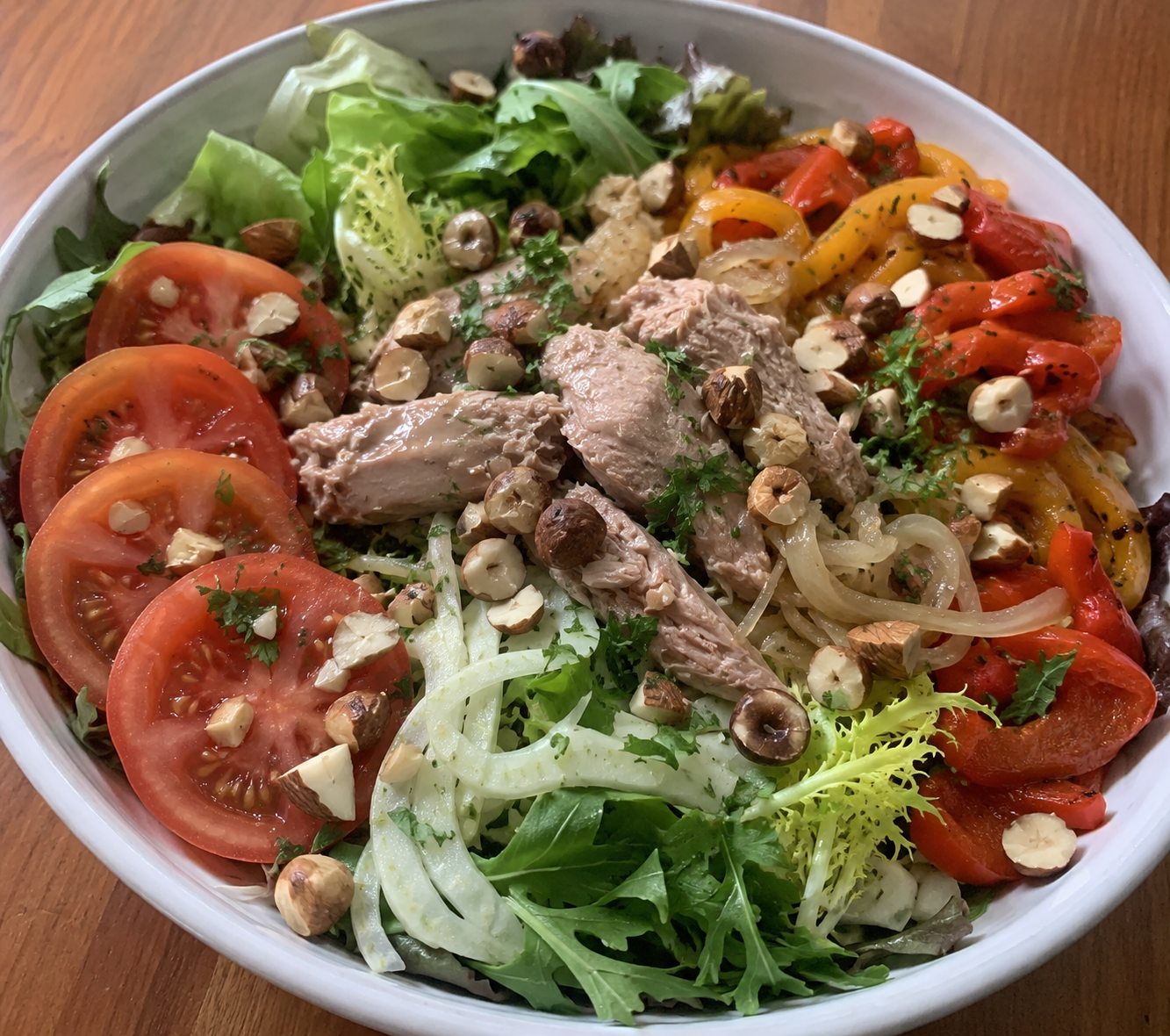
Silky wild tuna belly draped over ripe tomatoes, piquillo peppers, sweet onion, and a rotating selection of seasonal vegetables, with a bright sherry-olive oil dressing. Pristine ingredients, almost no cooking, profound flavor.
Yield: 4 servings as a starter, 2 as a main
Active: 20 min · Total: 25 min
Year-round (peak summer for tomatoes; seasonal vegetables rotate)
Ingredients
For the base salad
300 g (about 10 oz) wild-caught tuna belly (ventresca), preferably jarred in olive oil
3 ripe heirloom tomatoes, cut into thick wedges
6 piquillo peppers (or 1 large roasted red pepper), torn into strips
½ sweet white onion, very thinly sliced (Vidalia, Walla Walla, or Spanish sweet onion)
For the sherry-olive oil dressing
3 tbsp high-quality extra-virgin olive oil (Spanish single-estate)
1 tbsp aged sherry vinegar (Jerez, reserva if possible)
1 small clove garlic, very finely minced (optional)
Fleur de sel, to taste
Freshly cracked black pepper
For finishing
2 tbsp fresh flat-leaf parsley, torn
Fleur de sel
An extra drizzle of high-quality olive oil
Lemon wedges, for serving
Optional creative additions (mix and match — see seasonal variations below)
A handful of bitter greens (frisée, escarole, watercress, baby arugula, baby radicchio, dandelion greens)
A small spoonful of homemade piparra peppers, capers, or pickled guindilla chilies
Quick-pickled red onion (red onion + sherry vinegar + sea salt, 10 minutes)
A few thin slices of cured anchovy or Spanish boquerones (vinegar-cured)
2 tbsp homemade or quality store-bought sauerkraut for fermented depth
Toasted Marcona almonds, hazelnuts, or pine nuts
Shaved fennel bulb with its feathery fronds
Microgreens (sunflower, radish, pea shoots)
Edible flowers (nasturtium, calendula, borage)
Method
Assemble the base. Arrange the tomato wedges, piquillo strips, and sliced sweet onion across a wide platter. Spread evenly — this is a plate that's about visual contrast and abundance.
Make the dressing. In a small bowl or jar, whisk together the olive oil, sherry vinegar, optional minced garlic, a pinch of fleur de sel, and freshly cracked black pepper. Taste — the dressing should be bright but not sharp. Add more oil if too acidic.
Dress the vegetables. Spoon two-thirds of the dressing evenly over the vegetables. Let sit 5 minutes to let the tomatoes weep their juices and the onion soften.
Add the tuna belly. Lift the ventresca from its jar (reserve the oil for another use — drizzle over roasted vegetables or toast). Drape generous flakes of tuna belly across the top, keeping the pieces large and intact so they stay silky rather than fragmenting.
Add seasonal additions if using. Scatter your chosen bitter greens, pickled accents, ferments, nuts, fennel, microgreens, or edible flowers across the salad.
Finish. Scatter the torn parsley across the platter. Drizzle the remaining dressing over the tuna belly. Finish with a pinch of fleur de sel, a final drizzle of olive oil, and freshly cracked black pepper.
Rest 5 minutes. Let the salad sit briefly at room temperature so the flavors marry and the tuna belly fat softens. Serve with lemon wedges alongside for squeezing.
Seasonal Variations
The bones of this salad stay the same — ventresca, dressing, herbs, finishing salt. The vegetables and accents rotate with the season.
Spring (March–May)
Base swap: Replace the tomatoes with thinly sliced raw spring radishes (French breakfast, watermelon, or daikon) and shaved spring carrots.
Greens: Tender butter lettuce, baby pea shoots, or wild arugula.
Special additions: Lightly blanched green or white asparagus, fresh peas (raw, from the pod), pickled ramps, wild garlic flowers.
Herb: Fresh chervil, mint, and chives instead of (or alongside) the parsley.
Ferment: A small spoonful of homemade or quality kraut, or pickled ramp bulbs.
Summer (June–August) — the canonical version above
Late Summer / Early Autumn (August–October)
Base swap: Mix the tomatoes with grilled or oven-charred eggplant slices and roasted bell peppers (red, yellow, orange).
Greens: Mature arugula or wild rocket.
Special additions: Grilled fresh figs, melon balls (cantaloupe or Galia), thin slices of cured anchovy, capers in brine, piparra peppers.
Herb: Fresh basil and oregano alongside the parsley.
Ferment: Spicy homemade kimchi or quality kraut.
Autumn (October–December)
Base swap: Replace the tomatoes with roasted winter squash (kabocha or delicata, cooled to room temperature), roasted beets (rainbow if available), and roasted red onion.
Greens: Bitter dandelion greens, frisée, or radicchio (Treviso, Castelfranco, or Chioggia — beautiful red-and-white colors).
Special additions: Roasted persimmon or ripe pear slices, toasted hazelnuts or walnuts, a small handful of pomegranate seeds for color, thin slices of fresh fennel.
Herb: Fresh thyme leaves, sage chiffonade, and parsley.
Ferment: Sauerkraut with caraway, or fermented beets.
Winter (December–February)
Base swap: Replace the tomatoes with roasted parsnips, salsify, or celeriac (peeled and roasted at 400°F for 35 minutes); shaved fennel bulb; thin slices of raw Belgian endive.
Greens: Watercress, mâche (lamb's lettuce), pea shoots from a winter greenhouse, or bitter chicories (escarole, frisée, endive).
Special additions: Pickled red onion, candied citrus zest or blood orange segments, marinated artichoke hearts, brined olives (Castelvetrano or manzanilla), Marcona almonds.
Herb: Preserved lemon (zest only, finely minced), parsley, and tarragon.
Ferment: Preserved lemon, kimchi, or pickled winter radish.
Additional Variations (year-round)
With a soft-boiled or jammy egg: Add 2–4 jammy eggs (6-minute boil, ice bath, peel) halved across the salad for added richness and a runny-yolk sauce element.
With shaved aged cheese: Shave aged Manchego, queso Idiazábal, or Pecorino Sardo across the salad just before serving.
With grilled bread (omit for grain-free): For non-grain-free guests, serve alongside lightly grilled sourdough rubbed with garlic and ripe tomato.
With fresh anchovies: Add 4–6 white anchovies (boquerones en vinagre) draped alongside the tuna belly.
With smoked sardines or mackerel: Substitute the tuna belly with quality tinned smoked sardines or mackerel for a different oily-fish profile.
With bonito del norte instead: Substitute with quality jarred bonito del norte (the Cantabrian albacore) — slightly leaner than ventresca but still beautiful.
With confit tuna belly: Make your own ventresca by gently confit-cooking a fresh tuna belly piece in olive oil with a smashed garlic clove at 60–70°C / 140–160°F for 25 minutes, then cooling it in the oil. Genuinely transformative if you can find fresh wild tuna belly.
Appetizer presentation: Place small portions of tuna belly + tomato wedge + piquillo strip + sweet onion on small toasted gluten-free toasts or cucumber rounds. Top with parsley and a drop of olive oil. Pierce with a small skewer.
Larger meal version: Serve alongside grilled wild fish, slow-roasted chicken, or pan-seared scallops for a full dinner course.
Sourcing
Wild tuna belly (ventresca). Look for jarred or canned ventresca de bonito del norte (the Cantabrian albacore) or ventresca de atún (bluefin or yellowfin tuna belly). Pole-and-line-caught and sustainably sourced is the gold standard. The fish should be silky, almost flesh-pink, packed in olive oil (not "sunflower oil" or other seed oils). Avoid commercial canned tuna — it's a completely different ingredient. Reliable Spanish brands: Conservas Ortiz (Bermeo, Basque Country — the benchmark), Conservas Yurrita, Don Bocarte, Maisor, Conservas Olasagasti. U.S. specialty importers: La Tienda, Despaña Brand Foods, Mercado Little Spain."
Tomatoes. Peak summer is when this salad genuinely shines. Look for heirloom varieties at a farmers' market — Brandywine, Cherokee Purple, Green Zebra, Black Krim, or local heirloom varieties. The tomatoes should be deeply fragrant and yield to gentle pressure. Out of season, this salad needs the seasonal variations above (the tomatoes are not optional in the canonical version — without truly ripe tomatoes, make the autumn or winter version instead).
Piquillo peppers. Look for jarred Spanish piquillos from Navarra — sweet, slightly smoky, and naturally roasted over open flame. Look for "piquillos de Lodosa" specifically — the DO designation indicates quality. Avoid the cheaper "roasted red pepper" substitutes that lack the piquillo's specific smokiness. Reliable brands: Matiz, Pimientos del Piquillo de Lodosa DO, Conservas El Navarrico.
Sweet white onion. Vidalia, Walla Walla, Spanish sweet onion, or local seasonal sweet onion. Should be firm with crisp papery skin. Slice paper-thin for the best texture in the salad.
Aged sherry vinegar. From the Jerez region of Spain, aged in oak barrels minimum 6 months. Look for "Reserva" or "Vinagre de Jerez DO" on the label. Don Bruno, Capirete, or specialty Spanish importers.
High-quality extra-virgin olive oil. Single-estate Spanish oils (Picual, Hojiblanca, Arbequina varieties), harvest-dated within the last 12 months, in a dark glass bottle. Should smell fresh, green, slightly peppery — never musty or rancid.
Fresh flat-leaf parsley. Italian flat-leaf, not curly. From a farmers' market or windowsill pot for the freshest flavor.
Fleur de sel. French Guérande or Brittany; or Spanish flor de sal from the salt flats of Cádiz, Alicante, or Mallorca.
Sea salt for cooking. Baja Gold mineral sea salt.
Optional accents:
Piparra peppers (Basque green pickled chilies): Conservas Yurrita, La Tienda, Despaña.
Capers in brine (not in vinegar): Salina Sicilian capers, or Spanish alcaparras.
Boquerones en vinagre (vinegar-cured white anchovies)
Sauerkraut— refrigerated, unpasteurized, live cultures.
Marcona almonds: Skin-on or skin-off, fried in olive oil and salted.
Storage
Assembled salad: Best the day it's made — within 2–3 hours of assembly. The tomatoes weep moisture and the dressing pools at the bottom; the texture changes meaningfully after a few hours.
Prepped components (separate):
Tomatoes: don't pre-cut — slice just before serving for the best texture and color.
Piquillo peppers, sliced onion: refrigerated up to 3 days, sealed.
Dressing: refrigerated up to 1 week in a sealed jar. Re-whisk before using.
Tuna belly (unopened): pantry shelf-stable up to 2 years (quality improves with brief aging).
Tuna belly (opened): refrigerated up to 2 days in its own oil, sealed.
Bitter greens: refrigerated up to 3 days in a damp paper towel.
Why This Salad
Wild tuna belly — clean marine fat and complete protein. Ventresca is the highest-fat cut of the tuna, delivering EPA and DHA omega-3 fatty acids (the long-chain marine fats critical for brain, retinal, and mitochondrial membrane function), complete protein, vitamin D₃, selenium, and B12. The fat profile of wild bonito del norte (Cantabrian albacore) and small bluefin is meaningfully different from commercial canned tuna — much richer, more bioavailable, and far lower in mercury than larger industrial bluefin or longline-caught tuna.
A note on tuna sustainability. This is genuinely worth taking seriously. Choose pole-and-line-caught bonito del norte (albacore from the Cantabrian Sea) or wild yellowfin/skipjack tuna from sustainable fisheries. Avoid commercial bluefin (often endangered) and avoid longline-caught tuna (significant bycatch). The Spanish Atlantic albacore fishery has long been a model of artisan sustainability — small boats, pole-and-line fishing, and family canneries that have operated for generations.
Tomatoes — lycopene, vitamin C, and potassium. Ripe heirloom tomatoes deliver lycopene (the carotenoid associated with vascular and prostate health), vitamin C, potassium, and a range of polyphenols. Lycopene is actually more bioavailable when paired with the kind of olive oil and fish fats in this salad — the fat-soluble compound needs fat for absorption.
Piquillo peppers — vitamin C and capsaicin polyphenols. Sweet Spanish piquillo peppers deliver vitamin C (red bell peppers contain more per gram than oranges), beta-carotene, vitamin B6, and the capsaicin-family polyphenols with anti-inflammatory effects. The slow roasting traditionally used in Lodosa, Navarra also concentrates the sugars and develops Maillard compounds.
Sweet onion — sulfur compounds and quercetin. Raw sweet onion delivers allicin (antimicrobial), quercetin (anti-inflammatory polyphenol), and inulin (prebiotic fiber that feeds beneficial gut bacteria). The thin slicing helps with digestibility.
Olive oil — monounsaturated fats and polyphenols. Single-estate Spanish olive oil delivers oleic acid (a monounsaturated fat with documented cardiovascular benefits), olive polyphenols (hydroxytyrosol, oleuropein, oleocanthal — the last specifically with anti-inflammatory effects), and squalene. The polyphenol content drops over time, so harvest-dated oils within 12 months are genuinely better than older bottles.
Sherry vinegar — gut-supporting acetic acid and polyphenols. Aged Jerez sherry vinegar delivers acetic acid (which supports digestion and stomach acid production), polyphenols from the wine and oak aging, and the distinctive nutty-acidic character that only barrel-aged sherry vinegar carries. Different from rice vinegar or balsamic — the Jerez DO designation matters.
Fermented and bitter accents — gut microbial support and digestive bitterness. The optional sauerkraut, capers, piparras, boquerones, or radicchio family deliver live cultures (from the ferments) and bitter compounds (from the greens and pickled chilies) that support stomach acid production, bile flow, and overall digestion. Bitter compounds in food are genuinely one of the underappreciated nutrient categories in modern eating — most ancestral food cultures included bitter accents at every meal.
— Anna aka Food Marshall