ROASTED PORK with Crackling Skin and Clove-Lemon (+ ADDITIONAL SIDES AND TACO VARIATIONS)
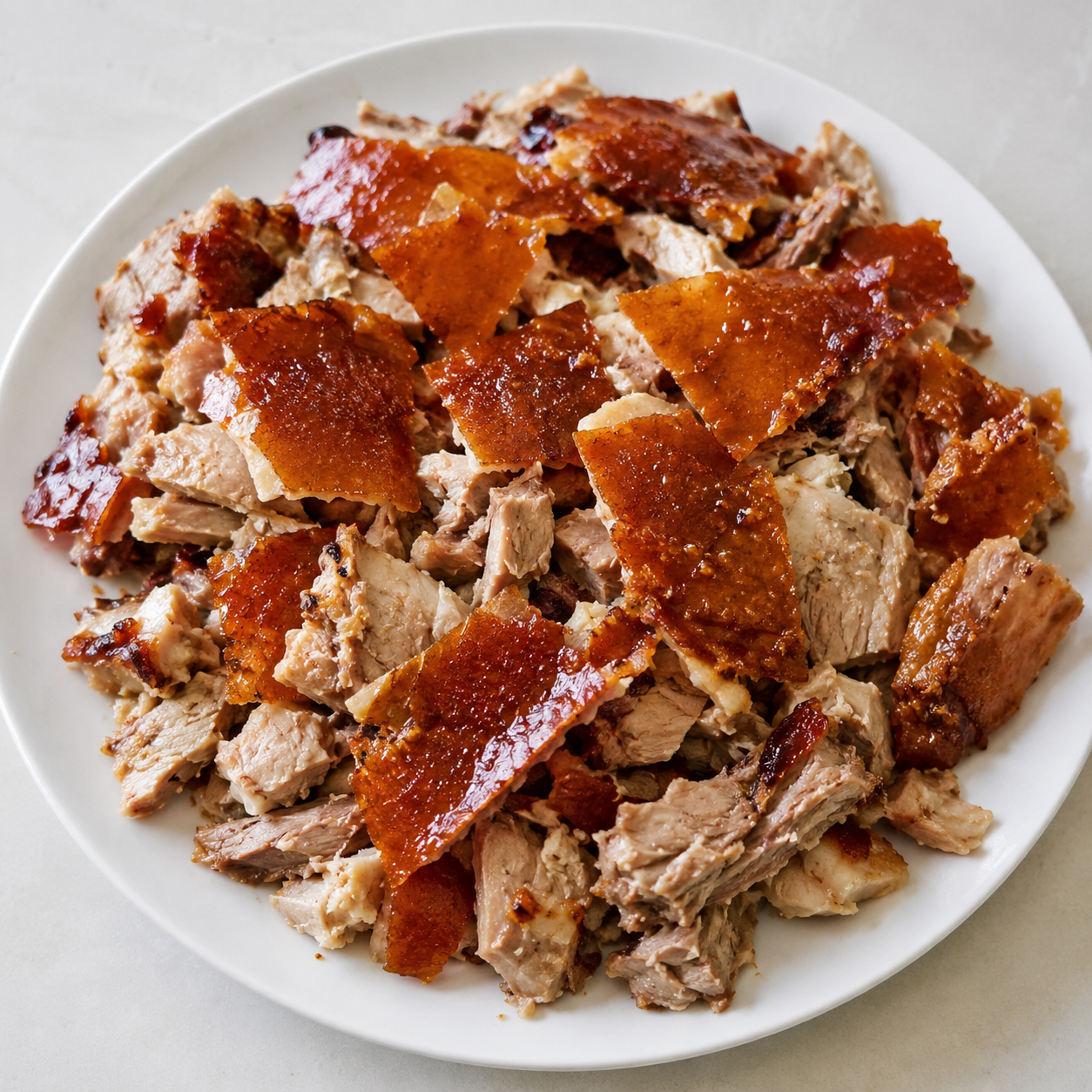
A whole suckling pig rubbed with a garlic-pepper-lard paste, roasted slowly until the skin shatters like glass, perfumed with a clove-studded lemon tucked in the cavity. Served whole with delicious sides and repurposed across the week into lettuce cups, tacos, scrambled eggs, hash, and bone broth.
Yield: 6–10 servings (1 whole 2–3 kg / 4½–6½ lb suckling pig, or 2–3 kg / 4½–6½ lb pork belly + shoulder roast)
Active: 30 min · Total: 3–4 hr (plus overnight marination)
Peak winter–early spring
Ingredients
For the suckling pig or pork roast
1 whole pasture-raised suckling pig (2–3 kg / 4½–6½ lb dressed weight), or 2–3 kg / 4½–6½ lb pasture-raised pork belly + pork shoulder roast (combined, or use one or the other)
1 whole head garlic, peeled and pounded to a paste
2–3 tbsp pastured lard or rendered pork fat
1½ tbsp ground white pepper
1 tsp freshly cracked black pepper
2 tbsp Baja Gold or other unrefined sea salt (plus extra for the skin)
3 bay leaves, crushed and finely ground in a mortar
½ cup dry white wine (Portuguese options: Bairrada, Vinho Verde, or Alvarinho)
1 lemon (preferably Algarve or organic navel), studded with 8–10 whole cloves
Additional sea salt, for rubbing the skin
For basting and finishing
¼ cup additional rendered pork fat or lard
¼ cup dry white wine + 2 tbsp pan juices, whisked together for basting
1 additional lemon, cut into wedges, for serving
Fleur de sel, for finishing
Method
Day before roasting
Make the garlic-pepper paste. In a large mortar or sturdy bowl, pound the peeled garlic with the sea salt until you have a smooth paste. Add the white pepper, black pepper, and crushed bay. Pound to integrate. Slowly work in the lard and the white wine until you have a loose, spreadable paste.
Rub the meat. Position the suckling pig (or pork roast) on a clean surface, skin-side up. Using your fingers and a small spatula, work the garlic-pepper paste deep into the flesh side — into every cavity, fold, and crease. Be generous; this is what flavors the meat through.
Salt the skin (separately). This is the critical step for glass-crackling skin: leave the outer skin/rind completely dry. Rub the skin generously with additional plain sea salt (no oil, no paste, no liquid). Salt draws out moisture, and dryness is what creates the glass-shatter crackling.
Marinate uncovered. Place the pig (or roast) on a wire rack set over a sheet pan and refrigerate, uncovered, overnight (or up to 24 hours). The skin must dry out completely — a tacky or moist skin will not crackle properly.
Day of roasting
Preheat the oven to 425°F. Position a rack in the lower-middle position.
Prep the cavity. Using a sharp paring knife or skewer, push 8–10 whole cloves into the flesh of the lemon — like a pomander. Tuck the clove-studded lemon into the cavity of the suckling pig (or place beside the pork roast if using). The lemon and cloves will perfume the meat as it roasts.
Blistering blast. Place the pig (or roast) skin-side up on a wire rack set over a large sheet pan or in a roasting pan. Roast at 425°F for 20–25 minutes — this initial high heat blisters the skin and begins the crackling process. The skin should be visibly tightening and forming small bubbles.
Drop the heat and roast slow. Reduce the oven to 325°F. Continue roasting:
Small suckling pig (2–2.5 kg): 2–2½ hours total at lower temp
Pork belly + shoulder roast (2–3 kg): 3–3½ hours total at lower temp
Internal temperature target: 195°F / 90°C at the thickest part of the shoulder (the meat should be fork-tender and pull easily from the bone)
Baste every 30 minutes with the rendered pork fat and wine mixture. Don't baste the skin itself — only the meat cavity and any exposed flesh. The skin needs to stay dry to crackle.
Final glass-crackling blast. Once the meat is fork-tender, increase the oven to 475°F (or use the broiler on high). Roast 8–12 minutes more, watching carefully, until the skin is deeply golden-bronze and shatters when tapped with the back of a knife. If the skin is being uneven, you can use a small kitchen blowtorch to spot-blister any areas that need extra heat.
Rest. Remove from the oven and rest the pig for 20–25 minutes (this is critical — the juices redistribute and the meat becomes tender). Tent loosely with parchment paper, not foil (foil can soften the crackling skin).
Carving and serving
Carve into chunks (bocados). Traditional Portuguese serving doesn't slice the pig neatly — it's hacked into rough chunks called bocados, with each piece carrying both meat and crackling skin. Use a heavy cleaver and crack the skin first; the meat below should pull apart easily. Save the bones and any unused pieces for bone broth.
Plate. Pile the chunks on a warm platter. Squeeze the roasted clove-lemon over the meat (the warm citrus oil and clove infuse beautifully). Finish with fleur de sel and freshly cracked pepper. Serve with the additional lemon wedges and vegetables sides (as outlined below).
Sides
Garlicky sautéed turnip greens or broccoli rabe — Wilt 1 lb tender greens in 3 tbsp olive oil with 4 sliced garlic cloves and a pinch of chili. Finish with a squeeze of lemon and sea salt.
Crispy roasted baby potatoes in rendered pork fat — Boil 1½ lb halved baby potatoes until just tender, drain, smash gently, then roast at 425°F in 3 tbsp rendered pork fat (from the leitão pan!) for 25 minutes until deeply golden. Finish with sea salt and fresh thyme.
Orange-and-watercress salad — Toss 4 cups watercress with segments of 2 oranges (Algarve or blood orange when in season), thinly sliced red onion, 2 tbsp aged sherry vinegar, and 3 tbsp olive oil. Finish with toasted slivered almonds. Cuts the richness beautifully.
Cauliflower mashed with butter and roasted garlic — For a grain-free alternative to the traditional rice; steam 1 head cauliflower, mash with 3 tbsp grass-fed butter, 4 cloves roasted garlic, sea salt, and freshly cracked pepper.
Pan-roasted apple slices — A small dish of pan-roasted apple slices (in pork fat with a sprinkle of cinnamon) on the side for sweet-savory contrast.
Ways to Serve and Repurpose
A whole suckling pig yields meaningfully more meat than a single dinner — and that's actually the genius of the dish. Below are five ways to use the leftovers.
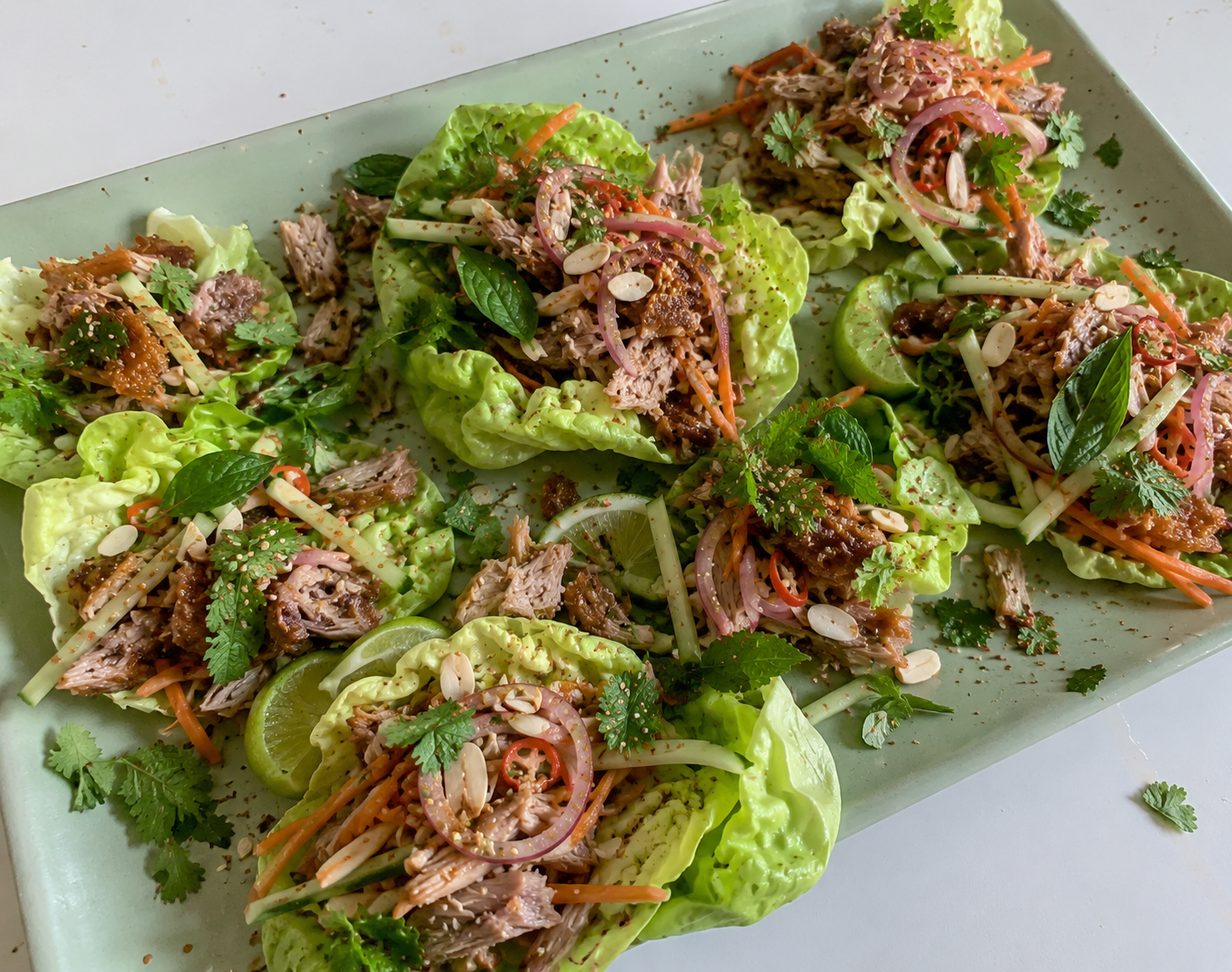
1. Suckling Pig Lettuce Cups
Yield: 12 cups · Active: 20 min
Ingredients:
2 heads Little Gem lettuce, separated into individual leaves, or 1 head butter lettuce
2 cups shredded leftover suckling pig (warm or room temperature), with crispy skin chopped and added back in
1 small red onion, thinly sliced and quick-pickled (steep in 2 tbsp apple cider vinegar + 1 tsp sea salt for 15 minutes)
1 cup matchstick carrots
1 cup thinly sliced cucumber
1 small Fresno or Thai chili, thinly sliced (optional)
½ cup fresh cilantro leaves
¼ cup fresh mint leaves, torn
2 tbsp fresh Thai basil leaves (or regular basil), torn
⅓ cup toasted slivered almonds, pine nuts, or Marcona almonds
2 tbsp toasted sesame seeds
Lime wedges, for serving
Dipping sauce options (choose one or set out multiple):
Garlic-cilantro sauce. Blend ½ cup olive oil + ¼ cup fresh cilantro + 3 cloves garlic + 2 tbsp lemon juice + sea salt.
Asian-style ginger-aminos sauce. Whisk ¼ cup coconut aminos + 2 tbsp rice vinegar (or apple cider vinegar) + 1 tbsp grated fresh ginger + 1 clove garlic minced + 1 tsp toasted sesame oil + 1 tsp raw honey.
Spicy tahini-lime sauce. Whisk ¼ cup raw tahini + 3 tbsp lime juice + 2 tbsp filtered water + 1 tbsp coconut aminos + 1 clove garlic minced + ½ tsp chili flakes + pinch sea salt.
Avocado-cilantro crema. Blend 1 ripe avocado + ½ cup full-fat coconut cream + ¼ cup fresh cilantro + juice of 1 lime + 1 garlic clove + sea salt until silky.
Quick romesco-style sauce. Blend 1 jarred roasted red pepper + ¼ cup toasted almonds + 2 tbsp aged sherry vinegar + 2 tbsp olive oil + 1 garlic clove + smoked paprika + sea salt.
Method: Arrange the lettuce leaves on a platter. Pile the shredded pork in a serving bowl. Set out small bowls of pickled onion, carrots, cucumber, chili, herbs, nuts, and sesame seeds. Set out 1–3 dipping sauces. Let guests assemble their own: lettuce → pork → toppings → sauce → roll and eat.
2. Suckling Pig Tacos
Yield: 12 tacos · Active: 25 min
Ingredients:
12 grain-free cassava-flour tortillas (Siete brand or homemade), or 12 large Little Gem leaves, or 12 large butter lettuce leaves, or 12 small savoy cabbage leaves (blanched 20 seconds in boiling water)
3 cups shredded leftover suckling pig (warmed, with chopped crackling skin)
1 ripe avocado, sliced or smashed
1 small red onion, thinly sliced and quick-pickled (apple cider vinegar + sea salt + a squeeze of lime, 15 minutes)
1 cup fresh cilantro leaves
½ cup fresh mint leaves
1 jalapeño or Fresno chili, thinly sliced (optional)
1 cup raw shredded purple cabbage (for crunch)
½ cup quality salsa verde (homemade or store-bought tomatillo)
Crumbled queso fresco or grated aged Manchego (optional, if dairy tolerated)
4 lime wedges, for serving
Dipping/topping sauces:
The avocado-cilantro crema from the lettuce cup section above
A classic salsa verde (charred tomatillos, jalapeño, garlic, cilantro, lime, sea salt — blended)
A smoky chipotle-lime sauce (blend 2 chipotles in adobo + 2 tbsp lime juice + 3 tbsp olive oil + ½ tsp sea salt + 1 garlic clove)
Method: Warm the cassava tortillas in a dry skillet (30 seconds per side) or use cool lettuce/cabbage as the wrap. Fill each with shredded pork, a slice of avocado, pickled onion, cilantro, mint, optional chili, and shredded cabbage. Top with salsa verde or chipotle sauce. Squeeze lime over. Eat immediately.
3. Crackling-Topped Soft Scrambled Eggs
Yield: 2 servings · Active: 10 min
Ingredients:
6 pastured eggs
2 tbsp grass-fed butter
½ cup shredded leftover suckling pig
½ cup crispy crackling skin (recrisped briefly in a dry pan), chopped or crumbled
2 tbsp finely sliced chives or scallion
Sea salt and freshly cracked black pepper
Hot sauce, for serving (optional)
Method:
Recrisp the crackling skin in a dry skillet over medium heat for 2 minutes until shattering-crisp again.
Warm the shredded pork in a small skillet with a splash of olive oil.
Whisk the eggs with a pinch of sea salt. Melt the butter in a small skillet over low heat. Pour in the eggs and stir gently and continuously with a rubber spatula, pulling the eggs from the edges to the center. Cook 3–4 minutes until just set but still soft and creamy.
Divide between 2 warm plates. Top with the warm shredded pork, then crown with crumbled crackling skin. Scatter chives. Finish with sea salt and freshly cracked pepper.
4. Pork & Greens Hash
Yield: 4 servings · Active: 25 min
Ingredients:
2 tbsp rendered pork fat or olive oil
1 lb baby potatoes, boiled until just tender, halved or quartered (or 1 lb pre-roasted potatoes from yesterday)
1 small yellow onion, finely diced
3 cloves garlic, sliced
1 bunch turnip greens, broccoli rabe, or kale, stems trimmed and roughly chopped
2 cups shredded leftover suckling pig
½ cup chopped crackling skin (optional)
4 pastured eggs
2 tbsp grass-fed butter or duck fat (for frying eggs)
Sea salt and freshly cracked black pepper
Hot sauce, for serving
Fresh chopped parsley
Method:
Crisp the potatoes. Heat 2 tbsp pork fat in a large cast-iron or stainless steel skillet over medium-high heat. Add the potatoes cut-side down and cook 6–8 minutes without moving, until deeply golden and crispy. Flip and cook another 4 minutes.
Add the onion and garlic. Push potatoes to one side and add the diced onion and sliced garlic. Cook 4 minutes until softened.
Add the greens. Add the greens. Add the turnip greens, broccoli rabe, or kale to the pan. Stir to combine and cook 3–4 minutes until wilted and bright.
Add the pork. Add the shredded suckling pig and optional crackling skin. Toss everything together. Cook 2–3 minutes until the pork is warmed through and crispy in spots. Season with sea salt and pepper.
Fry the eggs. In a separate small skillet, heat the butter over medium-high heat. Crack the eggs in, cook 2–3 minutes until whites are set but yolks are runny.
Serve. Divide the hash among 4 warm plates. Top each with a fried egg. Scatter fresh parsley. Serve with hot sauce.
5. Suckling Pig Bone Broth
Yield: 2–3 quarts · Active: 15 min · Total: 12–24 hours
Ingredients:
All bones, carcass, and pan drippings from the roasted suckling pig (collected in a sealed container after the meal)
1 large onion, halved
1 head garlic, halved horizontally
2 bay leaves
1 tbsp whole black peppercorns
2 stalks celery, chopped (optional)
1 large carrot, chopped (optional)
2 tbsp apple cider vinegar (helps extract minerals from the bones)
4 quarts filtered water (or enough to cover the bones)
Sea salt, to taste (add at end)
Method:
Place all bones, carcass pieces, and pan drippings in a large stockpot or slow cooker. Add the aromatics (onion, garlic, bay, peppercorns, optional celery and carrot) and the apple cider vinegar. Pour in enough filtered water to cover the bones by 2 inches.
Slow simmer. Bring just to a simmer (not a rolling boil — that produces a cloudy broth). Reduce heat to lowest setting. Simmer 12–24 hours for a deeply gelatinous, mineral-rich broth. The longer the simmer, the more collagen and minerals extracted. Skim any foam that rises to the surface in the first 2 hours.
Strain. After 12–24 hours, strain the broth through a fine-mesh strainer or cheesecloth into clean glass jars or storage containers.
Cool and store. Cool to room temperature, then refrigerate. The broth should set into a gelatinous jelly when cold — that's the sign of a well-extracted broth. Skim off any solidified fat (save it for cooking).
Use: Sip warm in mugs with sea salt and fresh herbs; use as a base for soups or stews; freeze in mason jars for longer storage (up to 6 months).
Sourcing
Whole pasture-raised suckling pig. This is the structural ideal — a whole 4–6 week old, milk-fed pig from a pasture-raised farm. Find local pasture-raised farms via Eatwild.com. The pig should be fully cleaned and dressed; some farms will quarter or cut the pig if you don't have a large enough roasting pan.
Pork belly + pork shoulder (alternative). If a whole suckling pig isn't available, a combined 2–3 kg pork belly and shoulder roast from a pasture-raised farm delivers similar results with the same rub and method. Look for U.S. heritage breed pork (Berkshire, Mangalitsa, Tamworth, Red Wattle).
Pastured lard. Rendered pork fat from pasture-raised pigs. Fatworks, Epic Pork Fat, or render your own from leftover pork fat trimmings. Refrigerator-stable for 6 months; freezer for 1 year. One of the finest cooking fats — high smoke point and rich flavor.
White pepper. Look for whole white peppercorns (not pre-ground). White pepper has a more subtle, slightly fermented character than black pepper — genuinely important for this rub.
Bay leaves. Fresh or dried Turkish or Mediterranean bay (laurel nobilis), not California bay. Should smell deeply herbal and slightly sweet.
Cloves. Whole cloves, not ground. Should be plump, oily, and aromatic.
Coconut aminos (for the Asian-style lettuce cup sauce). Coconut Secret raw coconut aminos. Soy-free, lower-sodium alternative to soy sauce.
Cassava-flour tortillas (for tacos, alternative). Siete Foods Cassava Tortillas are the most accessible grain-free option. Single-ingredient is preferred — check labels.
Fresh cilantro, mint, Thai basil, parsley, chives. From a farmers' market, windowsill pot, or organic produce section.
Quick-pickled red onion components. Bragg's apple cider vinegar (raw, with the mother) is the benchmark.
Sea salt. Baja Gold mineral sea salt for the cooking rub, fleur de sel for finishing.
Storage
Whole roasted suckling pig: Best the day made (especially the crackling skin). Once cooled, store leftover meat separately from skin to preserve skin texture. Refrigerated up to 4 days, sealed.
Shredded suckling pig: Refrigerated up to 4 days, sealed in glass containers. Reheat gently in a covered skillet with a splash of bone broth or olive oil. Freezes beautifully for up to 3 months — perfect for future quick meals.
Crispy crackling skin: Best the day made. After a day in the refrigerator, the skin softens — recrisp briefly in a dry skillet over medium heat for 2 minutes before serving. Don't store in plastic, which traps moisture and softens the crackling further.
Pan drippings and rendered pork fat: Strain through a fine-mesh strainer into a clean glass jar. Refrigerator-stable up to 6 months; freezer-stable up to 1 year. One of the most prized cooking fats — use for roasting potatoes, sautéing vegetables, or searing meats.
Lettuce cup components (prepped separately): Pickled onions, shredded vegetables, herbs — refrigerated up to 3 days. Lettuce leaves — refrigerated up to 5 days, wrapped in a damp paper towel.
Dipping sauces: Refrigerated up to 1 week in sealed glass jars. Re-whisk before using.
Bone broth: Refrigerated up to 5 days. Freezer up to 6 months in mason jars (leave 1 inch headroom for expansion).
NOURISHMENT NOTES
Pasture-raised pork — complete protein, B vitamins, zinc, and collagen. Pasture-raised pork delivers about 26 grams of complete protein per 3.5-oz serving, plus exceptional levels of B vitamins (B1 thiamine specifically — pork is one of the richest food sources), zinc, selenium, and iron in highly bioavailable forms. The fat profile is meaningfully different from grain-fed industrial pork — higher in monounsaturated and omega-3 fats from the pigs' more varied diet. A whole suckling pig also delivers significant collagen from the skin, bones, and connective tissue — the kind that converts to glycine, proline, and gelatin during cooking.
The garlic-pepper-lard paste — flavor and traditional fat. The traditional Portuguese rub uses pastured lard rather than seed oils, plus pungent garlic (allicin, quercetin, sulfur compounds) and white/black pepper (piperine, which enhances absorption of other compounds in the meal). The bay leaves contribute eugenol and other essential oils with traditional digestive-supporting roles.
The clove-studded lemon — essential oils and warmth. Whole cloves deliver eugenol (with documented anti-inflammatory and antimicrobial effects), and the lemon zest contributes limonene and citrus polyphenols. Together they perfume the meat with warm, slightly medicinal compounds that are ancestral in their use.
Crackling skin — collagen and fat-soluble nutrients. The skin and the fat layer directly beneath it deliver collagen (which converts to gelatin and glycine), fat-soluble vitamins A, D, E, and K (from pasture-raised pork specifically), and concentrated flavor compounds from the Maillard reaction at the high-heat finish.
The lettuce cups, tacos, eggs, and hash — multi-meal nutrient repurposing. Spreading one roast across multiple meals means each individual portion is leaner and more vegetable-rich than a traditional "Sunday roast" plate. The lettuce cups and tacos add raw cruciferous vegetables (cabbage, carrots, fresh herbs) and probiotic ferments (pickled onion). The scrambled-egg breakfast adds choline, fat-soluble vitamins, and complete protein from pastured eggs. The hash adds resistant starch from cooled-and-reheated potatoes, plus the cruciferous compounds of greens like turnip greens or broccoli rabe.
Bone broth — collagen, gelatin, and mineral concentration. The bone broth made from the carcass is one of the most nutritionally dense byproducts of this preparation. Long-simmered pork bone broth delivers collagen-derived amino acids (glycine, proline, hydroxyproline), gelatin (which supports gut lining integrity), and concentrated trace minerals (calcium, phosphorus, magnesium, potassium) leached from the bones during the long cook.