Raw Zucchini lasagna
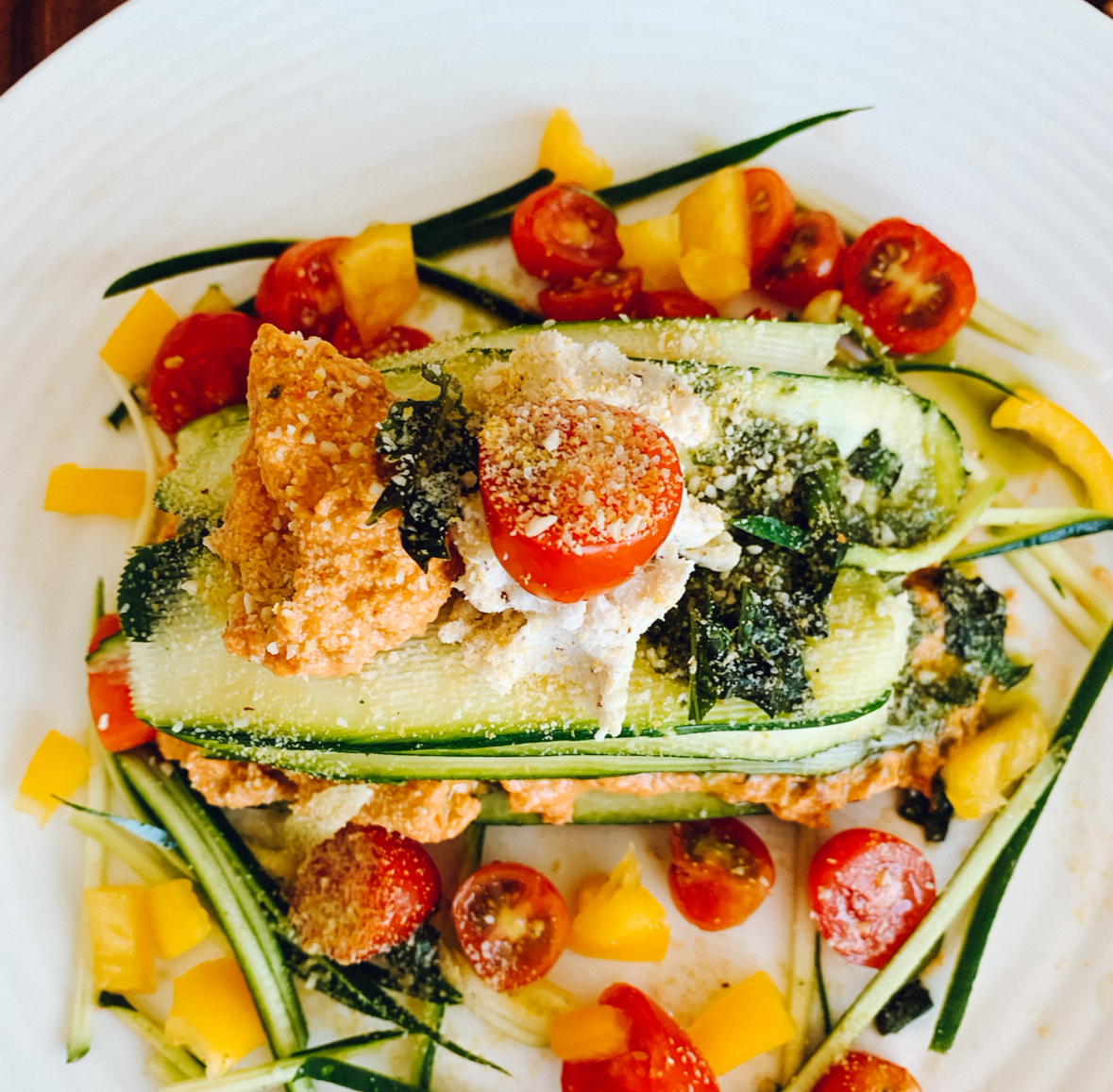
From the raw food days archive. These recipes work beautifully on their own as plant-based summer lunches, but they also welcome the addition of quality protein: oven-baked wild fish or grass-fed meatballs (lamb, beef, or turkey) on the side, fresh raw-milk ricotta in place of the cashew "cheese," and pasture-raised ground meat in place of the walnut "meat."
Raw Zucchini Lasagna with Cashew Ricotta and Three Sauces
A no-bake summer lasagna with marinara, basil pesto, and a soft cashew ricotta
Serves 6 · 1 hr active · 2 hr total · summer · early evening
Ingredients
Zucchini sheets
4 medium zucchinis
2 tbsp extra virgin olive oil
pinch sea salt
Marinara sauce
1 cup oil-packed sun-dried tomatoes (or dry, soaked in warm water 1 hour)
4 fresh tomatoes, chopped
1 small shallot, chopped
2 garlic cloves
1 tbsp dried oregano (or 1 tbsp Italian seasoning)
½ bunch fresh basil
1 tbsp lemon juice
2 tbsp extra virgin olive oil
1 tsp red pepper flakes (optional)
2 tsp sea salt
Cashew ricotta
2 cups raw cashews, soaked at least 2 hours
2 tbsp fresh lemon juice
1 tbsp nutritional yeast
1 tsp onion powder
½ tsp Himalayan pink salt
¼ cup filtered water (or as needed)
Basil pesto
1 cup packed fresh basil leaves
¼ cup pine nuts
1 garlic clove
1 tbsp lemon juice
¼ cup extra virgin olive oil
pinch Himalayan pink salt and black pepper
Garnish
2 ripe Roma tomatoes, sliced
handful fresh basil leaves, torn
Method
Prep the zucchini sheets. Slice each zucchini lengthwise on a mandoline into thin (⅛-inch) strips. Lightly drizzle with olive oil and salt to soften slightly. Set aside 15 minutes, then pat dry.
Make the marinara. Drain the soaked sun-dried tomatoes (reserving the liquid). Blend all marinara ingredients in a high-powered blender or food processor until chunky-smooth. Adjust salt and acidity.
Make the cashew ricotta. Drain the soaked cashews. Blend with all remaining ricotta ingredients in a food processor, adding water gradually until creamy. Should hold its shape on a spoon.
Make the pesto. Pulse all pesto ingredients in a food processor until coarsely combined.
Assemble. On a serving plate, lay 3 zucchini sheets slightly overlapping to form the bottom layer.
Pipe or spoon dots of marinara, then ricotta, then pesto across the zucchini.
Add a slice of Roma tomato.
Top with another zucchini layer and repeat the dots of all three sauces and the tomato.
Add a final zucchini layer. Decorate the top with cherry tomatoes, fresh basil, and a final drizzle of pesto and olive oil.
Serve immediately, or chill 30 minutes for the flavors to meld.
Nourishment Notes
The mandolin-thin zucchini sheets are doing the structural work that pasta sheets do in a traditional cooked lasagna — but with a fraction of the carbohydrate load and a substantially higher water-and-mineral content. The light salting step is critical: zucchini holds an enormous amount of water, and salting briefly draws moisture to the surface, which can then be patted away. Skipping this step results in a watery, slumping lasagna that releases liquid as it sits.
The triple-sauce architecture (marinara, ricotta, pesto) is a deliberate flavor arc. The marinara brings sweet-and-tangy depth from concentrated tomato; the cashew ricotta brings creaminess and slight nuttiness from soaked cashews and nutritional yeast; the pesto brings the green, aromatic top note from basil and pine nuts. Each layer hits a different point on the palate, which is why the assembled dish reads as complex rather than one-note. This is the same logic behind classical Italian lasagna — three textures, three flavors, layered.
Sun-dried tomatoes are the structural choice that makes the marinara substantial without long cooking. The drying process concentrates the natural glutamates in the fruit (the same compound that makes Parmigiano taste savory), which gives the raw sauce a depth that fresh tomato alone cannot match. The combination of sun-dried and fresh tomatoes here is borrowed from Sicilian pesto rosso, where both forms appear together for the same reason.
Storage: Best assembled within 2 hours of serving. The sauces alone keep separately in the refrigerator for 4 days. The zucchini sheets can be sliced 1 hour ahead and rested under salt until assembly.
Raw Zucchini Lasagna with Walnut Meat and Macadamia Cheese
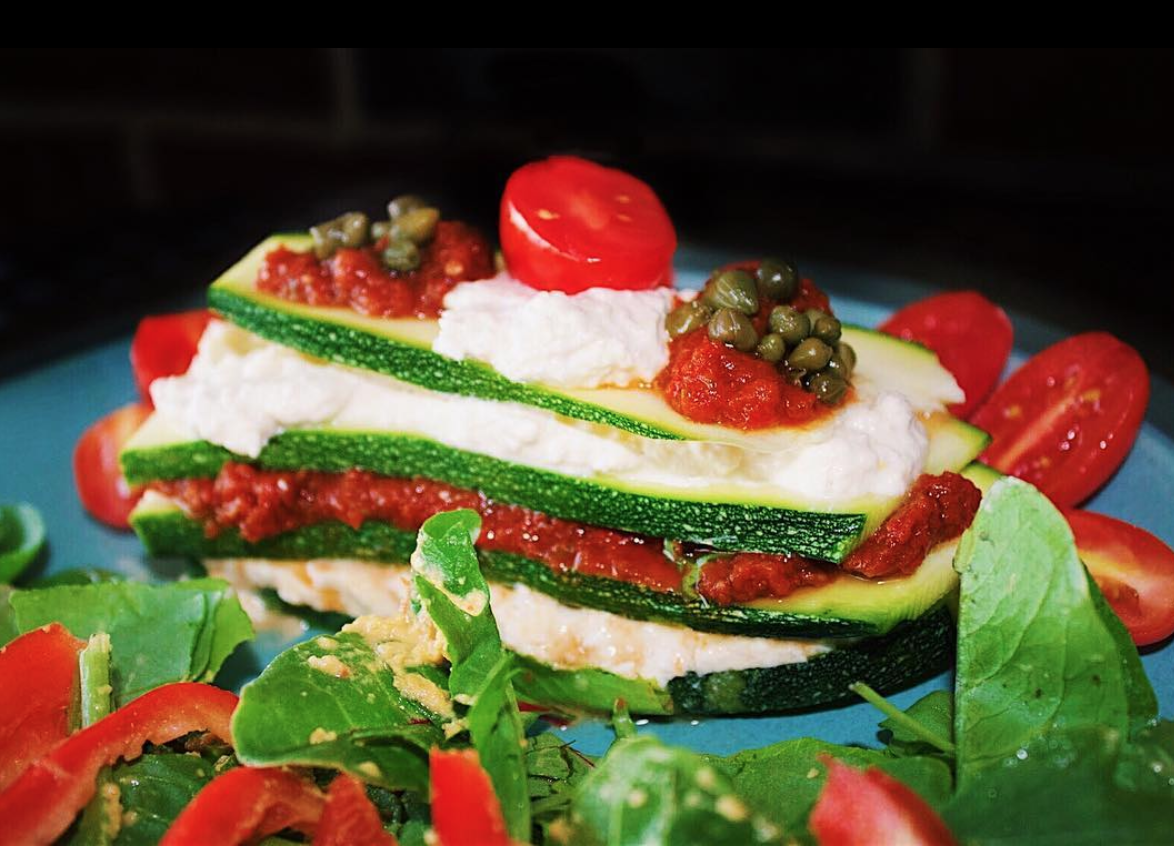
A more substantial raw lasagna with cultured macadamia cheese and a savory walnut "meat"
Serves 10 · 1 hr 30 min active · 36 hr total (with cheese culturing) · summer · early evening
Ingredients
Macadamia cheese (cultured)
1 cup raw macadamia nuts, soaked 8 hours
½ cup filtered water (or more as needed)
½ tsp probiotic powder
¼ tsp sea salt
1 tsp nutritional yeast
½ tsp lemon juice
1 tsp onion powder
¼ tsp garlic powder
Walnut meat layer
1 cup raw walnuts, soaked 1 hour
½ cup sun-dried tomatoes, soaked 1 hour
1 tbsp brown miso
1 tbsp tamari (or coconut aminos)
1 tsp lemon juice
Tomato sauce
1 ½ cups sun-dried tomatoes, soaked 2 hours
4 fresh tomatoes
2 medjool dates, pitted
2 garlic cloves
1 tbsp Italian herb mix
2 tbsp extra virgin olive oil
1 tbsp lemon juice
Basil pesto
2 cups packed fresh basil leaves
½ cup pine nuts
3 tbsp extra virgin olive oil
1 garlic clove
1 tbsp lemon juice
2 tsp nutritional yeast
½ tsp sea salt
Wilted spinach
7 oz fresh spinach
¼ tsp sea salt
Assembly
4 zucchinis, mandolin-sliced lengthwise
2 ripe tomatoes, thinly sliced
10 fresh basil leaves, cut chiffonade
Method
Cultured macadamia cheese — first stage. Blend the soaked macadamia nuts with water and probiotic powder in a high-powered blender until smooth.
Transfer to a strainer lined with cheesecloth. Place a small weight on top — heavy enough to gently press out moisture but not so heavy that the cheese pushes through the cloth.
Leave to culture 24–36 hours at room temperature.
Second stage. Mix the cultured cheese with salt, nutritional yeast, onion powder, garlic powder, and lemon juice. Refrigerate, sealed, for up to 2 weeks.
Walnut meat. Pulse all walnut meat ingredients in a food processor until cohesive but slightly chunky.
Tomato sauce. Blend all sauce ingredients in a high-powered blender until smooth.
Pesto. Pulse all pesto ingredients in a food processor until coarsely combined.
Wilted spinach. Massage the spinach with the salt in a bowl until it wilts down significantly. Drain off excess liquid.
Assemble. On a plate, lay 4 zucchini strips slightly overlapping.
Spread a layer of tomato sauce, then macadamia cheese, then walnut meat, then pesto, then wilted spinach.
Add 2 thin slices of tomato.
Lay another zucchini layer on top and repeat the filling steps.
Garnish with a quenelle of macadamia cheese, small-diced fresh tomato, fresh black pepper, and basil chiffonade.
Serve immediately.
Nourishment Notes
Cultured macadamia cheese is a relatively recent invention from the modern raw-food world but follows the same principle as traditional dairy fermentation. Probiotic-cultured nut cheese begins as a simple nut-and-water purée and develops a tangy, complex flavor profile over 24–36 hours as the bacteria consume the natural sugars in the nut and produce lactic acid. The result reads remarkably similar to a soft fresh cheese on the palate, which is why this version of raw lasagna substitutes for the dairy ricotta in a traditional lasagna.
The walnut-meat layer is doing what ground beef would do in a cooked lasagna — providing substantial body, protein, and savory umami flavor. The combination of walnut, sun-dried tomato, miso, and tamari creates a deep, almost meaty taste profile that the palate reads as a beef ragu. This is the same flavor architecture behind many vegan "ground beef" alternatives, and the raw version here keeps all the enzymes intact.
The 36-hour ferment time on the cheese is non-negotiable for the final flavor. A shorter ferment (8–12 hours) produces a flat, almost-floury cheese; a longer one (48+ hours) goes too sour and breaks down structurally. The 24–36 hour window is where the bacteria have produced enough lactic acid to develop the characteristic cheese tang but the cheese still holds its shape. This is the same principle behind traditional buttermilk and crème fraîche fermentation — same chemistry, different substrate.
Storage: Cheese keeps refrigerated 2 weeks; assembled lasagna keeps 1 day before the zucchini softens.