Zucchini Involtini and Ravioli
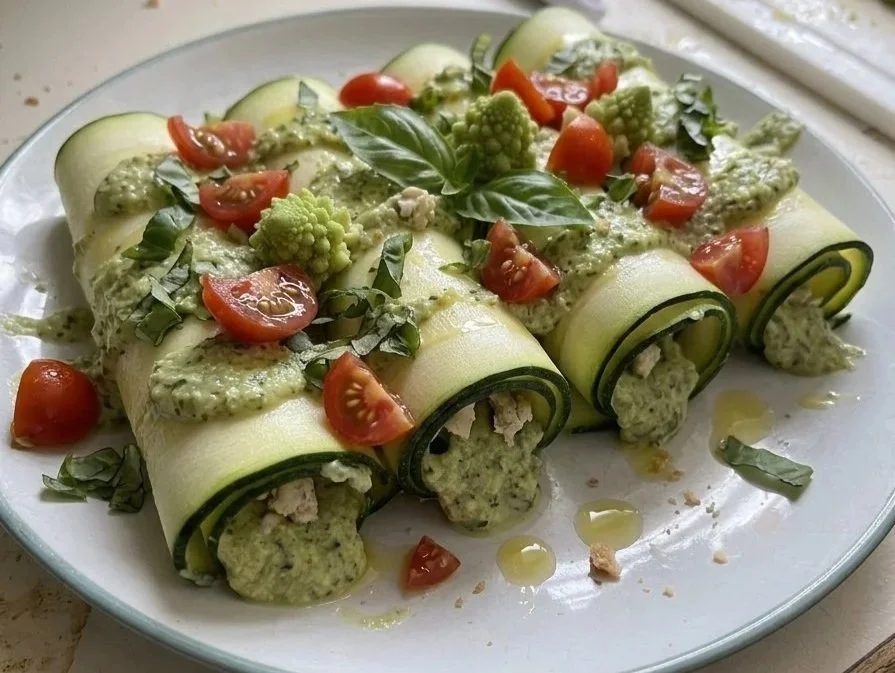
Involtini vs. Ravioli: What's the Difference?
Both are Italian ways of wrapping a filling. The difference is in the shape.
Involtini means "little bundles" in Italian. Thin slices of meat, eggplant, or zucchini are rolled around a filling, then served simply, warm or at room temperature, or baked in sauce until bubbling. In Italian-American kitchens, you'll often see the same dish called rollatini, especially the saucy, baked version, like classic eggplant rollatini.
Ravioli are sealed pockets rather than rolls. Traditionally, they're squares or rounds of pasta pinched closed around a filling. Here, crisscrossed zucchini ribbons fold over the filling to make little parcels that bake right in the sauce.
Beyond Zucchini: Other Wrappers
Zucchini is my go-to because it's tender, mild, and easy to slice into long ribbons, but a mandoline opens up a whole garden of wrappers. The one rule: denser vegetables need a quick pre-softening, or they'll crack when you roll or fold them.
Eggplant is the classic involtini wrapper. Slice it lengthwise about ¼ inch thick, brush with olive oil, and grill or roast at 400°F until soft and pliable, 3-4 minutes per side on the grill or about 15 minutes in the oven.
Carrots make sweet, vibrant little involtini. Choose the fattest carrots you can find, slice them lengthwise on the mandoline about ⅛ inch thick, and blanch 1 minute or grill briefly until they bend without snapping.
Sweet potatoes are wonderful for baked involtini. Peel a large one, slice it lengthwise about ⅛ inch thick, brush with olive oil, and roast at 400°F for 6-8 minutes until pliable.
Butternut squash gives beautiful long ribbons from its solid neck. Prep it just like sweet potato.
Beets are round, so they make ravioli rather than rolls. Roast or steam them whole until just tender, cool, and slice into thin rounds. Sandwich a spoonful of filling between two rounds and press the edges together. Golden beets won't stain the filling pink.
Grilled Zucchini Involtini with Romanesco-Basil Ricotta
Grilled zucchini ribbons rolled around a creamy romanesco-basil ricotta, served fresh with tomato and basil or baked in a rich sun-dried tomato sauce
Serves 4 · 40 min active · 45 min total (1 hr 10 min for the baked version) · late summer into autumn · midday or early evening
Ingredients
Romanesco-basil ricotta filling
1 small head romanesco (about 3 cups florets), or substitute cauliflower
1½ cups whole-milk ricotta, drained if watery
½ cup finely grated Parmigiano-Reggiano DOP
1 cup fresh basil leaves, well-packed
1 small garlic clove, finely grated
Zest of 1 lemon, plus 1 tbsp juice
½ tsp sea salt
½ tsp ground white pepper
Optional: 1 tbsp fresh thyme leaves or finely chopped rosemary
Zucchini wrappers
3 medium zucchinis, ends trimmed (leave the skin on; it helps the ribbons hold together on the grill)
2 tbsp extra virgin olive oil
Pinch of sea salt
To serve fresh
3 large fresh basil leaves, cut chiffonade
1 medium tomato, seeded and diced
A drizzle of extra virgin olive oil
Pinch of flaky sea salt
Method
Steam the romanesco. Steam the florets 6-8 minutes until completely tender. Spread them on a towel to cool and release their steam; excess moisture makes a runny filling.
Make the filling. Pulse the cooled romanesco, ricotta, Parmigiano, basil, garlic, lemon zest and juice, salt, pepper, and optional thyme or rosemary in a food processor until creamy but still flecked with small bits of romanesco. Taste and adjust the seasoning.
Slice the zucchini. Use a mandoline to slice the zucchini lengthwise into strips about ¼ inch thick. Brush both sides with olive oil and sprinkle lightly with salt.
Grill the zucchini. Heat a grill or grill pan over medium-high heat. Grill the strips 1-2 minutes per side, until marked and just pliable. Let them cool enough to handle.
Roll. Lay each strip flat, spoon a heaping tablespoon of filling onto one end, and roll it up snugly. Set the rolls seam-side down on a platter.
Top. Scatter with the diced tomato and basil chiffonade, drizzle with olive oil, and add a pinch of flaky sea salt.
Serve warm or at room temperature. For warm involtini, slide the platter into a 375°F oven for 8-10 minutes before topping.
Make it saucy: baked involtini in sun-dried tomato sauce
For a cozier, Italian-American-style supper, bake the rolls in sauce instead of serving them fresh.
Sun-dried tomato sauce
4 ripe tomatoes, chopped
1 red bell pepper, seeded and chopped
½ cup dry-packed sun-dried tomatoes, soaked in 2 cups warm water 30 minutes (reserve the soaking liquid), or sun-dried tomatoes packed in extra virgin olive oil, drained
½ cup raw cashews
¼ cup hemp seeds
¼ cup extra virgin olive oil
2 garlic cloves
1 tbsp Italian seasoning
½ tsp sea salt
Extra grated Parmigiano-Reggiano DOP and fresh basil, for serving
Make the sauce. Combine all the sauce ingredients in a high-powered blender. Add some of the sun-dried tomato soaking liquid (if you have it) until the sauce is thick but pourable. The sauce alone keeps in the fridge up to 4 days.
Assemble. Preheat the oven to 375°F. Spread about half the sauce over the bottom of a 9x13 baking dish. Nestle the rolled involtini seam-side down in the sauce, spoon the rest of the sauce over and around them, and scatter with a little Parmigiano.
Bake 20-25 minutes, until the sauce is bubbling and the filling is heated through.
Serve garnished with fresh basil and more Parmigiano.
Dairy-free option: fermented cashew cheese. Blend 2 cups raw cashews (soaked at least 2 hours and drained) with 1 tbsp fresh lemon juice, 1 tsp salt, ¼ cup filtered water, 2 tbsp fresh herbs, 1 tbsp nutritional yeast, and ¼ tsp probiotic powder until smooth. For a tangier, more cheese-like flavor, let it ferment in a cheesecloth-lined strainer somewhere warm (70–80°F) for 12–24 hours. Pulse it with the steamed romanesco, basil, garlic, and lemon in place of the ricotta and Parmigiano. If you bake it, the heat ends the cultures' life, so save a spoonful to dollop on top afterward for the probiotic benefit.
Nourishment Notes
Romanesco, the fractal-spiral cousin of cauliflower and broccoli, is what makes this filling more than a plain herbed ricotta. Romanesco has been cultivated in central Italy (specifically the Lazio region around Rome) since at least the 16th century, and its dense flesh and slightly sweet-nutty flavor pair beautifully with ricotta and basil. Count the spirals and you'll find numbers from the Fibonacci sequence, a botanical curiosity that delights anyone who looks closely. When romanesco is unavailable, regular cauliflower works just as well but makes a slightly milder filling.
Blending a cooked brassica into something creamy has deep roots in European cooking; French purée de chou-fleur uses cauliflower as a silky base. Here, whole-milk ricotta carries that idea further, bringing whey protein, calcium, and a fresh, milky sweetness that lets the romanesco and basil shine.
Grilling the zucchini does three jobs at once: it softens the ribbons so they roll without cracking, drives off water so the rolls don't weep on the platter or flood the baking dish, and adds a gentle smoky char. Slices about ¼ inch thick hold up on the grill without tearing.
The sun-dried tomato sauce is blended from raw ingredients rather than slow-cooked on the stove. The hemp seeds add fiber, plant protein, and the slight nutty depth that thickens the sauce naturally; the sun-dried tomatoes add concentrated glutamates that mimic the umami depth of a long-cooked tomato sauce. The result is lighter and brighter than traditional marinara, with comparable richness.
Storage: The fresh-served involtini are best the day they're made; the filling alone keeps refrigerated up to 3 days, and grilled zucchini keeps 2 days. The baked version keeps refrigerated up to 4 days; reheat at 325°F for 12-15 minutes.
Sourcing
Romanesco — organic, with tight, bright chartreuse heads. Peak autumn into winter; cauliflower works year-round
Ricotta — Bellwether Farms Whole Milk Basket Ricotta (Jersey cow's milk, hand-ladled into draining baskets, and a six-time Good Food Award winner) or their Sheep's Milk Ricotta, or fresh whole-milk ricotta from a local dairy
Parmigiano-Reggiano DOP — aged 24+ months. It's made from raw milk by law, so the DOP seal is your guarantee
Zucchini — organic, small to medium (fewer seeds and firmer ribbons)
Tomatoes and bell peppers — organic, peak-season, from a farmers' market
Sun-dried tomatoes — organic, dry-packed and sulfite-free, or packed in extra virgin olive oil only. Most oil-packed jars use sunflower or other seed oils
Cashews — organic. Every cashew sold, even "raw," has been heat-treated to remove the caustic oil in the shell
Hemp seeds — organic, hulled, and kept in the fridge
Italian seasoning — organic and non-irradiated, or mix your own from dried oregano, basil, thyme, and rosemary
Fresh basil, herbs, garlic, and lemons — organic (you're using the lemon zest), from a farmers' market or your own garden
White pepper — organic, non-irradiated, ground fresh from whole peppercorns
Extra virgin olive oil — single-estate, harvest-dated within the past year, in dark glass
Salt — Baja Gold sea salt for cooking; fleur de sel de Guérande or Maldon for finishing
For the dairy-free option: unfortified nutritional yeast, and a dairy-free multi-strain Lactobacillus powder with no fillers
Pesto Cheese Zucchini Ravioli with Burst Cherry Tomatoes
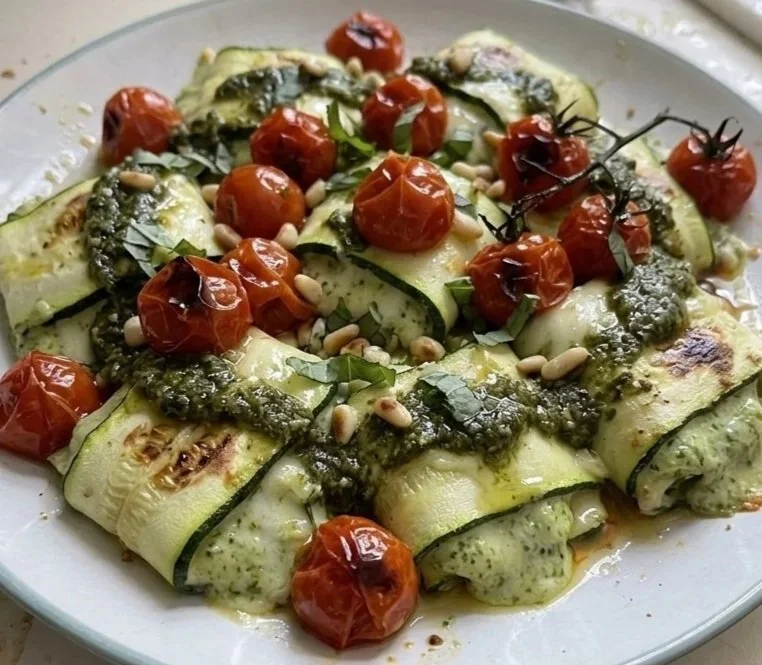
Zucchini-ribbon ravioli stuffed with ricotta and pesto, baked in a wine-and-balsamic burst tomato sauce
Serves 6 · 45 min active · 1 hr 10 min total · summer · early evening
Ingredients
Burst cherry tomatoes
3 cups cherry tomatoes
4 garlic cloves, chopped
¼ cup extra virgin olive oil, plus more for drizzling
⅓ cup dry white wine (Pinot Grigio or Sauvignon Blanc), or bone broth for an alcohol-free version
2 tbsp aged balsamic vinegar
2 tbsp fresh thyme leaves
Pinch of crushed red pepper flakes
Pinch of sea salt and freshly ground black pepper
Zucchini ribbons
3–4 medium zucchinis or yellow summer squash
Pinch of sea salt
Cheese filling
1 cup whole-milk ricotta (raw or sheep's milk, if available)
¼ cup finely grated Parmigiano-Reggiano DOP
⅓ cup basil pesto (homemade, see below, or a store-bought one made with only extra virgin olive oil)
Optional: ¼ cup torn fresh mozzarella, for a stretchy melt
Simple basil pesto (makes about ¾ cup)
2 cups fresh basil leaves, packed
¼ cup Mediterranean pine nuts
¼ cup finely grated Parmigiano-Reggiano DOP
1 small garlic clove
⅓ cup extra virgin olive oil
Pinch of sea salt
Optional: 1 tsp fresh lemon juice, to keep it bright green
Garnish
Fresh basil leaves
Fresh thyme sprigs
Drizzle of extra virgin olive oil
Pinch of flaky sea salt
Method
Make the pesto. Pulse the garlic, pine nuts, and salt in a food processor until finely chopped. Add the basil and pulse until minced. With the motor running, stream in the olive oil until smooth but still a little textured. Stir in the Parmigiano and optional lemon juice by hand. You'll have extra, which is lovely on eggs, grilled fish, or roasted vegetables.
Roast the burst tomatoes. Preheat the oven to 425°F.
In an oven-safe baking dish, combine the cherry tomatoes, garlic, olive oil, white wine, balsamic, thyme, red pepper flakes, salt, and pepper.
Bake 10–15 minutes, until the tomatoes begin to burst and the sauce starts to come together.
Prepare the zucchini ribbons. While the tomatoes roast, slice the zucchini lengthwise into very thin ribbons (about 1/16 inch) with a mandoline or a sturdy vegetable peeler. Thin ribbons fold without cracking.
Lay the ribbons flat on a kitchen towel. Sprinkle with salt. Let them sit 5–10 minutes.
Blot away the excess water with a paper towel.
Make the cheese filling. In a bowl, combine the ricotta, Parmigiano, pesto, and optional mozzarella. Stir until well combined.
Form the ravioli. Lay 2 ribbons side by side, slightly overlapping. Lay 2 more across them the other way, making a cross.
Spoon 1 tbsp of the cheese filling onto the center of the cross.
Bring the ends of the zucchini ribbons together over the cheese, folding them inward to create a small parcel.
Place in the sauce. Remove the burst tomatoes from the oven. Lay the zucchini ravioli seam-side down directly in the sauce.
Drizzle the ravioli lightly with olive oil. Season with salt and pepper.
Bake 15 minutes at 425°F, until the ravioli are warmed through and the filling is hot and set.
Garnish. Top with fresh basil leaves and thyme sprigs. Drizzle with a little more olive oil and add a pinch of flaky sea salt.
Serve immediately.
Storage: Refrigerator up to 3 days. Reheat at 350°F for 10 minutes. Extra pesto keeps in a jar in the fridge up to 5 days with a thin layer of olive oil on top, or freeze it in an ice cube tray for up to 3 months.
Nourishment Notes
The crisscross zucchini ravioli technique nods to Italian filled pasta, where small pockets of cheese filling are folded inside thin sheets of pasta. The version here uses zucchini ribbons instead of pasta dough, but the idea is the same: a thin, flexible wrapper folded around a creamy filling. The crisscross of 4 ribbons makes a particularly secure parcel that holds together through the brief bake.
Bursting cherry tomatoes is the technique that gives this dish its signature sauce. The 425°F heat causes the tomatoes' skins to split, releasing their concentrated juice, which combines with the wine, garlic, oil, and balsamic to form a rich, slightly tart sauce in just 10–15 minutes. The same technique drives Italian pasta al pomodoro fresco and the great Mediterranean summer pasta tradition. The choice of dry white wine matters: Pinot Grigio brings clean acidity, and Sauvignon Blanc brings slightly grassy depth. Avoid Chardonnay (too round) and oak-aged wines (too heavy). An honest note: a 15-minute bake doesn't cook off all the alcohol, so for an alcohol-free version, use bone broth with an extra splash of balsamic.
The ricotta-Parmigiano-pesto filling is what elevates this dish from a standard zucchini-and-cheese plate to something special. Each element plays a different role: ricotta provides the creamy body, Parmigiano adds salty, nutty depth and helps the filling set, and pesto provides the herbal-aromatic depth. The combination echoes the ricotta fillings of classic Italian ravioli. Quality matters here: use whole-milk ricotta (preferably raw or sheep's-milk), true Parmigiano-Reggiano DOP, and homemade pesto or one made with only extra virgin olive oil. Fresh basil brings eugenol and aromatic oils, and pine nuts add magnesium, zinc, and vitamin E.
Sourcing
Ricotta — Bellwether Farms Whole Milk Basket Ricotta or their Sheep's Milk Ricotta, or fresh whole-milk ricotta from a local dairy
Parmigiano-Reggiano DOP — aged 24+ months. It's made from raw milk by law, so the DOP seal is your guarantee
Mozzarella (optional) — Mozzarella di Bufala Campana DOP, or fresh whole-milk mozzarella from a local dairy
Pesto — homemade with extra virgin olive oil, Parmigiano-Reggiano DOP, and Mediterranean pine nuts. Some Chinese pine nut varieties are linked to "pine mouth," a bitter taste that can linger for days
Balsamic vinegar — Aceto Balsamico di Modena IGP with grape must listed first and no caramel color, or Aceto Balsamico Tradizionale DOP for finishing
White wine — organic, dry, low in added sulfites
Bone broth (alcohol-free option) — grass-fed, homemade, or from a small producer with no added flavorings
Cherry tomatoes and zucchini — organic, peak-season, from a farmers' market
Fresh basil, thyme, and garlic — organic, from a farmers' market or your own garden; Genovese basil is the classic pesto variety
Red pepper flakes and black peppercorns — organic, non-irradiated, ground fresh
Extra virgin olive oil — single-estate, harvest-dated within the past year, in dark glass
Salt — Baja Gold sea salt for cooking; fleur de sel de Guérande or Maldon for finishing
— Anna aka Food Marshall