Beef Heart Stew with Bone Broth
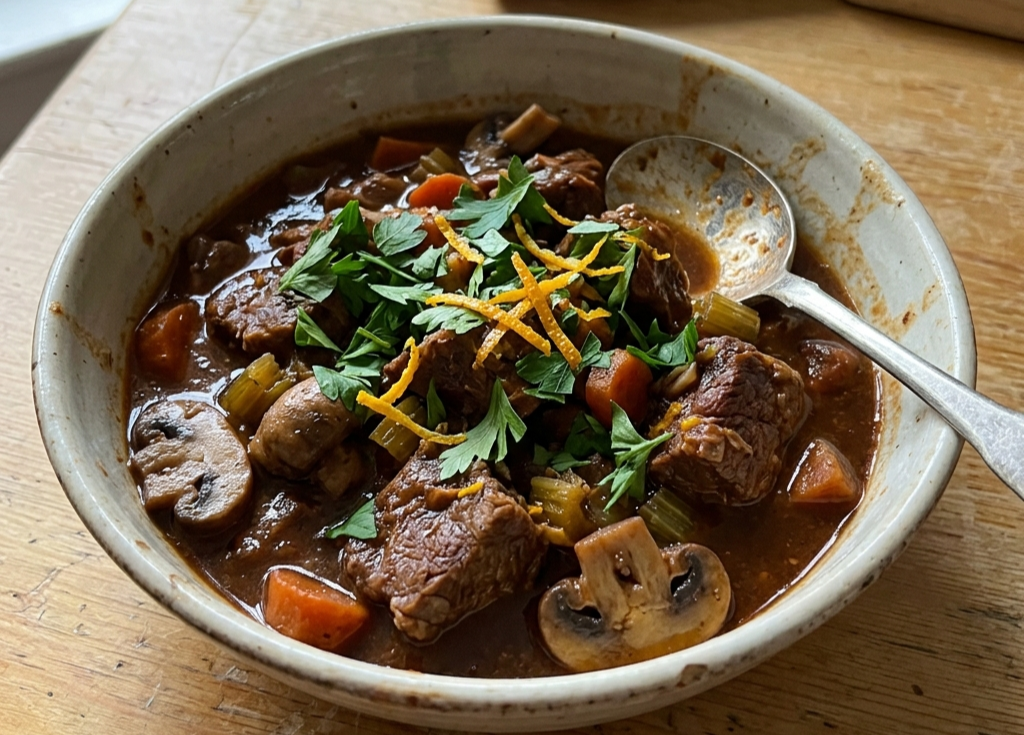
A nourishing winter stew that turns one of the most underappreciated cuts of meat into something deeply satisfying — slow-cooked with mushrooms, fresh herbs, bone broth, and a whisper of orange zest.
Serves 6–8 · 30 min active · 4–6 hr total · winter · early evening
Ingredients
For the stew:
2 tbsp grass-fed butter, tallow, or lard
1 large yellow onion, thinly sliced
2–4 carrots, thickly sliced
1½ cups stemmed and thickly sliced mushrooms (shiitake, cremini, or wild)
1 head garlic, cloves separated and smashed or minced
1 tsp grated orange zest, plus more for garnish
Generous pinch sea salt and freshly ground black pepper
3 lb grass-fed beef stew meat, cut into chunks (see note below on cuts)
½ cup tomato purée (optional)
½ cup diced nitrate- and sugar-free bacon (optional)
8 cups beef bone broth, preferably homemade (see broth method below)
1 small bunch fresh flat-leaf parsley
6–8 sprigs fresh thyme
2 bay leaves
½ to 1 tsp whole black peppercorns (or ground black pepper)
¼ cup chopped fresh flat-leaf parsley, for garnish
A note on the meat: This stew works beautifully with a combination of cuts — beef heart, chuck roast, and bone-in cuts like oxtail, short ribs, or beef shanks. The bone-in cuts add extra collagen and depth, and can be used to make the broth itself. If using only beef heart, slice it thinly across the grain.
To serve:
Grass-fed raw Parmigiano-Reggiano, raw A2 cheddar, or crumbled goat cheese
Sprouted sourdough bread
Method
1. Sauté the aromatics. In a large Dutch oven, heat the butter, tallow, or lard over medium-high heat. When shimmering, add the onion, carrots, mushrooms, garlic, orange zest, and two generous pinches each of salt and pepper. Stir to coat.
2. Sweat the vegetables. Reduce heat to low, cover, and cook 8–10 minutes, until the onion and garlic have softened and the mushrooms have begun to release their liquid.
3. Add the meat and broth. Stir in the beef (and beef heart, if using), tomato purée and bacon (if using), bone broth, parsley sprigs, thyme, bay leaves, and peppercorns.
4. Bring to a simmer. Cover and bring to a boil, then reduce heat to low. The liquid should barely tremble — a slow, steady simmer is what builds depth.
5. Slow-simmer for 4-6 hours (longer the cooking time, the more tender and fall-off-the-bone, melt-in-your-mouth style). Stir occasionally. The stew is ready when the meat is fork-tender and falls apart at the gentlest pressure. Taste and adjust salt and pepper.
6. Serve. Ladle into individual bowls. Top with chopped fresh parsley and additional orange zest. Serve with grated Parmigiano-Reggiano, raw A2 cheddar, crumbled goat cheese, or alongside sprouted sourdough bread for dipping into the broth.
Nourishment Notes
Beef heart is one of the most underappreciated cuts available — substantially leaner than other organ meats, mild in flavor, and remarkably dense in B vitamins (particularly B12), CoQ10, and bioavailable iron. CoQ10 is especially concentrated here: heart muscle produces and consumes CoQ10 at the highest rate of any organ in the body. Traditional cultures from Slavic to Mongolian to Tibetan have valued heart meat for centuries for exactly this reason. Slow-stewing breaks down the connective tissue and produces a texture nearly indistinguishable from conventional stew meat — but with substantially more nutritional density.
Bone broth as the cooking liquid is structurally important. Quality bone broth — slow-simmered for 12+ hours from grass-fed bones — contains collagen, glycine, glutamine, and minerals that infuse into the stew across hours of slow simmering. This same principle anchors traditional Eastern European bigos, Italian brodo, and the great American Southern pot likker traditions. Using bone broth instead of water or commercial stock creates a dish that is structurally more nourishing and substantially deeper in flavor.
The orange zest is the unusual ingredient that pulls this stew into a specific flavor territory. Bright citrus pairs especially well with rich, slow-cooked meat — the same principle drives Italian osso buco with gremolata (parsley, lemon zest, and garlic) and Greek stifado with orange peel. The volatile oils in citrus zest cut through the heaviness of the meat without competing for attention. A teaspoon is the right amount; more reads as floral.
How to Make the Beef Bone Broth
Cuts to use: A mix of marrow bones, knuckle bones, and connective-tissue-rich cuts. Beef shanks, oxtail, short ribs, and neck bones are ideal. If you can find them, knuckle and femur bones from a regenerative farm or local butcher will produce the deepest, most gelatinous broth. Aim for 4–5 lbs of bones for 1 gallon of finished broth.
Method: Roast the bones at 400°F for 30–40 minutes until deeply browned (this builds flavor). Transfer to a large stockpot or slow cooker, cover with filtered water by 2 inches, and add 2 tablespoons raw apple cider vinegar (helps draw minerals from the bones). Bring to a gentle simmer.
Cooking time: Simmer beef bone broth for 12–24 hours on the lowest possible heat. Skim foam from the surface during the first hour. In the final hour, add aromatics: halved onions, carrots and celery chunks, a few crushed garlic cloves, a couple of bay leaves, peppercorns, and any fresh herbs you have on hand.
Strain through a fine-mesh sieve, cool, and store in glass jars in the refrigerator for up to 5 days, or in the freezer for up to 3 months. The broth should gel when chilled — that's the collagen telling you it's the real thing.
Sourcing
Beef heart and stew meat: Look for 100% grass-fed and grass-finished from a regenerative farm. White Oak Pastures (Georgia), Force of Nature, Alderspring Ranch, or Belcampo ship nationwide. Locally, ask your farmer's market butcher — beef heart is typically inexpensive and often available on request. Avoid grain-finished or "grass-fed/grain-finished" hybrid labels.
Bones for broth: Same sources as above, or your local Amish farm or butcher. Many farms sell soup bones at a fraction of the cost of muscle meat.
Bacon: Look for nitrate-free, sugar-free, pasture-raised bacon. Pederson's Natural Farms (no sugar, no nitrates), Applegate Naturals, U.S. Wellness Meats, or local farm sources. Skip mainstream brands which typically include sugar, nitrates, and grain-finished pork.
Tomato purée: Bionaturae organic tomato purée in glass — Italian, no citric acid, clean ingredients. Jovial is also excellent. Avoid canned brands lined with BPA or containing added sugar.
Mushrooms: Local farmers' market for shiitake, cremini, or seasonal wild mushrooms when available. Smallhold ships fresh mushrooms nationwide. Foraged is best when you have access.
Cheese for serving:
Parmigiano-Reggiano: Look for true PDO (Protected Designation of Origin) Parmigiano-Reggiano from Italy — aged 24+ months. Avoid "Parmesan" alternatives.
Raw A2 cheddar: Alexandre Family Farm, Organic Pastures, or Raw Farm USA for raw cheeses from A2/A2 Jersey cows.
Goat cheese: Local goat dairy whenever possible; Cypress Grove Humboldt Fog or Vermont Creamery for shipped options.
Sourdough: Genuinely sprouted, traditionally fermented sourdough from a local baker. The structure of sprouted sourdough makes the grain dramatically more digestible than commercial bread.
Storage
Refrigerator: up to 5 days. Freezer: up to 3 months. Reheat gently on the stovetop over low heat to preserve the meat's texture — high heat will toughen the slow-cooked fibers.
Why This Stew
This is the kind of meal the body asks for in cold weather. Dense protein, rich saturated fats, slow-released collagen and minerals from the bone broth, mineral-rich vegetables, and bright herbs to lift the palate. The orange zest is a small wink — the volatile oils in citrus zest signal "warmth" and "spice" to the body in a way that cuts through the deep richness of slow-cooked meat. Traditional cold-climate cuisines from Eastern Europe to Greece to Italy all converged on the same insight: when the season turns dark, the body wants warmth, fat, depth, and a whisper of brightness to keep it from feeling heavy.
The cold-and-dark season asks a different question of the body. This stew is one of the body's favorite answers.