Carrot Cupcakes with Creamy Frosting (2 ways)
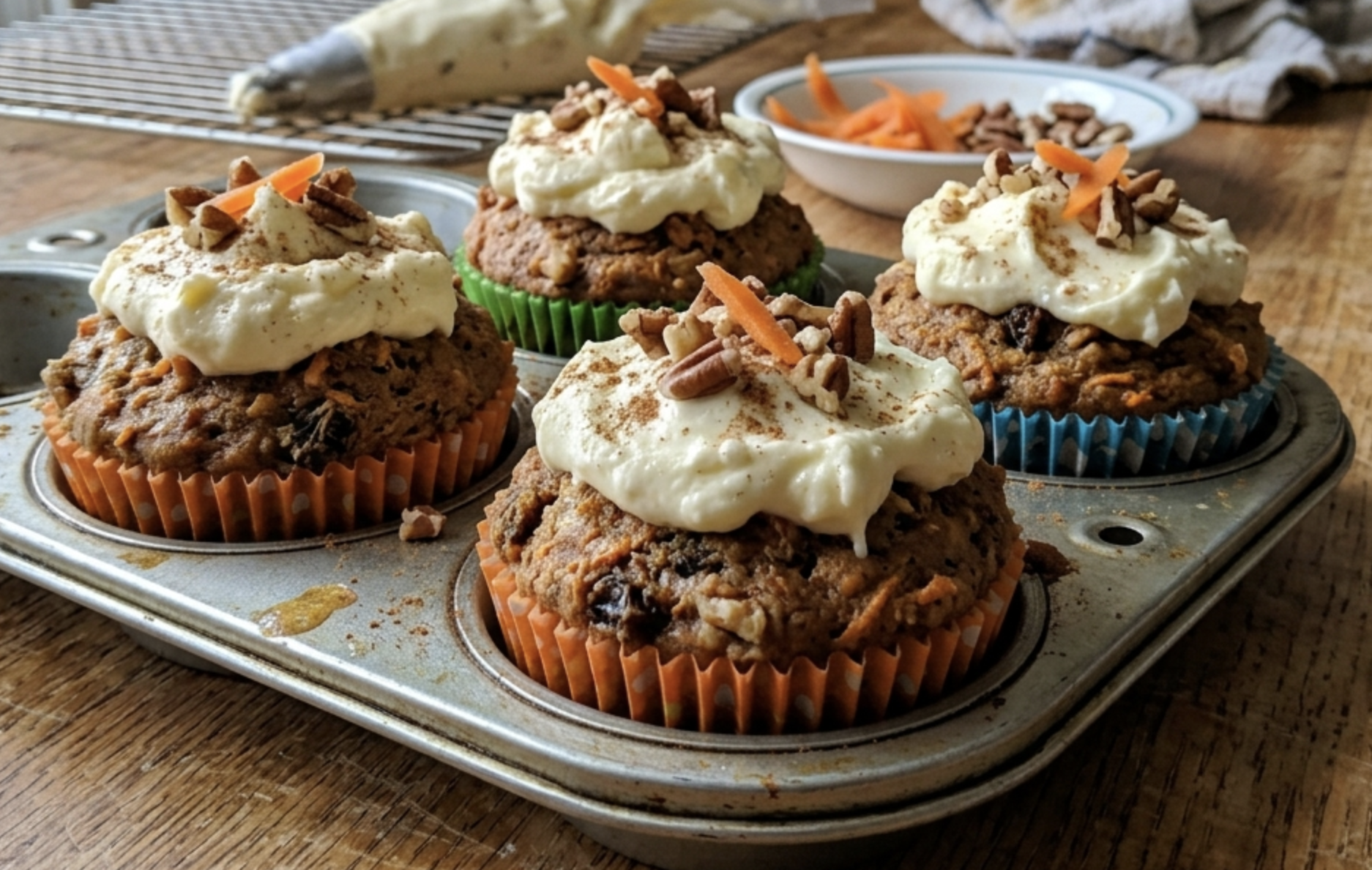
The spring-into-autumn celebration cupcake — Easter centerpiece, harvest gathering, sophisticated birthday dessert
Season: Spring (Easter) · Autumn · year-round celebration · Cuisine: American · Farm-to-Table · Grain-free · Yield: 24 cupcakes (halve for 12) · Active: 30 min · Total: 1 hr 30 min (incl. cooling and chilling) · Best eaten: afternoon
This is the cupcake counterpart to the layered carrot cake — different construction entirely, with a lighter crumb that comes from the dual flour base (almond plus a touch of coconut) and the addition of raw yogurt to the batter. The headline frosting is mascarpone whipped cream — folded together rather than beaten, mousse-like rather than dense, the most elegant version of the classic. A more traditional cream-cheese-and-butter maple frosting is offered as Path B for those who want a sturdier hold or a more classic American profile. Both are right; choose by occasion.
Ingredients
Cupcakes
2 cups blanched almond flour
½ cup coconut flour
1¼ tsp baking powder
1 tsp baking soda
½ tsp sea salt
1 tsp ground Ceylon cinnamon
½ tsp ground ginger
¼ tsp freshly grated nutmeg
1 lb carrots, scraped and finely grated
4 large pasture-raised eggs, at room temperature
¾ cup pure maple syrup
1 cup coconut oil, melted (or grass-fed butter, melted)
½ cup raw grass-fed yogurt (cow, goat, or sheep), at room temperature — see note below
1 tsp pure vanilla extract
A note on raw yogurt: Raw cow's yogurt requires local sourcing — a small dairy farm, herd-share, or Amish creamery. Miller's Bio Farm (Pennsylvania) ships to states that permit raw dairy. For raw sheep's yogurt specifically, commercial availability is essentially zero in the US due to FDA interstate restrictions; Bellwether Farms or Old Chatham Sheepherding Company are pasteurized but represent the cleanest commercial sheep's yogurt available. For a clean pasteurized cow's yogurt, Maple Hill (100% grass-fed) or Kalona SuperNatural are the practical alternatives — the recipe works beautifully with any of these.
Path A — Mascarpone Whipped Cream Frosting (the headline)
12 oz grass-fed mascarpone, at room temperature
¼ cup raw honey
2 tsp pure vanilla extract
1 cup very cold raw heavy cream
Path B — Maple-Cream Frosting (the classic alternative)
16 oz full-fat cream cheese, at room temperature (raw if available — see note in the carrot cake post; otherwise Vermont Creamery or Organic Valley)
1 cup grass-fed butter, at room temperature
⅔ cup pure maple syrup
2 tsp pure vanilla extract
Pinch sea salt
Optional: zest of 1 organic orange or lemon
Choosing your path: Path A is mousse-like, light, and the most elegant choice for a celebration meal — but it loses volume after a day, so it's best made the morning of serving. Path B is sturdier, holds 3+ days refrigerated, pipes cleanly, and is the better choice for a wedding shower, a large gathering with leftovers, or a make-ahead day. Both pair beautifully with the cupcake.
Garnish
A small handful of finely chopped walnuts or pecans · a light dusting of Ceylon cinnamon · edible flowers for spring or celebration presentation (pansies, violas, calendula petals, or organic rose petals)
Method
For the Cupcakes
Preheat the oven to 375°F. Line two 12-cup muffin pans with parchment liners (or unbleached paper liners).
Mix the dry ingredients. In a stand mixer fitted with the paddle attachment, combine the almond flour, coconut flour, baking powder, baking soda, salt, cinnamon, ginger, and nutmeg on low for about 20 seconds until evenly mixed.
Add the carrots. Add the grated carrots and beat on low for about 30 seconds, until the carrots are evenly distributed through the dry mix.
Process the wet ingredients. In a food processor or high-speed blender, process the eggs and maple syrup for about 20 seconds, until smooth and slightly aerated. Add the melted coconut oil (cooled slightly so it doesn't cook the eggs), yogurt, and vanilla, and process another 20 seconds until fully combined.
Combine. Pour the wet ingredients into the stand mixer with the dry-and-carrot mixture. Beat on low just until combined — do not overmix. The batter will be thick and a bit shaggy; that's correct.
Bake. Spoon the batter into the prepared liners, filling each about ¾ full. Bake 18–20 minutes, until the edges are just golden and a toothpick inserted into the center comes out clean. Rotate the pans halfway through if your oven has hot spots.
Cool completely. Cool in the pans for 10 minutes, then transfer to a wire rack and cool completely to room temperature before frosting — frosting a warm cupcake will collapse the frosting.
For Path A — Mascarpone Whipped Cream Frosting
In a stand mixer fitted with the whisk attachment (or in a bowl with a hand mixer), whisk the mascarpone, honey, and vanilla on medium until smooth and glossy — about 1 minute. Don't overbeat, or the mascarpone can split. Transfer to a separate bowl and rinse the whisk. In a chilled bowl, whip the very cold raw heavy cream to soft peaks — about 2–3 minutes. Add the whipped cream to the mascarpone mixture in two additions, folding gently with a rubber spatula to keep the air structure intact. The frosting should be light, billowy, and hold soft peaks. Use immediately, or refrigerate up to 2 hours before piping.
For Path B — Maple-Cream Frosting
Make sure the cream cheese and butter are fully at room temperature — cold dairy will clump and the frosting will not come together. In a stand mixer with the paddle attachment (or with a hand mixer), beat the cream cheese and butter on medium-high until completely fluffy and smooth — about 3 minutes, scraping down the sides as needed. Add the maple syrup, vanilla, salt, and optional citrus zest. Beat on medium just until well combined and glossy. Do not overbeat. Refrigerate 15 minutes before piping for cleanest application.
To Assemble
Pipe or spread the frosting generously onto each cooled cupcake. Path A frosting can be piped with a large round or star tip for a classic mounded look; Path B holds sharper piped peaks. Garnish with chopped walnuts or pecans, a light dusting of Ceylon cinnamon, and edible flowers if using. Refrigerate 30 minutes before serving for the frosting to set, and bring out 15–20 minutes before serving so the cupcake reaches the tenderest temperature.
Storage: Path A frosted cupcakes are best the day they are made — the whipped cream loses volume after about 24 hours, though the cupcakes themselves keep 3–4 days refrigerated. Path B frosted cupcakes keep 3 days refrigerated. Unfrosted cupcakes keep 4 days refrigerated or 3 months frozen (wrap individually in parchment, then foil). Either frosting keeps 3 days refrigerated separately; re-whip Path A briefly before piping if it has settled.
For 12 cupcakes
Halve all cupcake and frosting ingredients exactly. Use one 12-cup muffin pan. Bake time stays the same. The recipe halves cleanly — eggs become 2, maple syrup becomes ⅜ cup (6 tablespoons), coconut oil becomes ½ cup, and so on.
Nourishment Notes
These are American celebration cupcakes returned to whole-food integrity. The dual flour base — almond plus a smaller proportion of coconut — produces a lighter crumb than either flour alone. Almond flour brings vitamin E in its full tocopherol complex, magnesium, monounsaturated fats, and a meaningful protein load; coconut flour brings high fiber (about 40% by weight), additional medium-chain triglycerides, and the structural absorbency that gives the cupcake its tender, slightly cake-like rise. The four pasture-raised eggs deliver fat-soluble vitamins A, D, E, K2, choline, and lecithin — the lecithin is what gives the crumb its fine, airy texture. The raw yogurt brings live cultures, lactic acid that activates the leavening more cleanly than baking soda alone, and a subtle tang that balances the maple sweetness.
Carrots are the structural soul of the cupcake. Carrots peak in early summer through autumn, with a second window in early spring as overwintered roots come up sweet from cold storage in the soil. A freshly-harvested carrot carries far more beta-carotene, more vitamin K1, and more complex phytochemistry than commodity refrigerated stock. Beta-carotene is the orange pigment; the body converts it to vitamin A, supporting the retinal pigments that govern low-light vision, the mucous membranes that protect from seasonal pathogens, and the thyroid's ability to produce its active hormone. The substantial fat in this recipe (coconut oil, eggs, mascarpone, butter) is what allows the body to actually absorb the fat-soluble carotenoids — a low-fat carrot dish leaves much of the nutritional value behind. Grating the carrots fine rather than coarse gives the cupcake an even crumb and lets the carrot flavor permeate the whole bite.
The spices are the classic American carrot cake combination, and each one is doing real work. Ceylon cinnamon (true cinnamon, not the cassia variety sold as commodity “cinnamon”) carries chromium and polyphenols that support blood-sugar moderation — meaningful when the dish is sweet. Ginger's gingerols support digestion and have a long ancestral medicinal tradition. Freshly-grated nutmeg brings aromatic compounds (myristicin, eugenol) that warm the cupcake's character and pair beautifully with both carrot and dairy.
The Path A mascarpone whipped cream frosting is genuinely ancestral: raw, grass-fed dairy carrying intact enzymes, the full fat-soluble vitamin profile (A, D, K2 specifically MK-4, E), and butyrate. Mascarpone is a 16th-century northern Italian tradition — fresh cream gently warmed and acidified to produce a soft, sweet, high-butterfat cheese. The whipped cream folded in adds further fat-soluble vitamins and the air structure that makes the frosting feel mousse-like rather than dense. The Path B maple-cream frosting is the more familiar American silhouette but built from clean ingredients: real butter, cultured cream cheese, pure maple syrup standing in for refined powdered sugar. The maple syrup brings manganese, zinc, and a subtle caramel note that white sugar cannot offer. Both frostings carry the substantial fat that allows the eater's body to register the cupcake as nourishing food rather than as a sugar trigger.
As a circadian and seasonal food, cupcakes are afternoon eating. The natural sugars of carrot, maple, and honey metabolize most gracefully during daylight hours, when insulin sensitivity is highest. Easter brunch, an afternoon spring tea, an autumn harvest gathering at midday, a four o'clock birthday celebration — these are the cupcake's natural homes. Pair with a small espresso, a glass of cold raw milk, a cup of herbal tea, or a small kombucha for the dessert moment that closes a substantial meal. Avoid as a late-night snack — the glycemic load, though gentle for a cupcake, is still concentrated sweetness that the body handles best with light still on.
Recipe adapted from Deliciously Organic (Carrie Vitt) and Nourished Kitchen (Jenny McGruther), with my modifications: the Path A / Path B frosting choice, the spice combination, and the sourcing notes throughout.
Sourcing:
Carrots: local farmers' market or CSA share at peak season — heritage rainbow varieties (Cosmic Purple, Atomic Red, Lunar White) carry significantly more flavor and phytonutrient density than commodity orange. Spring carrots that have overwintered in cold soil are uniquely sweet; autumn carrots are at peak beta-carotene density. Backyard carrots are easy to grow.
Pasture-raised eggs: local farm direct, Alexandre Family Farm (regenerative California), or Apricot Lane Farms direct. Be specific about “pasture-raised” — “free-range” and “cage-free” are different and lower welfare standards.
Blanched almond flour: Honeyville Farms or Anthony's Organic for widely-available; the genuine top tier is freshly grinding blanched organic almonds yourself in a food processor or high-speed blender.
Coconut flour: Big Tree Farms or Bob's Red Mill organic.
Coconut oil: Nutiva (organic, virgin, single-source) or Dr. Bronner's for widely-available; for genuinely artisanal traditionally cold-pressed, Wilderness Family Naturals Gold Label or Tropical Traditions Gold Label.
Grass-fed butter (alternative to coconut oil): local Amish creamery is the gold standard; for shipped, Vermont Creamery cultured, Kalona SuperNatural, Organic Valley Pasture Butter, or Beurre d'Isigny AOP.
Pure maple syrup: local sugarbush or small Vermont/Quebec producer — Crown Maple, Runamok, or any small-scale producer at the farmers' market. Grade A Dark or Grade A Very Dark for the strongest flavor.
Raw honey: local apiarist is the genuine peak; for shipped, Really Raw Honey or Beekeeper's Naturals.
Raw grass-fed yogurt: local raw-dairy producer or Amish creamery is the gold standard; Miller's Bio Farm (Pennsylvania) ships to states that permit raw dairy. For pasteurized alternatives: Maple Hill (100% grass-fed) or Kalona SuperNatural for cow's; Bellwether Farms or Old Chatham for sheep's (note: commercial raw sheep's yogurt is essentially unavailable in the US).
Whole spices (Ceylon cinnamon, ginger, nutmeg): Burlap & Barrel or Diaspora Co. — single-origin, dramatically more flavorful than commodity. Grate fresh nutmeg from the whole nut for the brightest aromatic compounds. Use Ceylon (true) cinnamon, not cassia.
Grass-fed mascarpone: Vermont Creamery is the cleanest widely-available option (cultured, no stabilizers); for genuinely European, BelGioioso (American, but Italian-tradition methods) or imported Galbani DOP at a specialty grocer. Italian markets often carry traditional small-batch versions worth the search.
Cream cheese (Path B): Miller's Bio Farm for raw (ships to states that permit it), or local Amish creamery; otherwise Vermont Creamery, Organic Valley, or Kalona SuperNatural for organic cultured cream cheese — all use clean ingredient lists with no gums or stabilizers.
Raw heavy cream: local raw-dairy producer or herd-share where legal. For cleanest pasteurized alternative, Kalona SuperNatural or Organic Valley Grassmilk heavy cream.
Edible flowers (garnish): backyard organic garden is the genuine peak; for shipped, Marx Foods or local farmers' market specialty growers in spring. Common varieties: pansies, violas, calendula petals, organic rose petals, borage flowers, nasturtiums.
Walnuts or pecans (garnish): for walnuts, Living Tree Community sprouted, or California walnuts direct from a small grower at the farmers' market; for pecans, Pearson Farm (fifth-generation Georgia, the genuine top-tier shipped pecan) or local farmers' market vendors.