Coconut flour cupcakes (Vanilla or chocolate BASED) with Raw cacao frosting
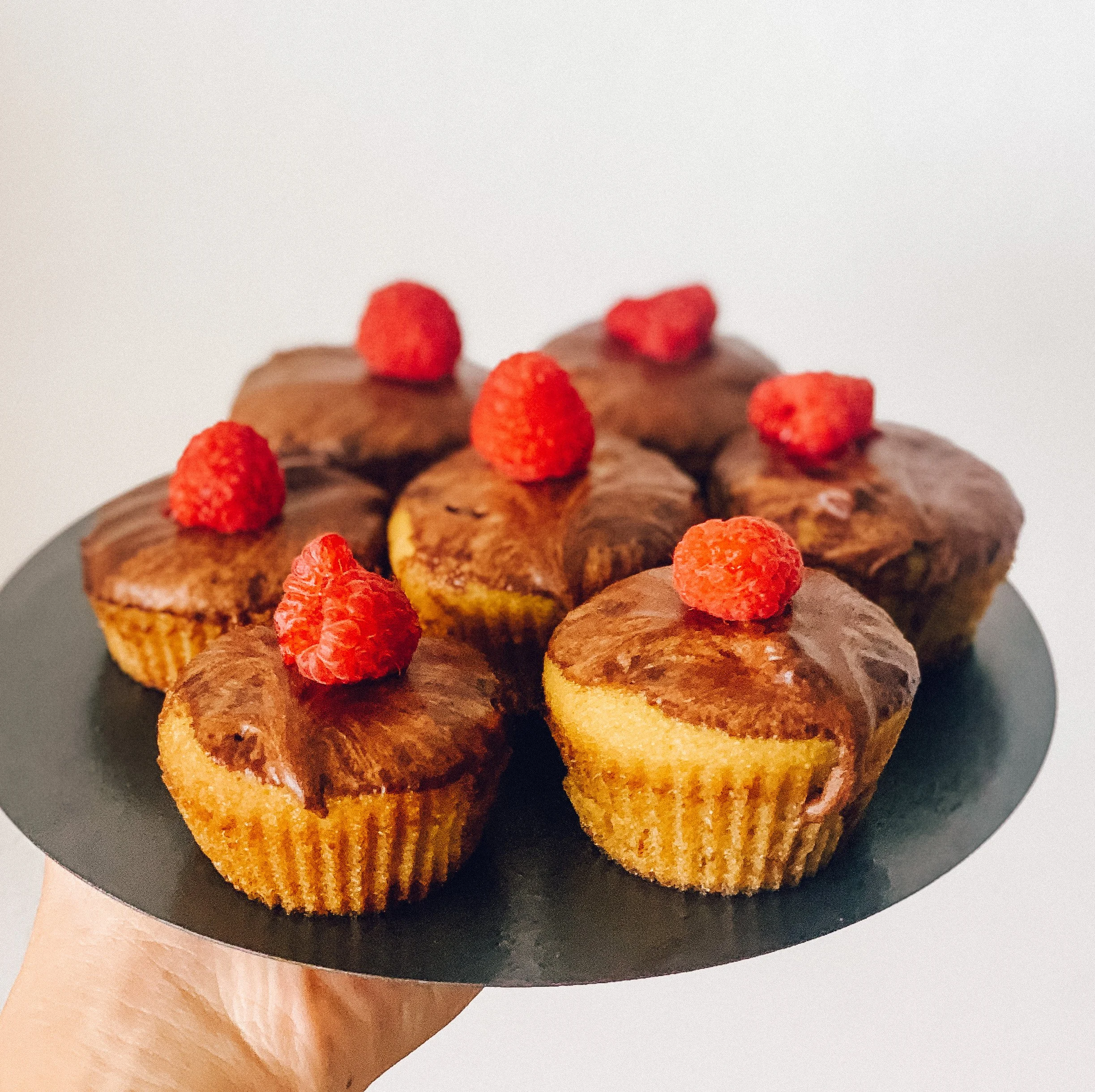
Coconut Flour Cupcakes with Raw Cacao Frosting
Vanilla or chocolate base, two frosting paths — the grain-free birthday classic
Season: Year-round (especially birthdays, Easter, autumn celebrations) · Cuisine: American · Farm-to-Table · Grain-free · Refined-Sugar-Free · Yield: 12 cupcakes · Active: 30 min · Total: 1 hr (incl. cooling) · Best eaten: afternoon
These are American birthday cupcakes returned to whole-food integrity — coconut flour instead of refined wheat, raw honey or pure maple syrup instead of refined sugar, raw cacao instead of processed cocoa, and either grass-fed butter or coconut oil as the structural fat. The same base batter works for both vanilla and chocolate cupcakes (the chocolate version simply adds raw cacao powder and a touch more liquid). Two frosting paths follow: a raw cacao buttercream that pipes beautifully and holds shape, or a whipped chocolate ganache for those who want something silkier and more dessert-restaurant-elegant. The cupcakes hold well overnight and the frostings can be made up to 3 days ahead, which makes this a generous celebration recipe to prep in advance.
Ingredients
Cupcakes — Vanilla Base
½ cup coconut flour
½ tsp baking soda
½ tsp sea salt
6 large pasture-raised eggs, at room temperature
⅓ cup pure maple syrup or raw honey
⅓ cup grass-fed butter, melted (or coconut oil for dairy-free)
1 tbsp pure vanilla extract
1 tbsp raw apple cider vinegar (with the mother — see note below)
¼ cup raw grass-fed whole milk or full-fat coconut milk
A note on the apple cider vinegar — why it's structural: In grain-free baking there is no gluten to trap air bubbles, so the leavening has to do all the structural work itself. The vinegar reacts with the baking soda to produce CO2, which is what gives the cupcake its rise. Without an acid, the baking soda may taste faintly metallic in the finished bake. Use raw, unfiltered apple cider vinegar with the mother specifically — the live cultures and trace enzymes add genuine depth, and the recipe loses something real with distilled or filtered vinegar.
Chocolate Variation
To make the cupcakes chocolate instead of vanilla, modify the base recipe as follows:
Add ¼ cup raw cacao powder to the dry ingredients
Increase the milk (raw or coconut) to ⅓ cup + 2 tbsp (this compensates for cacao's absorbency — cacao behaves like coconut flour and pulls moisture aggressively)
Optional: reduce vanilla to 2 tsp and add ½ tsp espresso powder, which deepens chocolate flavor without making the cupcakes taste like coffee
For an even more intense chocolate cupcake, use ⅓ cup raw cacao powder, reduce coconut flour to 6 tbsp (¼ cup + 2 tbsp), and increase milk to ½ cup. The crumb leans toward brownie-cupcake territory in the most-intense version — beautiful in its own right, but a different texture from the cake-like vanilla base.
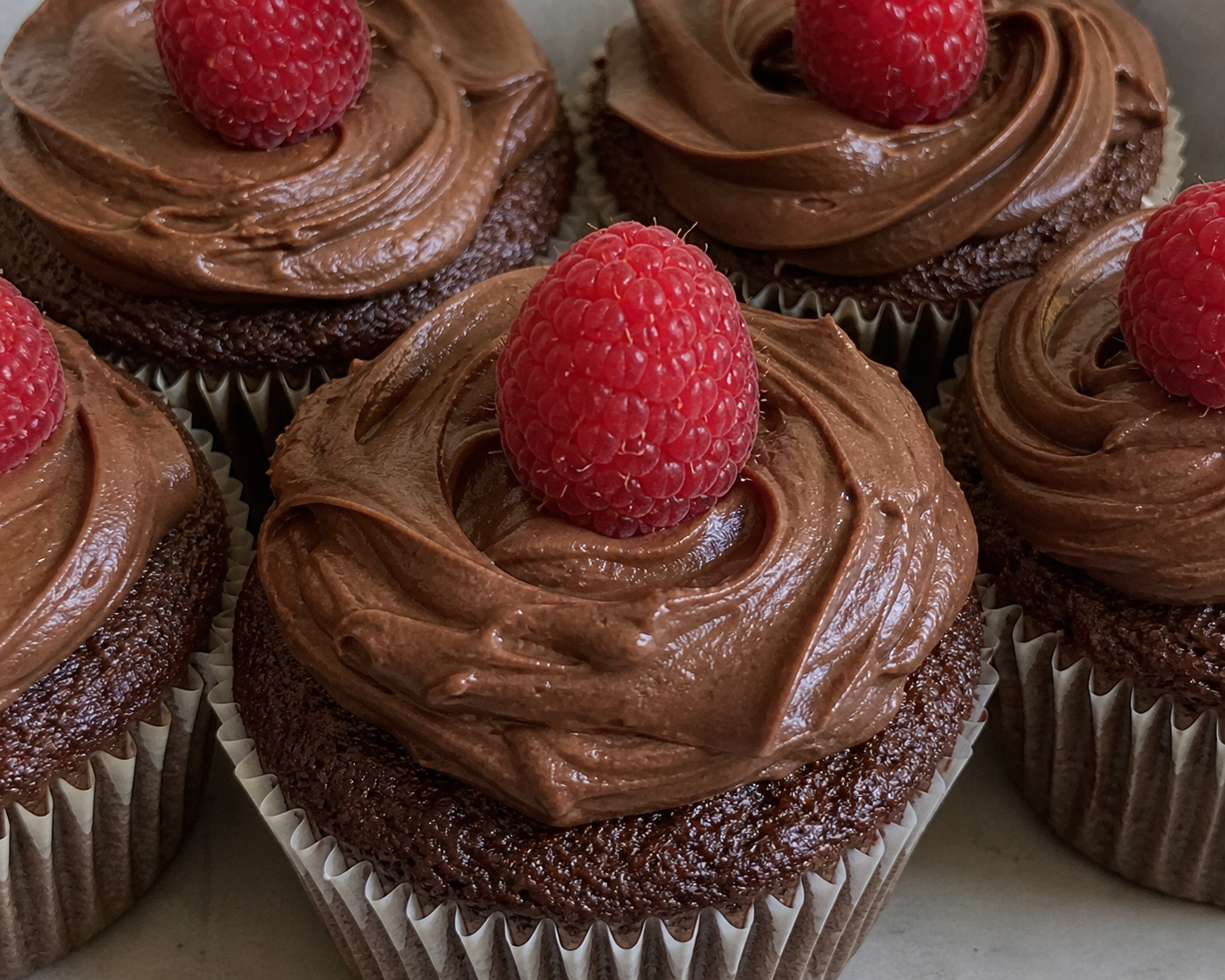
Path A — Raw Cacao Buttercream Frosting (the headline)
1 cup grass-fed butter, at room temperature (or coconut oil for dairy-free, refrigerated 30 min before whipping)
1 cup raw cacao powder
⅓ cup pure maple syrup
1 tbsp pure vanilla extract
Pinch sea salt
2 tbsp raw grass-fed cream or full-fat coconut milk (more if needed for consistency)
Optional creamy variation: add 2–3 tbsp raw almond butter, hazelnut butter, or peanut butter (single-ingredient — only the nut, no added oils or sugars) for a thicker, richer chocolate-nut-butter frosting. Hazelnut butter is the most decadent of the three (Nutella territory, but real); almond butter is the most neutral; peanut butter is the most distinctly American.
Path B — Whipped Chocolate Ganache (the silkier alternative)
8 oz (225 g) unsweetened 100% baking chocolate, finely chopped
½ cup coconut oil
¾ cup full-fat coconut milk (the thick portion from a refrigerated can)
¼ cup pure maple syrup
1 tsp pure vanilla extract
Pinch sea salt
This is the technique used in classical French pâtisserie — crème ganache fouettée, whipped chocolate ganache. A poured ganache is a glossy, even glaze; a whipped ganache, after cooling and beating, is a thicker, lighter, frosting-like texture that holds piped peaks. The result is somewhere between a frosting and a chocolate mousse.
Garnish (optional)
Fresh raspberries, sliced strawberries, or pomegranate seeds (chocolate version) · a light dusting of raw cacao powder · cacao nibs for crunch · a pinch of flaky sea salt on each cupcake (chocolate version) · edible flowers for spring or celebration presentation (vanilla version)
Method
For the Cupcakes
Preheat the oven to 350°F. Line a standard 12-cup muffin tin with parchment or unbleached paper liners.
Mix the dry ingredients. In a medium bowl, whisk together the coconut flour, baking soda, salt, and (for the chocolate variation) the raw cacao powder until evenly combined.
Mix the wet ingredients. In a large bowl, whisk the eggs vigorously until well-beaten and slightly aerated — about 30 seconds. Add the maple syrup (or honey), melted butter (cooled slightly so it doesn't cook the eggs), vanilla, apple cider vinegar, and milk. Whisk until completely smooth and emulsified.
Combine. Pour the wet ingredients into the dry, whisking continuously until the batter is completely smooth and lump-free. The batter will be thick but pourable — coconut flour absorbs liquid significantly, but the batter should still flow off the whisk in ribbons.
Critical: rest the batter. Let the batter rest for 5 minutes before scooping. Coconut flour continues absorbing liquid as it sits, and this rest gives the flour time to fully hydrate so the texture comes out tender rather than gritty. Skipping this step is the most common reason coconut flour cupcakes turn out dense or sandy.
Fill the liners. Spoon the batter into the prepared liners, filling each about ⅔ full. The cupcakes will rise substantially during baking.
Bake. Bake 22–25 minutes for the vanilla version, 24–27 minutes for the chocolate version, until the tops are golden (or deeply chocolate) and a toothpick inserted into the center comes out clean. Rotate the pan halfway through if your oven has hot spots.
Cool completely. Cool in the pan for 5 minutes, then transfer the cupcakes to a wire rack and cool completely to room temperature before frosting. Frosting a warm cupcake will collapse the frosting — there are no shortcuts on this step.
For Path A — Raw Cacao Buttercream Frosting
In a stand mixer fitted with the paddle attachment (or in a bowl with a hand mixer), beat the butter on medium-high until light and fluffy — about 2–3 minutes, scraping down the sides as needed. The butter should look paler and have noticeably more volume than when you started. Add the cacao powder, maple syrup, vanilla, and salt. Mix on low to incorporate (so the cacao doesn't powder-puff out of the bowl), then increase to medium-high and beat 2–3 minutes until smooth and glossy. Add the cream or coconut milk one tablespoon at a time, beating after each addition, until the frosting reaches a silky, pipeable consistency. If using the optional nut butter variation, beat in the nut butter at the end. Use immediately, or refrigerate up to 3 days; bring back to room temperature and re-whip briefly before piping.
For Path B — Whipped Chocolate Ganache
Set up a double boiler — a heatproof bowl set over a small saucepan with about an inch of simmering water (the bowl should not touch the water). Add the chopped baking chocolate and coconut oil to the bowl and stir gently until completely melted and smooth. Remove from the heat and let cool for 5 minutes. Stir in the coconut milk, maple syrup, vanilla, and salt until silky and glossy. At this stage, the ganache is pourable — if you want a poured glaze finish, use it now while warm. For piped peaks, refrigerate the ganache for 1 hour, until thickened but not fully solid. Transfer to a stand mixer and beat on medium-high for 2–3 minutes, until light, fluffy, and noticeably paler in color. Fill a piping bag fitted with a large round or star tip and use immediately.
To Assemble
Pipe or spread the frosting generously onto each cooled cupcake. Path A pipes into sharp peaks and holds beautifully; Path B pipes into softer, more cloud-like peaks. Garnish according to season and occasion: fresh berries and a flaky sea salt pinch for chocolate-on-chocolate presentations, edible flowers and a light cacao dusting for vanilla cupcakes with chocolate frosting, cacao nibs for crunch on either. Refrigerate 30 minutes for the frosting to set, then bring to room temperature about 20 minutes before serving for the tenderest crumb.
Storage: Frosted cupcakes keep 3 days refrigerated, covered. Unfrosted cupcakes keep 4 days refrigerated or 2 months frozen (wrap individually in parchment, then foil). Either frosting keeps 3 days refrigerated separately; re-whip Path B briefly before piping if it has settled. Bring to room temperature 20 minutes before serving for the tenderest texture.
Nourishment Notes
Six eggs in a half cup of coconut flour is the ratio signature of this cupcake — and it's not a typo. Coconut flour is unlike any grain flour: it's made from defatted coconut meat (the pulp left after coconut milk extraction), it's roughly 40% fiber by weight, and it absorbs four to five times its weight in liquid. The eggs are doing all the structural work that gluten would do in a wheat batter, both providing protein scaffold and emulsifying the fats. The result is a cupcake that rises substantially, holds its rise, and carries a meaningful nutritional load — six pasture-raised eggs spread across twelve cupcakes means each cupcake delivers half an egg's worth of complete protein, vitamin A, vitamin D, K2, choline, B12, and lecithin. The lecithin specifically is what gives the crumb its fine, airy texture; it's the same compound that makes hollandaise emulsify and that the body uses to build cell membranes.
Coconut flour also brings a slow-released energy profile — the high fiber content moderates the glycemic curve dramatically compared to white flour, the medium-chain triglycerides metabolize directly into ketones and energy rather than fat storage, and the lauric acid (a unique MCT) carries antimicrobial activity. Grass-fed butter (or coconut oil in the dairy-free version) contributes butyrate, conjugated linoleic acid, fat-soluble vitamins A, D, E, and K2 (specifically the MK-4 form found only in grass-fed animal fats), and the saturated fats that allow the body to absorb the carotenoids in the eggs. Pure maple syrup brings manganese, zinc, riboflavin, and a more complex carbohydrate matrix than refined sugar — the syrup's polyphenols actually buffer its glycemic impact. Raw honey is the more deeply ancestral sweetener: trace enzymes, antibacterial polyphenols, propolis compounds, and a different sugar profile (more fructose, less glucose) that some bodies handle more gracefully than maple.
Raw cacao is genuinely plant medicine. The unprocessed bean — fermented and dried but never roasted at the high temperatures that produce conventional cocoa — retains its full flavanol load (antioxidant compounds that support cardiovascular function and cerebral blood flow), its theobromine (a slow, sustained cardiovascular stimulant that feels different from caffeine's sharper edge), and its mineral density (magnesium, iron, copper, zinc, manganese — cacao is among the most mineral-dense plant foods on earth). The Dutched cocoa powder sold in supermarkets has been alkalized, which destroys the majority of these flavanols and produces a milder, less complex chocolate flavor. The difference between raw cacao and Dutched cocoa, both nutritionally and on the palate, is genuinely large — the same difference as fresh-pressed olive oil versus refined.
The Path A cacao buttercream is built on real grass-fed butter rather than the powdered-sugar-and-shortening that conventional buttercream uses — the structural difference shows up immediately on the palate (richer, less cloying, with the natural sweetness of maple rather than the harsh sweetness of refined sugar) and in the body's response (no insulin spike, sustained energy rather than a sugar crash). The Path B whipped ganache uses 100% baking chocolate — unsweetened, no fillers, no sugar — which is the structural choice that gives the ganache its depth. The maple syrup controls the sweetness; the coconut milk thins the texture; the unsweetened chocolate carries the cocoa solid concentration that produces the most intense flavor and the highest flavanol content.
As a circadian and seasonal food, cupcakes are afternoon eating. The natural sugars of maple, honey, and chocolate metabolize most gracefully during daylight hours when insulin sensitivity is highest — a four o'clock celebration with cupcakes is genuinely better tolerated by the body than a late-evening sugar load. These are year-round, but they come most alive at celebration moments: birthdays, Easter, autumn harvest gatherings, kid-friendly dessert moments. Pair with a small espresso, a glass of cold raw milk, a small kombucha, or a cup of yerba mate or chai for the dessert moment that closes a substantial meal. Avoid as a late-night snack — the glycemic load, though gentler than a conventional cupcake, is still concentrated sweetness that the body handles best with light still on.
Recipe adapted from Sweet Laurel Bakery (the coconut flour technique and the whipped ganache method), with my modifications: the apple-cider-vinegar-driven leavening for fluffier rise, the precise chocolate variation proportions, the Path A raw cacao buttercream as the headline frosting, and the optional nut-butter creamy variation.
Sourcing:
Coconut flour: Big Tree Farms (single-source Bali, fair-trade) or Bob's Red Mill organic.
Pasture-raised eggs: local farm direct, Alexandre Family Farm (regenerative California), or Apricot Lane Farms direct. Be specific about “pasture-raised” — “free-range” and “cage-free” are different and lower welfare standards.
Pure maple syrup: local sugarbush or small Vermont/Quebec producer — Crown Maple, Runamok, or any small-scale producer at the farmers' market. Grade A Dark or Grade A Very Dark for the strongest flavor.
Raw honey: local apiarist is the genuine peak; for shipped, Really Raw Honey or Beekeeper's Naturals.
Grass-fed butter: local Amish creamery is the gold standard; for shipped, Vermont Creamery cultured, Kalona SuperNatural, Organic Valley Pasture Butter, or Beurre d'Isigny AOP.
Coconut oil (dairy-free alternative): Nutiva (organic, virgin, single-source) or Dr. Bronner's for widely-available; for genuinely artisanal traditionally cold-pressed, Wilderness Family Naturals Gold Label or Tropical Traditions Gold Label.
Pure vanilla extract: Singing Dog Vanilla (organic, single-origin Madagascar) or Heilala (Pacific Islands, sustainably sourced direct from Tongan growers).
Raw apple cider vinegar (with the mother): Eden Foods (small, family-owned), Vermont Village (small-batch), or Bragg's (the widely-available standard, though now corporate-owned). Look for “raw, unfiltered, with the mother” specifically — distilled or filtered ACV is structurally different and lacks the live cultures.
Raw grass-fed whole milk: local raw-dairy producer or Amish creamery is the gold standard; Miller's Bio Farm (Pennsylvania) ships to states that permit raw dairy. For pasteurized alternatives, Maple Hill (100% grass-fed) or Kalona SuperNatural Grassmilk.
Full-fat coconut milk (no guar gum): Native Forest Organic Simple is the gold standard widely-available option — the “Simple” line specifically uses no fillers, just coconut and water; Aroy-D (Thai, Tetra Pak) is the chef's pick where BPA-free cans aren't available.
Raw cacao powder: Sunfood, Navitas Organics, or Terrasoul are the widely-available raw-processed (kept under 115°F to preserve enzymes and polyphenols) options. For genuinely top-tier single-origin, Pacari (Ecuadorian, single-estate, multi-award-winning) or Soul Lit Cacao (ceremonial-grade, Guatemalan, Indigenous-partnership). The difference between widely-available raw cacao and ceremonial-grade is real — the latter has noticeably more depth, more floral complexity, and a smoother chocolate finish.
Unsweetened 100% baking chocolate (for ganache): Pacari 100% (Ecuadorian, single-estate, the genuine top tier), Taza Chocolate stone-ground (Mexican-tradition), Alter Eco 100%, or Eating Evolved. Look for “single-ingredient” — just cacao, no soy lecithin, no added fats. Avoid commercial baking chocolate which typically contains hydrogenated fats and lecithin.
Raw nut butters (optional creamy variation): for almond butter, Artisana Organics or Jem Raw Organics for genuinely raw; for hazelnut butter, Big Spoon Roasters (small-batch North Carolina) or fresh-grind at a co-op grocery; for peanut butter, Once Again Organic Valencia (the cleanest organic Valencia option). All should be single-ingredient — just the nut, no added oils or sugars.
Raw heavy cream (optional in cacao buttercream): local raw-dairy producer or herd-share where legal. For cleanest pasteurized alternative, Kalona SuperNatural or Organic Valley Grassmilk heavy cream.
Cacao nibs (garnish): Navitas Organics or Big Tree Farms for widely-available; for top-tier single-origin, Pacari or Ora Cacao.
Fresh berries (garnish): local farmers' market in season; backyard if you grow them. Organic raspberries, strawberries, or pomegranate seeds pair beautifully with the chocolate frosting.
Edible flowers (vanilla cupcake garnish): backyard organic garden is the genuine peak; for shipped, Marx Foods or local farmers' market specialty growers in spring.
Flaky sea salt (chocolate cupcake garnish): Maldon (English flake salt), Jacobsen Salt Co. (Oregon), or Halen Môn PDO (Welsh, considered the most refined of the three).