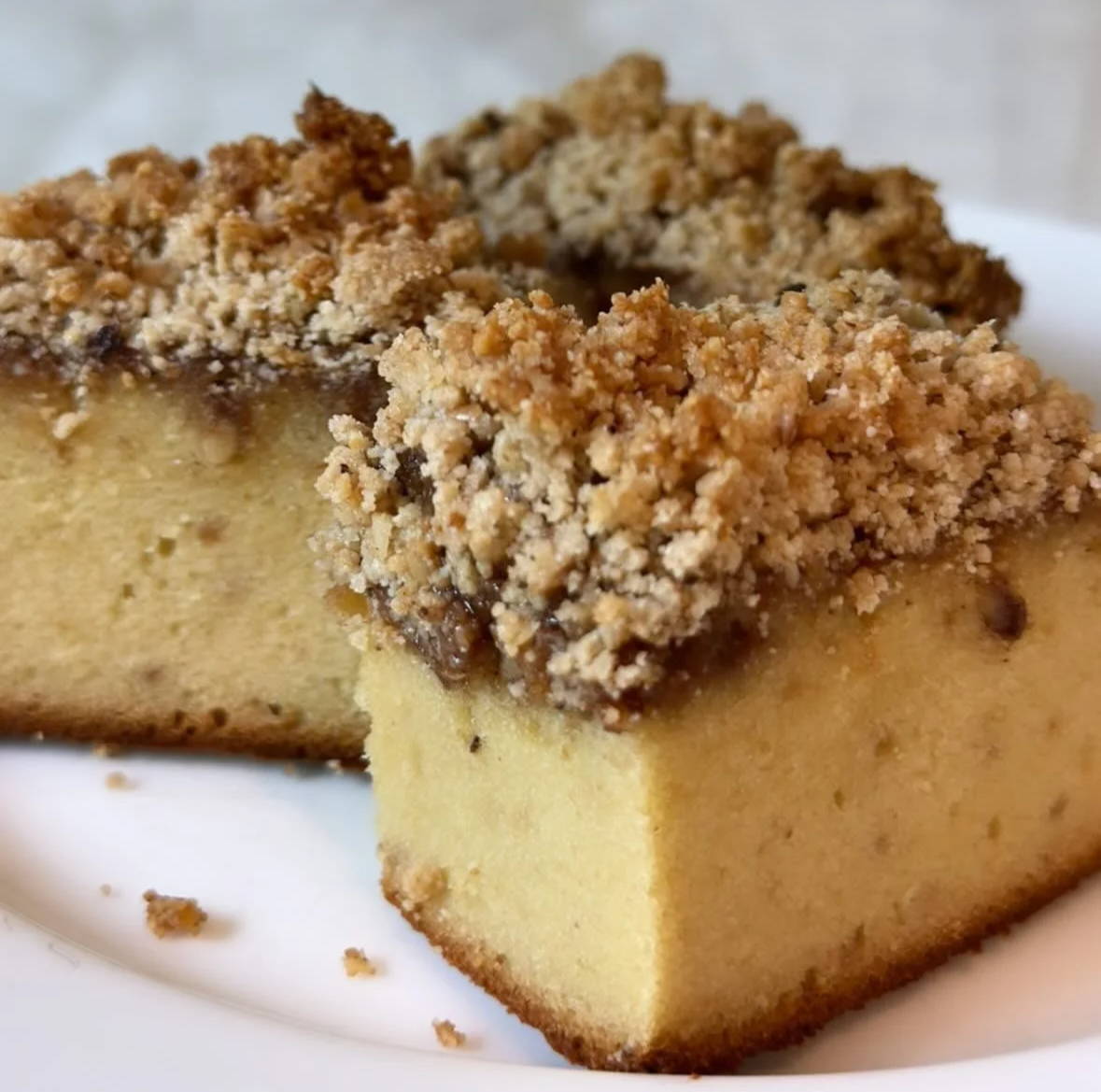
Coffee Cake (2 versions)
Season: Year-round · brunch and holiday breakfast
Cuisine: American · Grain-free
Yield: Each version serves 8–12
Best eaten: mid-morning
Version 1 is adapted from Pamela Salzman's grain-free baking and uses an almond-cassava base with a simple crumb top. The texture is denser and more cake-like. Version 2 is a coconut-flour-base cake from Deliciously Organic — eight pasture-raised eggs, raw honey, a sprouted-nut crumble on top — distinctly fluffier, lighter, and meaningfully higher in fiber and protein. The two versions answer different cravings: Version 1 is closer to a traditional American coffee cake; Version 2 is closer to a high-protein-fiber breakfast bake that just happens to taste like dessert.
Version 1 · Almond-Cassava Crumb Coffee Cake
Adapted from Pamela Salzman. The denser, more traditional American version.
Yield: One 8 or 9-inch springform · 8–12 servings Active: 20 min · Total: 1 hr 15 min
Ingredients
Crumb Topping
1 cup blanched almond flour
2 tbsp coconut flour
¼ cup coconut sugar
2 tsp ground Ceylon cinnamon
¼ tsp sea salt
6 tbsp cold unsalted grass-fed butter, cut into pieces
Cake
2 cups blanched almond flour (not almond meal)
½ cup cassava, arrowroot, or tapioca flour
2 tsp aluminum-free baking powder
½ tsp baking soda
½ tsp sea salt
¼ cup melted unrefined coconut oil, plus more for greasing
3 large pasture-raised eggs
1 cup whole-milk yogurt or coconut yogurt
½ cup pure maple syrup or raw honey
2 tbsp raw apple cider vinegar
1 tsp lemon zest
1 tsp pure vanilla extract
Method
Preheat the oven to 350°F. Lightly grease an 8 or 9-inch springform pan and line the bottom with parchment.
Crumb topping first. Pulse all topping ingredients in a food processor until moist clumps form. Transfer to a bowl and place in the freezer.
Cake. Wipe out the food processor, add all cake ingredients, and process until smooth, scraping down the sides once.
Pour batter into the prepared pan. Bake 20 minutes — no topping yet. Adding the topping at the start would let it sink into the still-loose batter.
Remove from the oven, crumble the chilled topping evenly over the partially-baked cake, and return to the oven for another 35–40 minutes, until golden and a toothpick inserted in the center comes out clean.
Cool 10 minutes in the pan, then run a knife around the edge and transfer to a rack.
Version 2 · Coconut Flour Coffee Cake with Sprouted-Nut Topping
Adapted from the Deliciously Organic. Eight eggs, raw honey, the lightest and highest-fiber of the three coffee cakes.
Yield: One 8×8 cake · 9 servings Active: 15 min · Total: 1 hr
Ingredients
Cake
1 cup coconut flour
½ tsp sea salt
1 tbsp ground Ceylon cinnamon
1 tsp baking soda
8 large pasture-raised eggs
½ cup whole-milk yogurt (raw, grass-fed if available; or strained coconut yogurt for paleo)
5 tbsp melted unsalted grass-fed butter (or coconut oil)
½ cup raw honey or pure maple syrup
1 tbsp pure vanilla extract
Topping (the sprouted-nut upgrade)
1½ cups raw, sprouted nuts — almonds, pecans, walnuts, or a mix (sub sunflower and pumpkin seeds for nut-free)
1 tbsp ground Ceylon cinnamon (or 2 tsp for a milder cinnamon load)
¼ cup raw honey or pure maple syrup
¼ cup cold unsalted grass-fed butter (or coconut oil), cut into pieces
Method
Preheat the oven to 325°F. Butter an 8×8 baking dish or line with parchment.
Cake batter. Place all cake ingredients in a food processor or high-speed blender and blend until smooth. Pour into the prepared dish.
Topping. Wipe out the food processor. Add the topping ingredients and pulse until the nuts are coarsely chopped and the mixture binds together.
Drop spoonfuls of topping over the batter, then use a butter knife to gently swirl the topping into the upper layer — this creates the swirled crumb pattern as the cake bakes.
Bake 40–45 minutes, until golden brown and a toothpick inserted in the center comes out clean.
Cool at least 15 minutes before slicing. Serve with a dollop of raw yogurt, a drizzle of raw cream, or a spoonful of raw coconut butter on top.
Sub: for a nut-free version, substitute pumpkin seeds and sunflower seeds in equal measure for the nuts in the topping. Use Celtic salt or another high-quality unrefined sea salt; Himalayan pink salt also works.
Nourishment Notes
These cakes do something remarkable: they taste like dessert but read nutritionally as a substantial breakfast bake. The differences in flour structure between the two versions matter. Almond flour (Version 1) anchors each slice with vitamin E, magnesium, and monounsaturated fats; cassava flour, made from the traditional staple tuber of West Africa and South America, lifts the crumb without grain and contributes resistant starch. Coconut flour (Version 2) is significantly higher in fiber and lower in carbohydrate than wheat flour — about 40% fiber by weight — and its high fiber content explains the unusually large number of eggs in the recipe. Coconut flour absorbs an extraordinary amount of liquid, and the eight eggs provide both moisture and structure. The result is a cake exceptionally rich in choline, retinol, and the fat-soluble vitamins (A, D, E, K2) that pasture-raised egg yolks deliver in their natural ratios. Eight eggs in one 8×8 pan is approximately 48 grams of complete protein distributed across nine slices — substantially more protein per portion than any wheat-based coffee cake.
Whole-milk yogurt brings live cultures, calcium, and vitamin K2 to both batters — a small fermentation note that improves digestibility and feeds beneficial gut flora. The Lactobacillus and Bifidobacterium strains active in real cultured yogurt are part of why traditional cultures across Europe, the Caucasus, and the Middle East paired sweet bakes with cultured dairy: the live acids stimulate digestive secretions and the probiotics offset the natural sugars' impact on the gut. Raw apple cider vinegar in Version 1 acidifies the batter to activate the baking soda while also slowing the glycemic response. Pasture-raised eggs deliver fat-soluble vitamins A, D, E, and K2 plus choline — choline being a particularly important nutrient that most modern diets fall short on, central to liver health and neurotransmitter synthesis. Grass-fed butter contributes butyrate and the same fat-soluble vitamins; the K2 in butter from grass-fed cows (specifically MK-4) directs calcium into bones and teeth and away from soft tissue. Sprouted nuts in the Version 2 topping deserve their own mention. Soaking and dehydrating raw nuts before consumption deactivates phytic acid and enzyme inhibitors that otherwise interfere with mineral absorption — increasing the bioavailability of zinc, iron, magnesium, and calcium substantially. This is the same principle traditional cultures applied to grains and legumes (sourdough fermentation, soaking, sprouting) before modern industrial processing skipped these steps. Sprouted nuts at retail (Living Tree Community, Better Than Roasted, or homemade) are easier to digest and meaningfully more nutrient-bioavailable than unsprouted raw nuts.
Ceylon cinnamon — used in both cakes — carries a meaningful polyphenol load and produces a documented modulation of postprandial glucose response; the chromium and proanthocyanidin content of true Ceylon cinnamon (vs. the cheaper cassia) supports insulin sensitivity. Raw honey contributes antimicrobial enzymes and trace minerals that pasteurization destroys. Pure maple syrup carries trace minerals (manganese, zinc, calcium) and a moderate glycemic response when paired with substantial fat and fiber.
As a circadian and seasonal food, these cakes are mid-morning eating — the slow carbohydrate, dense fat, and substantial protein profile aligns with the cortisol awakening response and supports steady forenoon energy. Eaten in the morning with a dollop of raw yogurt or alongside scrambled eggs, either version becomes a complete breakfast that holds you through the morning. Eaten alone in the afternoon, the natural sugars are buffered enough by the fat and fiber that the glycemic impact is moderate. Year-round in season, with peak resonance in autumn and winter when warming spices and rich textures suit cooler mornings.
Storage: Version 1 (almond) keeps in an airtight container at room temperature for 2 days, refrigerated up to a week, and freezes well — wrap individual slices and warm gently before serving. Version 2 (coconut flour) is best the day it's made; coconut flour bakes don't keep texture as long as nut-flour bakes. Refrigerate up to 4 days; warm gently before serving.