Pistachio-Crust Cheesecake with Apricot Caramel
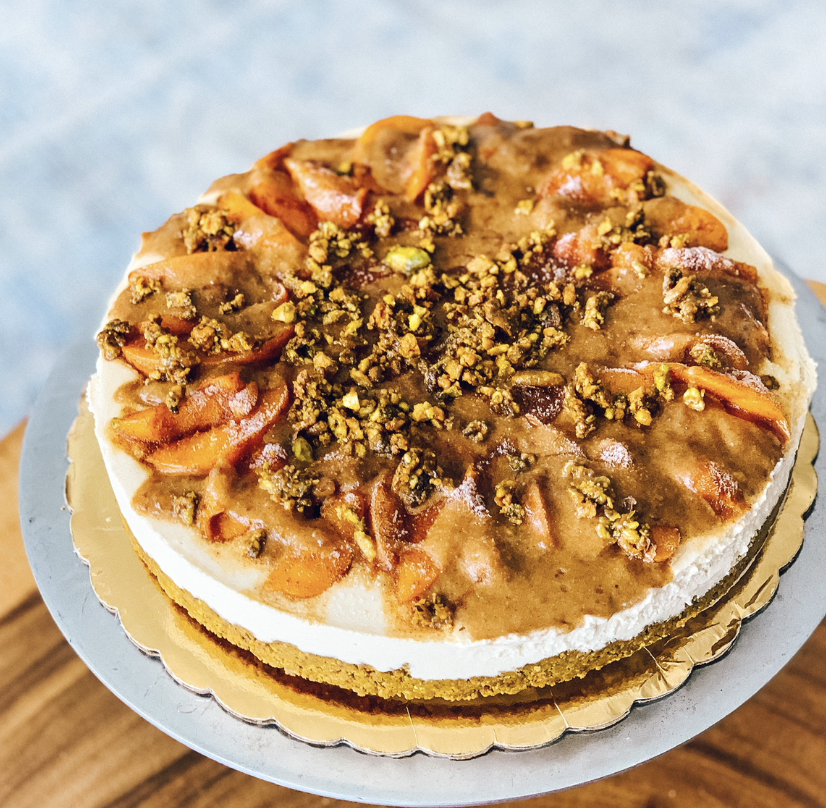
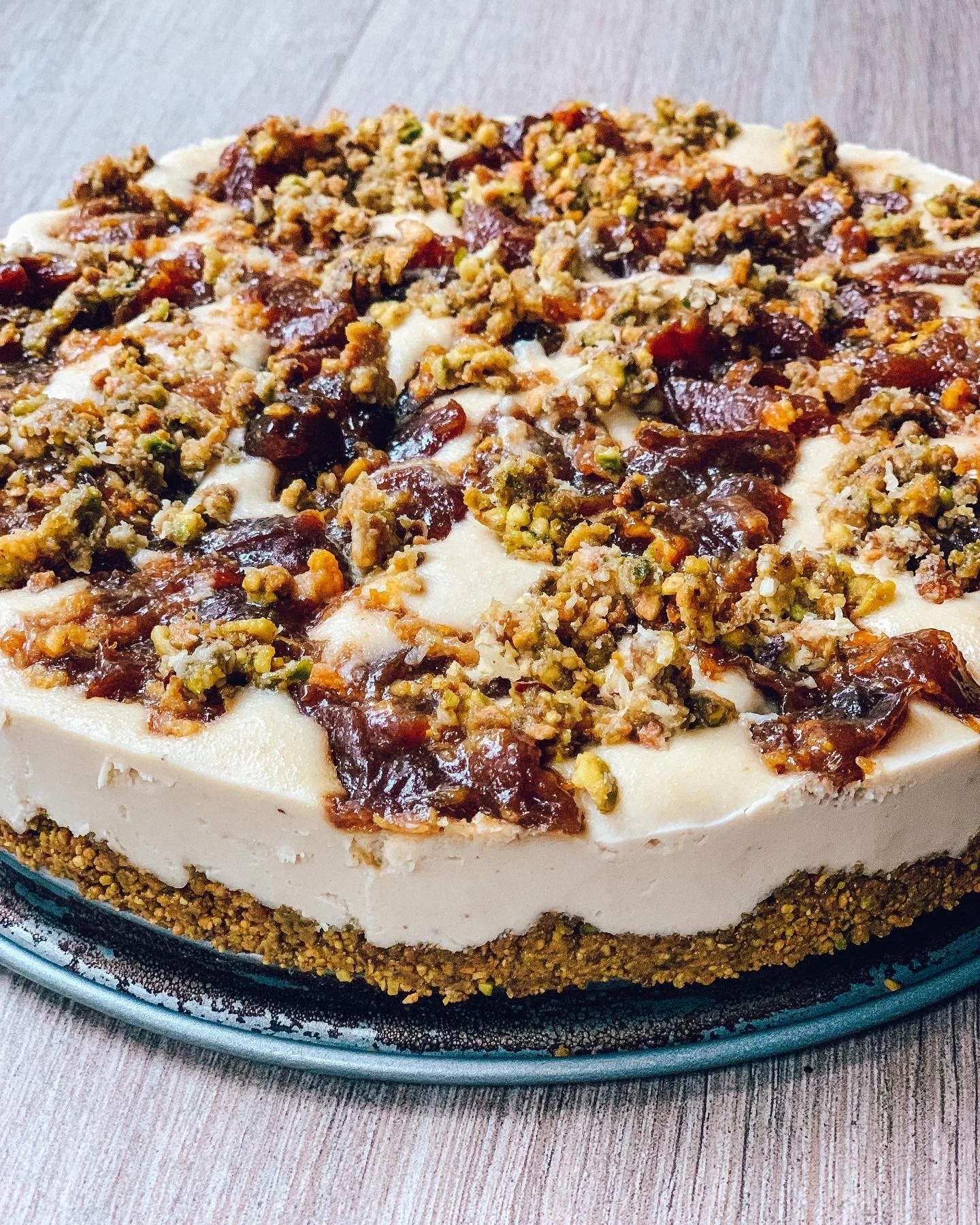
Pistachio-Crust Cheesecake with Apricot Caramel
A raw cashew cheesecake with a Persian-Mediterranean profile — pistachio crust, fresh apricot fan, dried-apricot caramel drizzle
Serves 16–20 · 30 min active · 6 hr total · summer · early afternoon or after-dinner
Ingredients
Pistachio crust
2 cups raw pistachios, finely ground
¼ tsp sea salt
1 tbsp coconut oil, melted
4–6 medjool dates, pitted
Cheesecake filling
3 cups raw cashews, soaked at least 4 hours and drained
⅔ cup fresh lemon juice
⅔ cup coconut oil, melted
⅔ cup full-fat coconut milk or coconut cream
½ to ⅔ cup pure maple syrup (start with ½, add more to taste)
1 tbsp pure vanilla extract
¼ tsp Himalayan pink salt
Apricot fan topping
3 ripe fresh organic apricots, halved, pitted, and thinly sliced
2 tbsp coconut sugar
1 tbsp fresh lemon juice
1 tsp ground Ceylon cinnamon
Apricot caramel drizzle
5 unsulphured dried apricots
¼ cup pure maple syrup
juice of half an organic orange
1–2 tsp ground Ceylon cinnamon
1 tsp coconut oil
Garnish
¼ cup raw pistachios, lightly crushed
additional fresh apricot slices (optional)
pinch of edible dried rose petals (optional)
Method
Make the crust. Line an 8-inch springform pan with parchment, letting the paper hang slightly over the sides for easy removal.
In a food processor, combine the ground pistachios, salt, melted coconut oil, and pitted dates. Process until sticky and cohesive — the mixture should hold together when squeezed in your palm.
Press evenly into the bottom of the prepared springform. Refrigerate while you prepare the filling.
Make the filling. Drain the soaked cashews. In a high-speed blender, combine the cashews, lemon juice, melted coconut oil, coconut milk, maple syrup (start with ½ cup), vanilla, and salt.
Blend on high until completely silky-smooth, scraping down the sides as needed. Taste and add additional maple syrup if needed.
Pour the filling over the chilled crust. Smooth the top with a spatula.
Freeze 4–6 hours, until completely firm.
Make the apricot fan. Only once the filling is firm enough that the apricots won't sink: In a small bowl, toss the sliced fresh apricots with coconut sugar, lemon juice, and cinnamon. Let stand 5 minutes for the apricots to release their juice slightly.
Arrange the apricot slices in a fan pattern across the surface of the firm cheesecake.
Make the apricot caramel drizzle. In a small food processor or blender, combine the dried apricots, maple syrup, orange juice, cinnamon, and coconut oil. Process until completely smooth and glossy. Add 1–2 tsp filtered water if needed for a pourable consistency.
Drizzle the apricot caramel generously over the fanned apricots. Sprinkle with crushed pistachios.
Return to the freezer 15 minutes to set the topping. Slice with a hot dry knife, thawing 10–15 minutes before serving.
Variation: Slow-Simmered Apricot Topping (autumn-leaning). For a more elaborate version with a longer-keeping topping, simmer 6 sliced fresh apricots with ¼ cup maple syrup, 2 cinnamon sticks, the zest and juice of 1 orange, and 1 cup water in a saucepan over medium heat. Bring to a boil, reduce to a gentle simmer, and cook 45–50 minutes until the apricots are tender and the liquid has reduced to a thick syrup. Strain the fruit; reserve the syrup. Return the syrup to the pan and reduce another 15 minutes until thick. Pour the syrup back over the fruit and refrigerate until ready to use. To serve, spoon the fruit and syrup over the cheesecake just before serving. The fruit-and-syrup keeps refrigerated up to 2 weeks; the cheesecake (without topping) keeps frozen up to 1 week.
Nourishment Notes
The pistachio crust is the structural anchor of this cheesecake and what pulls it firmly into Persian-Mediterranean flavor territory. Pistachios are nutritionally distinctive among tree nuts — substantial complete plant protein, vitamin B6, copper, manganese, and the carotenoid lutein (one of the few nuts that carries this eye-supportive compound at meaningful levels). The traditional cultivation of pistachios traces to ancient Persia and Mesopotamia, where the nuts have been documented for at least 5,000 years. The combination of pistachio with apricot — both fruits of the same broader Mesopotamian-Persian agricultural heritage — is one of the foundational pairings of Middle Eastern dessert tradition.
Fresh apricots are a relatively brief seasonal window in the United States (typically late May through July, depending on region), and eating them at peak ripeness is the small ritual that makes a dessert like this one feel firmly anchored in summer. The fresh apricot fan brings the bright, slightly tart counterpoint that balances the rich cheesecake filling; the dried apricot caramel layer brings concentrated sweetness and depth from the same fruit in a different form. Beta-carotene (the orange pigment in apricots) is fat-soluble, which means it's substantially more bioavailable when paired with the coconut oil in the cheesecake than it would be eaten alone.
The pistachio-and-apricot combination is structurally one of the foundational pairings of Persian, Turkish, and broader Levantine dessert tradition. Persian bastani (saffron-pistachio ice cream) often includes apricot or rose syrup; Turkish kayısı tatlısı (apricot dessert) is traditionally garnished with pistachios; the baklava of Gaziantep uses both ingredients together as a regional specialty. The combination works because pistachio's mild buttery sweetness complements apricot's bright fruit acidity without competing — each ingredient amplifies the other rather than dominating. The orange juice and cinnamon in the caramel layer add the warming spice notes that pull the dessert into the broader Mughal and Ottoman dessert tradition.
The freezer-set technique is the structural choice that makes this raw cashew cheesecake possible. Cashews soaked and blended with coconut oil and lemon juice produce a filling that's structurally similar to a baked cream-cheese cheesecake — but the freezing process is what sets it firmly enough to slice cleanly. The same principle drives most modern raw-vegan cheesecake preparations. The slight thaw before serving (10–15 minutes) is essential — fully frozen, the texture reads as ice cream; properly thawed, it reads as cheesecake.
Storage: Freezer up to 2 weeks. Slice with a hot dry knife. Thaw 10–15 minutes before serving.
Recipe credit: Inspired by Sweet Laurel Bakery.