MOROCCAN LAMB MEATBALLS WITH BEET & CARROT SLAW
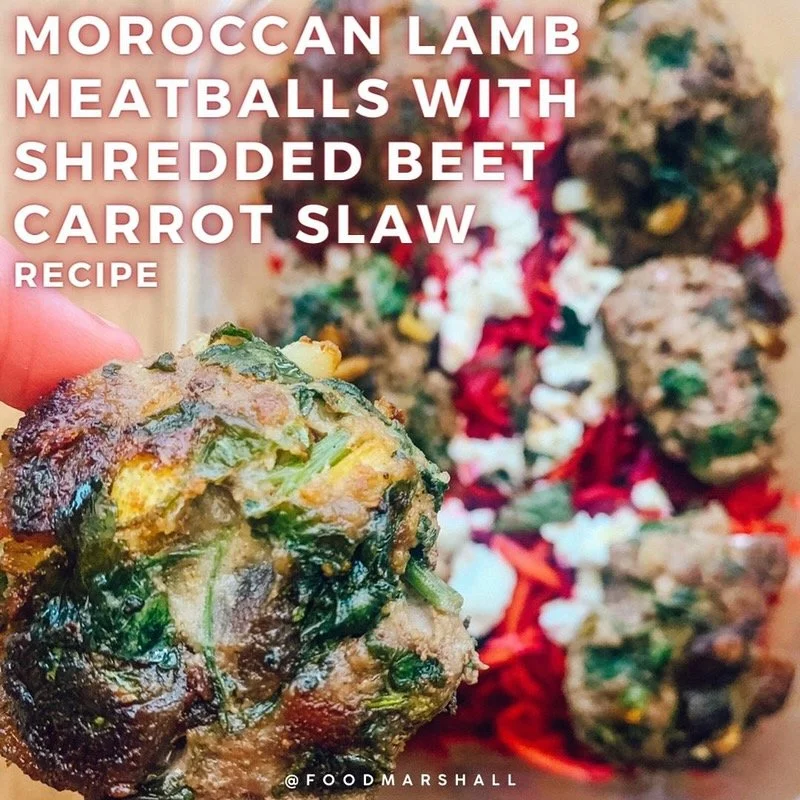
late-autumn plate of warming spice, dried fruit, and raw root vegetables.
Season: Late autumn through early spring
Cuisine: Moroccan · North African
Yield: Serves 4-6 (about 18 meatballs)
Active: 30 min · Total: 50 min
Best eaten: midday or early evening
INGREDIENTS
Meatballs
1½ lbs grass-fed ground lamb
1 shallot, finely chopped
4–6 dried apricots, finely chopped
3 tbsp fresh cilantro, minced
3 tbsp fresh parsley, minced
2 cloves garlic, minced
2 tsp fresh lemon zest
1 tsp harissa spice blend (or a mix of turmeric, coriander, cumin, paprika)
½ tsp Ceylon cinnamon
Sea salt, freshly ground pepper
A handful of dried rose petals (optional)
1–2 tsp raw honey (optional)
Beet & Carrot Slaw
8 large local carrots, shredded
1 large beet, peeled and shredded
A handful each of fresh cilantro, mint, and parsley, minced
3–4 tbsp extra virgin olive oil
Juice of 1 lemon and 1 tbsp zest
3 tbsp fresh orange juice and 1 tbsp zest
2 tbsp apple cider vinegar
½ cup raw grass-fed goat cheese or feta
Sea salt and pepper
Optional: ½ tsp Ceylon cinnamon, ¼ tsp nutmeg, a handful of golden raisins
Sub: grass-fed ground beef or bison if lamb is unavailable. The slaw can be made dairy-free by omitting the cheese and adding extra herbs and pumpkin seeds for richness.
METHOD
Preheat the oven to 400°F.
Combine all meatball ingredients in a large bowl and mix gently with your hands until just combined — overmixing toughens the texture. Alternatively, you can pulse the ingredients in a food processor.
Form into golf-ball-sized meatballs and place on a parchment-lined sheet pan. Bake 15–18 minutes, until cooked through.
While the meatballs bake, combine all slaw ingredients in a large bowl and toss well. Refrigerate at least 30 minutes (ideally several hours) to let the flavors meld and the beets soften slightly.
Plate the slaw and arrange the meatballs over the top.
NOURISHMENT NOTES
Grass-fed lamb is exceptional for its nutrient density — heme iron, zinc, B12, taurine, and conjugated linoleic acid are all present at concentrations that exceed most muscle meats. Sheep are one of the few livestock animals whose modern commercial form still resembles its ancestral character, since they cannot be confined and grain-fed the way cattle are without serious welfare cost. The Moroccan spice blend isn't ornamental: cumin, coriander, cinnamon, and turmeric all contain bioactive compounds with documented effects on digestion, glucose handling, and inflammation. Dried apricots and a touch of raw honey produce a subtle sweetness that traditional Moroccan tagines have used for centuries — the combination of warming spice and natural sugar is well-documented across the region's culinary anthropology.
The beet-carrot slaw layers in a substantial polyphenol and carotenoid load: betalains from the beets (potent antioxidants notably degraded by heat, which is why eating them raw matters), beta-carotene from the carrots, and a bright wash of citrus polyphenols from the orange and lemon zest. Eating raw shredded root vegetables is a traditional way to access enzymes and vitamin C that cooking degrades — and the olive oil and goat cheese ensure the fat-soluble carotenoids are actually absorbed. Beets also carry dietary nitrate, which the body converts to nitric oxide for vasodilation and circulatory support.
The hot-warm-spiced meatballs paired with the cool, raw slaw is digestively activating. As a circadian food, this plate belongs to midday, when the body's digestive fire can handle the dense protein, raw vegetables, and warming spices most efficiently. Lamb is a fat-forward meat best metabolized during daytime hours; eaten too late in the evening, the saturated fat sits less well and pushes back the body's natural cooling curve. Late autumn through early spring is the right window — when warming spices and root vegetables are most welcome and the body's pull toward dense protein is strongest.
Storage: cooked meatballs keep refrigerated for 3 days and freeze well up to 2 months. The slaw is best within 24 hours of dressing — the beets continue to soften and bleed.