COQ AU VIN
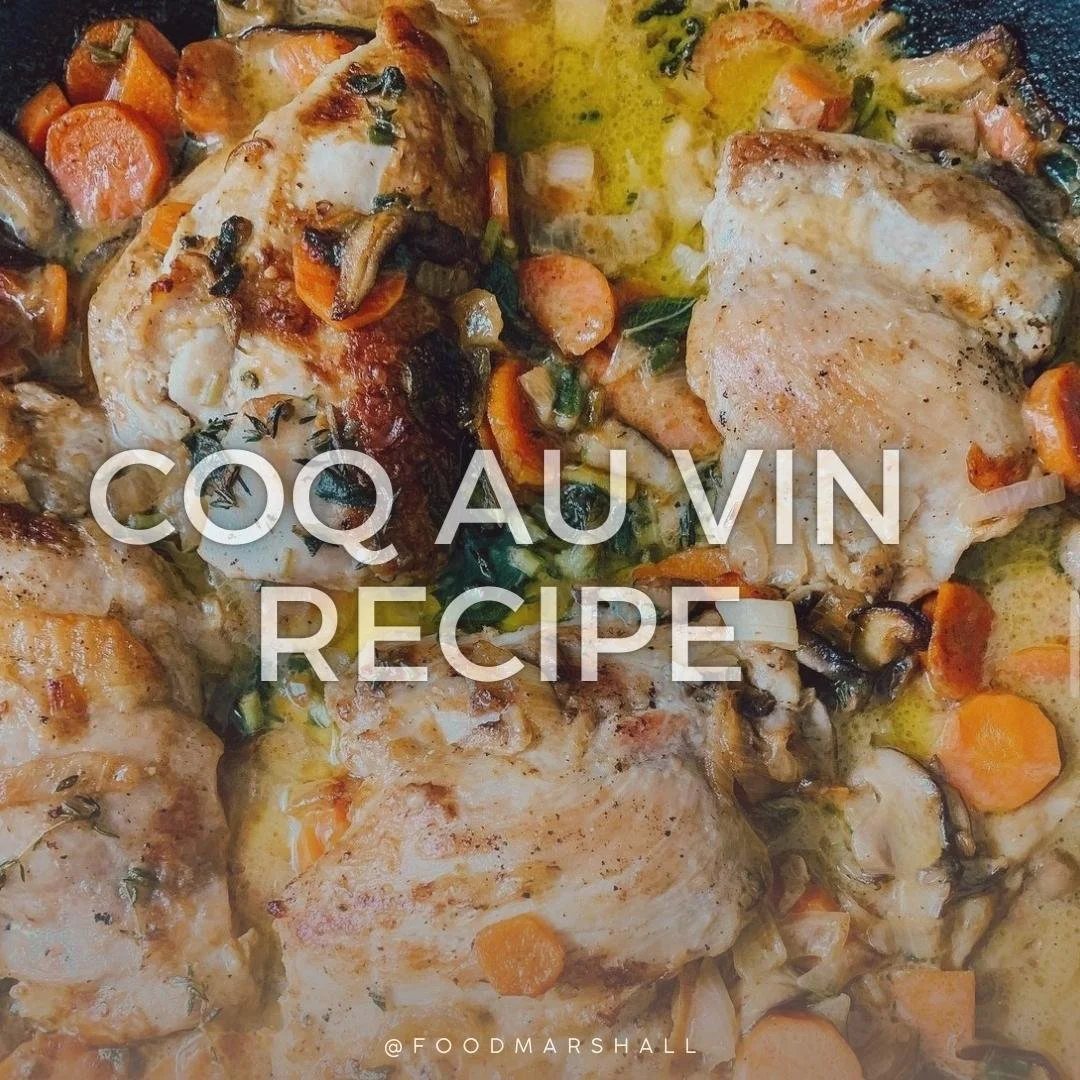
A heritage French braise for the long evenings of autumn and winter.
Season: Autumn · Winter
Cuisine: French · Heritage
Yield: 4–6 servings
Active: 30 min · Total: 1 hr 15 min
Best eaten: as a Sunday-supper centerpiece
INGREDIENTS
Base
2 lbs bone-in, skin-on pasture-raised chicken (breasts, thighs, or a mix)
Sea salt and black pepper
4 slices thick-cut pasture-raised bacon, chopped
2–3 tbsp grass-fed butter, ghee, or duck fat
1 large yellow onion, diced
4 garlic cloves, minced
2 carrots, chopped
1–2 lbs mixed mushrooms (cremini, shiitake, oyster), halved
2 tbsp tomato paste
1½–2 cups red wine (classic) or white Riesling (cream variation)
1 cup homemade chicken bone broth
2 bay leaves
4 sprigs fresh thyme
½ cup fresh parsley, chopped (added at the end)
For the Cream Variation (Riesling)
1 cup grass-fed heavy cream
2 tbsp Dijon mustard
½ cup grated Parmigiano-Reggiano
Sub: if mixed mushrooms are unavailable, cremini alone work well; thyme can be replaced with herbes de Provence.
METHOD
Season the chicken with salt, pepper, and a sprinkle of fresh thyme.
Render the bacon in a Dutch oven over medium heat until crisp. Remove with a slotted spoon and set aside, leaving the rendered fat.
Sear the chicken in batches in the bacon fat (add butter or ghee if needed), skin-side down first, until deeply golden — 3–5 minutes per side. Remove from the pot.
Sauté the onion in the rendered fat for 5 minutes. Add garlic, carrots, and mushrooms. Cook until golden, about 8 minutes.
Stir in the tomato paste and cook 2 minutes until darkened.
Pour in the wine and broth. Add bay leaves and thyme. Season with salt and pepper.
Return the chicken to the pot, skin-side up, and choose a method:
Stovetop: partially cover and simmer over medium-low heat 25–30 minutes, until chicken reaches 165°F internal.
Slow cooker: transfer everything to a slow cooker. Cook on low 5–6 hours or high 3–4 hours.
Oven (best for the Riesling cream variation): stir in the heavy cream, Dijon, and Parmesan. Transfer to a 400°F oven and roast 25–30 minutes, until bubbling and the chicken is cooked through.
Stir in fresh parsley and the reserved crispy bacon just before serving.
Serve over Parmesan mashed potatoes, cauliflower puree, or alongside a crusty loaf for sopping up the sauce.
NOURISHMENT NOTES
Coq au vin is a classic French braise originally developed to tenderize tough older birds — a coq, or rooster — through long, slow cooking in wine. The technique extracts maximum flavor and nutrition from every component: searing protein, building a vegetable base, and braising in wine and stock until the connective tissue surrenders into the sauce.
Pasture-raised chicken cooked with bone and skin contributes collagen, gelatin, and the fat-soluble vitamins concentrated in pastured fat. Pasture-raised bacon adds B vitamins, selenium, and stable saturated fats; the rendered fat that anchors this dish is a traditional cooking medium with one of the most stable oxidation profiles available. Wine — used in a long braise where most of the alcohol evaporates — leaves behind concentrated polyphenols (resveratrol from red wine; tartaric and malic acids from white) that deepen flavor and round the sauce. Mushrooms bring beta-glucans, B vitamins, and ergocalciferol from sun-exposed varieties. The cream variation layers in the calcium, butyrate, and fat-soluble vitamins of grass-fed dairy.
As a seasonal dish, coq au vin belongs to the cold months. Long braises align with the body's autumn and winter pull toward warming, slow-cooked, fat-rich meals — the kind of food that suits shorter days, lower light, and the metabolic shift toward grounding nourishment. It is even better the day after cooking, as the flavors deepen overnight.
Storage: refrigerate up to 3 days; reheat gently on the stovetop. Improves overnight.