Raw Kefir Shake with Bee Pollen & Berries
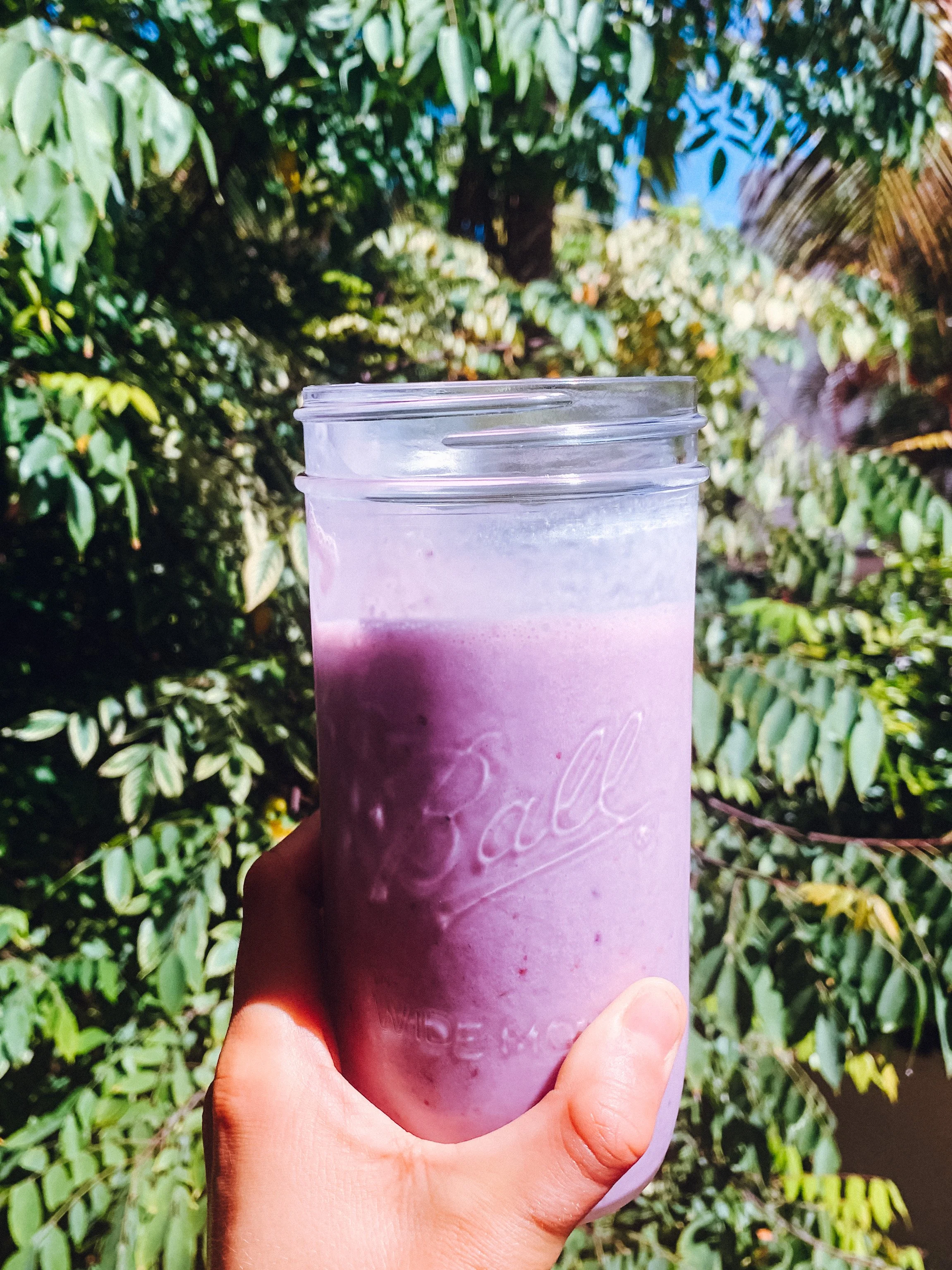
A 60-second breakfast that does the work of a full meal.
Season: Year-round · spring through autumn at peak
Cuisine: Universal · Raw Dairy
Yield: 2 servings
Active: 5 min · Total: 5 min
Best eaten: morning
Ingredients
2 cups raw kefir — goat, Jersey A2A2 cow, or sheep
½ cup wild blueberries, strawberries, or raspberries (fresh or frozen)
1 ripe banana
1 pasture-raised egg yolk
1 tbsp bee pollen
1 tbsp raw honey (optional)
Sub: any of the three raw milks — goat, cow, or sheep — make excellent kefir, and each carries its own character. Goat is the gentlest on dairy-sensitive systems; Jersey A2A2 cow is the richest and creamiest; sheep is the most concentrated in fat-soluble vitamins. Use whichever your local raw-dairy source carries.
Method
Place all ingredients in a high-speed blender.
Blend 30–60 seconds until completely smooth and creamy.
Pour into glasses and serve immediately.
Nourishment Notes
Raw kefir from grass-fed, pasture-raised animals is one of the most therapeutic fermented foods available — it contains live cultures, multiple strains of beneficial bacteria and yeasts, that recolonize the gut microbiome alongside the intact enzymes that pasteurization destroys. The kefir grains used to ferment milk into kefir are themselves an ancient symbiotic culture: legend traces them to Caucasus mountain shepherds who carried fermenting milk in animal-skin bags, and the same family of cultures has been passed down across thousands of years of pastoral cooking. Each of the three traditional kefir milks offers a distinct profile. Goat dairy is naturally lower in lactose, contains smaller fat globules, and carries a different protein structure (more A2 beta-casein) than cow's milk, making it digestible for many who cannot tolerate conventional cow dairy. Sheep milk is higher in fat per volume, richer in omega-3s when ewes have grazed varied forage, and carries meaningful short-chain fatty acids. Jersey A2A2 cow milk delivers the richest cream content and the same A2 protein profile that makes goat and sheep dairy gentler on digestion than commercial Holstein cow milk. Raw, unhomogenized dairy retains the original enzyme profile — phosphatase and lactase — that supports the body's absorption of calcium and magnesium directly into bone.
The supporting ingredients each carry meaningful weight. The pasture-raised egg yolk adds choline, fat-soluble vitamins A, D, E, K2, and lecithin — concentrated nutrients formed by the laying hen's exposure to sunlight and forage. Raw egg yolks have been a traditional breakfast addition across many cultures (Japanese tamago kake gohan, Italian zabaglione, the steak tartare yolk) for centuries; the lecithin specifically acts as a natural emulsifier in the blender, contributing to the silky texture. Bee pollen is a complete food made by bees from flower pollen — it carries B vitamins, trace minerals, antioxidants, and small amounts of complete protein, alongside flavonoids unique to the local botanical environment where the bees forage. A bee pollen sourced from a local apiary carries the regional pollen signature of the place you live in, which traditional practitioners have long associated with seasonal allergy tolerance. Wild blueberries deliver meaningfully more anthocyanins per berry than cultivated varieties; the small dark berries are visually denser in pigment for a reason.
As a circadian food, this shake belongs squarely to the morning. Pasture-raised egg yolks at breakfast set up the day's metabolism cleanly; the live cultures of raw kefir prime the gut for the day's eating; the natural sugars of banana and berries deliver in a fat-and-protein matrix that produces a steady metabolic curve rather than a spike. The shake is particularly restorative after antibiotics, illness, travel, or periods of digestive distress — the live cultures rebuild what those events deplete. Source raw dairy from a trusted local farm; realmilk.com lists producers by state, since raw milk access varies by state law.
Storage: best blended fresh and consumed immediately — the live cultures and raw egg yolk are at their most beneficial within minutes of blending. If you must hold it, refrigerate up to 4 hours in a glass jar with the lid sealed. Bee pollen keeps refrigerated 6 months or frozen up to a year; raw honey keeps indefinitely.