Duck Tacos with NIXTAMALIZED Corn Tortillas, PURPLE Cabbage SLAW & Green Chimichurri
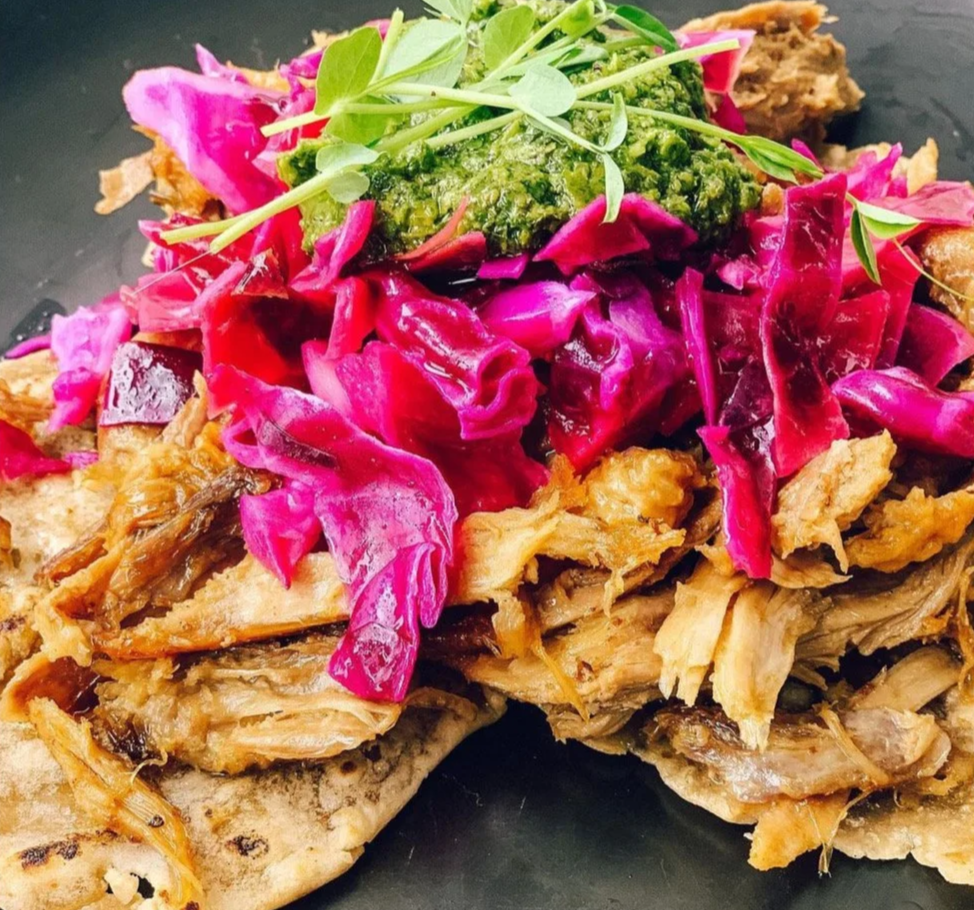
Autumn's most underrated protein, served on the oldest flatbread in the Americas.
Season: Autumn
Cuisine: Mesoamerican · French · Argentine (harvest fusion)
Yield: Serves 4–6
Active: 45 min · Total: 2 hr 30 min
Best eaten: late lunch or early-evening dinner
Ingredients
Roasted Duck
1 whole duck, 5–6 lbs, pasture-raised and air-dried
1 tbsp sea salt, 1 tsp freshly ground black pepper
4 tbsp raw grass-fed butter, melted (or ghee)
3 cloves garlic, finely grated
1 tbsp each fresh rosemary, tarragon, sage, and thyme leaves, finely chopped
Mexican carnitas alternate: replace the herb butter with 3 tbsp lard or duck fat + 1 tsp ground cinnamon + ½ tsp ground cloves + 1 tbsp dried Mexican oregano + 4 cloves grated garlic + 1 quartered orange (tucked into the cavity, half squeezed over the skin). Lean into warm, citrus-bright, deeply aromatic.
Tortillas — choose one path
Path A — Nixtamalized Purple Corn (preferred, ancestral)
2 cups heirloom nixtamalized purple corn masa harina
1½ cups warm filtered water
½ tsp sea salt
Makes about 12 tortillas
Path B — Cassava (grain-free, corn-free)
1 cup cassava flour (Otto's preferred — not tapioca flour)
2 tbsp extra virgin olive oil (or melted coconut oil)
½ tsp sea salt
½ cup warm filtered water (more as needed)
Optional color: 1 tsp beet powder (pink), spirulina (green), or turmeric (golden)
Makes about 8 tortillas
Massaged Purple Cabbage Slaw
½ head purple cabbage, very thinly sliced (about 4 cups)
1 medium carrot, julienned (optional)
2 tbsp raw, unfiltered apple cider vinegar (with the mother)
2 tbsp extra virgin olive oil
½ tsp sea salt, freshly ground black pepper
Green Herb Chimichurri
1 cup fresh cilantro leaves (with tender stems)
½ cup fresh flat-leaf parsley
¼ cup fresh mint leaves
2 cloves garlic
½ tsp sea salt
1 tbsp raw honey
2 tbsp raw apple cider vinegar
1 tbsp fresh lemon juice
½ cup extra virgin olive oil
Optional: pinch red chile flakes
Bright Radish Salad(optional but lovely — palate cleanser)
1 bunch breakfast radishes or watermelon radish, thinly sliced
¼ red onion, thinly sliced into half-moons
2 tbsp fresh lime juice
1 tbsp extra virgin olive oil
2 tbsp fresh mint, torn; 1 tbsp fresh tarragon, torn
Pinch sea salt
To Serve
A handful of fresh arugula or mixed spring greens per person
Sliced avocado (optional)
Shredded raw or aged grass-fed cheese — Manchego, aged raw cheddar, or cotija (optional)
Fresh cilantro leaves, lime wedges, flaky sea salt
Method
Choreography: start the duck first. While it roasts (2 hours), make the chimichurri, massage the cabbage, prepare the tortillas, and dress the radish salad. Everything finishes within 15 minutes of the duck coming out.
Duck
Preheat the oven to 400°F (205°C). Remove the duck from the refrigerator 30 minutes before roasting. Pat completely dry, inside and out, with paper towels. Dry skin is what gets crisp.
Season the cavity generously with salt and pepper. Season the exterior all over — do not be shy; a 5-lb duck needs meaningful salt. Combine the melted butter with grated garlic and chopped herbs in a small bowl.
Brush the duck all over with about two-thirds of the herb butter, getting into the leg crevices and under the loose neck skin. Pour the remainder into the cavity. Place breast-side up on a rack inside a heavy roasting pan.
Roast at 400°F for 2 hours. Every 30–40 minutes, baste thoroughly with the pan juices. Reserve the rendered fat after roasting — it is one of the most prized traditional cooking fats and keeps for months refrigerated.
Turn the oven to broil (high). Broil 5 minutes breast-side, then carefully flip and broil 5 minutes on the back. Watch closely — crackling-crisp is the goal, not burned.
Rest on a cutting board, tented loosely with foil, 15 minutes. Pull the meat from the bones with two forks — it should come away easily. Arrange on a warm platter, drizzled with a few spoonfuls of pan juices. Save the bones for broth.
Purple Corn Tortillas (Path A)
Combine the masa harina and salt in a bowl. Add warm water gradually, mixing with hands until the dough comes together. Knead 1–2 minutes — should feel like soft play-dough, holding shape when pressed without cracking. Adjust with water or masa as needed. Rest 10 minutes covered with a damp cloth.
Divide into 12 golf-ball-sized portions, kept covered. Cut two pieces of parchment for your tortilla press (or use a flat-bottomed plate). Press each ball to ⅛ inch — thinner than you think.
Heat a dry cast-iron skillet or comal over medium-high until very hot. Cook each tortilla 30–45 seconds per side, until small bubbles form and edges lift. The tortilla should puff slightly. Stack in a clean towel or warmer to stay soft.
Cassava Tortillas (Path B)
Whisk cassava flour, salt, and any optional color powder in a bowl. Rub the olive oil into the flour with your fingers. Gradually add warm water, mixing until the dough comes together. Knead briefly until smooth.
Divide into 8 balls. Roll each between two pieces of parchment to about ⅛ inch.
Cook on a dry cast-iron skillet over medium 1–2 minutes per side, pressing gently with a spatula, until light brown spots appear and the tortilla is cooked through but pliable.
Massaged Cabbage
In a large bowl, combine the cabbage, optional carrot, ACV, olive oil, salt, and pepper. Massage with hands 2–3 minutes — the cabbage will soften, reduce by about a third, and turn deeper magenta as the acid works. Rest at least 10 minutes.
Green Chimichurri
In a food processor, pulse the cilantro, parsley, mint, garlic, and salt until finely chopped — quick pulses, not a purée. Transfer to a small bowl. Whisk in honey, ACV, lemon juice, olive oil, and optional chile flakes. Taste and adjust. (Hand-chopping gives a more rustic Argentine texture — the traditional method.)
Radish Salad (if making)
Combine sliced radishes and red onion in a bowl. Add lime juice, olive oil, torn herbs, and salt. Toss gently. Rest 10–15 minutes — radishes soften slightly and turn paler pink.
Serve
Set everything in the center of the table: the platter of warm pulled duck, a tortilla warmer, the cabbage slaw, the bowl of chimichurri, the radish salad, fresh arugula, avocado, optional cheese, cilantro leaves, lime wedges. Each person builds: tortilla, arugula, pulled duck, spoonful of cabbage, drizzle of chimichurri, scatter of radish, optional cheese. Pass the flaky salt.
Nourishment Notes
This dish brings together food technologies from three continents, and each one carries genuine ancestral weight. Duck is one of the most underappreciated proteins in the American kitchen. Where commercial chicken has been bred, confined, and grain-finished to the point that its nutrient profile has been substantially degraded, duck remains largely unmodified — pasture-raised ducks still require water access, still forage naturally, and still carry a fat profile that reflects their varied diet. The meat is dense in bioavailable iron, zinc, B12, selenium, and the full B-vitamin complex; its darker color reflects higher myoglobin content, the signal of active-life muscle that modern commercial chicken has lost. Ancestrally, duck was a cold-weather bird across the Northern Hemisphere — Chinese Peking duck, French confit de canard, Yucatec pato en escabeche — every tradition placed duck at the harvest or cold-weather table. The fat content is higher than chicken, which is the point: autumn wants fat. Rendered duck fat that collects in the pan during roasting is one of the most prized cooking fats in traditional European cuisine, with a high percentage of monounsaturated oleic acid and a small amount of stable saturated fat — it carries the fat-soluble vitamins the duck absorbed during its life. Do not pour it down the drain. A jar of reserved duck fat will elevate every roasted vegetable for the next six weeks.
Nixtamalization, the technology behind the purple corn tortilla, is one of the most underappreciated food technologies in human history. Developed in Mesoamerica at least 3,500 years ago, nixtamalization is the process of soaking and cooking dried corn kernels in an alkaline solution (traditionally slaked lime — cal in Spanish — or wood ash). The word itself comes from Nahuatl: nextli (ashes) and tamalli (dough). It converts the niacin bound in corn into a bioavailable form the body can actually use; breaks down the corn's cell walls, releasing amino acids (particularly lysine and tryptophan) that are otherwise locked; substantially increases the calcium content; and critically, inactivates aflatoxin, a mycotoxin produced by Aspergillus molds that is one of the most potent carcinogens known. Without nixtamalization, a corn-based diet produces pellagra, the niacin-deficiency disease that killed tens of thousands in the American South in the 19th and early 20th centuries — people who had adopted corn as a staple without adopting the processing. In Mesoamerica, where nixtamalization had been part of food culture for thousands of years, pellagra simply did not occur. Heirloom purple corn carries high anthocyanin levels, the same flavonoids found in blueberries and purple cabbage. Cassava, the grain-free alternative, has been cultivated for 8,000 years in Brazil and the Caribbean and is high in resistant starch — a prebiotic fiber that feeds beneficial gut bacteria. Both tortilla paths are traditional foods, not compromises.
Purple cabbage massaged with raw ACV is doing several things at once. Cabbage is a brassica carrying glucosinolates that convert to sulforaphane during cellular breakdown, supporting phase-two liver detoxification. Purple cabbage specifically carries anthocyanins — echoing the purple corn — which is why the visual alignment of this dish is also nutritional alignment. The acid massage begins a lacto-light process: not full fermentation, but a gentle breakdown of cell walls that makes nutrients more bioavailable. Raw, unfiltered ACV with the mother adds a small probiotic load and supports digestive enzyme production — essentially a quick lacto-fermented slaw in ten minutes. Fresh cilantro contains compounds studied for heavy-metal chelation; parsley is one of the richest vitamin K1 sources in the kitchen; mint supports gastric motility. The chimichurri's traditional pairing with roasted meats is not coincidence — it is ancestral digestive design, the herbal acid that primes digestion before the rich duck arrives. As a circadian and seasonal food, this plate belongs to early evening — duck is rich and high-fat, best metabolized while peak digestive capacity is still active and there is still light on the table. A late-lunch or 5–7 p.m. dinner lands cleanly; a late-night version pushes the body's cooling and melatonin curve back. Autumn is the season of dense pigments — the anthocyanins responsible for the deep purples of late-harvest produce are among the most studied plant compounds, and a harvest table built around them is the visual signature of the nutrients the body most needs as the light shortens.
Storage: leftover pulled duck keeps 3–4 days refrigerated and reheats beautifully in a little of its own fat — next-day duck tacos are arguably better than day-one tacos as the meat marinates in its rendered fat. Leftover duck makes an exceptional cold salad with greens and chimichurri. Reserved duck fat keeps 3–4 months refrigerated. Chimichurri keeps 3 days and improves after the first few hours. The cabbage slaw is best within a couple of hours of massaging — by which point it has softened ideally. Tortillas are best fresh but keep wrapped in a clean towel for several hours.
Marinated Purple Cabbage Slaw with Cilantro & Pepitas
The Mexican-inspired foundational slaw — upgrades every taco, bowl, and roasted plate.
Season: Year-round (foundational)
Cuisine: Mexican-Inspired · Mesoamerican
Yield: ~6 cups (serves 6–8 as a side, fills 12–16 tacos)
Active: 15 min · Total: 30 min minimum (best after 2+ hours)
Best eaten: any daylight hour, alongside richer meals
Ingredients
Slaw
½ head purple cabbage, cored and very thinly shredded (about 4 cups)
1 large carrot, julienned or shaved with a peeler into thin ribbons
¼ small red onion, very thinly sliced (rinsed briefly in cold water to remove harshness while keeping color and bite)
½ cup fresh cilantro leaves, roughly chopped
¼ cup raw pepitas, toasted
Optional: 1 jalapeño, seeded and thinly sliced into rings
Dressing
3 tbsp raw, unfiltered apple cider vinegar (with the mother)
2 tbsp fresh lime juice
3 tbsp extra virgin olive oil
1 tsp raw honey (or maple syrup for vegan)
1 tsp sea salt
½ tsp freshly ground black pepper
1 small clove garlic, finely grated (optional)
½ tsp ground cumin (optional, for a warmer Mexican note)
Optional Additions
1 ripe avocado, diced (add just before serving)
Zest of 1 lime
2 tbsp crumbled queso fresco or feta (not vegan)
A small handful of pomegranate arils (late autumn/winter — strikingly beautiful against the purple)
Method
Shred the cabbage. Cut into quarters and remove the tough core. Slice each quarter very thinly (⅛-inch) with a sharp chef's knife or mandoline. The thinner the better — thick cabbage takes longer to soften and is less pleasant to eat.
Toast the pepitas. In a dry skillet over medium-low heat, toast 3–4 minutes, stirring frequently, until fragrant and lightly popping. Watch closely — they burn quickly. Cool.
Prepare the other vegetables. Julienne or peeler-shave the carrot. Slice the red onion thinly, then rinse briefly in a strainer under cold water (removes the sharp raw bite while preserving color and structure). Drain well. Chop the cilantro.
Whisk the dressing. Combine ACV, lime juice, olive oil, honey, salt, pepper, optional garlic, and optional cumin in a small bowl.
Marinate. In a large bowl, combine the cabbage, carrot, and red onion. Pour the dressing over and toss thoroughly — work it in with clean hands, gently massaging the cabbage 30–60 seconds to begin softening it. The cabbage will release its purple color into the dressing as you massage. Cover and refrigerate at least 30 minutes; genuinely best after 2+ hours and even better the next day.
Finish before serving. Fold in the chopped cilantro, toasted pepitas, and any optional additions (avocado, jalapeño, lime zest, cheese, pomegranate arils). Adjust salt one final time.
Nourishment Notes
Purple cabbage is one of the quietly exceptional vegetables in the kitchen. A cup of shredded purple cabbage delivers over 100% of the daily vitamin C requirement, meaningful vitamin K, vitamin B6, folate, fiber, and — critically — glucosinolates. These sulfur-containing compounds are the defining phytonutrients of the brassica family. When chopped, bruised, or chewed, the enzyme myrosinase converts them into isothiocyanates, a class of compounds extensively studied for supporting phase-two liver detoxification pathways. Purple cabbage carries additional anthocyanins (the deep-purple pigments), which the body metabolizes into bioavailable polyphenols with documented cardiovascular and anti-inflammatory effects. A cup of this slaw delivers the phytonutrient density of a supplemental green drink in genuinely delicious form.
Marinating cabbage in acid is doing real chemistry. The acetic acid in raw apple cider vinegar and the citric acid in lime juice partially hydrolyze the cabbage's tough cell walls, making the glucosinolates and anthocyanins more bioavailable. Extended marinating (24+ hours) also begins a mild lacto-fermentation — the same process that produces sauerkraut, but much gentler and briefer. After 24 hours in the refrigerator, the slaw carries a small but meaningful probiotic component in addition to its raw-vegetable benefits. It is the most accessible form of "mildly fermented" that most American kitchens can achieve without making sauerkraut from scratch. Pepitas have been eaten across Mesoamerica for at least 7,000 years, since squash was one of the first domesticated crops of the Americas. They carry exceptional magnesium content (about 150 mg per ounce — among the highest plant sources), zinc, manganese, copper, and meaningful plant protein, plus alpha-linolenic acid (plant omega-3) and gamma-linolenic acid. Toasting briefly intensifies their flavor without degrading their nutritional profile.
Fresh cilantro contributes chlorophyll, vitamin K1, and specific compounds studied for heavy-metal chelation — making it a thoughtful pairing for meat-based meals that might include trace metals from commercial food systems. Fresh lime delivers vitamin C and d-limonene (in the zest, which supports phase-two liver detoxification). Raw apple cider vinegar with the mother contributes acetic acid (studied for glycemic moderation), trace probiotic cultures, and apple polyphenols. Taken together, the slaw delivers concentrated brassica phytonutrients, meaningful minerals from pepitas, the probiotic benefit of acid-marinated vegetable matter, and the digestive-supportive compounds of cilantro and lime — all in a side that travels with virtually any protein. As a foundational kitchen practice, making a batch on Sunday for the week ahead is one of the highest-leverage habits for getting raw brassica nutrition into daily eating without thinking about it.
Storage: refrigerated in a covered container 4–5 days. Actually improves through days 2–3 as the cabbage softens further. By day 5, the cabbage becomes quite soft — still delicious, but best eaten within that window. Add the pepitas and cilantro only within 2 hours of serving so they stay crisp and bright.