Pork Chops — Four Seasonal Preparations
Pasture-raised pork, seared in cast iron, paired with what's at peak in each season.
Cuisine: European Heritage · Italian, French, American
Yield: Serves 4 (each preparation)
Best eaten: midday or early evening
A good pork chop is one of the most underrated weeknight celebrations. The work is upstream — finding pasture-raised pork from pigs that actually foraged outdoors. Industrial pork is one of the most ancestrally problematic meats; pasture-raised pork is one of the most genuinely nourishing. The difference is structural, not marginal. Pigs are omnivorous foragers — designed to eat roots, nuts, fallen fruit, insects, and vegetation — and when allowed to forage on pasture, their meat carries meaningfully more omega-3 fatty acids, higher levels of vitamin D (pigs synthesize vitamin D through their skin the same way humans do), richer fat-soluble vitamin content, and a distinctly cleaner flavor. Buy pasture-raised, eat moderately, and the health concerns associated with "pork" largely dissolve. The four preparations below take that foundation and run it through Italian summer, American autumn, and French country traditions.
Master Method (applies to all four preparations)
Pat the chops completely dry with paper towels. Season generously on both sides with sea salt and freshly ground black pepper, pressing the seasoning into the meat.
Bring to room temperature 20–30 minutes before cooking.
Heat 2 tbsp grass-fed butter, ghee, lard, or duck fat in a heavy oven-safe skillet (cast iron is ideal) over medium-high heat until shimmering.
Sear undisturbed 3–4 minutes per side until a deep golden-brown crust develops. Do not move the meat.
For thicker chops (1½+ inches), finish in a 400°F oven 4–6 minutes, until internal temperature reaches 140°F for medium-rare or 145°F for medium (it will continue rising during rest).
Rest 5 minutes tented loosely with foil before plating.
1. Balsamic Peach Pork Chops with Feta, Basil & Arugula
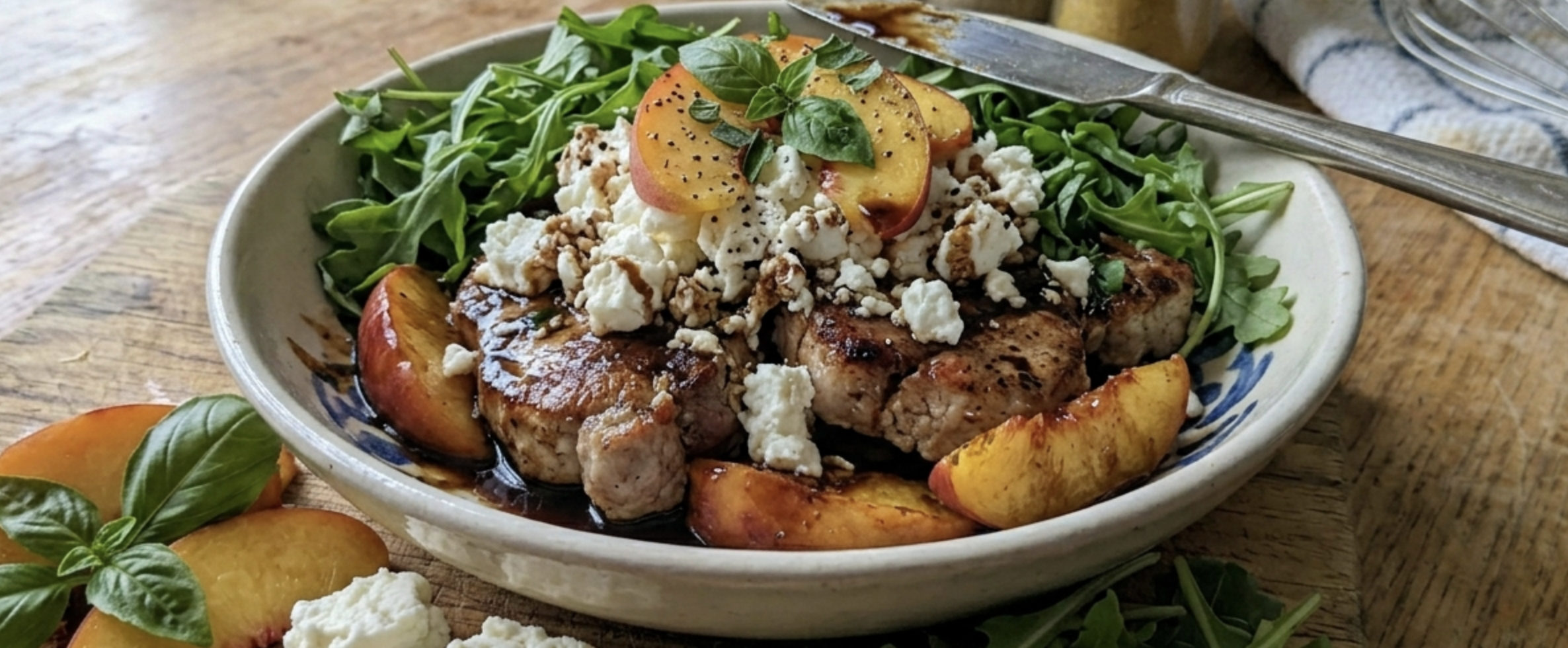
Season: Summer — peak peach window (July through mid-August). The summer one-pan dinner where the fruit becomes the sauce.
Ingredients (in addition to the master chops)
½ cup aged balsamic vinegar
1 tbsp raw honey
1 tbsp fresh oregano leaves (or thyme, or both)
2 ripe peaches, pitted and sliced into thick wedges
1 clove garlic, finely grated (optional, adds depth)
6 oz sheep's milk feta, crumbled
½ cup fresh basil leaves, torn
¼ tsp crushed red chili flakes
2 cups arugula, as a bed
1 lb fingerling or baby potatoes, roasted at 425°F for 25 min (optional, makes it complete)
Method (continuing from the master sear): in the last 2 minutes of cooking, whisk together the balsamic, honey, oregano, and garlic in a small bowl. Pour over the chops in the skillet, turning once to coat. Transfer the chops to a plate to rest. Add the peach wedges to the skillet, tossing in the glaze. Place the skillet under the broiler 4–5 minutes, until peaches are charred at the edges and the glaze has thickened — watch closely. Plate over arugula. Top with the chops, charred peaches, pan sauce, crumbled feta, torn basil, chili flakes, flaky salt, and a thread of olive oil.
2. Cauliflower Purée with Crispy Potatoes & Caramelized Onions

Season: Autumn / Winter — when root vegetables are at their best and the body welcomes warming, fat-rich meals.
Ingredients (in addition to the master chops)
Spice rub for the chops: ½ tsp smoked paprika, ½ tsp garlic powder, ½ tsp onion powder, 1 tbsp fresh rosemary minced, 1 tbsp fresh thyme minced
Cauliflower purée: 1 large head cauliflower (florets), 4 tbsp raw grass-fed butter, pinch sea salt, optional splash of bone broth
Crispy potatoes: 1½ lbs fingerling or yukon gold potatoes (thinly sliced), 2 tbsp grass-fed tallow or ghee (melted), 1 tbsp apple cider vinegar
Caramelized onions: 2 yellow onions sliced, 4 garlic cloves minced, 2 tbsp grass-fed butter
Method: preheat oven to 450°F. Toss the sliced potatoes with tallow, vinegar, salt, and pepper. Roast 30 minutes, flipping halfway, until deeply golden and crisp. Steam the cauliflower 10 minutes until very soft; blend with butter and salt until silky, thinning with bone broth if needed. Caramelize the onions in butter over medium-low for 25 minutes, adding garlic in the last few minutes. Sear the chops per the master method using the spice rub. Plate the cauliflower purée under the chop with caramelized onions and crispy potatoes alongside.
3. Apple Sage Pork Chops with Brussels Sprouts

Season: Autumn — peak apple harvest. The classic American heritage pairing.
Ingredients (in addition to the master chops)
Optional seasoning blend for chops: lemon zest, onion powder, garlic powder, sesame seeds, dried parsley
Brussels sprouts: 1 lb halved sprouts, 1 small red onion (thinly sliced), 3 garlic cloves minced, 3 tbsp grass-fed butter, ¼ cup shaved Parmigiano-Reggiano
Sautéed apples: 2 apples (Honeycrisp or Pink Lady), 2 tbsp grass-fed butter, 2 tbsp fresh sage minced, ½ tsp ground Ceylon cinnamon, 1 tsp coconut sugar (optional)
Method: melt butter in a large skillet over medium-high. Add Brussels sprouts cut-side down and sear undisturbed 4 minutes until golden. Add red onion and garlic; cook 5–7 minutes until tender and onion caramelizes. Top with shaved Parmesan. In a separate skillet, melt butter over medium. Add apple slices, sage, cinnamon, salt, and optional coconut sugar; sauté 5–7 minutes until softened and lightly caramelized. Sear the pork per the master method. Plate the chops with Brussels sprouts on the side, sautéed apples spooned over, and a final shaving of Parmesan.
4. French Country with Carrot Purée, Gremolata & Sautéed Greens
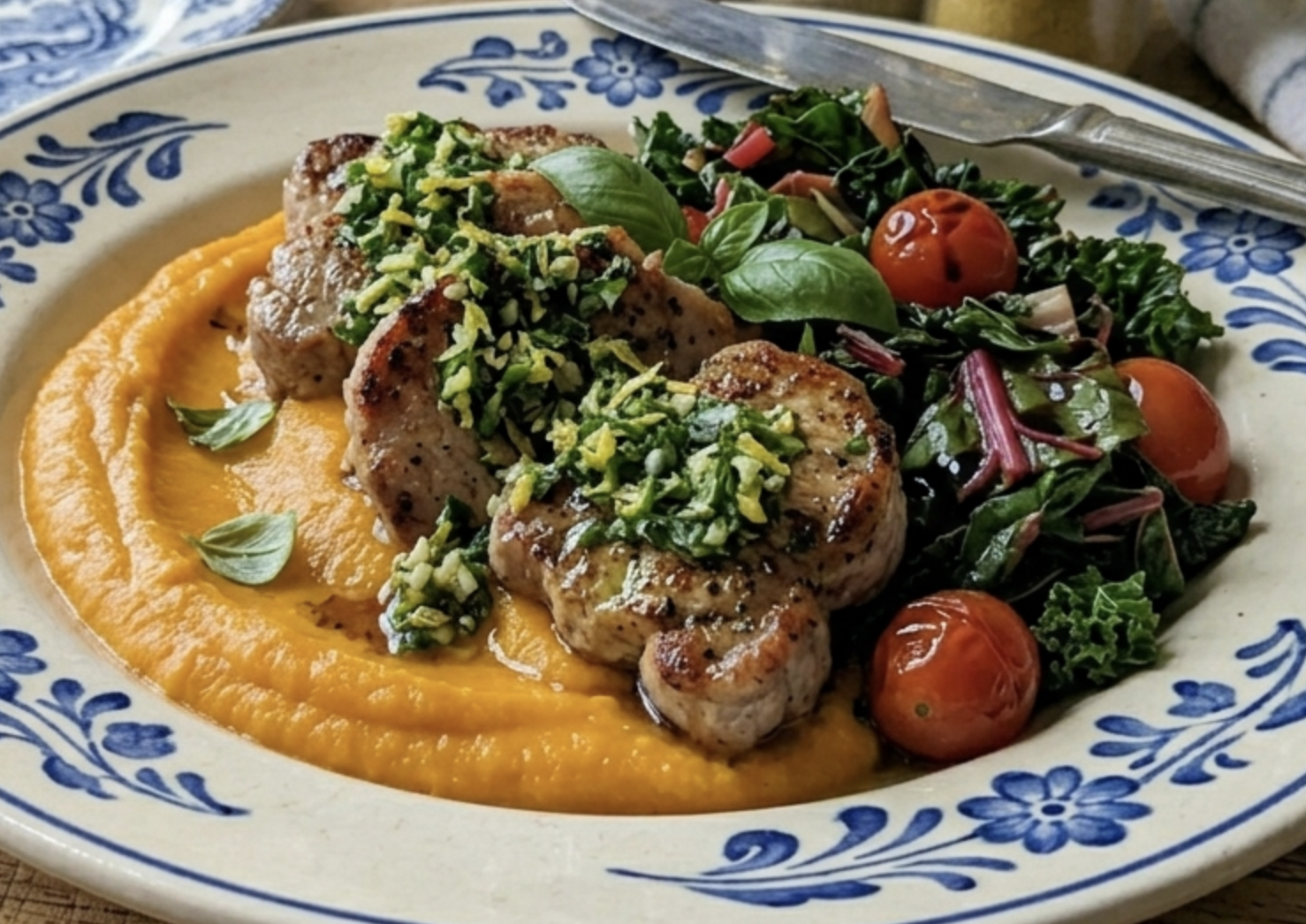
Season: Autumn / Winter — a complete French country plate that lands beautifully when days are short.
Ingredients (in addition to the master chops)
For the chops: duck fat or tallow for searing, 1 tbsp each fresh rosemary, sage, and thyme leaves
Carrot purée: 1 lb carrots peeled and chopped, 3 tbsp grass-fed butter, ¼ cup grass-fed cream, 1 tsp fresh thyme
Sautéed chard & shiitake: 1 bunch Swiss chard (leaves and stems separated), 8 oz shiitake mushrooms (sliced), 3 garlic cloves minced, 2 tbsp grass-fed butter
Gremolata: ½ cup fresh parsley (finely minced), 1 small shallot finely chopped, zest of 1 lemon, juice of ½ lemon, 1 small garlic clove minced, 3 tbsp extra virgin olive oil, sea salt and pepper
Optional garnish: 2 tbsp dukkah
Method: boil carrots in salted water 15 minutes until very tender. Drain and blend with butter, cream, thyme, salt, and pepper until completely smooth and silky. Keep warm. Combine all gremolata ingredients in a small bowl; let rest 10 minutes. Melt butter in a skillet over medium heat. Add chard stems and shiitake; sauté 5 minutes until golden. Add garlic and chard leaves; cook 2–3 minutes more until wilted. Sear the chops per the master method, using the rosemary-sage-thyme rub and duck fat. Plate: spread carrot purée on each plate, top with sautéed greens, then the pork chop. Spoon gremolata over the chop and finish with optional dukkah.
Nourishment Notes
The pasture-raised pork chop itself is the foundation across all four preparations. Beyond the difference in fatty-acid profile and vitamin D content already noted, pork chops deliver complete protein, B1 (thiamine — pork is among the highest food sources), selenium, zinc, and B6 in highly bioavailable forms. Bone-in chops at 1–1½ inches thick cook most evenly and carry the marrow's fat-soluble vitamins; the bone is not just structural, it contributes meaningfully to flavor and nourishment. The fat in pastured pork — long demonized in modern nutrition — is actually one of the most stable cooking fats in traditional kitchens, and lard from pastured pigs has been a staple fat across European and Mediterranean cooking for thousands of years.
The seasonal companions are doing structural work, not garnish work. The European pork-and-fruit pairing tradition is at least two thousand years old: pork with apples in autumn, pork with cherries and apricots in spring, pork with peaches and figs in late summer, pork with quince in the Mediterranean, pork with prunes in France. Every pork-eating culture independently arrived at the same conclusion — pork's relatively mild, fatty, slightly sweet meat meets fruit acid and fruit sugar in a way that genuinely completes the flavor. The summer peach version delivers vitamin C, beta-carotene, potassium, and chlorogenic acids; the autumn apple version brings pectin, quercetin, and the digestive support of fresh sage (rosmarinic acid, thujone — a herb traditionally paired with pork in French and English country cooking specifically for its digestive effect). The cauliflower and Brussels sprouts in the autumn/winter preparations contribute glucosinolates that convert to sulforaphane during chewing — compounds with documented effects on phase-two liver detoxification and the body's antioxidant response. Carrot purée concentrates beta-carotene, with substantial butter and cream ensuring the fat-soluble vitamin A precursor is actually absorbed (raw carrots without fat absorb only a fraction of their carotenoid content). The gremolata is functional, not decorative: parsley brings vitamin K1 and apigenin; raw garlic adds allicin; lemon zest contributes d-limonene for liver phase-two support.
As a circadian food, pork sits cleanest at midday or early evening — it is rich and high-fat, best metabolized during peak daylight digestive hours. If served at dinner, begin the meal while light is still on the table. Each preparation honors a different season's natural rhythm: summer's plant-animal balance with peach and arugula brightening the rich meat; autumn's pull toward warming, slow-cooked vegetables and apple's gentle sweetness; winter's deeper appetite for caramelized onions, carrot purée, and the dense root vegetable companions. This is what real ancestral eating looks like across the year — one protein, four expressions, each shaped by what is actually growing.
Storage: leftover pork keeps 3 days refrigerated. Cold sliced pork works beautifully over salads or in wraps the next day. The peach-balsamic sauce, gremolata, and caramelized onions all keep 4–5 days refrigerated and improve overnight; cauliflower purée holds 3 days; carrot purée holds 4 days. Reheat purées over low heat with a splash of broth or cream.