Creamy Chayote-Ginger Soup with Apple, Cream, and Toasted Pepitas
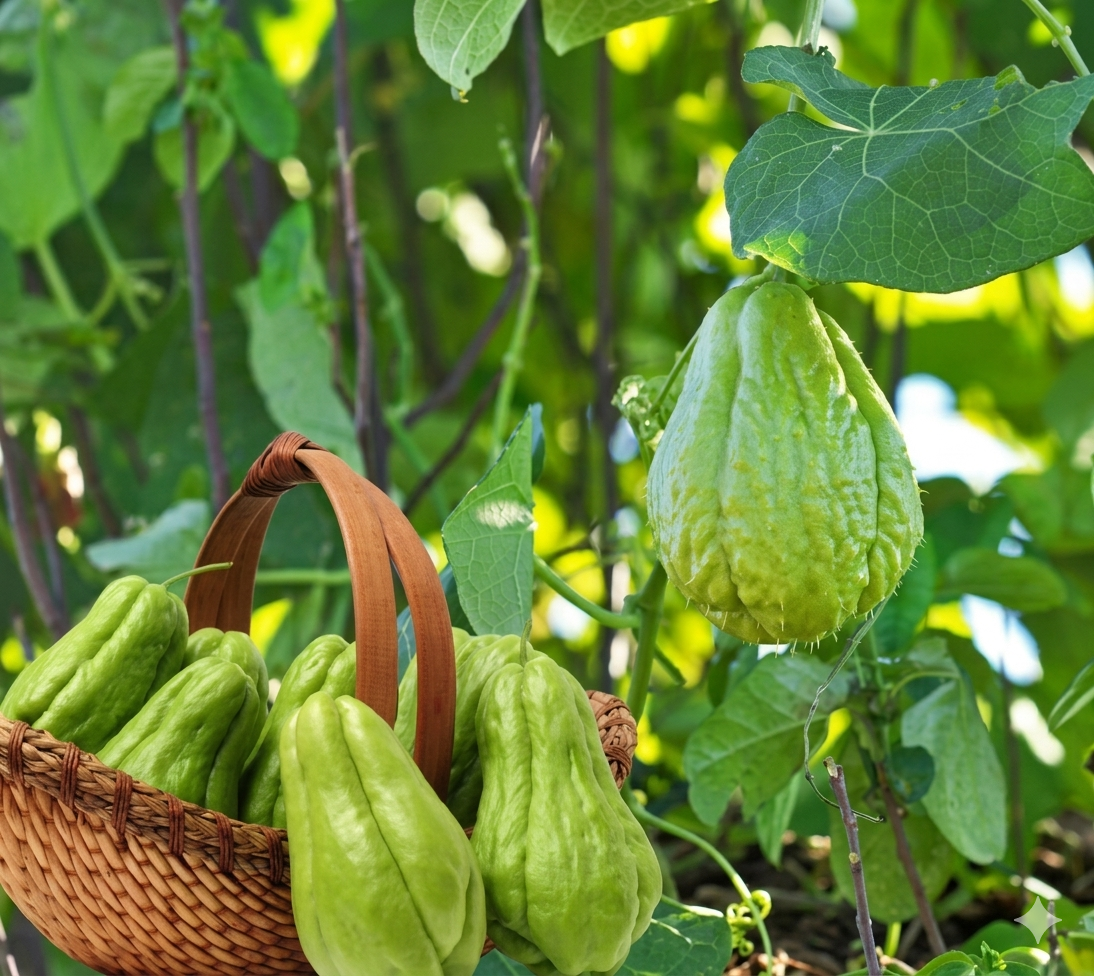
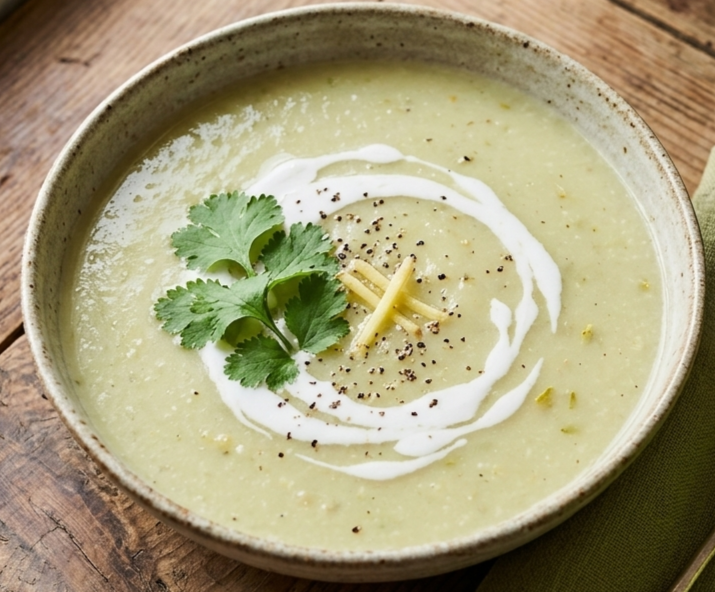
A 4,000-year-old Mesoamerican squash, warmed by ginger, brightened with apple, finished with toasted pepitas and lime
Serves 6 as a main, 10–12 as a first course · 15 min active · 45 min total · autumn / winter (year-round) · midday or early evening
Ingredients
Soup
2 large white chayote squash, peeled, seeded, and chopped (about 6 cups)
2 medium yellow onions, chopped
2 garlic cloves, roughly chopped
1 tart apple (Granny Smith, Honeycrisp, or Pink Lady), peeled, cored, and chopped
2 tbsp fresh ginger, grated (about a 2-inch knob)
2 tbsp raw grass-fed butter (or extra virgin olive oil)
1 cup homemade chicken bone broth (or vegetable broth)
1 cup raw grass-fed heavy cream (or full-fat coconut milk for dairy-free)
1 tsp sea salt, plus more to taste
¼ tsp white pepper (or freshly ground black)
pinch ground nutmeg (optional)
1–2 tbsp fresh lime juice, or zest of 1 lime, to finish
Garnish
½ cup raw pumpkin seeds (pepitas), toasted
¼ cup unsweetened coconut flakes, toasted
fresh cilantro sprigs
lime wedges
Sub: chayote releases a slightly sticky, soapy-feeling liquid when cut — harmless, but rinse hands frequently or wear gloves if sensitive.
Method
Prepare the chayote. Peel with a vegetable peeler, halve lengthwise to reveal the single flat central seed (remove and discard), then chop the flesh into roughly 1-inch pieces.
Toast the garnishes. In a dry skillet over medium-low heat, toast the pumpkin seeds 3–4 minutes until fragrant and lightly popping. Remove to a bowl. Toast the coconut flakes in the same skillet, stirring constantly, about 1 minute until golden — coconut burns quickly, watch closely. Set aside in a separate bowl.
Soften the aromatics. Melt the butter in a large heavy pot over medium heat. Add the onion and a pinch of salt; cook 6–8 minutes until soft and translucent. Add the garlic and cook 30 seconds until fragrant.
Stir in the grated ginger and cook 1 minute, until you can smell it clearly rising from the pot.
Add the chayote and apple. Stir to combine and cook 3–4 minutes to lightly soften the exterior.
Simmer. Pour in the bone broth and bring to a gentle simmer. Season with 1 tsp salt and the white pepper. Cover partially and simmer over medium-low 20–25 minutes, until the chayote is completely tender when pierced with a fork.
Add the cream. Remove from heat and stir in the cream. Important: do not boil after adding the cream — raw cream will split, and coconut milk's flavor changes meaningfully at high heat.
Blend. Use an immersion blender (or work in batches in a standing blender) and blend 2–3 minutes until completely silky-smooth and uniformly pale green.
Adjust. Taste and correct: salt, a grind of pepper, optional pinch of nutmeg. Stir in the fresh lime juice or zest. The lime lifts everything; do not skip it.
Serve. Ladle into shallow bowls. Top each with a generous spoonful of toasted pumpkin seeds, toasted coconut flakes, a sprig of cilantro, and a lime wedge alongside.
Variation: Savory European finish. Omit the coconut flakes and replace with ¼ cup shaved aged Asiago or Parmigiano-Reggiano DOP (24+ months). The cheese melts slightly into the warm soup, producing a quasi-cacio-e-pepe character. Pair with a heavy crack of black pepper and a drizzle of single-estate olive oil.
Topping library — five ways to finish a bowl. Make the soup base once at the start of the week and rotate the topping nightly:
Crispy fermented vegetables — drain ½ cup sauerkraut or fermented carrots, pat dry, briefly sauté in 1 tbsp coconut oil 3–5 min until lightly crisp at the edges. Probiotic-supportive (don't overheat — high heat destroys cultures).
Shaved Asiago and black pepper — peel ¼ cup aged Asiago into ribbons, top each bowl with cheese, generous black pepper, drizzle of olive oil.
Toasted coconut and lime — ⅓ cup unsweetened coconut chips toasted golden, lime zest, pinch sea salt, optional drops of toasted sesame oil. Tropical, summer-leaning.
Sautéed jalapeño and cilantro — 1 jalapeño thinly sliced, sautéed 2–3 min in butter, finished with chopped cilantro and lime. Spicy, Mexican-leaning.
Toasted seeds and herb oil — 2 tbsp pumpkin seeds + 2 tbsp sunflower seeds + 1 tbsp olive oil + 1 tbsp chopped chives or dill. Simple weeknight version.
Storage: Refrigerate 3–4 days; reheat gently over low heat without boiling (raw cream will split if boiled). Freezer up to 2 months — for best texture, freeze the base before adding cream and finish on reheating. Toasted pepitas and coconut flakes keep 5 days in airtight containers.
Nourishment Notes
Chayote is genuinely unique among squashes. The Aztecs called it chayotli, and archaeological evidence places its cultivation in Mesoamerica at roughly 2000 BCE — making it one of the oldest domesticated vegetables in the Americas alongside squash, beans, and corn. A cup of cooked chayote carries about 25 calories — far lower than most vegetables — but delivers meaningful vitamin C (20% daily), folate (40% daily), vitamin K, copper, manganese, and fiber. What distinguishes it nutritionally is its specific polyphenol profile: chayote carries compounds studied for cardiovascular and anti-inflammatory effects, and traditional Mexican medicine has used both the leaves and the fruit for centuries as support for circulation and blood pressure. Chayote has been used traditionally for kidney support and as a foundational soup base for invalids and convalescents — gentle on the digestive system and mineral-restoring in a way that maps cleanly onto its low-carbohydrate density and remarkably high water content (about 94%). It is one of the few foods that is both very low-calorie and substantially nutritionally meaningful — most low-calorie vegetables are simply water and fiber with few active compounds. Chayote is the exception.
Fresh ginger contributes the defining warming note. Ginger has been used medicinally and culinarily across Asia for at least 5,000 years — appearing in the oldest Indian Ayurvedic texts, the earliest Chinese medicinal manuscripts, and Persian and Middle Eastern cooking across centuries. Gingerol, its active compound, has been studied extensively for anti-inflammatory, anti-nausea, digestive, and circulation-enhancing effects. The warming sensation when you eat fresh ginger is a real physiological effect — ginger genuinely increases peripheral circulation and metabolic rate. Crucially, gingerol is lipophilic — it dissolves better in fat than in water — which is why a ginger soup made with cream delivers more of its functional compounds than a water-based ginger preparation. Traditional medicine has understood this intuitively for millennia; the cream is not decoration.
The supporting architecture is doing real work. Slowly cooked yellow onions develop a deep sweetness and contribute quercetin and the prebiotic fructans that feed beneficial gut microbes. The tart apple adds soluble pectin fiber that supports microbial fermentation in the large intestine, alongside the natural acidity that brightens the soup's flavor balance. Bone broth as the base contributes glycine and proline (precursors for collagen synthesis and gut-lining repair), naturally occurring electrolytes, and trace minerals from the bones themselves. Raw, grass-fed cream layers in butyrate, intact enzymes (lipase, lactase, phosphatase), and the full fat-soluble vitamin profile (A, D, E, K2) — alongside the Wulzen factor preserved only in unpasteurized dairy from grass-fed cows. Toasted pumpkin seeds bring magnesium, zinc, and meaningful protein — pepitas have been eaten across Mesoamerica for thousands of years and remain central to the region's cooking. The lime zest at the finish carries d-limonene, supporting the liver's processing of the dish's richness.
As a seasonal food, chayote — despite tropical origins — peaks in the cooler months even in subtropical climates. Paired with ginger, it becomes one of the most pleasing temperature-and-flavor contrasts in a soup: the cool, creamy sweetness of the squash, the rising heat of fresh ginger, the brightness of lime. Autumn and winter are when the body's pull toward warming, fat-rich, slow-cooked meals reaches its peak, and a ginger-cream soup answers that ask without overwhelming the system. The gentle carbohydrate load makes it easily digested at midday or early evening — light enough to start a meal, warming enough to be its own meal with a salad alongside. Eaten too late in the evening, the cream's richness sits less well; midday or before sunset is the cleanest window. The rotating topping library makes this a genuinely versatile weekly anchor — make the base on Sunday and finish each bowl differently across the week.
Storage: Refrigerate 3–4 days; freezer up to 2 months. The base reheats best without the cream — freeze the base, finish with cream and toppings on reheating.
Sourcing: Chayote from a local Latin American or Asian grocery is the gold standard — these markets carry firm, glossy, properly green chayote at peak quality, often at half the price of supermarket versions; look for fruit that's heavy for its size with smooth unblemished skin, and avoid any with brown spots or shriveled stem ends. For backyard growers in subtropical climates (USDA zones 8+), chayote is a vigorous perennial vine that produces prolifically once established. Yellow onions and garlic from a local farmers' market — heirloom hardneck garlic varieties (Music, German Red, Spanish Roja) carry significantly more flavor than commodity supermarket garlic; backyard onion patches are easy fall-and-spring crops. Tart apple from a local orchard or farmers' market at peak — heirloom varieties (Pink Lady, Honeycrisp, Mutsu, Northern Spy) carry more flavor than commodity supermarket apples. Fresh ginger root: look for plump, firm rhizomes with smooth skin (a sign of recent harvest); local Asian markets carry significantly fresher ginger than commodity grocery aisles, and Hawaiian-grown organic ginger from specialty importers like Real Goods Ginger or Big Island Ginger is the gold standard for shipped options. Homemade bone broth from a long-simmered batch (12–24 hours) of pasture-raised chicken bones from your local farmers' market or Amish farm; for shipped fallback, Bonafide Provisions or Kettle & Fire (both genuinely small-batch with clean ingredients). Raw grass-fed heavy cream from a local raw-dairy producer or Amish creamery — Amish farms across Pennsylvania, Ohio, Indiana, and Wisconsin produce exceptional raw fresh dairy through cow-shares, roadside stands, and Amish-run grocery markets; the Weston A. Price Foundation's raw-milk finder (realmilk.com) helps locate one near you. For shipped fallback, Kalona Supernatural's organic non-homogenized cream is the best widely-available option; avoid ultra-pasteurized cream which alters the flavor structure significantly. Raw grass-fed butter from a local Amish creamery is the gold standard; for shipped, Kerrygold Reserve (Irish grass-fed). Coconut milk (for dairy-free version): Native Forest Organic Simple (guar-gum-free) or Aroy-D pure coconut milk in cartons. Raw pumpkin seeds (pepitas) from a local farmers' market or Latin American grocery; for shipped, Go Raw or Living Tree Community (both small-batch, sprouted varieties widely available). Unsweetened coconut flakes: Big Tree Farms or Bob's Red Mill organic. Aged Asiago or Parmigiano-Reggiano DOP (24+ months) from a specialty Italian importer like Gustiamo, Eataly, or a local cheese counter — never grocery-shelf "Parmesan." Single-estate extra virgin olive oil from a quality importer like Gustiamo, Eataly, or Olio2Go. Fresh limes from a local farmers' market in subtropical regions; backyard lime trees are productive perennials in USDA zones 9+. Fresh cilantro from a windowsill pot grown at home or a farmers' market herb vendor.