The Grain-Free Donut Collection
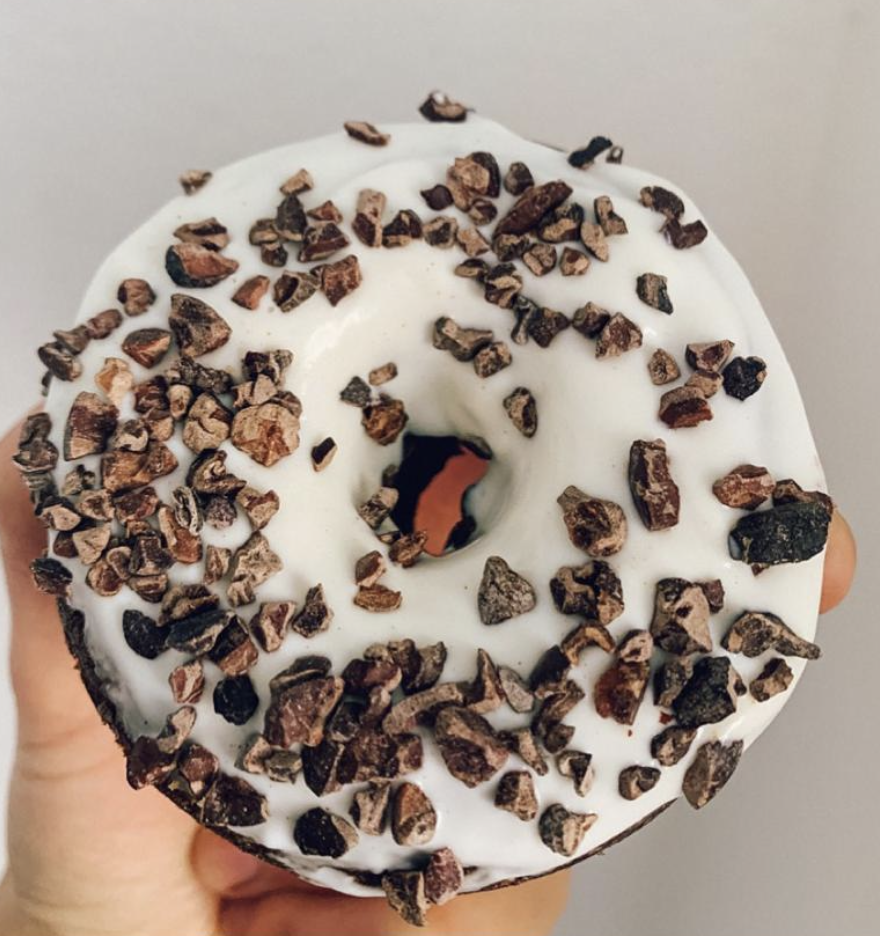
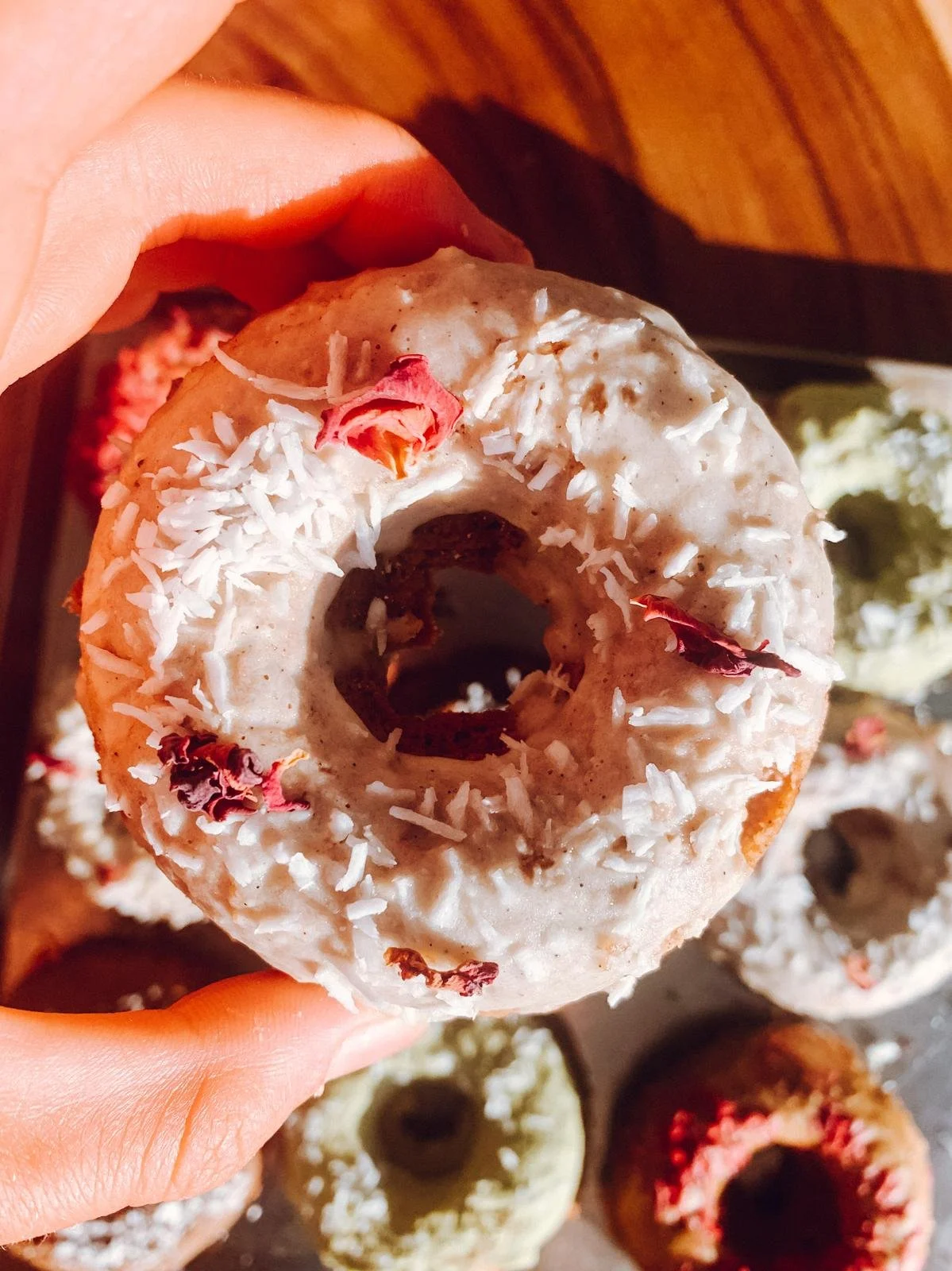
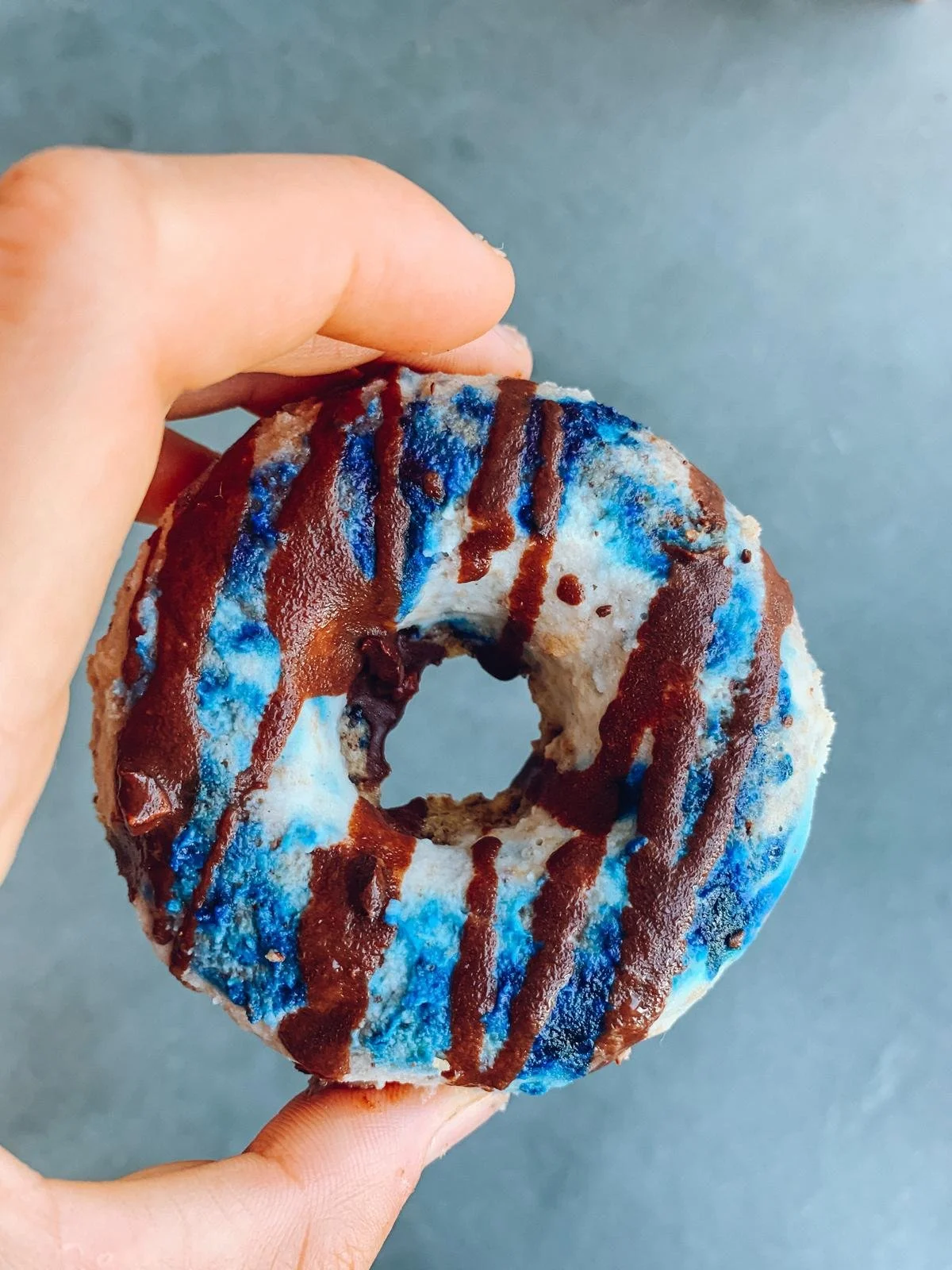
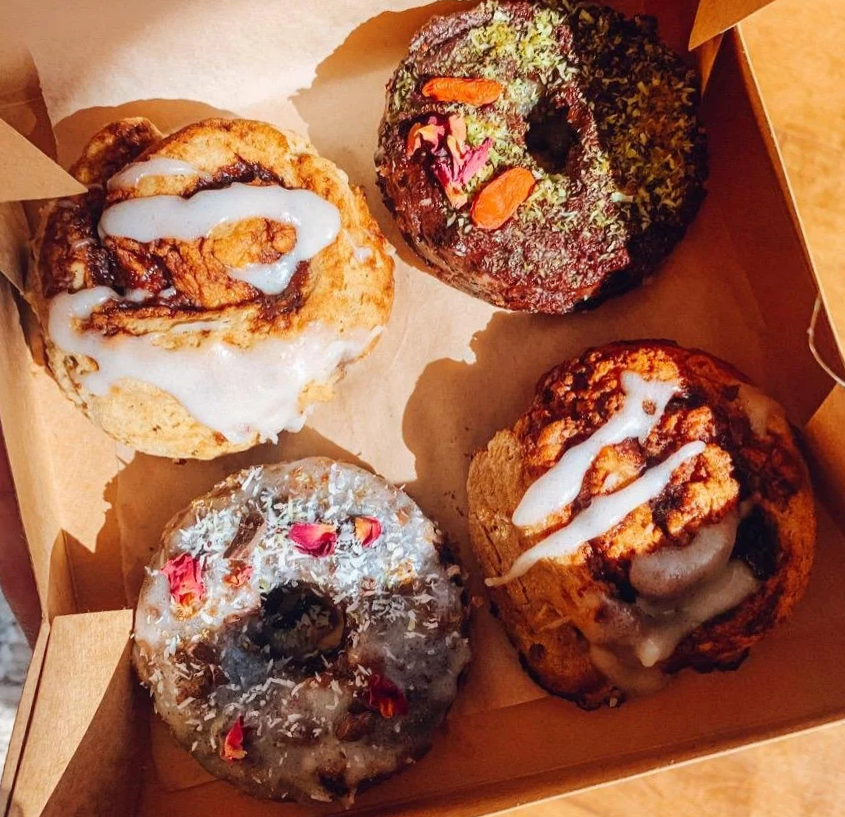
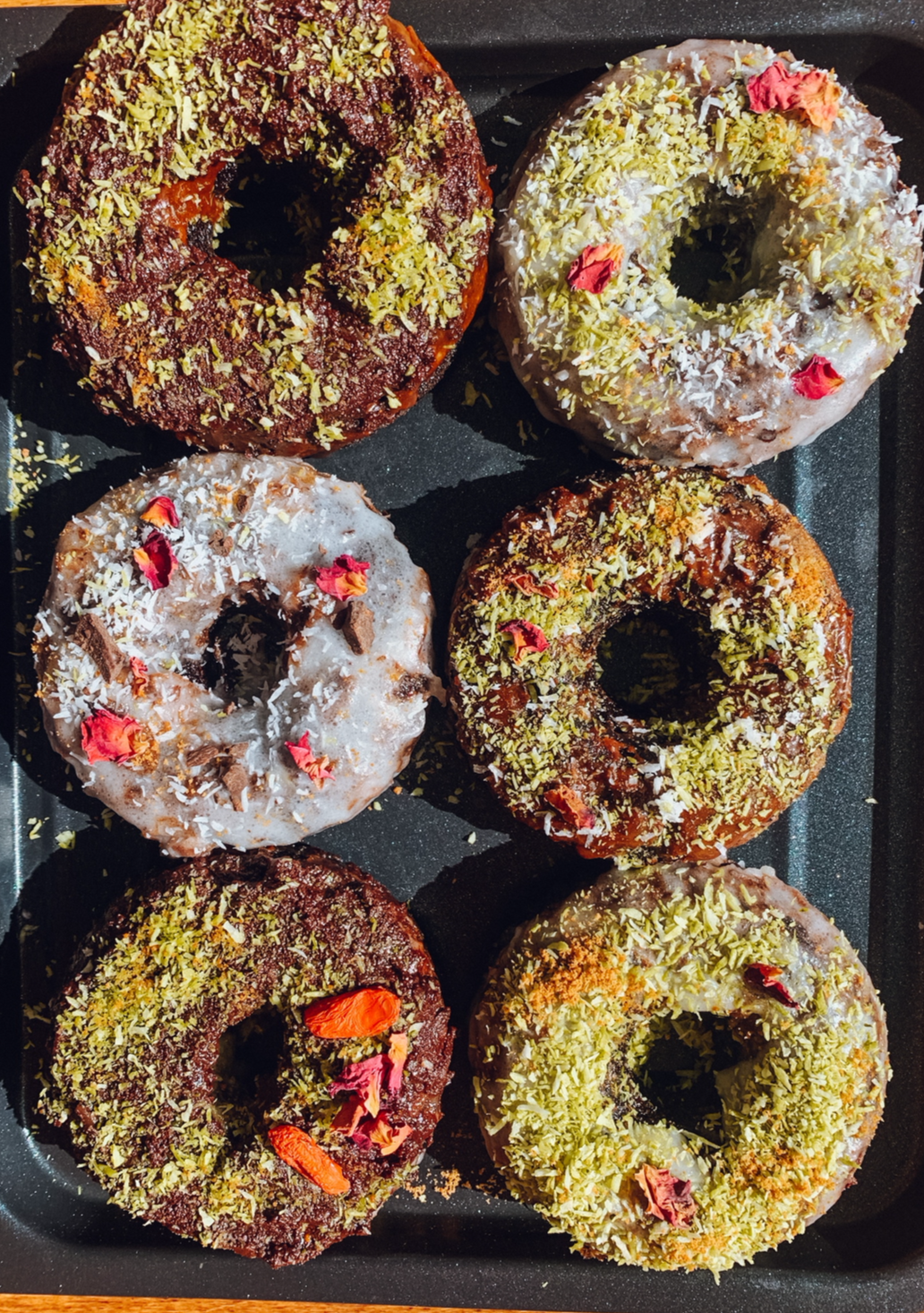
Five refined-sugar-free donuts — Samoa-style with coconut caramel, chocolate with chocolate glaze, coconut-crusted with raspberry chia filling, vanilla with berry glaze, and a raw no-bake chocolate protein donut. Plus the foundational coconut caramel sauce that stitches the collection together.
A note from the kitchen
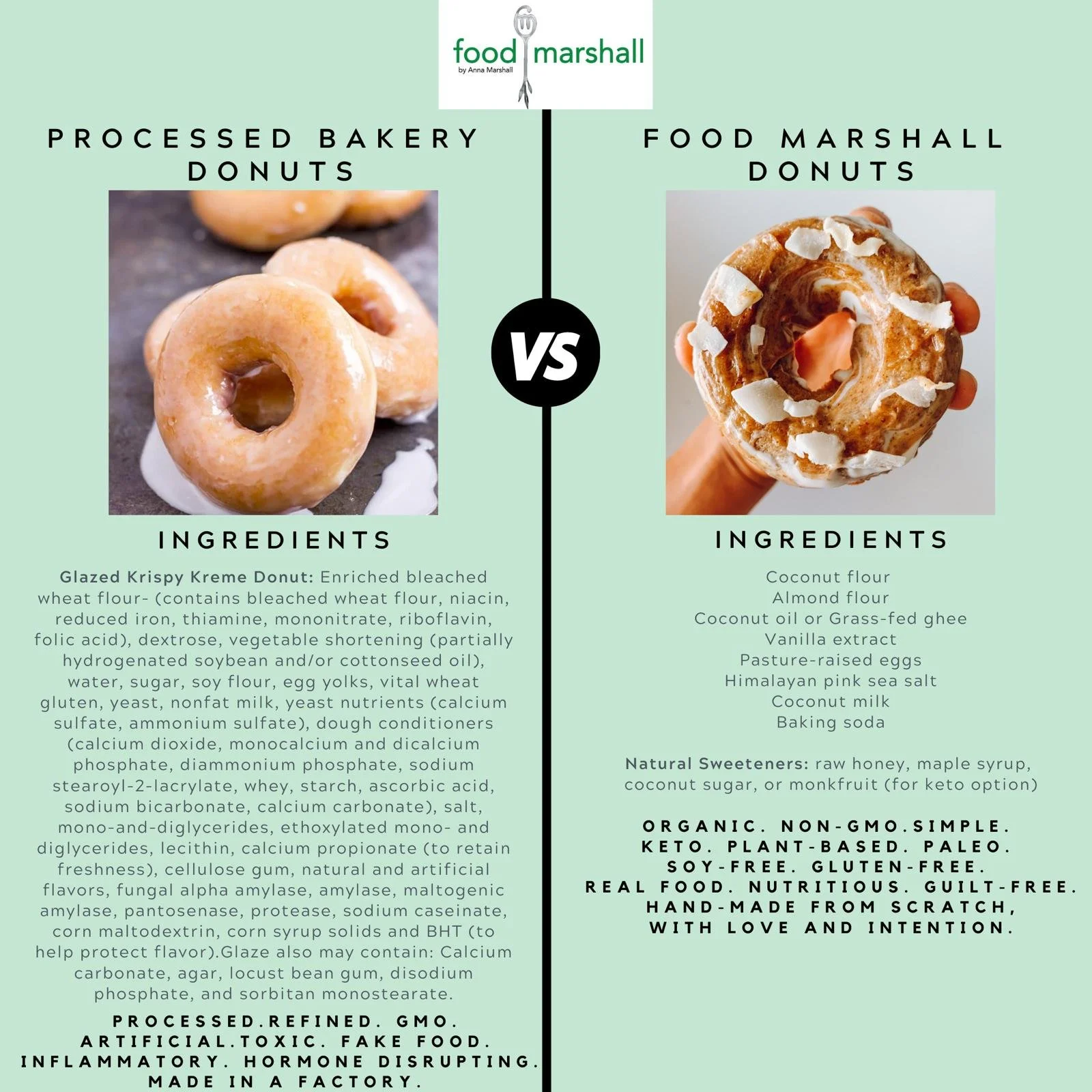
I have a love for desserts that mimic the comforting nostalgia of childhood favorites — but built from real food. Donuts are one of those formats that conventional bakeries have ruined: refined wheat flour, hydrogenated palm shortening, high-fructose corn syrup, artificial colors, the works. The donut as a category became something the body can't recognize.
But the idea of a donut — the soft, cake-like base, the glossy glaze, the moment of it on a plate next to morning coffee — that idea is genuinely worth preserving. The format works— we just need better ingredients.
This grain-free donut collection is my answer. Almond flour and coconut flour bases. Coconut milk caramel slowly reduced to deep amber. Real dark chocolate, real berries, real maple syrup, and raw honey. No palm shortening, no refined sugar, no artificial anything.
Each donut is grain-free, refined-sugar-free, and approachable — most are mixing-bowl-and-spoon recipes that come together in 30 minutes of active time.
A few of these recipes are adapted from foundational sources in the wellness baking world. I've credited each at the bottom of the post and refined each through my own kitchen testing, sourcing standards, and the small adjustments that come from making something many times.
— Anna aka Food Marshall
Quick navigation
Samoa-Style Almond Flour Donuts — chocolate-dipped with coconut caramel and toasted coconut
Coconut Flour Chocolate Donuts with Chocolate Glaze — minimalist, simple, foundational
Coconut-Crusted Donuts with Raspberry Chia Filling — almond-coconut base, jewel-bright filling
Vanilla Donuts with Berry Glaze — almond or hazelnut flour, raspberry or strawberry
Raw Chocolate Protein Donuts — no-bake, almond butter base, optional collagen
Foundational Coconut Caramel Sauce — two methods, used across the collection
1. Samoa-Style Almond Flour Donuts
Chocolate-dipped almond flour donuts drizzled with coconut caramel and finished with toasted coconut — the homemade Girl Scout cookie tribute.
Yield: 6 large donuts · Active: 30 min · Total: 1 hr · Year-round · weekend breakfast or after-dinner
Ingredients
For the donut base:
2½ cups blanched almond flour
½ tsp baking soda
½ tsp pinch sea salt (scant)
6 tbsp raw honey
¼ cup coconut oil, softened or melted
1 tbsp pure vanilla extract
1 tsp fresh lemon juice
3 large pasture-raised eggs, room temperature
For the coconut caramel topping:
1 (13.5 oz) can full-fat coconut milk (guar-gum-free — Native Forest Organic Simple or Natural Value)
½ cup raw honey or pure maple syrup (mild-flavored)
Pinch sea salt
1 tbsp grass-fed ghee or butter (or coconut oil for dairy-free)
2 tsp pure vanilla extract
¼ cup unsweetened finely shredded coconut, plus 2 tbsp more for garnish
For the chocolate dip:
1 (10 oz) bag dark chocolate chips (Hu Kitchen, Pascha)
1 tbsp grass-fed ghee or coconut oil
Method
Make the donut base. Preheat the oven to 350°F. Generously grease a 6-mold non-toxic silicone or stainless steel donut pan with coconut oil. In a medium bowl, whisk together the almond flour, baking soda, and salt. In a separate bowl, whisk together the honey, melted coconut oil, vanilla, lemon juice, and eggs until smooth. Add the wet ingredients to the dry and stir until a smooth batter forms.
Bake. Spoon or pipe the batter into the donut molds, filling each about ¾ full. Bake 15 minutes, until the tops spring back when lightly touched. Cool in the pan 10 minutes, then transfer to a wire rack to cool completely.
Make the coconut caramel. Toast the ¼ cup shredded coconut in a dry skillet over medium-low heat, stirring constantly, 3–4 minutes, until golden. Transfer to a plate to cool. Repeat with the additional 2 tbsp shredded coconut for garnish. In a medium saucepan, combine the coconut milk, honey, and salt. Bring to a low boil over medium-high heat, stirring frequently. Reduce heat to medium-low and simmer, stirring frequently, 25–35 minutes, until the mixture has reduced by about half and turned a deep amber color. Watch carefully in the last 5 minutes — caramel can go from perfect to burnt quickly. Remove from heat. Whisk in the ghee (or butter) and vanilla. Stir in the toasted ¼ cup shredded coconut. Cool 15 minutes — the caramel will thicken further as it cools.
Make the chocolate dip. In a double boiler (or heatproof bowl over simmering water), melt the chocolate chips with the ghee, stirring frequently until smooth.
Assemble. Dip the top half of each cooled donut into the melted chocolate. Place chocolate-side up on a wire rack over parchment paper. Spoon or drizzle the coconut caramel over each donut while the chocolate is still tacky. Sprinkle with the additional 2 tbsp toasted shredded coconut. Allow to set at room temperature 15 minutes (or refrigerate 5 minutes) before serving.
Storage: Refrigerator up to 4 days, sealed. Freezer (without toppings) up to 1 month. Best at slightly cool room temperature.
This recipe was inspired by PaleOMG.
2. Coconut Flour Chocolate Donuts with Chocolate Glaze
A simple coconut-flour chocolate donut with a smooth chocolate-chip glaze — inspired by Elana's Pantry — minimalist and clean.
Yield: 8 donuts · Active: 20 min · Total: 35 min · Year-round · breakfast or anytime
Ingredients
For the donut base:
¼ cup coconut flour
¼ cup raw cacao powder
¼ tsp sea salt
¼ tsp baking soda
4 large pasture-raised eggs, room temperature
½ cup coconut oil, melted
3 tbsp pure maple syrup
For the chocolate glaze:
½ cup dark chocolate chips (Hu Kitchen, Pascha, or Enjoy Life)
1 tbsp grass-fed ghee or coconut oil
Method
Preheat the oven to 350°F. Generously grease a non-toxic silicone donut pan with coconut oil.
Make the batter. In a food processor, pulse together the coconut flour, cacao powder, salt, and baking soda. Pulse in the eggs, melted coconut oil, and maple syrup until thoroughly combined and smooth.
Bake. Fill each well of the donut mold about ½ full with batter (the coconut flour expands during baking). Bake 15–18 minutes, until the tops spring back when lightly touched. Remove from the pan and place on a cooling rack. Optional finishing touch: Use a small paring knife to cut a clean hole in the center of each donut (sometimes the donut hole closes during baking).
Make the glaze. In a small saucepan over very low heat, melt the chocolate chips and ghee together, stirring constantly until smooth.
Drizzle the glaze over each cooled donut. Cool 5 minutes for the glaze to set before serving.
Storage: Refrigerator up to 4 days, sealed. Freezer (without glaze) up to 1 month.
3. Coconut-Crusted Donuts with Raspberry Chia Filling
A soft almond-and-coconut-flour donut, glazed and rolled in shredded coconut, then filled with a homemade raspberry chia jam — the Valentine's Day donut and the rebuild of an Australian biscuit-counter classic.
Yield: 6 donuts · Active: 30 min · Total: 1 hr · Year-round (peak Valentine's, summer berry season) · special breakfast or afternoon
Ingredients
For the donut base:
⅓ cup raw grass-fed milk or coconut milk
3 large pasture-raised eggs, room temperature
½ cup Medjool dates, pitted
1½ cups blanched almond meal or almond flour
1 tbsp coconut flour
½ tsp gluten-free baking powder
½ tsp baking soda
½ tsp apple cider vinegar
1 tsp pure vanilla extract or vanilla bean paste
For the raspberry chia jam:
1 cup frozen raspberries (or fresh, if in peak season)
2 tbsp pure maple syrup
2 tbsp chia seeds
1 tsp fresh lemon juice (optional, brightens the flavor)
For the glaze and coconut crust:
⅓ cup coconut butter (also called coconut manna), melted
2 tbsp pure maple syrup
1 tbsp coconut oil, melted
1 cup unsweetened finely shredded coconut, for rolling
Method
Make the donut batter. Preheat the oven to 350°F. Generously grease a 6-mold non-toxic silicone donut pan with coconut oil. In a food processor or high-speed blender, combine the nut milk, eggs, and pitted dates. Process until completely smooth and creamy — about 1 minute.
Add the dry ingredients. Add the almond meal, coconut flour, baking powder, baking soda, apple cider vinegar, and vanilla. Process again until a smooth, thick batter forms.
Bake. Spoon the batter into a piping bag (or use a zip-top bag with the corner snipped) and pipe the batter into the donut molds, filling each about ¾ full. Bake 13–15 minutes, until golden and the tops spring back when lightly touched. Cool in the pan 10 minutes, then transfer to a wire rack to cool completely.
Make the raspberry chia jam. While the donuts cool, combine the raspberries and maple syrup in a small saucepan over medium-low heat. Cook 5–7 minutes, stirring occasionally, until the raspberries have broken down into a loose puree. Remove from heat. Stir in the chia seeds and optional lemon juice. Let stand 15–20 minutes — the chia seeds will absorb the liquid and thicken the jam to a spreadable consistency. Cool completely. Transfer to a jar; keeps refrigerated up to 1 week.
Make the glaze. In a small bowl, whisk together the melted coconut butter, maple syrup, and melted coconut oil until completely smooth and glossy. The mixture should be pourable but not too thin.
Glaze and crust. Place the shredded coconut in a wide shallow bowl. One at a time, dip the top of each cooled donut into the glaze, letting excess drip off. Immediately roll the glazed top through the shredded coconut, pressing gently to ensure the coconut adheres. Place each finished donut on a wire rack, glaze-side up.
Fill with jam. Using a small piping bag fitted with a narrow tip (or a zip-top bag with the corner snipped), pipe 1–2 teaspoons of raspberry chia jam into the center of each donut, filling the donut hole and slightly into the donut itself. Alternatively, simply spoon a small dollop of jam into the center of each donut hole.
Serve. The donuts are best served the day they're made, while the coconut is fresh and the jam is glossy. Refrigerate any extras.
Storage: Refrigerator up to 3 days, sealed. The coconut crust will soften slightly in the fridge — to refresh, place donuts on a baking sheet in a 300°F oven for 3–4 minutes to dry the coconut. Freezer (without jam filling) up to 1 month — fill with fresh jam after thawing.
4. Vanilla Donuts with Berry Glaze
Almond or hazelnut flour vanilla donuts with a coconut butter berry glaze — raspberry or strawberry.
Yield: 6 donuts · Active: 25 min · Total: 1 hr · Spring–early summer (peak berry season) · breakfast or afternoon snack
Ingredients
For the donut base:
1¼ cups blanched almond flour OR hazelnut flour
¼ tsp baking soda
⅛ tsp sea salt
3 tbsp pure maple syrup
½ tsp pure vanilla extract
2 tbsp coconut oil, melted
1 tsp apple cider vinegar
2 large pasture-raised eggs, room temperature, whites and yolks separated
For the berry glaze:
¼ cup coconut butter (also called coconut manna)
¼ cup coconut oil, melted
1 tbsp pure maple syrup
5–10 fresh raspberries OR 5–10 fresh strawberries (hulled and quartered), gently smashed
Method
Preheat the oven to 350°F. Generously grease a 6-mold non-toxic silicone donut pan with coconut oil.
Make the donut batter. In a medium bowl, whisk together the almond (or hazelnut) flour, baking soda, and salt. In a separate bowl, whisk together the maple syrup, vanilla, melted coconut oil, apple cider vinegar, and egg yolks (only — reserve the whites separately). Add the wet mixture to the dry. Stir until smooth.
Beat the egg whites. In a clean bowl, beat the egg whites with an electric mixer until firm peaks form. This is the structural step that gives these donuts their lift. Gently fold the egg whites into the batter, working carefully to keep as much air as possible.
Bake. Equally distribute the batter between the 6 donut molds. Smooth the tops gently. Bake 12–15 minutes, until lightly golden and the tops spring back when touched. Cool in the pan 10 minutes, then transfer to a wire rack.
Chill. Refrigerate the donuts 30 minutes — this helps them firm up before glazing.
Make the berry glaze. In a small bowl, whisk together the coconut butter, melted coconut oil, and maple syrup until smooth. Add the smashed berries and stir gently to incorporate. The mixture will turn pink (raspberries) or pale red (strawberries).
Dip and serve. Dip the tops of the chilled donuts into the glaze. Allow to rest at room temperature about 5 minutes for the glaze to set partially. Dip again for a thicker layer if desired. Garnish with additional fresh berries and a pinch of edible dried rose petals if desired. Serve immediately, or refrigerate up to 30 minutes before serving.
Storage: Refrigerator up to 3 days, sealed. The glaze firms in the cold and softens at room temperature — best slightly cool but not chilled.
5. Raw Chocolate Protein Donuts
The no-bake option — almond butter and cacao pressed into silicone molds, with grass-fed collagen for protein. Made in 10 minutes, ready in 30. Not cakey like baked donuts— more like cold brownie batter/fudge. Best eaten slightly thawed after freezer storage
Yield: 5 large donuts · Active: 10 min · Total: 30 min (set in freezer) · Year-round · summer favorite · breakfast, snack, post-workout
Ingredients
½ cup runny almond butter (or sub cashew butter)
⅓ cup grass-fed collagen peptides (optional — Vital Proteins or Ancient Nutrition— however; without collagen, the mixture will likely be softer and more fudge-like)
3-4 tbsp raw cacao powder
3 tbsp pure maple syrup
1 tbsp coconut oil, melted
1 tbsp coconut flour (or more if the nut butter is particularly runny)
Pinch sea salt
Additional add-ins:
To deepen the flavor: 1 tsp vanilla extract, ½ tsp cinnamon, or a tiny splash of espresso
For an adaptogen lift: Add 1 tsp ashwagandha or maca powder for hormonal support; ½ tsp reishi or cordyceps for immune/energy support.
For sweeter: Add 1–2 more tbsp maple syrup or 2 chopped Medjool dates.
For finishing (optional):
Melted dark chocolate for drizzling
Crushed raw cacao nibs
Bee pollen
Hemp hearts
Flaky sea salt
A note on the collagen
Collagen peptides are an optional protein boost — adds about 9–10g of complete protein per donut (assuming Vital Proteins or similar grass-fed bovine collagen). Pasture-raised collagen supports skin, joint, and gut tissue and is one of the most bioavailable protein sources available.
Method
Combine. In a medium bowl, add all ingredients (sift the cacao powder if it's lumpy). Stir thoroughly with a spatula until well combined and uniform. The mixture will start to stiffen as you mix — this is correct.
Press into molds. Spoon the mixture into 5 wells of a non-toxic silicone donut mold or large silicone muffin pan. Press firmly with the back of a spoon or your fingers to compact, ensuring the mixture fills the donut shape evenly without air gaps.
Set. Place the mold in the freezer for 20–30 minutes, until firm enough to release cleanly.
Release. Pop the donuts gently out of the silicone mold. They should release cleanly with no sticking.
Finish (optional). Drizzle with melted dark chocolate, sprinkle with cacao nibs, hemp hearts, bee pollen, or flaky sea salt. Let the chocolate set 5 minutes at room temperature.
Storage: Refrigerator up to 1 week, sealed. Freezer up to 1 month. Best slightly cool — let stand at room temperature 2–3 minutes before eating for the optimal soft-fudgy texture.
This recipe was adapted from Sweetly Raw (Heather Pace).
6. Foundational Coconut Caramel Sauce
A reduced coconut milk caramel — a clean alternative to dairy- or corn-syrup-based caramel for drizzling, dipping, or layering across this collection.
Yield: About 1 cup · Active: 10 min · Total: 40 min · Year-round · use across desserts
Method 1: Reduced coconut milk caramel (richer, deeper, traditional)
Ingredients:
1 (13.5 oz) can full-fat coconut milk (guar-gum-free — Native Forest Organic Simple or Natural Value)
½ cup raw honey or pure maple syrup (mild-flavored)
Pinch sea salt
1 rounded tbsp grass-fed ghee or butter (or coconut oil for dairy-free)
2 tsp pure vanilla extract
Method: In a medium saucepan, combine the coconut milk, honey (or maple syrup), and salt. Bring to a low boil over medium-high heat, whisking frequently. Reduce heat to medium-low and simmer, stirring frequently, 25–35 minutes, until the mixture has reduced by about half and turned a deep amber color. Watch carefully in the last 5 minutes — caramel can go from perfect to burnt quickly. Stir constantly during this final phase. Remove from heat. Whisk in the ghee (or butter, or coconut oil) and vanilla until smooth. Cool 15–20 minutes — the caramel will thicken further as it cools. Use warm or cooled. Refrigerate for storage.
Method 2: Quick blender caramel (fast, raw, no cooking)
Ingredients:
¼ cup almond or cashew butter (homemade or store-bought)
¼ cup pure maple syrup
2 tbsp coconut oil, melted
1 or 2 fresh Medjool dates, pitted
1 tsp pure vanilla extract
Pinch Himalayan pink salt
Method: Combine all ingredients in a blender or food processor. Process until completely smooth and glossy, about 1 minute. For thinner sauce (drizzling on top of desserts): add another 2 tbsp maple syrup. For denser caramel candy texture: add 2 more dates. For spreading on cake layers: add 2 more tbsp almond or cashew butter.
Storage: Refrigerator up to 2 weeks (Method 1) or 4 weeks (Method 2). Reheat gently over low heat to soften.
Nourishment Notes
Why grain-free baking, and why these flours
Almond flour and coconut flour are the two foundational flours of the modern grain-free baking movement, and they work in structurally different ways. Almond flour is essentially ground blanched almonds — high in healthy fats, vitamin E, and magnesium, with a moderate protein content and a mild, slightly sweet flavor that works beautifully in cakes, cookies, and donuts. Almond flour produces a tender, slightly dense crumb similar to a quatre-quarts or financier.
Coconut flour is the dried, defatted, finely ground meat of the coconut — high in fiber (about 40% by weight), high in protein (about 20% by weight), and low in carbohydrate. The structural quirk is that coconut flour absorbs roughly 4–5 times its weight in liquid, which means recipes call for substantially more eggs and liquid than equivalent almond-flour preparations. The result is a lighter, more sponge-like crumb than almond flour produces — closer to the texture of a soufflé or French quatre-quarts.
Hazelnut flour produces a substantially nuttier, slightly more complex flavor profile than almond flour, with notes that pair especially well with vanilla and berries. The European baking tradition has long favored hazelnut flour for delicate cakes and tortes (Italian torta nocciola, Austrian Linzer Torte, French gâteaux noisettes).
The chia jam — a small structural genius
The raspberry chia jam in the coconut-crusted donut is one of the most useful clean-eating preparations in the modern wellness kitchen. Unlike conventional jam, which relies on substantial refined sugar (typically 50–60% sugar by weight) for both sweetness and pectin gel formation, chia jam uses the natural pectin of the fruit plus the gel-forming properties of soaked chia seeds to thicken into spreadable consistency.
The chia seeds themselves contribute meaningful nutrition: omega-3 alpha-linolenic acid (the highest plant-source content of any common seed), complete plant protein, fiber, calcium, magnesium, and the polyphenols caffeic acid and quercetin. A tablespoon of chia jam delivers genuine nourishment — unlike a tablespoon of conventional jam, which delivers mostly refined sugar. The technique works with any berry: blueberry, strawberry, blackberry, mixed, or even stone fruits like peach, apricot, or plum.
The coconut milk caramel — why it works
The coconut milk caramel is one of the most useful structural sauces in modern grain-free baking. Unlike conventional caramel (which relies on white sugar caramelization at very high temperatures), coconut milk caramel relies on the slow reduction of coconut milk's natural fats and sugars over medium-low heat — a process closer to how Mexican cajeta (caramelized goat's milk) and French dulce de leche are made.
Coconut milk's natural composition makes it an exceptional caramel base. It contains roughly 20% fat (mostly medium-chain triglycerides, MCTs), about 5% sugars, and small amounts of protein — the same general composition as dairy milk, which is why traditional dairy caramel techniques work nearly identically. The slow reduction concentrates the fats and natural sugars while the proteins develop Maillard browning products (the same reaction that browns meat and toasted bread), producing the deep amber color and complex flavor of properly made caramel.
The 25–35 minute reduction time is the structural step that determines whether the caramel reads as deep amber and complex or pale and one-note. Guar-gum-free coconut milk produces a smoother, less gummy result than guar-gum-containing brands.
A note on palm shortening
Several of the original recipes adapted in this collection called for palm shortening. I've intentionally rewritten each without it. Palm shortening — even from "sustainable" sources — has been associated with substantial deforestation in Indonesia and Malaysia, with documented effects on orangutan habitat, indigenous land rights, and biodiversity. Even certified-sustainable palm products carry supply chain risks.
Substituting grass-fed ghee or butter (or coconut oil for dairy-free preparations) produces a structurally similar fat behavior in the recipe without the supply chain concerns. The fat's job in baking is to add gloss, body, and richness — all of which ghee, butter, or coconut oil accomplish equally well.
Collagen and the raw protein donut
The optional collagen in the raw protein donuts is worth a quick note. Collagen is the most abundant protein in the body — it makes up roughly 30% of total body protein and is concentrated in skin, joints, tendons, ligaments, gut lining, and connective tissue. Modern Western diets typically lack collagen because we've moved away from eating bone-in, skin-on, nose-to-tail animal foods that were the traditional sources.
Grass-fed bovine collagen peptides (Vital Proteins, Ancient Nutrition) are hydrolyzed for maximum bioavailability, mix into liquids without clumping, and are largely flavorless — perfect for incorporating into desserts. Adding 1–2 tbsp of collagen to a recipe like the raw protein donut adds 9–10g of complete bioavailable protein per serving without changing the texture or flavor.
For those choosing fully plant-based preparations, the donuts work without collagen — just increase the almond butter slightly to maintain structural integrity. Hemp protein, pea protein, or sprouted brown rice protein can also be used at the same ratio if a plant-based protein boost is desired.
Why these donuts genuinely nourish
Every donut in this collection delivers what conventional bakery donuts cannot: substantial fat content from coconut, nuts, and pasture-raised eggs that anchors the natural sugars from honey and maple syrup; complete protein from eggs (or collagen in the raw version); minerals from cacao and nuts; and zero refined flour, refined sugar, hydrogenated oil, or artificial anything.
The result is a dessert format that satisfies sweet cravings without the spike-and-crash pattern of conventional baking. A single donut delivers steady energy, real flavor, and the sensory pleasure of a treat — without the metabolic damage that conventional donuts inflict.
Sourcing
Almond flour and almond meal: King Arthur super-fine almond flour, Anthony's Goods organic blanched, or Bob's Red Mill super-fine. Look for blanched, finely ground for the smoothest texture. Almond meal is similar but slightly coarser — works in the coconut-crusted donut.
Coconut flour: Anthony's Goods organic, Bob's Red Mill organic, or Nutiva organic. Look for finely ground.
Hazelnut flour: Bob's Red Mill hazelnut flour, or Anthony's Goods. For the highest quality, grind your own from raw Oregon hazelnuts (Freddy Guys Hazelnuts or Holmquist Hazelnuts).
Pasture-raised eggs: Local farm whenever possible — the deeply orange yolks are the indicator of real foraging. Vital Farms pasture-raised, Alexandre Family Farm, or local farmers' market sources.
Grass-fed butter and ghee: Vital Farms butter, Organic Valley Pasture Butter, or Kalona Organic for butter. For ghee, Pure Indian Foods grass-fed cultured ghee, Fourth & Heart, or Ancient Organics.
Coconut milk: Native Forest Organic Simple is the gold standard — full-fat, BPA-free cans, no gums or thickeners. Natural Value (also guar-gum-free) is an excellent alternative. Aroy-D in cartons (no thickeners). Avoid lite versions and brands with guar gum or carrageenan.
Coconut oil: Nutiva organic virgin, Dr. Bronner's fair-trade organic, or Garden of Life raw extra-virgin. Cold-pressed, unrefined.
Coconut butter (coconut manna): Artisana raw organic, Nutiva organic coconut manna, or Wilderness Family Naturals. Coconut butter is different from coconut oil — it's whole pureed coconut meat, with both the fat and the fiber. Don't substitute coconut oil.
Shredded coconut: Let's Do Organic unsweetened, Big Tree Farms organic, or Anthony's Goods organic. Unsweetened only — coconut flakes from the baking aisle are typically sweetened with refined sugar.
Nut milk (almond, cashew): Homemade is best (1 cup soaked nuts blended with 4 cups filtered water and strained). For shipped, Malk Organics (just nuts, water, salt — no gums or stabilizers) or Three Trees. Avoid commercial nut milks with carrageenan, gellan gum, or other stabilizers.
Raw cacao powder: Navitas Organics raw cacao powder, Sunfood Superfoods, or Terrasoul Superfoods organic. Raw and unprocessed for the highest flavanol content.
Dark chocolate chips: Hu Kitchen (clean ingredient list, no refined sugar), Pascha (organic, allergen-free), or Enjoy Life (allergen-friendly). Look for 70%+ cacao content. For an even cleaner option, chop your own bar of 85% Raaka or Alter Eco dark chocolate.
Raw honey: Local apiarist whenever possible — local honey carries pollen profiles unique to your region. Really Raw Honey, Bee Raw, or Savannah Bee Company for shipped raw honey.
Maple syrup: Grade A dark or amber from a Northeastern producer — Crown Maple, Coombs Family Farms, or local farmers' market sources.
Vanilla: Heilala Vanilla for whole beans, Singing Dog Vanilla for organic extract, or Nielsen-Massey for premium pure vanilla.
Almond butter and cashew butter: Big Spoon Roasters organic almond butter (single-ingredient, sprouted — exceptional), Once Again organic, Artisana raw cashew butter, or homemade. Avoid commercial brands with added sugar or palm oil.
Medjool dates: Joolies (organic California), Natural Delights, or local farmers' market sources.
Chia seeds: Anthony's Goods organic, Nutiva organic, or Bob's Red Mill. Look for whole black or white chia seeds (not pre-ground), kept refrigerated or frozen for freshest fats.
Raspberries and strawberries: Local farmers' market during peak season (June–August in temperate climates). Heritage varieties carry significantly more flavor than commercial. For frozen raspberries (in the chia jam), Trader Joe's organic frozen raspberries are a rare grocery-chain product worth recommending — clean, no additives, year-round availability.
Apple cider vinegar: Bragg's organic with the mother, or Fire Cider for a tonic-style version.
Baking powder: Bob's Red Mill aluminum-free baking powder, or Rumford aluminum-free. Aluminum-containing baking powders leave a metallic aftertaste.
Celtic and Himalayan sea salt: Selina Naturally Celtic Sea Salt or The Spice Lab Himalayan Pink. Avoid table salt, which is bleached and stripped of its mineral content.
Collagen peptides (for the raw protein donut): Vital Proteins grass-fed bovine collagen, Ancient Nutrition multi collagen, or Bulletproof grass-fed. Look for grass-fed, pasture-raised sources only. Marine collagen (Vital Proteins Marine, Sports Research) is a fish-based alternative.
Donut pans: For non-toxic silicone, look for food-grade silicone donut pans labeled BPA-free, PVC-free, and phthalate-free — Boxiki Kitchen, Trudeau, or Sasa Demarle. For metal, USA Pan stainless steel donut pans (made in the USA, no non-stick coating).
Storage across the collection
Samoa-Style Donuts: Refrigerator up to 4 days, sealed. Freezer (without toppings) up to 1 month.
Coconut Flour Chocolate Donuts: Refrigerator up to 4 days, sealed. Freezer (without glaze) up to 1 month.
Coconut-Crusted Raspberry Chia Donuts: Refrigerator up to 3 days, sealed. Best the day they're made. Freezer (without jam) up to 1 month.
Vanilla Berry Donuts: Refrigerator up to 3 days, sealed. Best fresh.
Raw Chocolate Protein Donuts: Refrigerator up to 1 week. Freezer up to 1 month.
Coconut Caramel Sauce: Refrigerator up to 2 weeks (Method 1) or 4 weeks (Method 2).
For all baked donuts: best at slightly cool room temperature. Refrigerate sealed, then bring to room temperature 5–10 minutes before serving. Freeze without toppings, then top after thawing.
For the raw donuts: best slightly cool — let stand at room temperature 2–3 minutes before eating for the optimal soft-fudgy texture.
Pairs Well With
For the table: A morning cup of fresh-brewed coffee — single-origin from a small roaster or your local roaster. For tea drinkers, a strong English breakfast, Earl Grey, or chai with cardamom and cinnamon. For children or non-caffeine drinkers, fresh-pressed orange juice, raw milk, or coconut milk hot chocolate.
For brunch: A frittata with herbs, fresh fruit, and these donuts on a wooden board. For an autumn version, a butternut squash soup with a crumbled donut on the side as the dessert moment.
For an after-dinner moment: An espresso and one donut, served on a small plate. The simplicity is the elegance.
For a celebration: A platter of donuts variety — one of each style — at the center of a brunch table for a birthday, a Mother's Day, a Sunday gathering. A small bowl of additional coconut caramel on the side for guests who want extra. The coconut-crusted raspberry-jam donuts are particularly beautiful as a Valentine's Day or anniversary breakfast plate.
Why These Donuts
The conventional bakery donut is one of the most engineered products in modern American food — refined wheat flour, hydrogenated palm or soybean oil, high-fructose corn syrup, refined white sugar, artificial flavors, artificial colors, preservatives. Even a single donut from a chain delivers a sugar load that triggers the classic spike-and-crash pattern, while contributing essentially zero nutritional value.
These donuts are the real deal. Almond and coconut flour instead of refined wheat. Pasture-raised eggs and grass-fed butter instead of industrial fats. Real maple syrup and raw honey instead of corn syrup. Real dark chocolate, real vanilla, real berries, real coconut. Coconut milk caramel slowly reduced to deep amber over 30 minutes, instead of corn-syrup-based caramel sauce from a jar. Raspberry chia jam instead of high-fructose corn syrup filling.
Built right, a donut is a celebratory food that genuinely satisfies, delivers steady energy, and carries the sensory pleasure of a treat without the metabolic damage. Make these for a Sunday brunch, a birthday, an afternoon coffee break, a post-workout snack, a Mother's Day, a Valentine's morning, an Easter morning. The donut tradition belongs to all of us — we just need to take it back from the industrial bakery and rebuild it with food that knows what it's doing.