Grass-Fed Beef Chili with Warming Spices and Bone Broth
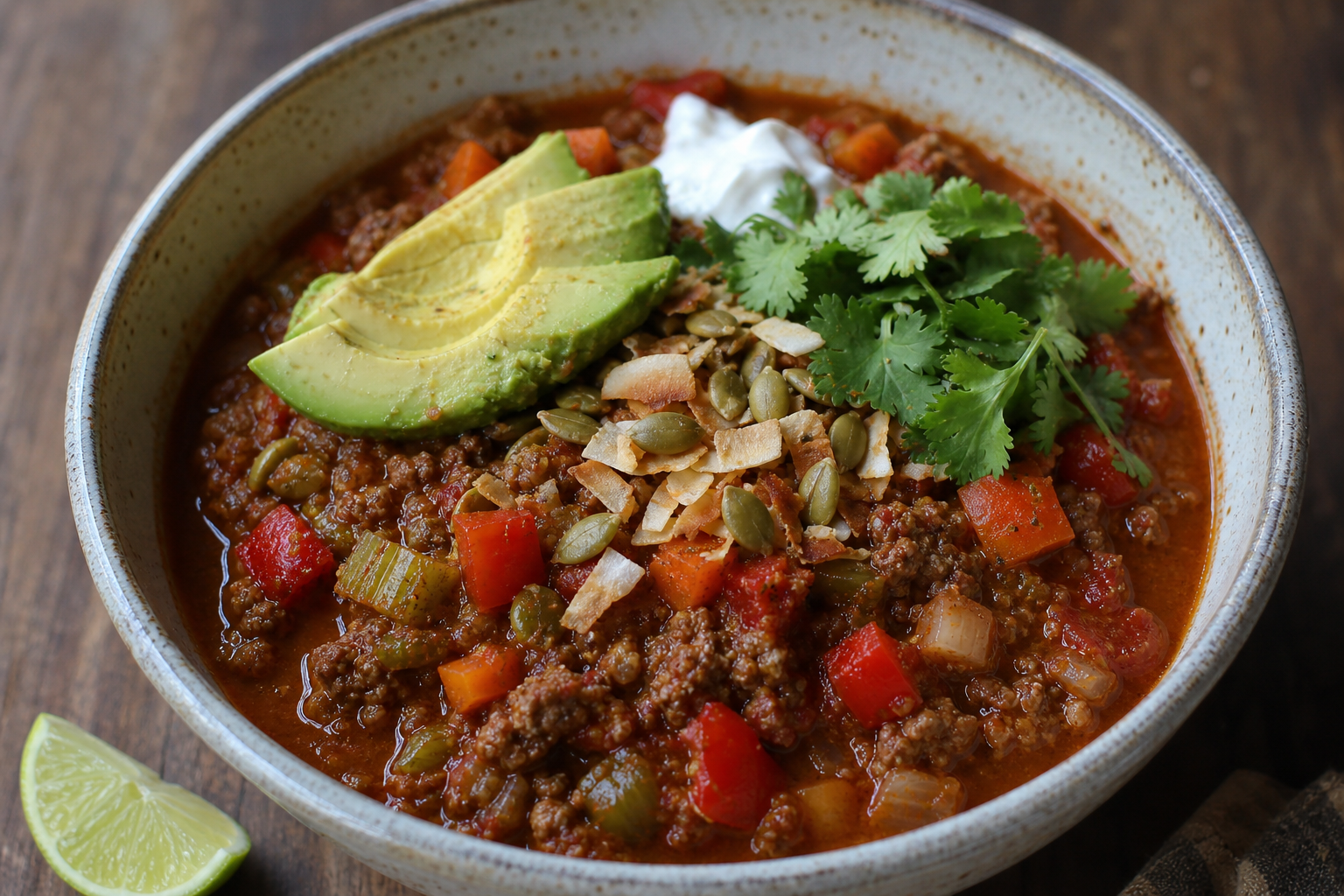
Grass-Fed Beef Chili with Warming Spices and Bone Broth
A foundational cold-weather chili built on grass-fed beef, regenerative bone broth, warming spices, and peak-season nightshades — finished with avocado, cilantro, and toasted seeds
Serves 4–6 · 15 min active · 1 hr total · autumn / winter · early evening
Autumn-Winter (cold-weather warming dish, peppers and tomatoes at peak in late summer for canning, served through the cold months).
Ingredients
Base
2 tbsp pasture-raised lard, grass-fed ghee, or coconut oil
1 lb grass-fed ground beef (80/20 or 85/15 for proper richness)
1–2 medium yellow onions, chopped (about 1 ½ cups)
2 medium carrots, chopped
2 red bell peppers, stemmed, seeded, and chopped
4 stalks celery, chopped
4 garlic cloves, minced
2 cups chopped tomatoes (fresh peak-season, or jarred whole peeled tomatoes broken up by hand)
4 cups homemade beef or chicken bone broth (or filtered water in a pinch)
1 tsp sea salt, plus more to taste
freshly ground black pepper, to taste
Spice blend
2 tbsp chili powder (look for single-source ground chiles, not "chili seasoning" with anti-caking agents)
1 tbsp ground cumin
1 tbsp dried oregano (Mexican oregano if you can find it — significantly more flavor than Mediterranean for this dish)
1 tsp smoked paprika
1 tsp ground coriander
½ tsp ground cinnamon (optional — traditional Cincinnati / Mexican mole touch, deepens the flavor)
1–2 dried chipotle peppers in adobo, finely chopped (optional — for genuine smoky heat)
To finish
1 ripe avocado, sliced
½ cup fresh cilantro leaves
¼ cup raw pumpkin seeds (pepitas), lightly toasted
2 tbsp unsweetened coconut chips, lightly toasted (optional — tropical brightness)
lime wedges
raw cultured sour cream or coconut yogurt (optional)
Method
Heat the fat. Heat the lard, ghee, or coconut oil in a large heavy-bottomed pot or Dutch oven over medium-high heat until shimmering.
Sear the beef. Add the ground beef and sear undisturbed for 3–4 minutes, allowing a deep brown crust to form on the bottom. Break up with a wooden spoon and continue cooking 4–5 minutes until evenly browned.
Bloom the spices. Add the chili powder, cumin, oregano, smoked paprika, coriander, and optional cinnamon directly to the browned beef. Stir constantly for 30–60 seconds — blooming the spices in the rendered fat is structurally important; it activates the spice oils and transforms raw spice flavor into integrated depth.
Add the aromatics. Stir in the onions, carrots, bell peppers, celery, and minced garlic. Cook 7–8 minutes, stirring occasionally, until the onions are translucent and the vegetables are softened.
Add the tomatoes. Stir in the chopped tomatoes (and chipotle in adobo if using), salt, and pepper. Bring to a gentle simmer; cook 3–4 minutes, allowing the tomatoes to break down slightly.
Add the broth. Pour in the bone broth. Bring to a low boil, then reduce heat to low.
Simmer. Cover partially and simmer over low heat 45 minutes, stirring occasionally. The chili should thicken meaningfully as it cooks; if it reduces too quickly, add a splash more broth.
Adjust. Taste and correct: more salt, more pepper, an additional pinch of cumin or chili powder if needed. The flavor improves substantially overnight — this is one of the few dishes that genuinely tastes better the next day.
Finish. Ladle into wide shallow bowls. Top each generously with sliced avocado, fresh cilantro, toasted pumpkin seeds, optional toasted coconut chips, a squeeze of lime, and an optional dollop of raw cultured sour cream or coconut yogurt.
Storage: Refrigerate 4–5 days; the flavor improves by day two and three. Freezer up to 3 months in airtight containers.
Nourishment Notes
Grass-fed beef is structurally and nutritionally distinct from commodity grain-finished beef. Cattle raised on rotational pasture eating their evolutionary diet (grass, forbs, legumes) develop a meaningfully different fat profile — substantially higher in omega-3 fatty acids, conjugated linoleic acid (CLA, with anti-inflammatory and metabolic benefits), the full range of fat-soluble vitamins (A, D, E, K2), and trace minerals (zinc, selenium, B12). The ground beef format is structurally ideal for chili because the fat renders out during the initial sear, distributing throughout the broth and carrying the fat-soluble nutrients of the spices throughout the dish.
The spice architecture is doing real metabolic work. Chili powder (made from dried, ground chile peppers) carries capsaicin — the compound that produces the heat sensation, studied for thermogenic effects, cardiovascular support, and anti-inflammatory action. Cumin contributes cuminaldehyde, traditionally used across Indian, Middle Eastern, and Mexican cuisines for digestive support. Mexican oregano (different botanically from Mediterranean oregano — Lippia graveolens vs. Origanum vulgare) contributes a citrusy, more assertive flavor profile that pairs naturally with the chile heat; it carries carvacrol and thymol, both studied for antimicrobial effects. Smoked paprika adds depth without raw heat; ground coriander brings a fresh, citrusy counterpoint. Together this is the classic Mexican-Tex-Mex spice triangle that has anchored slow-simmered meat dishes across the Americas for centuries.
Bone broth as the base is structurally significant — far beyond just a flavor enhancement. Homemade bone broth (long-simmered, 12–24 hours) extracts collagen from the bones into gelatin, which provides glycine and proline (the structural amino acids for collagen synthesis and gut-lining repair), naturally occurring electrolytes, and trace minerals from the bones themselves. The combination of broth + slow-simmered beef + warming spices makes this chili structurally restorative — the kind of meal that traditional cultures across the world have built around recovering invalids, post-illness convalescents, and cold-weather workers.
The nightshade architecture (tomatoes + bell peppers + chile powder) carries substantial lycopene — the carotenoid pigment that gives tomatoes their red color, made dramatically more bioavailable by cooking with fat. The fat-soluble nature of lycopene means chili (with its rendered beef fat and slow cooking) delivers significantly more bioavailable lycopene than raw tomato preparations. Bell peppers contribute exceptional vitamin C (more than oranges by weight), particularly the red varieties, which also carry capsanthin — a carotenoid studied for protective effects.
The garnish architecture matters more than home cooks realize. Avocado contributes monounsaturated fats, fiber, and additional fat-soluble vitamin support; fresh cilantro carries linalool (a calming compound) and supports heavy-metal detoxification through its chelating properties; toasted pumpkin seeds add zinc, magnesium, and protein; lime contributes vitamin C and d-limonene, supporting the liver's processing of the dish's richness. The optional cultured sour cream or coconut yogurt adds probiotic cultures that support digestion of the meat and beans.
As a circadian and seasonal food, chili is fundamentally cold-weather eating — the warming spices, dense protein, and slow-simmered architecture align with the body's natural pull toward dense, calorie-rich meals during autumn and winter. Best eaten in early evening; the slow-released energy from the protein and fat carries through the night without spiking blood sugar.
Storage: Refrigerator 4–5 days (improves overnight); freezer up to 3 months.
Sourcing: Grass-fed ground beef from a local rancher at the farmers' market is the gold standard — small-scale grass-finished operations across the country sell direct and produce significantly better beef than commodity grocery brands. For shipped options, White Oak Pastures (Georgia, regenerative multi-species farm, ground beef genuinely high-quality), Force of Nature (regenerative ranching, USDA-organic ancestral blends), US Wellness Meats (rotational-grazed pasture beef from family farms), or Northstar Bison's grass-fed beef line all meet the structural standard. Avoid commodity supermarket "grass-fed" beef which is often grass-fed-grain-finished — look for "100% grass-fed" or "grass-finished" specifically. Yellow onions, carrots, celery, red bell peppers, and tomatoes from a local farmers' market or CSA share at peak season — heirloom variety naming where available (Cherokee Purple, Brandywine, Sungold for tomatoes; Lipstick or Carmen for sweet red peppers). For off-season tomatoes, jarred whole peeled tomatoes from a small Italian importer (Bionaturae or Mutti, both glass-packed) work structurally as a substitute. Garlic from a local farmers' market — heirloom hardneck varieties (Music, German Red, Spanish Roja) carry significantly more flavor than commodity supermarket garlic. Spices: single-source from a small specialty importer like Burlap & Barrel (single-origin spices traced to specific farms), Diaspora Co. (single-origin spices from regenerative farms in India), or Spicewalla (small-batch spice blends). Skip Simply Organic and McCormick — both are commodity-scale despite the organic label. Mexican oregano specifically: look for Penzeys Spices, Burlap & Barrel, or a Mexican grocery (significantly more flavor than commodity supermarket oregano). Homemade bone broth from a long-simmered batch (12–24 hours) of pasture-raised beef or chicken bones from your local farmers' market or Amish farm; for shipped fallback, Bonafide Provisions or Kettle & Fire (both genuinely small-batch with clean ingredients). Pasture-raised lard from a local Amish creamery or rendered at home from leaf lard; for shipped, Fatworks (small-batch pasture-raised, properly rendered). Grass-fed ghee: Pure Indian Foods (genuinely traditional, single-source) or Ancient Organics (small California producer). Coconut oil: Nutiva (organic, virgin, single-source). Avocados from a local farmers' market in subtropical regions or California small-grower direct (Apricot Lane Farms, Frog Hollow Farm); avoid commodity supermarket avocados which are typically picked underripe. Fresh cilantro from a windowsill pot grown at home or a farmers' market herb vendor. Raw pumpkin seeds (pepitas) from a local farmers' market or Latin American grocery; for shipped, Go Raw or Living Tree Community (both small-batch, sprouted varieties). Limes from a local farmers' market in subtropical regions; backyard lime trees are productive perennials in USDA zones 9+. Himalayan pink salt: Terrasoul (small-batch, hand-mined) is the genuinely high-quality widely-available option. Raw cultured sour cream from a local raw-dairy producer or Amish creamery (realmilk.com finder); for coconut yogurt, COYO (Australian small-batch) or Anita's Coconut Yogurt.