Wild Salmon and Broccoli Red Curry with Coconut and Lime
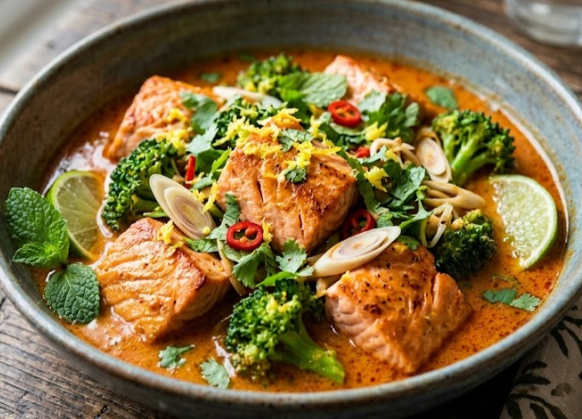
Wild-caught salmon and broccoli in a red curry-coconut broth, finished with lime zest, fresh cilantro, mint, and lemongrass
Serves 4 · 20 min active · 40 min total · year-round (peak salmon season summer-fall) · early evening
Cuisine: Thai-leaning Pan-Tropical
Ingredients
2 tbsp coconut oil
1 yellow onion, chopped
3 garlic cloves, chopped
¼ cup small-batch red curry paste (see sourcing)
1 lemongrass stalk, finely chopped
2 tbsp coconut aminos
2 tbsp ume plum vinegar
2 heads broccoli, chopped
1 cup mixed wild mushrooms (optional)
3–4 cups homemade chicken or fish bone broth
1 can full-fat coconut milk (Native Forest Organic Simple)
2 tbsp fish sauce (Red Boat, no sugar added, gluten-free)
juice and zest of 1 lime
1 lb wild-caught salmon, skin removed, broken into bite-sized pieces
2 cups kale, bok choy, or spinach
4 sprigs green onion, chopped
½ cup fresh cilantro, chopped
½ cup fresh mint, chopped
Method
Sauté aromatics. Heat coconut oil in a large pot over medium heat. Add onion and garlic; cook 4–5 minutes until translucent.
Bloom the paste. Add red curry paste, lemongrass, ume plum vinegar, coconut aminos. Stir 1 minute. Add broccoli and mushrooms; stir 5–7 minutes until tender.
Pour in bone broth and bring to a low simmer. Stir in coconut milk, fish sauce, lime juice, and lime zest.
Add greens of choice (kale, bok choy, spinach) and submerge to soften.
Add salmon pieces and cook 6–8 minutes until just cooked through — do not overcook; salmon turns dry quickly.
Serve. Divide into 4 bowls. Garnish generously with green onion, additional lime, cilantro, mint. Optional: sprinkle toasted sesame seeds, slivered almonds, or cashews.
ENHANCEMENT SUGGESTIONS
Make your own red curry paste. Soak 6–8 dried red chiles (Thai or guajillo) 30 min; blend with 2 lemongrass stalks (white parts only), 2 tbsp galangal (or ginger), 4 garlic cloves, 4 shallots, 2 kaffir lime leaves, 1 tsp shrimp paste, 1 tsp toasted coriander seeds, 1 tsp toasted cumin, ½ tsp white pepper. Refrigerates 2 weeks, freezes 3 months. The single biggest flavor difference between home-cooked and restaurant Thai curry.
Skip Thai Kitchen — it's mass-market and lacks the authentic depth. Maesri (small Thai company, restaurant-grade, no added oils — ingredients are simply chiles, aromatics, spices, salt) is the genuinely cleanest jarred option, available at Asian groceries. Mae Ploy (also restaurant-grade Thai) is similarly clean and slightly more salt-forward. Both are what authentic Thai restaurants use. For other brands, always verify the label — many "premium" curry pastes contain soybean, canola, sunflower, or rice bran oil. Best of all: make your own (see enhancement note above) — fresh paste keeps refrigerated 2 weeks, freezes 3 months, and contains nothing but the ingredients you put in.
Toast and grind your own coriander, cumin, and white peppercorns before adding to the paste/curry. Fresh-toasted is dramatically more flavorful.
Galangal instead of (or alongside) ginger. Galangal (Thai ginger) is the structurally authentic root for Thai curry — citrusy, piney, completely different flavor profile from ginger. Available frozen at Asian groceries; substitute or supplement the ginger.
Kaffir lime leaves. 4–5 kaffir lime leaves added with the broth contribute the distinctive Thai aromatic profile that no substitute can match. Available frozen at Asian groceries; lasts months in freezer.
Palm sugar or coconut sugar — 1 tbsp added with the fish sauce. Authentic Thai curry has subtle sweetness that balances the fish sauce salt and lime acidity. The structural sweetness layer most American versions miss.
Tamarind paste alongside lime. 1 tbsp tamarind paste with the lime — adds a sour-fruity complexity that lime alone cannot provide.
Sear the salmon separately. Skin-on salmon, seared crispy in ghee 4–5 min skin-side down before nestling skin-up into the curry to finish. Crispy skin + silky curry = restaurant-level texture contrast.
Thai basil instead of regular basil. If you can find it (Asian groceries), Thai basil's anise notes are distinctly different and structurally correct for this dish.
Crispy shallots and toasted coconut shavings as final garnish. 2 thinly sliced shallots fried in ghee + 2 tbsp unsweetened coconut chips toasted golden, scattered across the plate.
Sourcing: Wild-caught salmon — King, Sockeye, or Coho from Alaska or Pacific Northwest is the gold standard; for shipped, Sea to Table or Vital Choice. Avoid farmed Atlantic salmon. Red curry paste: Maesri or Mae Ploy — both restaurant-grade Thai brands, available at Asian groceries, with clean ingredient lists (no seed oils). Skip Thai Kitchen and other mass-market brands which often contain soybean, canola, or rice bran oil. Fish sauce: Red Boat is genuinely high-quality — single-batch, no sugar added, no MSG, traceable to a single Vietnamese village). Coconut aminos: Coconut Secret (the original small-batch). Ume plum vinegar: Eden Foods (genuinely high-quality). Native Forest Organic Simple coconut milk. Lemongrass and kaffir lime leaves: Asian grocery (or your local farmers' market in subtropical regions). Heirloom hardneck garlic. Fresh cilantro and mint from windowsill pot or farmers' market. Lime: local farmers' market in subtropical regions, or backyard tree (USDA 9+).