Indian Butter Chicken (Murgh Makhani)
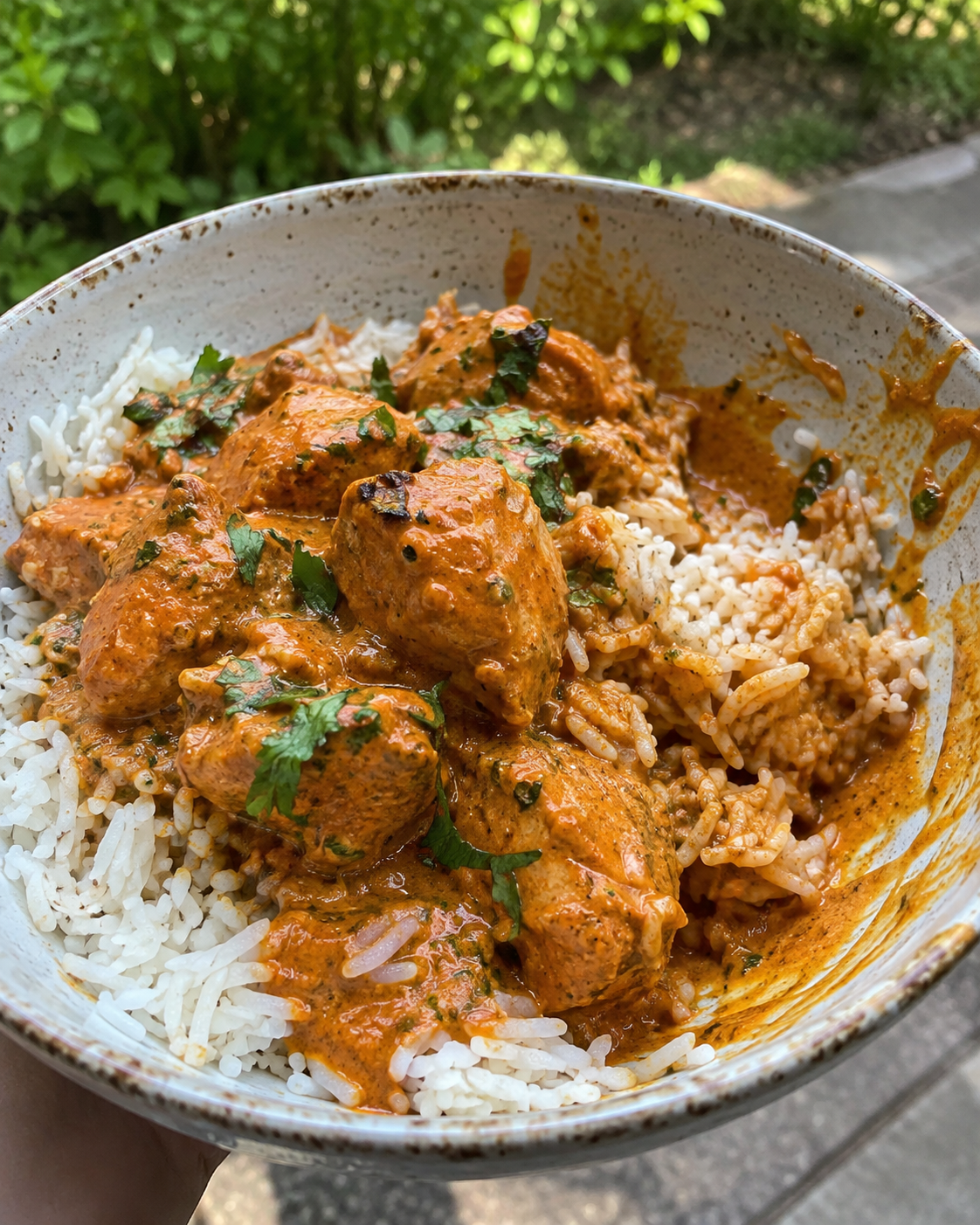
The Punjabi classic in its simplest weeknight form: spiced pastured chicken in a silky tomato, butter and cream sauce, ready in about 30 minutes.
Yield: serves 4 · Active: 15 min · Total: 35 min · Season: year-round, especially welcome fall through winter, when warming spices hit the spot. Fresh cilantro is at its best in the cooler months (fall through spring in California and the South). · Cuisine: North Indian / Punjabi · Best eaten: midday or early evening
Butter chicken (murgh makhani, from makhan, butter) is one of the great comfort dishes of Indian cooking, and one of the youngest. It’s widely credited to Moti Mahal restaurant in 1950s Delhi, where cooks reportedly simmered leftover tandoori chicken in a rich tomato, butter and cream sauce to bring it back to life. It became an instant classic and traveled with the Indian diaspora all over the world.
This is the quick home version: no tandoor and no overnight marinade. Bite-sized pieces of pastured chicken get coated in warming spices (turmeric, ginger, cumin, garam masala), seared in butter with onion and garlic, then simmered in tomato and cream until the sauce turns silky and golden-orange. A shower of fresh cilantro finishes it. It’s even better the next day, once the spices settle in.
Serve it over Coconut Rice Two Ways, either the coconut cilantro jasmine rice or the grain-free coconut-lime cauliflower rice. Or spoon it over a silky cauliflower purée, with my Loaded Turmeric-Roasted Cauliflower on the side. Got more time? Try my Tikka Masala over Cilantro Coconut Cauliflower Rice.
Ingredients
Chicken
1½ lb pastured chicken thighs or breasts, cut into 1-inch pieces
1½ tsp ground turmeric
1 tsp ground ginger, or a 2-inch piece of fresh ginger, finely grated (or both)
1 tsp ground cumin
1 tsp garam masala, plus more to finish
¼ tsp ground Ceylon cinnamon
½ tsp mild curry powder (optional)
1 tsp Baja Gold sea salt
½ tsp freshly ground black pepper
Sauce
3 tbsp grass-fed butter (raw if you have it) or grass-fed ghee
¼ medium yellow onion, finely diced
6 cloves garlic, minced
2 tbsp tomato paste
½ cup tomato passata or crushed tomatoes (optional, for a saucier, more classic version)
1 cup grass-fed heavy cream (raw if you have it)
½ tsp raw honey (optional, to balance the tomato)
1 tsp kasuri methi (dried fenugreek leaves), crushed between your fingers (optional)
Baja Gold sea salt, to taste
Garnish
1 large bunch fresh cilantro, chopped (about ½ cup)
A swirl of cream or yogurt (optional)
A pinch of garam masala
Swaps
Thighs vs. breasts: thighs are juicier and more forgiving, but both work.
Dairy-free: use full-fat coconut milk instead of cream, and ghee or coconut oil instead of butter. It turns a little sweeter and more coconut-forward, and it’s delicious in its own way.
Method
Spice the chicken. In a large bowl, toss the chicken with the turmeric, ginger, cumin, garam masala, cinnamon, curry powder (if using), salt and pepper until every piece is coated. Let it sit up to 30 minutes if you have time; it’s great without resting too.
Cook the aromatics. Melt the butter in a large heavy skillet over medium heat. Add the onion and cook 2–3 minutes, until soft and translucent. Add the garlic and cook 30 seconds, just until fragrant. Don’t let it brown, or the sauce will taste bitter.
Brown the chicken. Turn the heat to medium-high. Add the chicken in a single layer (work in two batches if needed so it browns instead of steaming). Cook undisturbed 2–3 minutes, then stir and cook 3–4 minutes more, until browned on the outside. It will finish cooking in the sauce.
Build the sauce. Lower the heat to medium-low. Stir in the tomato paste and cook 1 minute, until it darkens. Add the passata (if using), then pour in the cream, scraping up the browned bits from the bottom of the pan. Stir in the honey, if using.
Simmer. Cover and simmer gently 5–7 minutes, until the chicken is cooked through and the sauce has thickened. Breasts should reach 165°F and thighs 175°F. For a thicker sauce, uncover and simmer 3–5 minutes more, stirring now and then. It thickens a little more as it stands, so don’t over-reduce.
Finish. Crumble in the kasuri methi, if using. Taste and adjust the salt. Stir in half the cilantro.
Serve. Spoon over coconut rice, cauliflower rice or cauliflower purée. Top with the rest of the cilantro, a swirl of cream or yogurt, and a pinch of garam masala.
Make it a meal: add cucumber-mint raita (full-fat yogurt with grated cucumber, mint, a pinch of cumin and salt), garlicky sautéed spinach, a cucumber-tomato salad with cilantro, and grain-free naan or cassava flatbread. To drink, try cold water with lemon, chai, or a mango kefir lassi in warm weather.
Storage: Refrigerate up to 4 days, or freeze up to 2 months. It’s even better the next day; reheat gently over low heat with a splash of water or cream. For 12, triple everything and cook in a large heavy pot, browning the chicken in batches.
Cream note: raw cream and butter aren’t raw once cooked, but they still bring all their richness. Honey note: the honey is heated, so it isn’t raw. Honey isn’t safe for babies under 12 months.
Homemade Garam Masala
Most store-bought garam masala is stale, and fresh is dramatically better. Toast 2 tbsp green cardamom pods, 1 cinnamon stick, 1 tbsp whole cloves, 2 tbsp cumin seeds, 2 tbsp coriander seeds, 1 tbsp black peppercorns and the seeds from 2 black cardamom pods in a dry skillet over medium-low heat for 2–3 minutes, until fragrant. Cool, then grind finely. It keeps about 2 months in an airtight jar.
Nourishment Notes
Turmeric brings curcumin, one of the most studied anti-inflammatory plant compounds. Curcumin is poorly absorbed on its own, but pairing it with fat (the butter and cream here) and black pepper (whose piperine can greatly increase absorption) helps a lot. Indian cooks have combined turmeric, fat and pepper for generations.
Garam masala layers cardamom, cinnamon, cloves, cumin, coriander and black pepper, each with its own aromatic oils and polyphenols. Cardamom and cumin have long been used to support digestion, and cloves are rich in eugenol, a potent antioxidant. Ginger is one of the most traditionally medicinal foods in Asian cooking, studied for its effects on digestion, nausea and inflammation.
Grass-fed cream and butter bring fat-soluble vitamins A, D, E and K2, plus butyrate and CLA. The fat also carries the spices’ fat-soluble compounds, like curcumin, into your body.
Tomato paste brings concentrated lycopene, which you absorb better with fat, making tomato and cream a good pairing.
Pastured chicken brings complete protein, B vitamins and selenium. The thighs add more iron and zinc. Fresh cilantro adds vitamin K, chlorophyll and a brightness that lifts the rich sauce. Kasuri methi (fenugreek leaves) brings its own maple-like aroma and has long been used in Indian cooking for digestion.
For your cycle: in the luteal phase, warm, spiced comfort food with plenty of protein and fat can help with the low energy and cravings before your period. Turmeric and ginger are also a gentle choice for menstrual cramps. Pair it with coconut rice for the slow carbs your body asks for that week.
Sourcing
Chicken: pastured, from a local farm or White Oak Pastures
Turmeric and spices: fresh, organic whole spices from a spice shop or Indian grocer, ground at home when you can
Garam masala: homemade (above), or a fresh blend from an Indian grocer
Kasuri methi: Indian grocers, or online
Fresh ginger and cilantro: Asian or Indian markets have the best quality and prices
Heavy cream: raw grass-fed from realmilk.com, or Organic Valley Grassmilk Heavy Cream
Butter and ghee: grass-fed
Coconut milk (dairy-free): Native Forest Organic or Thai Kitchen Organic
Tomato paste and passata: single-ingredient, in glass if possible, such as Mutti
Sea salt: Baja Gold
— Anna aka Food Marshall