Kelp Noodle Pad Thai
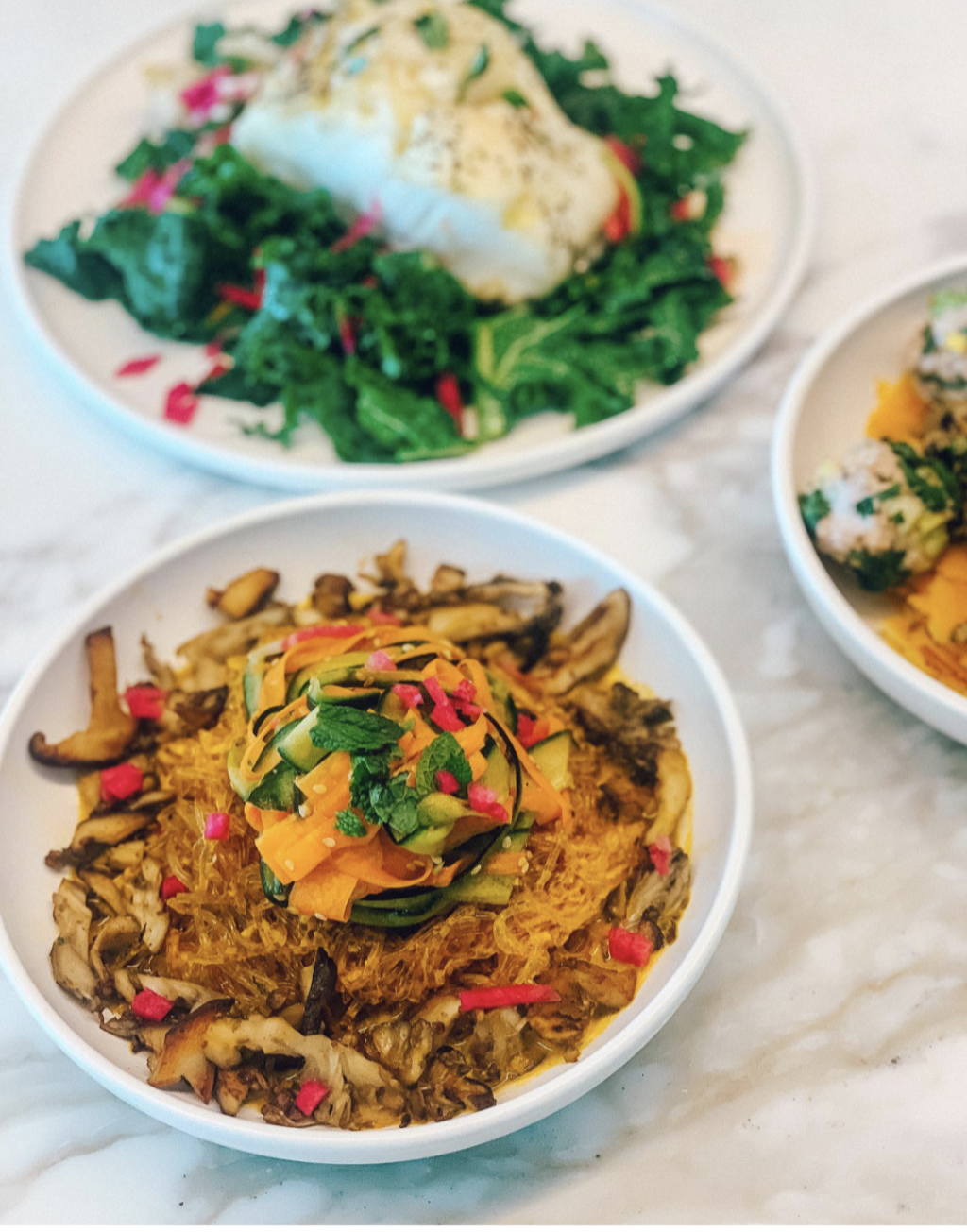
A raw, vegetable-forward Thai-inspired bowl built on sea-kelp noodles and an almond-butter sauce.
Season: Spring · Summer (year-round in tropical climates)
Cuisine: Thai-Inspired Fusion
Yield: Serves 4
Active: 20 min · Total: 30 min
Best eaten: midday or early dinner during long-day months
Ingredients
Noodle Base
1 (12 oz) bag kelp noodles, rinsed and drained (or zucchini noodles)
1 large carrot, julienned
1 cup purple cabbage, thinly shredded
1 cup green cabbage, thinly shredded
1 red bell pepper, thinly sliced
1 cup mung bean sprouts
4 green onions, sliced
1 cup baby spinach
½ cup fresh cilantro, chopped
Pad Thai Sauce
¼ cup raw almond butter or organic Valencia peanut butter
3 tbsp gluten-free tamari or coconut aminos
2 tbsp toasted sesame oil
2 tbsp fresh lime juice (or lemon)
2 tbsp coconut nectar or raw honey
2 tbsp raw apple cider vinegar
1 tbsp fresh ginger juice (or 1-inch knob, grated)
2 garlic cloves, minced
1 tsp ground turmeric
1 tsp paprika
1 tsp ground coriander
½ jalapeño, minced (optional)
2 tbsp cold-pressed olive oil or avocado oil
Toppings
½ cup raw cashews or almonds, chopped
2 tbsp sesame seeds
Marinated mushrooms (optional)
Extra cilantro and lime wedges
Sub: zucchini noodles work in place of kelp if you want a fully land-vegetable version, though you lose the iodine. For a warm version, briefly sauté the cabbage and bell pepper for 2–3 minutes before tossing.
Method
Soften the kelp noodles: soak rinsed kelp noodles in warm water with a squeeze of lemon for 10–15 minutes to soften. Drain and pat dry. (Skip this step if using zucchini noodles.)
Make the sauce: whisk all sauce ingredients in a bowl until smooth. Adjust to taste — salt with more tamari, sweetness with more honey, acidity with more lime.
Assemble: in a large bowl, combine the kelp noodles, carrot, cabbages, bell pepper, sprouts, green onions, spinach, and cilantro.
Pour the sauce over and toss thoroughly with tongs or clean hands until everything is well coated.
Top with chopped cashews, sesame seeds, marinated mushrooms if using, and extra cilantro. Serve with lime wedges.
Nourishment Notes
Kelp noodles are made from sea kelp and water — a near-zero-calorie base rich in iodine, the trace mineral most modern diets fall short on and a critical cofactor for thyroid hormone production and cellular metabolism. Sea vegetables have been a continuous part of Japanese, Korean, Irish, and coastal Mediterranean cooking for thousands of years; iodine concentration in kelp is essentially impossible to replicate from land plants. A modern diet built around grain and grain-fed animal foods runs chronically low in iodine, and a regular practice of seaweed eating restores what those traditional cultures took for granted. The rainbow of raw vegetables delivers a wide spectrum of polyphenols, carotenoids, and vitamin C alongside the prebiotic fibers that feed gut flora. Purple cabbage carries anthocyanins (the same pigment that gives blueberries and elderberries their antioxidant character); green cabbage delivers glucosinolates that convert to sulforaphane during chewing — preserved by the raw preparation, which keeps the heat-sensitive enzyme myrosinase intact. Carrots' beta-carotene becomes meaningfully more bioavailable in the presence of the fat from the almond-butter sauce; raw vegetables without fat absorb only a fraction of their fat-soluble nutrients.
The sauce is doing real digestive work, not just flavor work. Almond butter brings vitamin E, magnesium, monounsaturated fats, and meaningful protein. Toasted sesame oil and sesame seeds layer in calcium, magnesium, copper, and the lignans sesamin and sesamolin (compounds studied for antioxidant and lipid-supportive effects). Coconut aminos or tamari provide complete amino acids and gentle umami without the soy or wheat of conventional shoyu. Turmeric's curcumin is fat-soluble — it requires the almond butter and sesame oil for absorption, and the small amount of black pepper in the dish (or in the paprika blend) further enhances curcumin uptake by up to 2,000% via piperine. This is traditional Indian-Thai food-as-medicine pairing, refined over thousands of years of culinary practice. Fresh ginger contributes gingerol's anti-inflammatory and circulation-supporting effects; raw garlic adds allicin's antimicrobial and cardiovascular support; raw apple cider vinegar contributes acetic acid that supports stomach acid production and slows gastric emptying for steadier postprandial blood sugar.
As a circadian and seasonal food, this bowl belongs to midday or early dinner during the long-day months. Raw, fresh dishes are easier to digest when ambient temperatures and digestive fire are both high — the body's metabolic capacity peaks during daylight, and raw vegetable matter requires more digestive work than cooked. Eating the bulk of raw preparations like this one between late morning and early afternoon, when solar exposure is at its peak, is the cleanest match to the body's natural rhythm. In tropical climates, where daylight hours stay relatively constant year-round, the dish works any season; in temperate climates, save it for spring and summer when the body welcomes high-water-content, alive food. As a quick alongside to grilled fish, shrimp, or pasture-raised chicken, it doubles as a complete light dinner.
Storage: best eaten the day it's assembled — kelp noodles soften further over time and the cabbages weep moisture. Components can be prepped separately up to 2 days ahead and tossed at the table. The sauce alone keeps refrigerated 5 days; whisk before using and use as a dipping sauce for fresh vegetables, a dressing for grain bowls, or a quick marinade for chicken.