Lomo Saltado: Peruvian Beef Stir-Fry
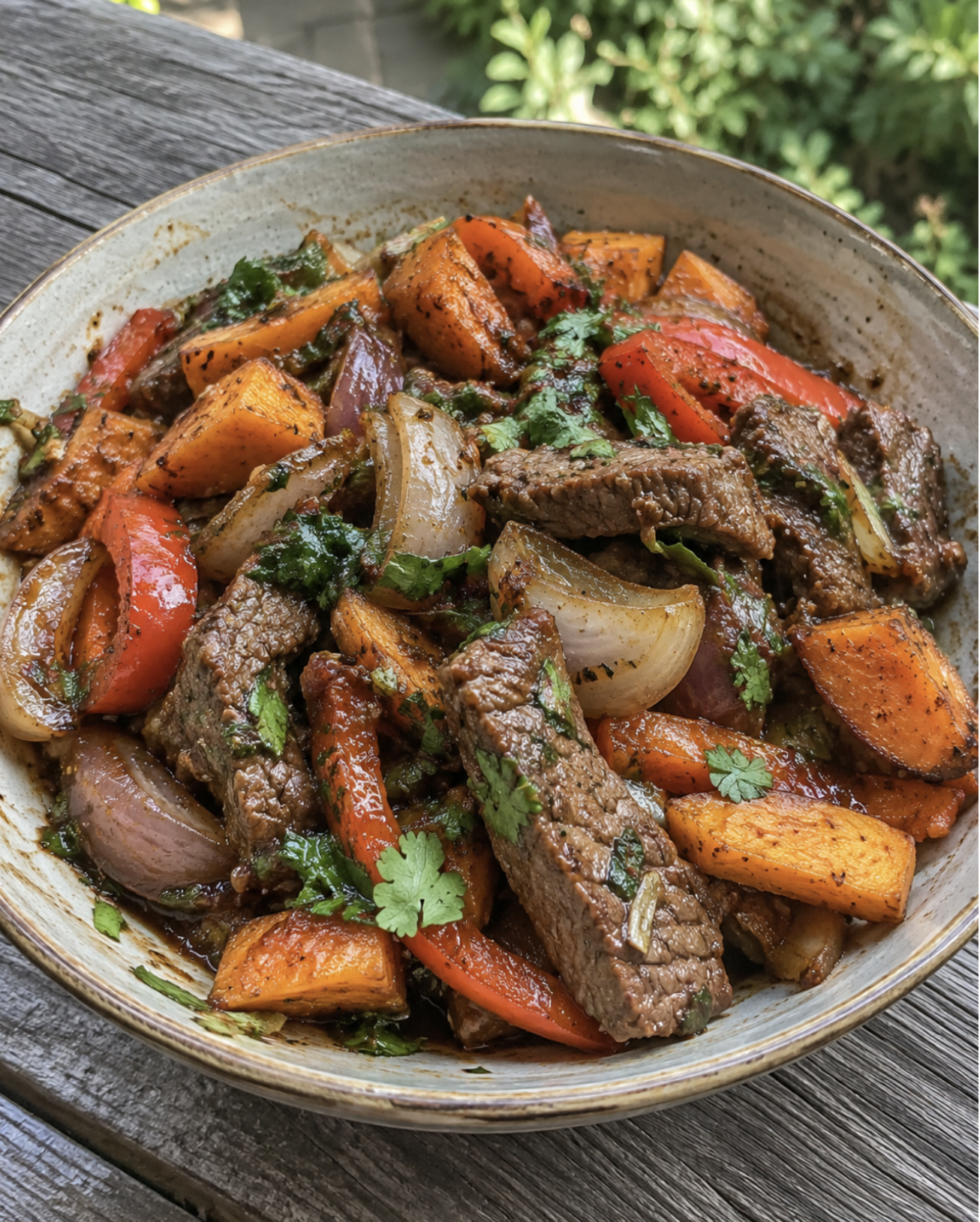
Grass-fed beef seared with red onion, tomato, and chili, tossed with coconut aminos and vinegar, and served over crispy potato wedges fried in beef tallow.
Yield: Serves 4 · Active: 35 min · Total: 55 min · Year-round, with tomatoes and peppers at their best from July through September · Cuisine: Peruvian, Chifa (Chinese-Peruvian) · Best eaten: midday or early evening
For a true Nikkei (Japanese-Peruvian) dish, see my Tuna Ceviche.
Ingredients
Tallow-fried wedges (choose one)
Classic: 2 large Yukon Gold or russet potatoes
Sweet potato: 2 medium sweet potatoes
Purple: 1½ lbs purple potatoes (Purple Majesty or Purple Peruvian), or Okinawan purple sweet potatoes
⅓ cup grass-fed beef tallow
1 tsp Baja Gold sea salt, plus more for the cooking water
Beef
1½ lbs grass-finished sirloin, cut against the grain into thin strips
½ tsp Baja Gold sea salt and ¼ tsp black pepper
2 tbsp beef tallow, avocado oil, or ghee
Stir-fry
2 tbsp beef tallow, avocado oil, or ghee
1 red onion, cut into thick wedges
1 bell pepper (red, orange, or yellow), sliced into thick strips
2 garlic cloves, minced
½ tsp ground cumin
2 ripe tomatoes, cut into wedges
1 ají amarillo pepper, sliced (or 1 tbsp ají amarillo paste, or 1 small jalapeño)
3 tbsp coconut aminos
2–3 tbsp red wine vinegar or raw apple cider vinegar
To serve
Fresh cilantro, chopped
Lime wedges
Optional: rice, or cauliflower rice for grain-free
A note on the peppers: Bell peppers aren’t traditional, but they’re common in home versions and add color and sweetness. Leave them out for a more classic lomo saltado.
Method
Parboil the wedges (start first). Heat the oven to 200°F to keep them warm later. Scrub the potatoes (no need to peel) and cut each lengthwise into 8 wedges, about ¾ inch at the thickest edge. Drop them into a pot of well-salted boiling water and cook until a knife slides in with a little resistance: 6–8 minutes for Yukon Gold, russet, or purple potatoes, and 4–5 minutes for sweet potatoes, which soften faster. Drain, spread on a towel, and let them steam dry for 5 minutes. Dry wedges crisp; wet ones spit and steam.
Fry in tallow. Melt the tallow in a large cast-iron or stainless skillet over medium-high heat until it shimmers. Add the wedges cut side down in a single layer, working in two batches so they aren’t crowded. Fry 3–4 minutes per cut side, turning with tongs, until deep golden and crisp all over, 10–12 minutes total. Sweet potatoes brown faster because of their natural sugar, so turn the heat to medium for them. Move the wedges to a rack set over a sheet pan, sprinkle with salt, and keep them warm in the oven while you cook the beef.
Sear the beef. Heat 2 tbsp fat in a wok or large heavy skillet over high heat until shimmering. Season the beef with salt and pepper, and add it in a single layer, working in two or three batches so the pan stays hot. Sear 1–2 minutes per side, until browned but still rosy inside. Move it to a plate.
Stir-fry the vegetables. Add 2 tbsp more fat to the pan. Add the onion and bell pepper, and stir-fry over high heat 3–4 minutes, until softened but still a little crisp. Add the garlic and cumin, and cook 30 seconds.
Add the tomatoes and chili, and stir-fry 1 minute, just until the tomatoes soften but hold their shape.
Bring it together. Return the beef and its juices to the pan, add the coconut aminos and vinegar, and toss over high heat for about 1 minute, until glossy and coated. Taste; it should be bright, savory, and a little sweet from the tomatoes.
Serve. Pile the stir-fry over the wedges (the classic Peruvian way, so they soak up the sauce), or serve with rice or cauliflower rice. Scatter with cilantro, and add lime wedges.
Storage
Leftovers: refrigerated up to 2 days. Reheat the beef and vegetables quickly in a hot pan, and recrisp the wedges separately in a hot skillet with a spoonful of tallow, or in a 425°F oven for 8–10 minutes. (The microwave makes them soggy.)
Nourishment Notes
Grass-finished sirloin: heme iron, zinc, B12, taurine, carnitine, and complete protein, plus more omega-3s and CLA than grain-finished beef. Searing it hot and fast browns the outside while keeping the inside tender and juicy.
Potatoes: potassium (more than a banana), vitamin C, and B6, plus steady carbohydrates.
Sweet potatoes (if using): beta-carotene, which your body turns into vitamin A, plus vitamin C, B6, and manganese.
Purple potatoes (if using): anthocyanins, the same deep-violet pigments in blueberries, which help calm inflammation. Peru is the birthplace of the potato and still grows thousands of native varieties, purple ones among them.
Beef tallow: a stable, heat-tolerant fat that holds up at frying temperatures without breaking down the way seed oils do. It also gives the wedges the rich, old-fashioned flavor fries had before restaurants switched to vegetable oil.
Ají amarillo: Peru’s signature golden chili, fruity and medium-hot, with capsaicin and vitamin C. It gives lomo saltado its traditional flavor and color. Look for it frozen or as a paste at Latin markets; jalapeño is a good substitute.
Bell peppers: vitamin C (a cup of red pepper has more than an orange), plus beta-carotene and zeaxanthin.
Tomatoes: lycopene, a carotenoid studied for supporting heart health, and better absorbed when cooked with fat.
Red onion and garlic: quercetin and sulfur compounds.
Coconut aminos: a savory, soy-free, gluten-free seasoning made from coconut sap and sea salt, a little sweeter and lower in sodium than soy sauce.
Vinegar: the bright acidity that balances the rich beef.
Cilantro and lime: vitamin C and vitamin K, plus a fresh finish. The vitamin C also helps your body absorb the iron in the vegetables.
As a circadian food, this protein-rich, satisfying meal is best at midday or early dinner. It’s a year-round dish, and especially good in summer, when tomatoes and peppers are at their peak.
For your cycle: With heme iron, zinc, and B12, this is especially restorative during and just after your period, and the potatoes bring steady energy for the luteal phase.
Sourcing
Sirloin: 100% grass-fed and grass-finished, from a local rancher, US Wellness Meats, or White Oak Pastures
Potatoes and sweet potatoes: organic (conventional potatoes are among the most heavily sprayed crops)
Purple potatoes: organic Purple Majesty or Purple Peruvian from a farmers’ market, or Okinawan purple sweet potatoes from an Asian market
Beef tallow: grass-fed, from your local butcher or rancher, or rendered at home from suet
Avocado oil or ghee (for the stir-fry, if not using tallow): organic cold-pressed avocado oil, or grass-fed ghee
Tomatoes, peppers, onions, garlic, cilantro, and limes: organic, from a farmers’ market
Ají amarillo: frozen whole peppers or paste, from a Latin market, with no added preservatives
Coconut aminos: organic and soy-free, like Coconut Secret
Vinegar: organic red wine vinegar, or raw apple cider vinegar with the mother (Bragg)
Cumin: organic and non-irradiated
Salt: Baja Gold sea salt
— Anna aka Food Marshall