The Epic Fall Harvest Salad
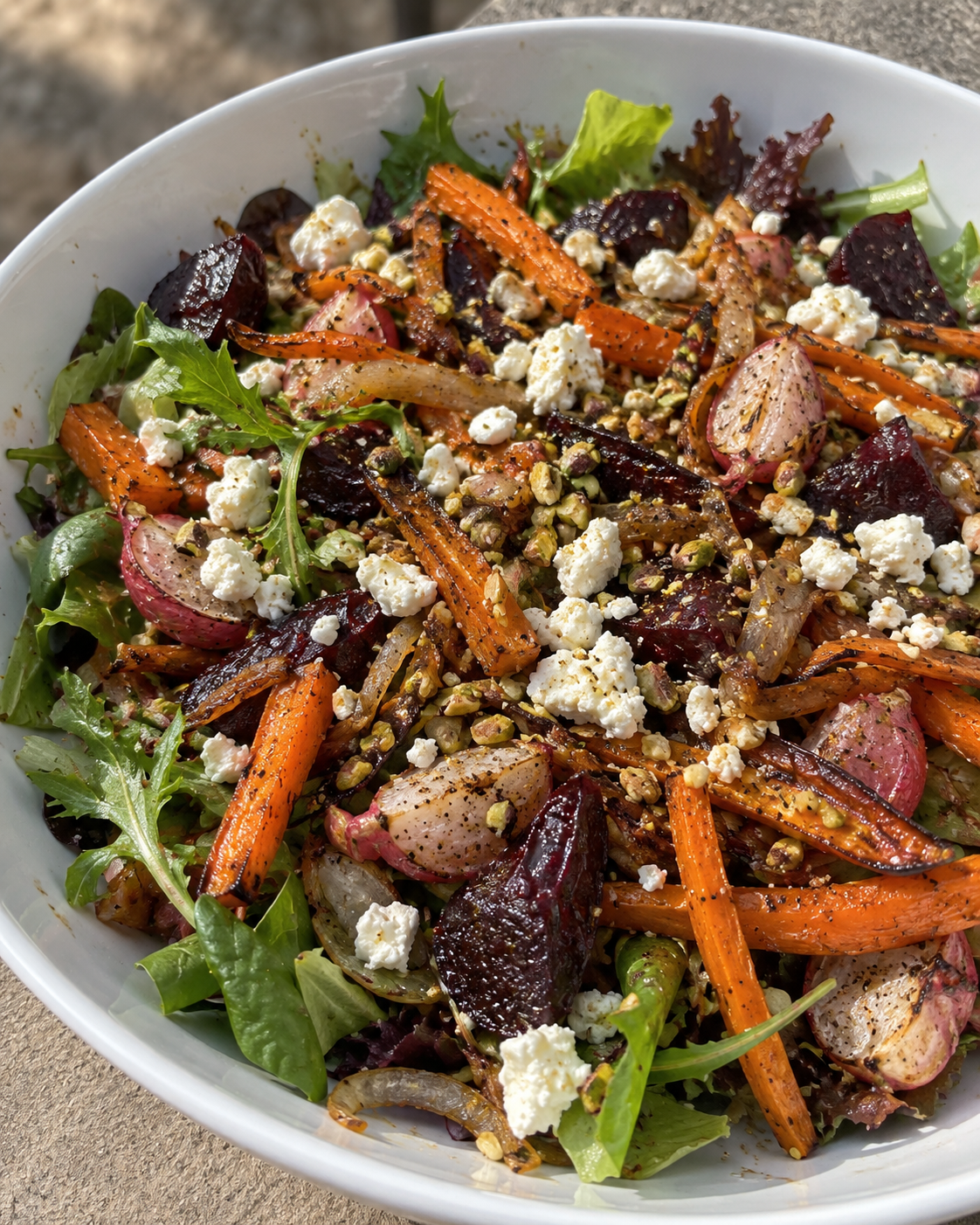
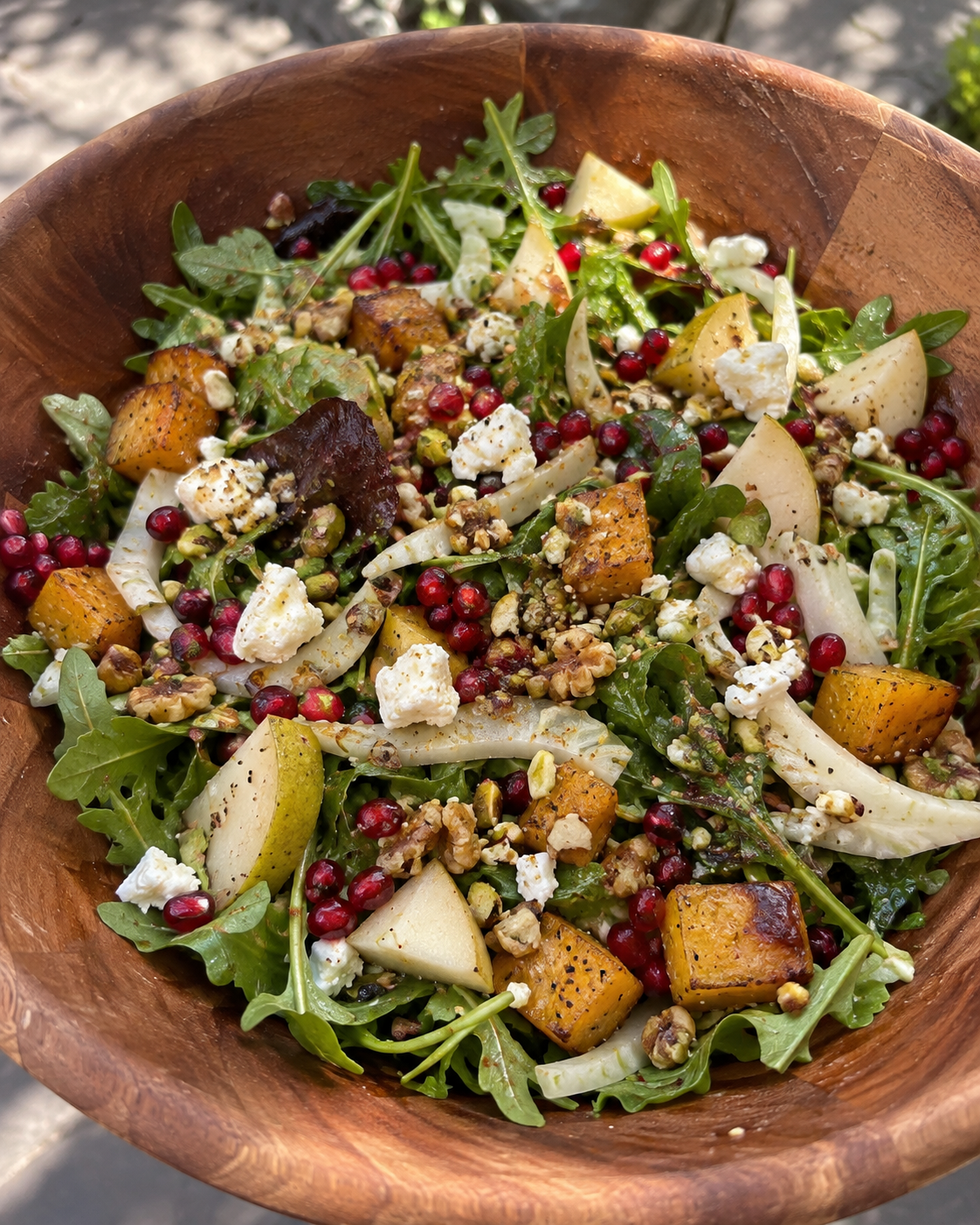
A showstopping, main-dish salad that celebrates everything the fall harvest has to offer: tender massaged kale and shaved Brussels sprouts, warm maple-roasted delicata and golden beets, crisp apple, sweet persimmon, and jewel-like pomegranate, shards of aged cheddar, maple-spiced pecans and pepitas, crispy shallots, and a tangy apple cider-maple Dijon vinaigrette. Add a protein, and it's dinner.
Yield: Serves 6 as a main, or 8–10 as a side · Active: 45 min · Total: 1 hour · Best in North America from September through November, at the height of the fall harvest · Best eaten: midday or early evening
The Harvest Salad Formula
Pick something from each category and you'll have a perfectly balanced salad every time:
Greens + something roasted + something fresh and crunchy + fruit + cheese + nuts or seeds + extra crunch + herbs + dressing + protein (optional)
Everything That Can Go Into It
Hearty greens: lacinato kale, shaved Brussels sprouts, radicchio, escarole, frisée, arugula, baby spinach, or shredded red cabbage
Roasted vegetables: delicata squash rings, butternut or kabocha cubes, golden or Chioggia beets, sweet potatoes, carrots, parsnips, radishes, cauliflower, Brussels sprouts, red onion, or fennel
Roasted fruit: pears, figs, or apples
Fresh fruit: crisp apples, ripe pears, Fuyu persimmons, pomegranate arils, fresh figs, Asian pears, or quince (poached)
Dried fruit: unsweetened dried cherries, cranberries, golden raisins, chopped dates, or dried figs (unsulfured, with no added sweeteners or oils)
Raw crunch: shaved fennel, thinly sliced celery, radishes, kohlrabi, or shaved raw beets
Cheese: aged white cheddar shards, crumbled goat cheese (chèvre), blue cheese or Gorgonzola, shaved Parmigiano-Reggiano, Manchego, ricotta salata, or fresh ricotta, like Bellwether Farms'
Nuts and seeds: maple-spiced pecans, walnuts, toasted hazelnuts, pistachios, pepitas, sunflower seeds, or pistachio dukkah (find my dukkah recipe in my Farm-to-Table Roasted Root Vegetables with Labneh, Dukkah, and Mint Gremolata)
Extra crunch: crispy shallots, crispy pasture-raised pork belly or bacon, toasted coconut, or crushed homemade granola (try the Savory Rosemary Seed from my Food Marshall Granola post)
Fresh herbs: parsley, mint, chives, dill, or thyme
Protein: roast chicken, seared steak, wild salmon, wild shrimp, jammy pasture-raised eggs, crispy pork belly, or shredded turkey (perfect for Thanksgiving leftovers)
How to Roast Any Vegetable
Heat the oven to 425°F. Cut your vegetables into even pieces, toss them with ghee or olive oil (about 2–3 tbsp per sheet pan) and salt, and spread them in a single layer with plenty of space, so they brown instead of steam. Roast them on separate pans by type, since each cooks at its own pace:
Dense roots (beets, carrots, parsnips, and sweet potatoes): 30–40 minutes, flipping once. Roast red beets on their own pan, so they don't stain everything else.
Winter squash (delicata rings, and butternut or kabocha cubes): 20–30 minutes, flipping once.
Radishes, red onion, and fennel: 20–25 minutes.
Brassicas (Brussels sprouts, cauliflower, and broccoli): 18–30 minutes, depending on the vegetable. For exact times and tips, see my Roasted Brassicas: A Foundation Guide.
For extra-crispy, caramelized edges, raise the oven to 475°F for the last 5 minutes, and watch closely so nothing burns.
Ingredients for the Epic Version
Roasted vegetables
1 delicata squash, halved, seeded, and sliced into ½-inch half-moons (no need to peel), or butternut squash, or sweet potatoes
2 golden beets, peeled and cut into wedges
2 cups other roots, like carrots, parsnips, or radishes, cut into even pieces (optional)
3 tbsp grass-fed ghee or extra virgin olive oil, divided
1 tbsp maple syrup
½ tsp Ceylon cinnamon
¾ tsp Baja Gold sea salt, divided
Maple-spiced pecans and pepitas
¾ cup pecans
¼ cup pepitas
1 tbsp maple syrup
1 tsp grass-fed butter, melted
¼ tsp Ceylon cinnamon, a pinch of cayenne, and a pinch of salt
Crispy shallots
2 shallots, thinly sliced into rings
3 tbsp grass-fed ghee or tallow
Greens
1 bunch lacinato kale, stems removed, leaves thinly sliced
2 cups Brussels sprouts, shaved thin
1 small head radicchio, torn
1 tbsp extra virgin olive oil and a pinch of salt, for massaging
Fresh fruit, cheese, and herbs
1 crisp apple (like Honeycrisp), thinly sliced
1 Fuyu persimmon, thinly sliced
Arils from 1 pomegranate
⅓ cup unsweetened dried cherries
4 oz aged white cheddar, broken into shards (or crumbled goat or blue cheese)
A handful of fresh parsley and mint leaves
Apple cider-maple Dijon vinaigrette
⅓ cup extra virgin olive oil
3 tbsp raw apple cider vinegar
1 tbsp maple syrup or local honey
1 tbsp Dijon mustard
1 small shallot, finely minced
¼ tsp Baja Gold sea salt and black pepper
Method
Roast the vegetables. Heat the oven to 425°F. Toss the beets (and any other roots) with 1 tbsp ghee and ¼ tsp salt and roast 30–40 minutes, until tender. On a second pan, toss the squash or sweet potatoes with 1½ tbsp ghee, the maple syrup, cinnamon, and ¼ tsp salt and roast 20–25 minutes for delicata, or 25–30 minutes for butternut or sweet potatoes, flipping once, until caramelized. For extra-crispy edges, raise the oven to 475°F for the last 5 minutes.
Toast the nuts. Lower the oven to 325°F (or use a skillet). Toss the pecans and pepitas with the maple syrup, butter, cinnamon, cayenne, and salt, and bake 8–10 minutes, until glossy and fragrant. They crisp up as they cool.
Fry the shallots. Heat the ghee in a small skillet over medium heat and fry the shallots, stirring often, 6–8 minutes, until golden and crisp. Drain on a paper towel and sprinkle with salt. (Save the shallot-infused ghee for cooking eggs or vegetables.)
Make the vinaigrette. Whisk or shake everything together.
Massage the greens. In a large bowl, massage the kale with the olive oil and salt for 1–2 minutes, until it softens and turns deep green. Toss in the shaved Brussels sprouts and radicchio with a few spoonfuls of vinaigrette.
Build the platter. Spread the dressed greens on a large platter. Scatter the warm roasted squash or sweet potatoes and beets over the top, then the apple, persimmon, pomegranate, and dried cherries. Add the cheddar shards, maple-spiced nuts, crispy shallots, and herbs.
Finish. Drizzle with more vinaigrette and serve the rest on the side. Top with your protein of choice, if you like.
One More Dressing
Creamy tahini-maple: Whisk ⅓ cup tahini, 2 tbsp raw apple cider vinegar, 1 tbsp maple syrup (or local honey), 1 tsp Dijon, 1 small grated garlic clove, and a pinch of salt, then whisk in 4–6 tbsp cold water until pourable. For a golden version, whisk in ½ tsp ground turmeric and a pinch of black pepper.
Protein Pairings
Roast chicken: sliced or shredded pasture-raised chicken thighs, roasted with thyme
Seared steak: grass-fed flank or strip steak, sliced thin against the grain
Wild salmon: roasted with a maple-Dijon glaze
Wild shrimp: seared in ghee with garlic and a squeeze of lemon
Jammy eggs: pasture-raised eggs, boiled 6½–7 minutes, halved
Crispy pork belly: for a salty, savory crunch
Leftover turkey: a perfect post-Thanksgiving lunch
Make ahead: Roast the vegetables, toast the nuts, fry the shallots, and make the vinaigrette up to 3 days ahead. Massaged kale holds well for a day. Assemble just before serving, so everything stays crisp.
Storage: Leftover dressed salad keeps up to 1 day refrigerated; store the nuts and shallots separately so they stay crunchy.
Nourishment Notes
Kale, Brussels sprouts, and radicchio — glucosinolates, vitamins K and C, folate, and the gently bitter compounds that make chicories a traditional digestive.
Delicata squash, buttternut squash, or sweet potatoes — beta-carotene, made more absorbable by roasting in ghee, plus potassium and fiber.
Golden beets — folate, nitrates, and betaxanthins.
Carrots, parsnips, and radishes — beta-carotene, fiber, potassium, and, in the radishes, glucosinolates.
Apple, persimmon, and pomegranate — pectin, quercetin, vitamin C, beta-carotene, and punicalagins.
Aged cheddar — calcium, protein, and vitamin K2.
Pecans and pepitas — manganese, zinc, magnesium, and iron.
Raw apple cider vinegar and Dijon — acetic acid for blood-sugar balance, and myrosinase from the mustard, which helps your body form sulforaphane from the brassicas.
For your cycle: The brassicas support estrogen metabolism through Phase 2 liver detoxification, which makes this especially supportive in the luteal phase, and the pepitas' zinc and the squash's steady carbohydrate support every phase.
Sourcing
Kale, Brussels sprouts, radicchio, delicata, butternut, sweet potatoes, beets, carrots, parsnips, radishes, shallots, apples, persimmons, pomegranates, and herbs — organic, from a farmers' market at the height of the fall harvest
Dried fruit — organic and unsulfured, with no added sweeteners or oils
Aged cheddar — raw-milk or organic, grass-fed aged white cheddar
Fresh ricotta and chèvre — whole-milk ricotta from grass-fed cows, with no gums or stabilizers, like Bellwether Farms'; a fresh farmstead goat cheese from a local dairy
Pecans and pepitas — organic, kept in the fridge
Raw apple cider vinegar — organic, with the mother (Bragg)
Dijon mustard — organic, with no preservatives or sugar; Delouis Fils or Maison Orphée
Maple syrup — organic Grade A dark; or organic, local honey
Tahini — organic when available, 100% sesame; Al Arz
Pork belly or bacon (optional) — pasture-raised, with no added sugar or nitrates
Grass-fed butter, ghee, and tallow — organic, cultured butter from 100% grass-fed cows; grass-fed ghee; tallow rendered from grass-fed suet
Spices — organic and non-irradiated Ceylon cinnamon, cayenne, and turmeric
Extra virgin olive oil — organic, single-estate, harvest-dated, in dark glass
Baja Gold sea salt