Blueberry Cheesecake (two ways)
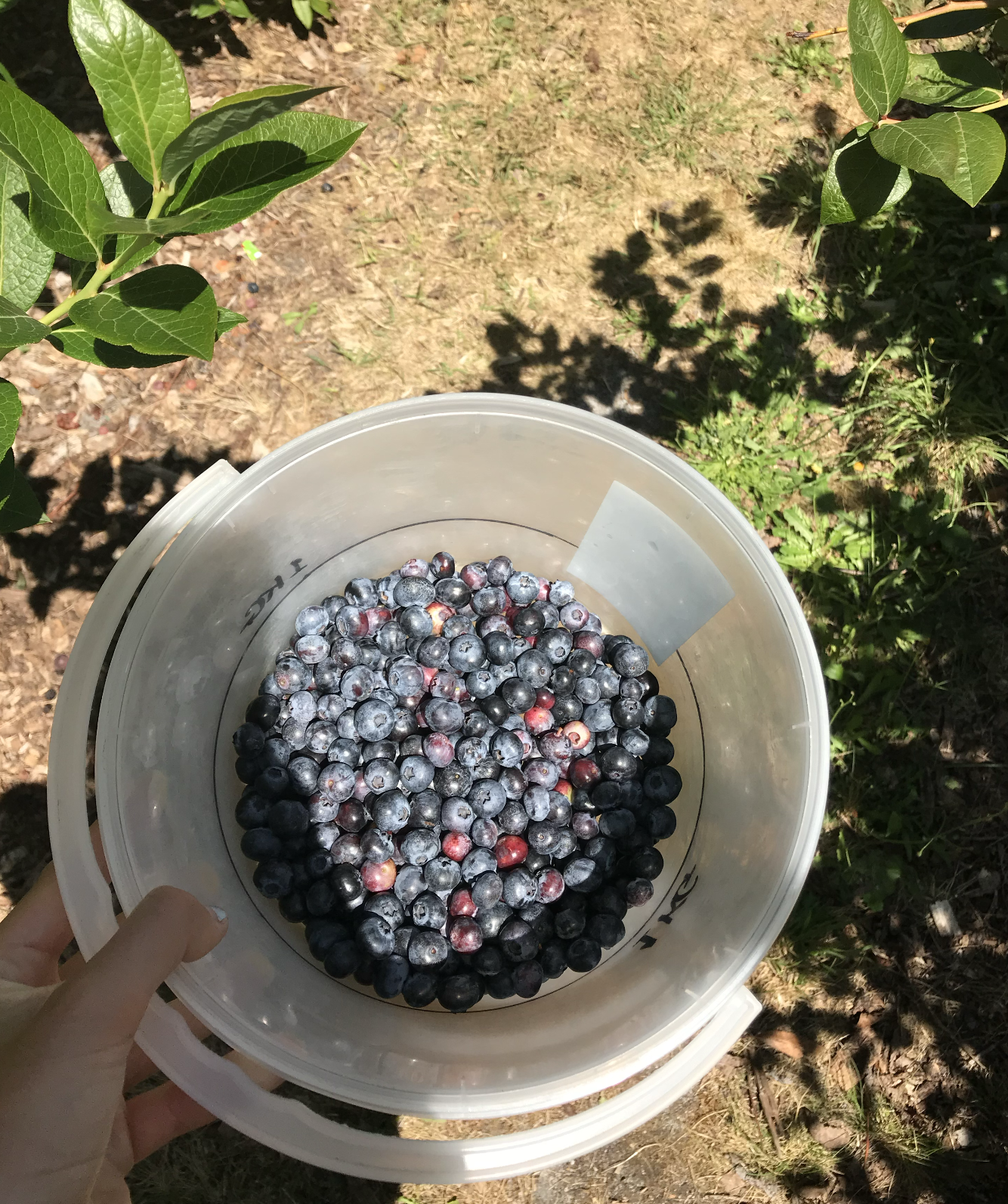
Harvesting Blueberries in Tasmania
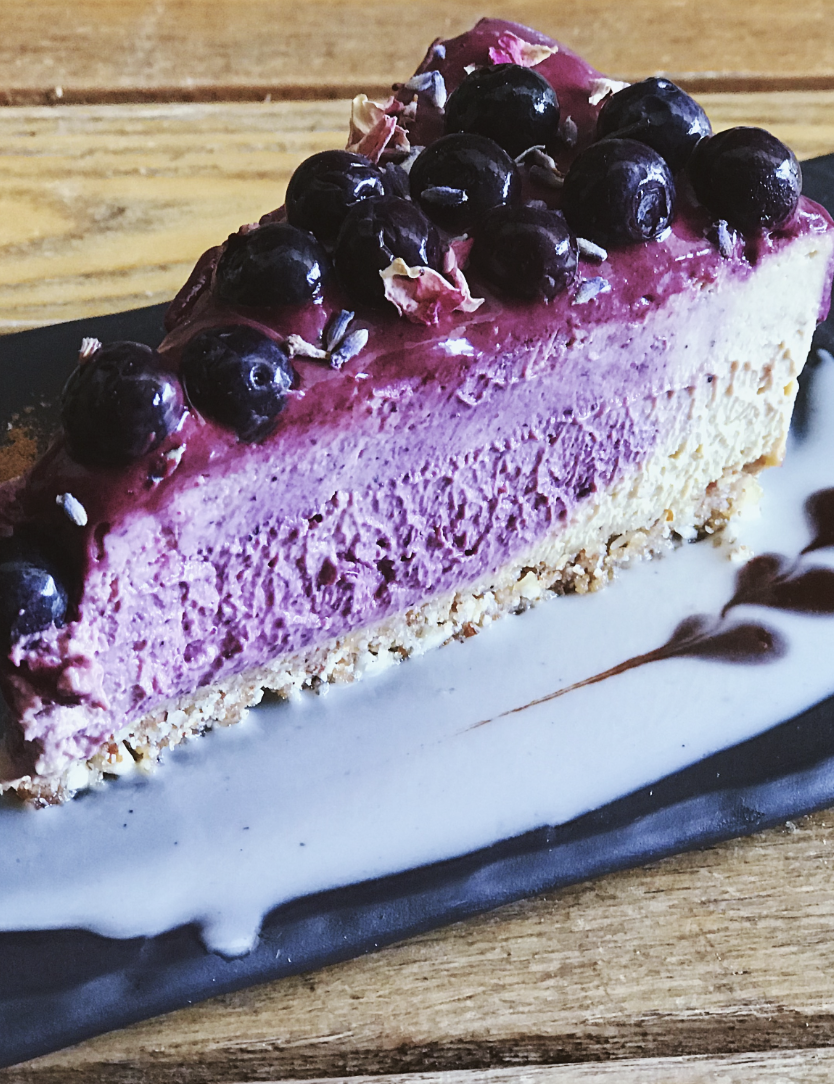
Raw Blueberry Cheesecake featured from Earth To Table Sydney, Australia
A no-bake, refined-sugar-free cheesecake built on a nut-and-date crust with a creamy citrus filling and a vibrant blueberry-chia jam top layer. Two unified versions in one recipe: a raw dairy-free cashew-based version and a raw dairy version made with grass-fed cream cheese for those who tolerate raw dairy beautifully. Both grain-free; both stunning on a summer table.
Yield: 10–12 slices (one 8-inch springform) · Active: 30 min · Total: 3 hr 30 min (mostly freezing) · Summer (peak blueberry season: June–August) · Cuisine: Grain-free, ancestral baking
A note from the kitchen
Cheesecake is one of those desserts that the conventional bakery has structurally ruined — cream cheese full of stabilizers and gums, refined sugar, industrial graham-cracker crusts, and a baking technique that requires a water bath and an hour of careful temperature management. This is the same dessert, rebuilt entirely.
The crust is a nut-and-date dough — pulsed in a food processor for ninety seconds, pressed into a springform pan, and set in the freezer while you make the filling. The filling is silky and creamy, citrus-bright, gently sweetened with raw honey or pure maple syrup. The top is a chia-thickened blueberry jam that holds its shape beautifully when sliced.
Two paths through this recipe, depending on how your body responds to dairy:
The raw dairy-free version uses soaked cashews as the base — the technique most plant-based raw cheesecakes rely on. Silky, neutral, citrus-forward. Requires 4+ hours soaking time for the cashews.
The raw dairy version uses grass-fed cream cheese (raw if you have access; minimally-pasteurized otherwise) without cashews — the cream cheese alone provides the body and structure. Richer, tangier, structurally more like the cheesecake you grew up with, but made with real ingredients your body recognizes. Faster too: no soaking required, so you can start the recipe and have it in the freezer within thirty minutes.
Both versions are no-bake, gluten-free, grain-free, refined-sugar-free. Both need three hours in the freezer before serving. Make either when blueberries are at their peak in summer.
Ingredients
For the crust (works for both versions):
1 cup raw pecans (or substitute raw hazelnuts or raw almonds)
1 cup almond flour (finely-ground, blanched)
4–6 pitted Medjool dates (soft, sticky, fresh)
2 tbsp unrefined coconut oil (melted)
1 tsp ground cinnamon
¼ tsp sea salt
½ tsp pure vanilla extract (optional)
For the filling — RAW DAIRY-FREE VERSION:
2 cups raw cashews, soaked in cold filtered water for at least 4 hours or preferably overnight
½ cup full-fat coconut milk (canned, shaken well)
¼ cup unrefined coconut oil, melted and cooled
⅓ cup raw honey OR pure maple syrup (Grade A Dark Robust)
2 tbsp fresh lemon juice
1 tsp finely grated lemon zest
1 tbsp pure vanilla extract (or ½ tsp vanilla bean powder)
¼ tsp sea salt
For the filling — RAW DAIRY VERSION (with grass-fed cream cheese, no cashews):
16 oz (2 cups) grass-fed cream cheese, fully softened to room temperature (raw if available — see sourcing)
⅓ cup raw heavy cream OR full-fat coconut milk (canned, shaken well)
3 tbsp grass-fed butter OR unrefined coconut oil, melted and cooled
⅓ cup + 1 tbsp raw honey OR pure maple syrup (Grade A Dark Robust)
2 tbsp fresh lemon juice
1½ tsp finely grated lemon zest
1 tsp pure vanilla extract
¼ tsp sea salt
For the blueberry-chia jam top layer (works for both versions):
1½ cups fresh or frozen wild blueberries (thawed if frozen)
1 tbsp fresh lemon juice
1 tbsp chia seeds
1–2 tsp raw honey (optional, only if your berries aren't deeply ripe)
For finishing:
Fresh blueberries (a small handful for the top)
Fresh lemon zest
Fresh mint leaves (optional)
Edible flowers (optional — chamomile, calendula, rose petals)
Method
Soak the cashews (raw dairy-free version only). At least 4 hours ahead (or the night before), place the cashews in a bowl and cover generously with cold filtered water. Soaking softens the cashews so they blend silky-smooth and helps deactivate the natural enzyme inhibitors. Drain and rinse before using. (Skip this step entirely if you're making the raw dairy version.)
Soften the cream cheese (raw dairy version only). Remove the grass-fed cream cheese from the refrigerator at least 1 hour before starting. It must be fully softened to room temperature — cold cream cheese will leave lumps in the filling that won't smooth out, no matter how long you blend.
Prep the pan. Grease an 8-inch springform pan with coconut oil. For easier release, line the bottom with a circle of parchment paper, and line the sides with strips of parchment paper that extend slightly above the rim.
Make the crust. Add the pecans, almond flour, pitted dates, melted coconut oil, cinnamon, sea salt, and optional vanilla to a food processor. Pulse 20–30 times, then process in short bursts until the mixture comes together into a sticky dough with small visible nut pieces. Don't over-process or you'll turn it into nut butter — you want texture.
Press the crust into the pan. Transfer the dough to the prepared springform pan. Using slightly damp fingers or the back of a spoon, press the dough into an even layer across the bottom of the pan. Press firmly so it holds together when sliced. Place the pan in the freezer while you make the filling.
Make the filling — choose your version:
Raw dairy-free version: Drain and rinse the soaked cashews. Add them to a high-powered blender along with the coconut milk, melted coconut oil, honey or maple syrup, lemon juice, lemon zest, vanilla, and sea salt. Blend on high for 1–2 minutes, scraping down the sides as needed, until the mixture is completely silky-smooth and creamy with no graininess. Taste and adjust — more lemon juice for tartness, more honey for sweetness, more salt to deepen the flavor.
Raw dairy version (no cashews): Add the softened cream cheese, raw heavy cream (or coconut milk), melted butter (or coconut oil), honey or maple syrup, lemon juice, lemon zest, vanilla, and sea salt to a food processor or stand mixer with the paddle attachment. (A high-powered blender works too but is less ideal for cream cheese — it can overwork and turn the filling gummy.) Blend on medium speed for 45–60 seconds, scraping down the sides at least once, until completely smooth and creamy with no lumps. Don't overblend — cream cheese can curdle or break if processed too long. Taste and adjust.
Pour the filling over the crust. Remove the springform pan from the freezer. Pour the filling slowly over the crust, smoothing the top with an offset spatula. Tap the pan firmly against the counter 3–4 times to release any air bubbles. Return to the freezer for at least 1 hour to set partially before adding the blueberry layer.
Make the blueberry-chia jam. While the cheesecake firms up, rinse out the blender or food processor. Add the blueberries, lemon juice, chia seeds, and optional honey. Blend on medium speed for 30–45 seconds, until mostly smooth but still with some visible berry texture. Let the jam sit at room temperature for 10–15 minutes to allow the chia seeds to thicken.
Add the blueberry layer. Once the cheesecake filling has set partially (about 1 hour), remove the pan from the freezer. Pour the blueberry-chia jam evenly over the top of the cheesecake. Smooth gently with a spatula. Return to the freezer.
Freeze until firm. Total freezing time should be at least 3 hours from start to slice, or until the cheesecake is completely firm to the touch. The dairy version sets slightly faster than the dairy-free version because the cream cheese firms up quickly once chilled — start checking at 2½ hours.
Slice and serve. Remove the cheesecake from the freezer 10–15 minutes before serving to soften slightly. Run a sharp knife under hot water, dry it off, and slice the cheesecake into wedges, wiping the knife between each cut. The hot knife creates clean slices through the firm filling.
Finish. Top each slice with a few fresh blueberries, a small grating of lemon zest, a few fresh mint leaves, and optional edible flowers. Serve immediately while still cold and firm.
Variations
Mixed berry version: Substitute the blueberry jam top with a mixture of fresh blueberries, raspberries, blackberries, and sliced strawberries. Use the same chia-thickening technique with whatever berry combination is at peak season.
Layered jam top: Make a thin layer of blueberry-chia jam first, freeze 30 minutes, then top with a second layer of raspberry-chia jam for a two-toned visual effect.
Lemon-forward (more citrus-bright): Double the lemon zest and add an extra tablespoon of lemon juice to the filling. Bright, summery, almost lemon-meringue-pie in feeling.
Cacao butter version (for a firmer, more candy-like texture): Replace the coconut oil in the filling with ½ cup melted food-grade cacao butter. The cacao butter sets harder than coconut oil and gives the cheesecake a denser, almost chocolate-truffle texture. Works for either the dairy or dairy-free version.
Vanilla-forward (cleaner flavor): Skip the lemon altogether. Use 1½ tbsp pure vanilla extract or 1 tsp vanilla bean powder. Top with sliced fresh figs and raw honey instead of blueberry jam.
Cinnamon-chai variation: Add 1 tsp ground cinnamon, ½ tsp ground cardamom, ¼ tsp ground ginger, and a pinch of ground clove to the filling. Top with sliced fresh apples or pears instead of blueberries. Beautiful for autumn-winter.
Different berry top: Substitute the blueberries with raspberries, blackberries, strawberries, or wild huckleberries — whatever is at peak ripeness.
Mini cheesecakes: Press the crust into the bottoms of 12 muffin tins lined with parchment paper liners. Divide filling and jam evenly. Freeze 2 hours. Makes individual portions perfect for a brunch board or picnic.
Larger cheesecake: For a 9-inch or 10-inch springform pan, increase the crust to 1½ cups pecans + 1½ cups almond flour + 7–9 dates, and increase the filling by 50%. Increase freezing time to 4–5 hours.
Quick Sourcing
The rule throughout: lead with what to look for, not what brand to buy. The best version of any ingredient comes from a producer you know personally — a local grower, beekeeper, dairy farmer, or maple-syrup producer whose name you can speak.
Raw cashews (for the dairy-free version): What to look for:
Truly raw — not "raw" cashews that have actually been steam-processed (which is most commercial "raw" cashews). True raw cashews are difficult to find since the outer shell contains a caustic resin that requires heat removal. "Raw" in this context generally means low-temperature processed.
Organic when possible — cashew farming is heavily chemical-intensive conventionally.
Whole, unbroken — pieces oxidize faster and have less life force.
From a single-origin producer when possible — fair-trade cashews from Vietnam, India, or Ivory Coast.
Smell test: should smell sweet and creamy, never musty or rancid.
Refrigerate or freeze once opened — cashews go rancid faster than people realize.
Avoid "roasted cashews" or "salted cashews" for this recipe — you need raw for the creamy texture.
Almond flour: What to look for:
Finely-ground, blanched (not almond meal — which is coarser and contains the skins, structurally different).
Organic when possible — almonds are a heavily-sprayed crop conventionally.
Recently milled — almond flour goes rancid fast. Smell test: should smell sweet and faintly nutty, never musty or bitter.
Stored cool in the refrigerator or freezer once opened.
Avoid pre-mixed "almond flour blends" with added starches, gums, or fillers.
Raw pecans (or hazelnuts/almonds for the crust): What to look for:
Raw and unsalted.
Whole, not pieces — pieces oxidize faster.
Organic when possible.
Recently harvested — smell test: should smell sweet and faintly grassy, never musty or stale.
For pecans specifically: deep amber color indicates higher tannin and antioxidant content. Pale pecans are typically older.
Refrigerate or freeze once opened.
Medjool dates: What to look for:
Soft, plump, slightly wrinkled, dark mahogany-brown color — these are the structural indicators of fresh, properly-stored dates.
Sticky to the touch (not dry or hard).
Organic when possible — dates concentrate pesticide residues if grown conventionally.
Whole dates with the pit still in are typically fresher than pre-pitted (less surface exposure to air).
Refrigerate to extend shelf life.
Avoid commercial "baking dates" (often deglet noor variety — drier, less sweet, structurally different from Medjool).
Grass-fed cream cheese (for the dairy version): What to look for:
From cows on pasture year-round when possible.
Raw if available where it's legally sold, or minimally-pasteurized otherwise.
The shortest possible ingredient list — ideally just cultured cream and salt. Sometimes a small amount of guar gum or carob bean gum is acceptable; avoid those with multiple gums, stabilizers, modified starches, or "natural flavors."
Full-fat (never low-fat or fat-free — these are stripped of the fat-soluble vitamins and structurally different from real cream cheese).
From a small local creamery or grass-fed dairy when possible — ask at the farmers' market or local cheesemonger.
Avoid commercial block cream cheese with stabilizers, gums, and corn-fed dairy.
Raw heavy cream (alternative to coconut milk in the dairy version): What to look for:
Raw from grass-fed cows, available through state-legal raw milk sources, herd-share programs, or licensed raw dairy producers.
If raw isn't accessible: minimally-pasteurized (vat-pasteurized) grass-fed heavy cream. Never ultra-pasteurized (the high heat destroys the enzymes and proteins).
Deep yellow tint — the visual indicator of grass-fed dairy (yellow comes from beta-carotene in fresh grass).
Look for "cream line" milk where available — the cream rises to the top naturally rather than being homogenized in.
Grass-fed butter (alternative to coconut oil in the dairy version): What to look for:
From cows on pasture year-round when possible.
Cultured (fermented before churning) for the deepest flavor — but uncultured works too.
Deep yellow color — the visual indicator of grass-fed butter (yellow comes from beta-carotene in fresh grass; pale white butter indicates grain-fed cows).
High butterfat percentage (84%+ is European-style; 80% is standard American).
A small local farm or creamery you know is the gold standard.
Avoid commercial supermarket butter from confined-feedlot dairies.
Unrefined coconut oil: What to look for:
Virgin or extra-virgin, cold-pressed, unrefined — these terms indicate minimal processing.
Organic when possible.
In a glass jar (not plastic — coconut oil pulls phthalates and other chemicals from plastic packaging).
Should smell distinctly of coconut. "Refined coconut oil" is processed to remove the coconut flavor and aroma — it's an option if you don't want coconut flavor in the filling, but it's structurally less ancestral than unrefined.
Solid at room temperature below 76°F; liquid above.
Full-fat coconut milk: What to look for:
Full-fat coconut milk in BPA-free cans or glass jars (BPA-free is important since coconut milk's fat content pulls plastics from the lining).
The shortest possible ingredient list — ideally just coconut and water, or coconut, water, and a small amount of guar gum (acceptable but not ideal).
Avoid coconut milk with carrageenan, gellan gum, polysorbate 80, or "natural flavors."
Cartons of "coconut beverage" are not coconut milk — they're heavily diluted, sweetened, and structurally different from canned coconut milk.
Fresh or frozen wild blueberries: What to look for:
Wild blueberries (smaller, darker, more intensely flavored) over commercial cultivated highbush blueberries when available — wild blueberries have dramatically higher antioxidant content (anthocyanins, polyphenols) and a more concentrated flavor.
Local farmers' market or wild-foraged during peak season (June–August depending on region).
Deep blue-purple color with a visible silver-white bloom (the natural dusty coating is a sign of freshness — washing removes it, so wash just before using).
Plump, firm berries (not shriveled or leaking juice).
Organic when possible — blueberries are on the Dirty Dozen list for pesticide residue.
Frozen wild blueberries (Maine-grown is the U.S. gold standard) are an excellent off-season option — equally nutrient-dense and often more affordable than fresh.
Raw honey: What to look for:
Raw, unfiltered, and unheated (high heat destroys the enzymes and pollen that make raw honey medicinal).
Beeswax-capped or with visible pollen in the jar — signs of minimal processing.
From a local beekeeper at the farmers' market is the gold standard. Local honey carries pollen from your immediate region, which supports seasonal allergen adaptation.
Crystallization is normal and a sign of real raw honey — gentle warming in a hot water bath returns it to liquid. Never microwave raw honey: microwave heating destroys the enzymes, structured water, and pollen compounds that make raw honey medicinal in the first place.
Avoid commercial supermarket honey labeled only "honey" — much of it has been ultra-filtered to remove pollen (so origin can't be traced) and may be cut with corn syrup.
Pure maple syrup: What to look for:
100% pure maple syrup — the only ingredient on the label should be "maple syrup."
Grade A Dark or Grade A Very Dark (Robust or Strong flavor) — these have deeper maple flavor and slightly higher mineral content than the lighter grades.
From a small producer or sugar shack you can trace — Vermont, New Hampshire, Maine, upstate New York, Wisconsin, Quebec, or local farmers' market vendors during sugaring season (February–April).
In a glass bottle when possible.
Refrigerate after opening.
Avoid "pancake syrup" or "maple-flavored syrup" — these are corn syrup with artificial flavoring.
Cacao butter (for the variation): What to look for:
Food-grade, raw, unrefined cacao butter.
Organic and fair-trade when possible — cacao supply chains have historical labor issues.
Single-origin (Ecuador, Peru, Ivory Coast, Dominican Republic) for traceability.
Pale ivory-yellow color, with a faintly chocolate-cocoa aroma.
Avoid deodorized cacao butter (used for cosmetics — structurally less ancestral) and "cocoa butter" used industrially.
Lemons: What to look for:
Organic and unwaxed — since you're using the zest, you want the peel free of pesticides and food-grade wax.
Heavy for their size with thin, smooth skin — heavier lemons have more juice.
Freshly squeezed juice always over bottled (bottled lemon juice contains preservatives and has lost most of its volatile aromatics).
Meyer lemons (sweeter, more floral) are a beautiful alternative when in season.
Pure vanilla extract: What to look for:
"Pure vanilla extract" — never "imitation vanilla" or "vanilla flavoring."
Madagascar Bourbon vanilla beans are the classic for cheesecake — rich, deep, classic vanilla flavor.
In a dark glass bottle.
Alcohol-free glycerin-based vanilla extract is an option for those avoiding alcohol entirely (the alcohol in standard extract evaporates quickly in no-bake desserts but doesn't fully burn off).
Chia seeds: What to look for:
Organic when possible.
Black or white chia — both are structurally equivalent.
Recently harvested — smell test: should be neutral, never musty or rancid.
Stored cool in a sealed glass container.
Sea salt: What to look for:
Unrefined, solar-dried or hand-harvested. No anti-caking agents, no bleaching, no chemical processing.
Naturally moist — this is the visual indicator of preserved minerals.
Lower sodium content (under 35% sodium chloride) — mineral-rich sea salts have lower sodium and higher trace mineral content than refined varieties.
For this recipe: a fine-grain unrefined sea salt — Baja Gold mineral sea salt (third-party tested at 29.5–31.5% sodium, harvested from the Sea of Cortez, solar-dried) or any equivalent mineral-rich sea salt.
Avoid iodized table salt, kosher salt (no mineral content), and mass-produced "Pink Himalayan" (often counterfeited and dyed).
Cinnamon: What to look for:
Ceylon cinnamon (also called "true cinnamon") over cassia cinnamon — Ceylon has a more delicate flavor and dramatically lower coumarin content (cassia contains compounds that can stress the liver in high doses).
Single-origin and organic when possible.
Freshly ground when possible.
Avoid pre-ground spices that have been sitting in pantries for years — they lose potency quickly.
Storage
Freezer: Up to 2 weeks, well-sealed in a glass container or wrapped in beeswax wrap. The cheesecake keeps its structure beautifully and is genuinely better when stored frozen — the flavors meld and the texture becomes more cohesive.
Refrigerator: Once thawed, refrigerate 3 days, sealed.
Slicing tip: Always slice from frozen, running your knife under hot water and drying it off between each cut.
For traveling or gifting: Slice the frozen cheesecake into individual portions, wrap each in parchment paper, and place in a freezer-safe container. Perfect for a picnic, beach day, or potluck — the slices thaw in 10–15 minutes at room temperature.
Pairs Well With
For the table: A cup of strong herbal tea (chamomile, rooibos, lavender, lemon balm, peppermint) complements the citrus-and-berry brightness beautifully. For something colder, sparkling water with a slice of lemon and a few fresh blueberries muddled in, fresh-pressed lemonade with mint, or a small glass of homemade lemon-blueberry kombucha.
For a complete summer dessert experience: Serve alongside a small bowl of fresh whole blueberries, a drizzle of raw honey, and a few mint leaves. The textures complement — creamy frozen cheesecake against fresh, snapping berries.
For brunch: This cheesecake works beautifully as a dessert at a summer brunch — serve alongside soft-boiled eggs, fresh fruit, raw goat or sheep yogurt with raw honey, and a strong cup of matcha or pour-over coffee. The cheesecake becomes the gentle sweet ending to a savory-forward meal.
For the gathering: This is a centerpiece dessert. Make it ahead, store in the freezer, slice and finish just before serving. Beautiful for summer dinner parties, garden gatherings, birthdays, or any occasion where you want something dramatic but not heavy.
Why This Cheesecake
The conventional supermarket cheesecake has structurally become something the body doesn't recognize as food — refined sugar (often 1+ cups per recipe), industrial cream cheese full of stabilizers and gums, processed graham-cracker crusts with hydrogenated oils, and a baking technique that requires precise temperature management to avoid the cake cracking, sinking, or weeping.
This is the same beloved dessert, rebuilt entirely. Real soaked cashews (or real grass-fed raw cream cheese) for body and creaminess. Real raw honey or pure maple syrup for gentle sweetness. Real fresh lemon for brightness. Real wild blueberries for color, antioxidants, and flavor. Real chia seeds to thicken the jam without commercial pectin or gelatin. A real nut-and-date crust pressed into a real springform pan. No baking required, no water bath, no temperature management.
Make it once in summer when blueberries are at their peak — wild blueberries if you can find them. Make it for a dinner party, a birthday, a hot evening when you want dessert but don't want to turn on the oven. Make either version, depending on how your body responds to raw dairy and/or nuts. Both honor what cheesecake is meant to be at its most ancestral: cream, fat, fruit, gentle sweetness, served cold on a warm day.
Honor the ingredients. The rest takes care of itself.
— Anna aka Food Marshall