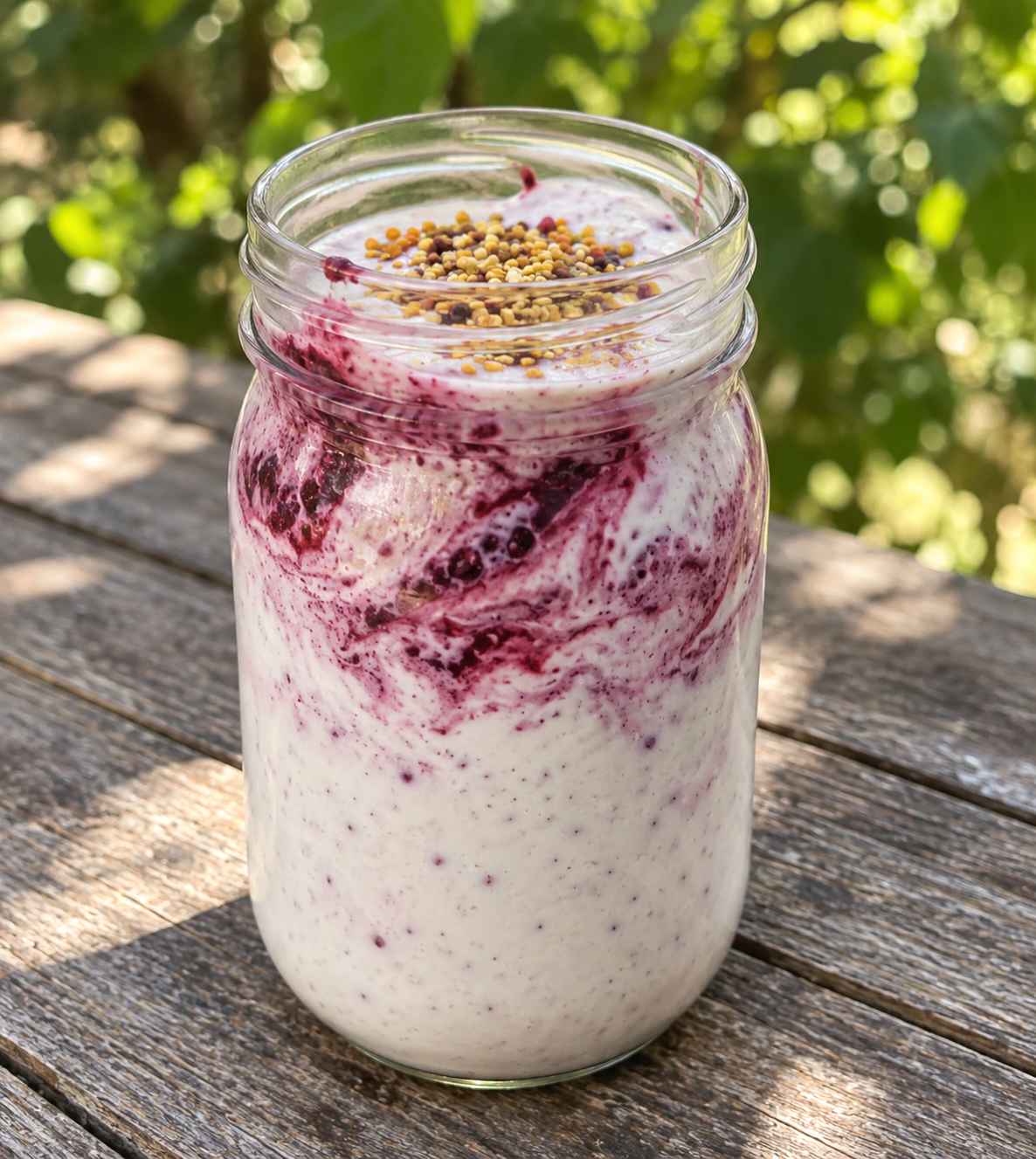
raw Kefir Smoothie RECIPES with fruit, collagen, and superfoods
About Raw Milk Kefir: The Living Daily Ferment
Before we get to the recipes, let's talk about the star ingredient.
What Raw Milk Kefir Actually Is
Raw milk kefir is one of the oldest continuously prepared fermented foods in human history. Originating in the Caucasus mountains between the Black and Caspian Seas thousands of years ago, kefir was traditionally made by nomadic mountain peoples who fermented fresh raw milk in leather pouches carried against their bodies. The natural warmth cultured the milk into a tangy, effervescent, deeply nourishing daily food that supported longevity, digestion, and immune function.
Kefir grains are the fermentation culture — not literal grains, but small gelatinous clumps that resemble tiny cauliflower florets. The grains are a living symbiotic culture of bacteria and yeasts (SCOBY) — up to 60 different species of Lactobacillus, Lactococcus, Streptococcus, Leuconostoc, and beneficial yeasts (Saccharomyces, Kluyveromyces, Candida) working together in one microbial community. This is meaningfully more diverse than yogurt's typical 2-5 strains or commercial probiotic supplements with 8-15 strains.
When raw milk is added to kefir grains and left to ferment at room temperature for 24-48 hours, the microbes consume the lactose and produce a wide spectrum of bioactive compounds — organic acids, short-chain fatty acids, B vitamins, K2, bacteriocins (natural antimicrobials), and postbiotic metabolites. The result is a slightly tart, gently effervescent, cultured milk that's meaningfully more nutritionally complex than the raw milk it started as.
The Documented Benefits of Raw Kefir
Gut microbiome diversity: Delivers 30-60+ live probiotic strains (compared to yogurt's 2-5 or commercial probiotic supplements with 8-15) Supports the estrobolome — the gut bacteria that metabolize estrogen (particularly important for women) Colonizes the gut more effectively than pasteurized probiotic products (live wild cultures survive digestion better) Produces bacteriocins (natural antimicrobials) that help balance gut flora against opportunistic pathogens.
Digestive support:
Lactose is largely broken down during fermentation — most people who don't tolerate milk digest kefir comfortably
Live enzymes support the digestion of proteins, fats, and remaining carbohydrates
Traditional across Eastern European cultures as a remedy for digestive complaints
Supports the intestinal barrier through short-chain fatty acid production
Immune modulation:
The diverse probiotic strains modulate immune response — supporting both anti-inflammatory pathways and appropriate immune activation
Historically used across Russian and Caucasus medicine for tuberculosis, chronic infections, and post-surgical recovery
Modern research shows measurable improvements in immune markers
Bone density:
Delivers bioavailable calcium, vitamin K2 (essential for calcium metabolism), and vitamin D (in whole raw milk versions)
The lactic acid enhances calcium absorption compared to plain milk
Traditional Caucasus diets rich in kefir have been studied for exceptional longevity and low osteoporosis rates
Blood sugar support:
The lactic acid and acetic acid produced during fermentation improve insulin sensitivity
Clinical studies show measurable improvements in fasting blood sugar and HbA1c with regular kefir consumption
Mental health and mood:
The gut-brain axis is meaningfully supported by kefir's diverse strains
Some research shows benefits for anxiety, depression, and cognitive function
The tryptophan content plus the microbial support of serotonin production may contribute
Anti-inflammatory effects:
Bioactive peptides produced during fermentation have documented anti-inflammatory properties
Traditional across cultures as a food for post-illness recovery and chronic inflammatory conditions
Skin health:
Traditional across Russian and Eastern European folk medicine for eczema, psoriasis, and rosacea
The gut-skin axis benefits from the diverse microbial support
Longevity connection:
Caucasus populations known for exceptional longevity historically consumed kefir daily as a foundational food
The combination of gut microbiome support, mineral density, K2, and bioactive peptides delivers a compounding longevity effect
Cycle support for women:
The estrobolome benefits meaningfully from kefir's diverse strains
Supports Phase 2 liver detoxification of hormones
Traditional across women's health folk practices as restorative during menstruation and postpartum
Where to Source Raw Milk for Kefir
Raw milk is legally available in over 30 U.S. states through direct-from-farm sales, herdshare programs, or retail. Regulations vary by state, but access is expanding as consumer demand grows.
Trusted sourcing options:
Local Amish and Mennonite farms — Amish communities across Pennsylvania, Ohio, Indiana, Iowa, Wisconsin, and other states often produce exceptional raw milk from small-herd, pasture-based operations. Many communities allow herdshare arrangements or direct farm-gate sales. Check with local Amish farmers' markets, cheese counters, or Amish community bulletin boards. Amish dairy is often produced with heritage-breed cows (Jersey, Guernsey, Ayrshire) with meaningfully higher fat content and richer nutritional profile.
Raw Farm USA — one of the largest legal raw milk producers in California, with wide retail distribution across the state and increasingly available through shipping in some other states. Look for their raw whole milk at natural grocers or through their online ordering system. Their standards include grass-fed, pasture-raised, and rigorous testing protocols. This is often the most accessible option for California residents.
Local farmers' markets and CSAs — many small dairy farms sell raw milk directly through farmers' markets, CSA shares, or on-farm pickup. Look for farmers who are transparent about their herd health, feed practices, and testing protocols.
Herdshare programs — in states where retail raw milk sales are restricted, herdshare programs allow you to purchase a "share" of a cow or goat and legally receive raw milk from that animal. Search your state's specific regulations and local farm directories.
Real Milk directory (realmilk.com) — the definitive online resource for finding legal raw milk sources near you. Maintained by the Weston A. Price Foundation, this directory lists producers by state with contact information, testing protocols, and product details. This is honestly the first place to check for any reader looking to source raw milk in their area.
Weston A. Price Foundation resources (westonaprice.org) — beyond the Real Milk directory, WAPF provides extensive education on raw milk safety, sourcing, and legal information. Their local chapters can often connect you with trusted local producers.
Homestead and small family farms — if you live in a rural area, direct farm relationships often produce the highest quality raw milk. Look for farmers who are transparent about their practices, welcome farm visits, and rotate their cows to fresh pasture regularly.
If Raw Milk Isn't Legally Available in Your Area
If you can't legally source raw milk locally, these are the best substitutes ranked from best to acceptable:
Low-temperature vat-pasteurized organic whole milk — pasteurized at 145°F for 30 minutes (the traditional method that preserves more enzymes and nutrients than high-temperature pasteurization). Look for producers like Kalona SuperNatural or small local dairies that specify vat-pasteurization
Standard-pasteurized organic grass-fed whole milk — not ideal but workable. Kalona SuperNatural, Organic Valley Grassmilk, or Maple Hill are quality accessible options
Avoid ultra-pasteurized milk (UHT) — treated at 280°F, meaningfully destroys enzymes, denatures proteins, and produces a milk that ferments poorly
Homemade kefir from grass-fed pasteurized milk — still meaningfully better than commercial kefir products, even if not raw
How to Make Raw Milk Kefir at Home
Home kefir-making is honestly one of the simplest fermentation projects — no special equipment beyond a glass jar and a plastic strainer needed. Once you have live kefir grains, they multiply and last indefinitely with proper care.
What you'll need:
Live milk kefir grains (about 1-2 tablespoons)
1 quart glass mason jar with a loose lid (or breathable cloth cover secured with a rubber band)
2-4 cups raw milk (or low-temp pasteurized organic whole milk)
Plastic or wooden strainer (avoid metal, which can damage the grains)
Storage jar for finished kefir
Method:
Combine. Place kefir grains in a clean glass mason jar. Pour raw milk over the grains (aim for about 1 tablespoon of grains per 2 cups of milk).
Ferment. Cover with a loose lid or breathable cloth. Leave at room temperature (68-72°F is ideal) for 18-48 hours.
Watch for signs of readiness. The kefir is ready when:
The milk has thickened and slightly separated
The liquid has a tangy, slightly effervescent aroma
Small pockets of whey may separate at the bottom
The texture is like drinkable yogurt or thin buttermilk
Strain. Using a plastic or wooden strainer over a clean bowl, gently pour the kefir through. Use a plastic or wooden spoon to encourage the kefir through the strainer without damaging the grains.
Store the finished kefir. Transfer to a clean glass jar with a tight lid. Refrigerate. Consume within 5-7 days for peak nutritional value.
Start the next batch. Place the strained kefir grains back in the mason jar with fresh milk. The grains grow slowly over time — you can gift excess grains to friends or use them to make second-ferment kefirs, water kefir, or add to compost for exceptional soil health.
Tips for successful home kefir:
Temperature matters. Kefir grains ferment fastest at 68-75°F. In cooler temperatures, fermentation takes longer (up to 48 hours). In warmer temperatures, it's faster (as little as 12 hours).
Longer fermentation = more tang and less lactose. If you're lactose sensitive, ferment for the full 48 hours. If you prefer milder flavor, ferment for 18-24 hours.
Don't use metal utensils or containers. Metals can damage the microbial cultures over time. Stick to glass, wood, plastic, or ceramic.
The grains grow over time. Every 2-4 weeks, you'll have more grains than you need. Excess grains can be gifted, dried for storage, or added to a compost pile.
If the grains stop working, it's usually because they were exposed to metal, temperature extremes, or chlorinated water. Rinse gently with filtered water and try a fresh batch.
Where to source live kefir grains:
Cultures for Health (culturesforhealth.com) — reliable online source for dehydrated kefir grains that revive quickly with fresh milk
Fusion Teas or Fermented Food Lab — online sources for live active kefir grains shipped in nutrient milk
Local fermentation communities — Weston A. Price Foundation chapters, homesteading groups, and local fermentation classes often have members who share grains for free or trade
Facebook groups and homesteading forums — the fermentation community is generous, and grains are often shared or sold at nominal cost
Etsy — many small producers sell live kefir grains through Etsy shops
A friend who already makes kefir — the best source is a fellow home fermenter whose grains you can visually inspect first
Yogurt vs. Kefir: Why Kefir Is Superior
Both yogurt and kefir are fermented dairy foods, and both deliver real nutritional value. But kefir is meaningfully more powerful for several reasons:
Strain diversity:
Yogurt typically contains 2-5 strains of bacteria (usually just Lactobacillus bulgaricus and Streptococcus thermophilus, plus maybe a few added strains)
Kefir contains 30-60+ strains of bacteria and yeasts working symbiotically
This diversity is meaningful — different strains support different functions, and true microbiome health depends on diverse populations rather than concentrated single strains
Yeast content:
Yogurt contains no beneficial yeasts
Kefir contains multiple beneficial yeasts (Saccharomyces kefir, Kluyveromyces, others) that produce natural bioactive compounds not available in yogurt
These yeasts support gut ecology in ways bacteria alone cannot
Colonizing power:
Yogurt's bacteria are largely "transient" — they pass through without permanently colonizing the gut
Kefir's strains have been shown to colonize the gut more effectively, potentially establishing themselves as part of the resident microbiome
This meaningfully affects long-term gut health
Lactose reduction:
Yogurt fermentation reduces lactose by about 30-50%
Kefir fermentation reduces lactose by 60-99% (depending on fermentation time)
Many people who can't tolerate yogurt can tolerate kefir comfortably
Postbiotic compounds:
Kefir's fermentation produces bacteriocins (natural antimicrobial peptides), organic acids, and short-chain fatty acids at meaningfully higher concentrations
Yogurt produces these compounds but at lower concentrations and less diverse profiles
Traditional preparation:
Yogurt requires temperature-controlled fermentation (around 110°F)
Kefir ferments at room temperature — no equipment beyond a glass jar needed
This makes kefir more accessible for home fermentation and reflects the ancient nomadic origin of the tradition
Effervescence and bioactive compounds:
The yeasts in kefir produce mild carbonation and unique bioactive peptides not present in yogurt
This includes kefir-specific compounds (kefiran, a polysaccharide with documented immune-modulating effects) that yogurt doesn't produce
Substituting yogurt in the smoothies:
If raw kefir isn't available, whole-milk grass-fed yogurt (Bulgarian, Greek-style, sheep, or goat) is honestly the best substitute — it delivers many of the same benefits, just less powerfully. Ideal substitutes:
Bellwether Farms sheep yogurt — A2 casein, exceptional nutritional profile
Redwood Hill Farm goat yogurt — A2 casein, tangy
Maple Hill grass-fed cow yogurt — widely accessible
Homemade yogurt from raw milk — meaningfully better than commercial yogurt
But if you can source raw kefir or make it yourself, kefir is honestly the superior choice.
For a deeper exploration of raw milk kefir's history, science, my personal daily practice, and detailed fermentation methods, please visit my full blog post: Raw Milk Kefir: A Living Daily Ferment
Adding Grass-Fed Collagen and Creatine Monohydrate to Your Smoothie
Both are increasingly researched, deeply beneficial for both men and women, and dissolve into raw kefir smoothies without changing flavor or texture, making these recipes ideal delivery vehicles.
Grass-Fed Collagen Peptides — Benefits and Sourcing
Grass-fed collagen peptides deliver hydrolyzed collagen protein — the most abundant protein in the human body, making up about 30% of total protein content. Collagen forms the structural foundation of skin, hair, nails, joints, tendons, ligaments, bones, gut lining, and blood vessels. As we age, natural collagen production begins declining meaningfully in our mid-20s and drops about 1-1.5% per year — one of the primary drivers of visible aging and joint deterioration.
Documented benefits from clinical research:
Skin elasticity and hydration — multiple randomized controlled trials show measurable improvements in skin elasticity, hydration, and reduction of fine lines after 4-12 weeks of daily supplementation (10-20g/day)
Joint pain reduction — clinical studies on athletes and patients with osteoarthritis show meaningful reduction in joint pain and improved function
Gut lining support — the amino acids glycine, proline, and hydroxyproline directly support the intestinal barrier and can help repair leaky gut
Hair and nail growth — clinical trials show measurable improvements in hair thickness and nail growth rate
Bone density — postmenopausal women in randomized trials showed increased bone mineral density with 5g/day collagen peptide supplementation
Sleep quality — the glycine content (about 20% of collagen protein) supports deeper sleep by lowering core body temperature and calming the nervous system
Post-workout recovery — particularly beneficial for connective tissue repair after resistance training or high-impact exercise
Wound healing — supports the body's natural healing processes
Types of collagen and what they do:
Type I — 90% of the collagen in the body. Supports skin, hair, nails, tendons, bones. This is what most bovine collagen products deliver
Type II — supports joint cartilage specifically. Often sold separately for joint issues
Type III — supports blood vessels, gut lining, and skin. Often paired with Type I
Type V and X — smaller amounts, support connective tissue and bone formation
Most quality grass-fed bovine collagen peptides deliver Types I and III (the most versatile combination for whole-body support).
Recommended brands:
Lineage Provisions — pasture-raised, grass-fed, grass-finished bovine collagen from small-scale regenerative farms. Single-ingredient, third-party tested for heavy metals and glyphosate. One of the most transparent producers in the space. This is honestly one of the highest-quality options available.
Bare Bones — pasture-raised, grass-fed collagen peptides. Third-party tested. Also produces exceptional bone broth.
Perfect Supplements — grass-fed, single-ingredient. Rigorously tested for heavy metals, pesticides, and glyphosate. Widely accessible.
Vital Proteins — the widely accessible benchmark. Grass-fed but not always grass-finished (a distinction worth noting). Look for their "Grass-Fed" label specifically. Convenient for most grocery stores.
Great Lakes Wellness — grass-fed, single-ingredient, more affordable than Vital Proteins. Widely accessible.
Ancient Nutrition — multi-collagen blend (Types I, II, III, V, and X) from beef, chicken, fish, and eggshell membrane. More comprehensive but less "pure" than single-source bovine.
For marine collagen alternatives:
Vital Proteins Marine Collagen or Amandean Marine Collagen — from wild-caught fish, higher in Type I. Good for those avoiding bovine sources.
Dosage: 10-20g per day for skin, hair, nail, and joint benefits. 5g per day for gentle daily maintenance. Can be split across multiple servings (mixed into smoothies, coffee, tea, or hot broth). Best absorbed with vitamin C (from citrus, berries, or bell peppers).
A note on marketing: "Grass-fed" and "grass-finished" are not the same. Grass-fed means the animal was fed grass for at least part of its life; grass-finished means it was on grass its entire life. Grass-finished delivers a meaningfully cleaner nutritional profile. Producers like Lineage Provisions and Bare Bones use grass-finished sourcing.
Grass-Fed Creatine Monohydrate — The Supplement That Belongs in Every Smoothie
Creatine monohydrate is one of the most well-researched supplements in the world — with studies documenting benefits across muscle performance, brain health, and aging. Historically marketed almost exclusively to male bodybuilders, creatine has been dramatically underused by women, older adults, and anyone interested in cognitive support. The research shows benefits that go far beyond gym performance.
What creatine actually does:
Creatine is a naturally occurring compound made in the liver, kidneys, and pancreas from three amino acids (arginine, glycine, and methionine). It's stored primarily in muscle cells (95%) and the brain (5%), where it helps regenerate ATP — the body's primary energy currency. Supplementing with creatine saturates these stores meaningfully beyond what diet alone provides.
Documented benefits from clinical research:
For exercise performance (all genders):
Increased strength and power output — meta-analyses show 5-15% improvement in strength gains during resistance training
Improved high-intensity performance — sprints, HIIT, weightlifting, plyometrics
Faster recovery — reduced muscle damage markers post-exercise
Increased lean muscle mass — meaningful for anyone doing resistance training
Enhanced training adaptation — allows more volume and higher-quality training over time
For brain health (all genders — this is where recent research is exciting):
Improved memory and cognitive performance — particularly in tasks requiring rapid processing
Reduced mental fatigue — measurable during cognitively demanding tasks
Protection against age-related cognitive decline — emerging research shows benefits for hippocampal function
Support during sleep deprivation — creatine appears to buffer cognitive performance during periods of poor sleep
Neuroprotective effects — early research suggests support for Parkinson's, depression, and traumatic brain injury recovery
For women specifically:
Menstrual cycle support — some research suggests creatine may be particularly helpful during the luteal phase and menstruation when natural creatine synthesis dips
Bone density — creatine combined with resistance training shows enhanced bone mineral density in postmenopausal women
Reduced sarcopenia risk — particularly important for women over 40 as muscle mass naturally declines
Mood and depression support — some evidence suggests creatine may support mood in women with depression, particularly during hormonal transitions (perimenopause, postpartum)
No, creatine does not "bulk up" women — the water retention is intramuscular (inside muscle cells, supporting function) not subcutaneous (under the skin, causing puffiness). Women don't have the hormonal profile to build large muscles from creatine alone
For men specifically:
Testosterone-supportive effects — some research suggests creatine may support natural testosterone maintenance
Enhanced muscle protein synthesis
Better recovery between training sessions
Cognitive support during high-stress or high-training periods
For older adults (both sexes):
Reduced sarcopenia — muscle loss from aging
Preserved brain function — particularly meaningful for cognitive aging
Improved functional capacity — everyday tasks (stairs, standing, balance)
Reduced fall risk — through improved muscle function and balance
Recommended brands:
Lineage Provisions — pasture-raised, grass-fed creatine monohydrate. Single-ingredient, third-party tested for heavy metals. One of the few brands sourcing from regenerative farms. One of the cleanest options available. This is my top recommendation.
BulkSupplements Creatine Monohydrate — single-ingredient, third-party tested, affordable. Micronized for better mixing.
Creapure® Creatine Monohydrate — this is the German-manufactured "gold standard" of creatine. Look for brands that specifically state they use Creapure® (like Lineage Provisions, Thorne, and Momentous do). Creapure® has the most rigorous testing protocols and highest purity standards.
Important sourcing note: Look for creatine that specifies Creapure® on the label. This is the specific German-manufactured form with the highest purity standards (99.99% pure creatine monohydrate). Chinese-manufactured creatine can contain contaminants (creatinine, dicyandiamide, dihydrotriazine) that are worth avoiding. Nearly all quality brands specify Creapure® on the label.
Dosage:
Standard maintenance dose: 3-5g per day, taken consistently (timing doesn't matter — daily consistency does)
Loading protocol (optional): 20g/day for 5-7 days to saturate stores faster, then drop to 3-5g/day maintenance
Older adults: may benefit from slightly higher doses (5-10g/day) as natural creatine synthesis declines
Women during luteal phase or menstruation: some research suggests benefits from consistent daily supplementation (5g/day)
How to add to your kefir smoothie:
Creatine monohydrate is virtually tasteless — dissolves nicely into raw kefir smoothies with no flavor impact. Add 3-5g (about 1 rounded teaspoon) to any of the four smoothie recipes. Best absorbed with carbohydrates (bananas, berries, honey — all of which are already in these smoothies).
A note on safety and side effects:
Creatine is one of the safest supplements available — over 500 clinical studies show excellent safety profiles even at high doses. Common concerns:
"Creatine damages the kidneys" — this is a persistent myth. In healthy individuals, creatine is safe for the kidneys. Those with pre-existing kidney disease should consult their doctor
"Creatine causes bloating" — the water retention is intramuscular (inside muscles, supporting function) not subcutaneous (under the skin, causing puffiness)
"Creatine causes hair loss" — a single small study suggested a possible link, but the evidence is weak. Larger studies have not confirmed this
"Creatine is only for young men lifting weights" — the research shows benefits for men and women, athletes and non-athletes, young and old
A note on organic and grass-fed creatine:
Truly "grass-fed" creatine is a slight marketing stretch — creatine is synthesized from amino acids, not derived directly from animals. What matters is the manufacturing process purity (Creapure® is the gold standard) and the absence of fillers, additives, and heavy metal contamination. Lineage Provisions and similar high-quality brands emphasize their sourcing standards, which is honest and useful — but the real quality marker for creatine specifically is the Creapure® certification and third-party testing.
No worries — it got dropped somewhere in the back-and-forth. Here it is again, exactly as you originally wrote it, with your voice preserved verbatim.
Raw Kefir Strawberry
The everyday one. Slightly sweet from lucuma and banana, tangy from the kefir, floral from bee pollen. Works as a drinkable smoothie or spooned into a bowl.
Serves 1 generously, or 2 small
1 cup raw kefir
1½ cups frozen strawberries
1 frozen banana
1 tablespoon lucuma powder (optional)
1 teaspoon bee pollen
Pinch of sea salt
1 to 2 teaspoons raw honey (optional)
For the smoothie bowl option
Crushed mulberries
Toasted coconut flakes
Method
Add the kefir first, then the strawberries, banana, lucuma, bee pollen, and salt.
Blend on low until the fruit breaks down, then take it to high for 30 seconds. Stop there. Long blending warms raw kefir and thins it.
Taste before you sweeten. Between the lucuma, the banana, and the fruit, most batches need no honey at all.
For the bowl: use only ½ cup kefir, blend thick, spoon into a chilled bowl, and scatter crushed mulberries and toasted coconut across the top.
Nourishment Notes
Raw kefir carries live cultures that pasteurized yogurt cannot, and it arrives with the fat-soluble vitamins intact. Bee pollen brings trace minerals and free amino acids in a form the body recognizes. The pinch of salt is not seasoning in the ordinary sense — it gives the strawberries somewhere to land, and it replaces minerals lost overnight.
Coconut Kefir Cloud Smoothie
A tropical, cooling smoothie combining raw kefir with full-fat coconut milk, banana, and a whisper of vanilla and cinnamon. Rich, creamy, deeply satisfying — perfect for hot weather, post-workout, or luteal phase cravings.
Yield: 1-2 servings · Active: 5 min · Total: 5 min
Ingredients
¾ cup raw milk kefir
½ cup full-fat coconut milk (from a BPA-free can)
1 ripe banana (frozen preferred for thicker consistency)
2 tbsp unsweetened shredded coconut (optional but recommended)
1 tsp pure vanilla extract
¼ tsp ground Ceylon cinnamon
1-2 tsp raw honey (adjust to taste)
Pinch of sea salt
1 serving of grass-fed collagen peptides
1 serving of grass-fed creatine monohydrate
4-5 ice cubes
Method
Combine. Add all ingredients to a high-speed blender.
Blend gently. Pulse briefly, then blend 20-30 seconds until creamy.
Taste and adjust. Add more coconut milk for richness, more honey for sweetness, more ice for a slushier texture.
Serve immediately. Top with additional shredded coconut if desired.
Berry-Cherry Kefir Cream Smoothie
Cherries carry more natural melatonin than any other fruit, and blended with wild berries and raw kefir, they settle the body toward sleep. The color runs deep purple-red — cherry-black at the edges, brighter where the raspberries land. Great for an early evening healthy dessert.
Yield: 1-2 servings · Active: 5 min · Total: 5 min
Ingredients
1 cup raw milk kefir
1 cup mixed frozen berries (blueberries, raspberries, blackberries — organic)
½ cup frozen dark cherries, pitted (Bing or tart cherries)
1 small banana (or half a large banana)
1 tsp pure vanilla extract
1-2 tsp raw honey (adjust to taste)
1 tbsp grass-fed collagen peptides (optional)
Pinch of sea salt
Optional: 3-5g grass-fed creatine monohydrate
Optional: 1 tsp raw cacao powder (deepens the flavor)
Method
Combine. Add all ingredients to a high-speed blender.
Blend gently. Pulse briefly, then blend 25-30 seconds until smooth and deep purple.
Taste and adjust. Add more honey for sweetness or more kefir if too thick.
Serve immediately.
Banana-Vanilla Kefir Milkshake
A classic banana-vanilla milkshake reimagined with raw kefir — creamy, satisfying, deeply nourishing. Perfect breakfast substitute, post-workout recovery, or afternoon snack. Works beautifully with the addition of collagen and creatine as a complete cellular support drink.
Yield: 1-2 servings · Active: 5 min · Total: 5 min
Ingredients
1 cup raw milk kefir
2 ripe bananas (frozen preferred for milkshake consistency)
1 tsp pure vanilla extract (or the scraped seeds of ½ vanilla bean for exceptional flavor)
1-2 tsp raw honey (adjust to taste — very ripe bananas may need no additional sweetener)
¼ tsp ground Ceylon cinnamon
Pinch of sea salt
Optional: 2 tbsp grass-fed collagen peptides
Optional: 3-5g grass-fed creatine monohydrate (Creapure®)
Optional: 1 tbsp raw cacao nibs (for texture and depth)
3-4 ice cubes (if bananas aren't frozen)
Method
Combine. Add all ingredients to a high-speed blender.
Blend gently. Pulse briefly, then blend 20-30 seconds until thick, creamy, and milkshake-like.
Taste and adjust. Add more banana for thickness, more cinnamon for warmth, more kefir if too thick.
Serve immediately. Top with a sprinkle of cinnamon and optional cacao nibs.
Berry Cream
Serves 1 generously, or 2 small
1 cup raw kefir
1½ cups frozen wild blueberries, or mixed berries
2 tablespoons grass-fed collagen powder
Pinch of sea salt
1 to 2 teaspoons raw honey (optional)
1 raw pastured egg yolk (optional)
1 teaspoon blue spirulina or chlorella (optional)
Bee pollen, to top
Method
Blend the kefir, berries, collagen, and salt until smooth.
If you're adding the yolk, drop it in at the end and pulse twice. Overblending a raw yolk flattens it.
Taste, then honey if it needs it. Wild blueberries run tarter than cultivated.
Pour and finish with bee pollen across the surface.
Nourishment Notes
Wild blueberries carry more anthocyanin per berry than any cultivated variety, and freezing does not touch that. Collagen supplies the glycine and proline that most of us stopped eating when we stopped eating the whole animal. A raw yolk from a pastured hen adds choline and preformed vitamin A — the form the body uses without conversion.
Fig Orange
Serves 1 generously, or 2 small
1 cup raw kefir
3 fresh figs, stems removed — or 4 dried figs, soaked 20 minutes and drained
Zest of 1 orange
1 frozen banana
2 tablespoons grass-fed collagen
Pinch of sea salt
1 to 2 teaspoons raw honey (optional)
Bee pollen, to top
Method
Zest the orange directly into the blender so the oils go in with it. That's where the fragrance lives.
Add the kefir, figs, banana, collagen, and salt. Blend until the fig seeds are broken and the color turns rosy-gold.
Sweeten only if you used fresh figs and they came in underripe.
Top with bee pollen.
Notes on the figs
Fresh Black Mission figs give you jam and florals. Dried figs, soaked, push the whole drink toward caramel and carry more sugar — use four, not more.
Nourishment Notes
Figs bring potassium, calcium, and the kind of fiber that feeds the cultures already in the kefir. Orange zest carries the flavonoids that live in the peel rather than the juice, which is the part most people throw away. Collagen and kefir together make this a drink with real protein behind it, not just fruit sugar in a glass.
Kefir Matcha Pitaya
Serves 1 generously, or 2 small
1 cup raw kefir
1 to 2 teaspoons matcha (ceremonial grade)
Juice of ½ lemon, fresh
½ avocado
¾ cup frozen pitaya, açaí, or fresh purple dragon fruit or fresh kiwi
Pinch of sea salt
1 to 2 teaspoons raw honey (optional)
Method
Whisk the matcha into 2 tablespoons of the kefir first, into a smooth paste. Matcha thrown straight into a full blender leaves grit and clumps.
Add the paste back with the rest of the kefir, the lemon, avocado, dragon fruit, and salt.
Blend high for 45 seconds — the avocado needs it.
Taste. Matcha and lemon are both sharp, and this one benefits from honey more than the others do.
A note on color
Pitaya and fresh dragon fruit hold the pink against matcha green. Açaí is deeper and will pull the whole thing brown-purple. Kiwi will maintain a green color.
Nourishment Notes
Matcha delivers L-theanine alongside its caffeine, which is why the lift feels smooth instead of jagged. The vitamin C in fresh lemon juice helps the catechins survive the trip through the gut. Avocado supplies the fat that carries every fat-soluble compound in the glass across the intestinal wall.
Mocha Maca
Deep, warming, chocolatey. This one runs closer to a milkshake than a smoothie — the cacao and ghee do the work, the date brings the sweetness, and the maca gives it the earthy floor that keeps it from feeling like dessert.
Serves 1 generously, or 2 small
1 cup raw kefir
2 tablespoons cacao powder
1 tablespoon cacao nibs
1 teaspoon maca powder
1 teaspoon ghee
½ teaspoon cinnamon
2 tablespoons grass-fed collagen
1 frozen banana
1 Medjool date, pitted
Pinch of sea salt
½ to 1 teaspoon Anima Mundi adaptogenic mushroom powder (optional)
Method
Soften the date in warm water for 5 minutes if it isn't fresh and sticky. Drain.
Blend everything except the nibs until completely smooth — cacao powder needs the full run to lose its chalk.
Add the nibs and pulse three or four times, so they stay in pieces.
Nourishment Notes
Cacao is one of the densest sources of magnesium in the food supply, and magnesium is the mineral most of us are quietly short of. Ghee supplies butyrate and the fat-soluble vitamins from grass-fed milk without the milk solids. Maca boost libido and sexual performance while cacao expands the heart. Hello sexy time.
Recipe 6 — Blue Piña Nana
Tropical, teal-green from the spirulina, thick from the avocado and almond butter. This is the one to drink right away — pineapple's bromelain will keep working on the collagen if you let it sit.
Serves 1 generously, or 2 small
1 cup raw kefir
1 cup frozen pineapple
1 frozen banana
½ avocado
1 tablespoon almond butter
1 teaspoon blue spirulina or chlorella
2 tablespoons grass-fed collagen
Pinch of sea salt
Method
Blend the kefir, pineapple, banana, avocado, almond butter, collagen, and salt until smooth.
Add the spirulina last and pulse to combine, so the color stays even rather than streaking.
Drink it right away. Pineapple carries bromelain, an enzyme that breaks down protein, and given time it will thin the collagen and loosen the texture. This is not a smoothie to make ahead.
A note on color
Blue spirulina against yellow pineapple reads teal-green, not blue. Chlorella pushes it further toward the green end.
Nourishment Notes
Pineapple's bromelain is the same enzyme that softens the drink — taken with food it supports protein digestion. Avocado and almond butter together give this one enough fat to hold you through a morning. Spirulina and chlorella both carry chlorophyll and a full spread of amino acids, and a single teaspoon is plenty; more turns pond-flavored fast.
Storage
Fresh smoothies: Best consumed within 20 minutes for peak probiotic and enzyme content. Refrigerated up to 24 hours in a sealed jar, though the live cultures diminish over time
The Blue Piña Nana: Drink immediately — bromelain from pineapple will continue breaking down the collagen and thinning the texture
Raw kefir (alone): Refrigerated up to 5-7 days for peak nutritional value. Beyond 7 days it becomes progressively more tart and less palatable but is still safe
Frozen fruit: Long-term storage — up to 6 months
Collagen and creatine powders: Room temperature in sealed containers, indefinitely
Support for the female infradian rhythm
These smoothies are deeply supportive across all cycle phases:
Menstrual phase (Days 1-5):
Mocha Maca is the ideal choice — warming cacao delivers magnesium (essential for cramp reduction), maca supports adrenal recovery, cinnamon warms the body, ghee delivers K2 and butyrate
Berry Cream is also excellent — anthocyanins from wild blueberries deliver deep anti-inflammatory support, optional egg yolk delivers preformed vitamin A and choline for cellular repair
During heavier menstrual bleeding days (Days 1-3), warming grounding foods in your library — Tabil Lamb, Cozido, Sunday Brisket — may be more restorative than a cool smoothie. That said, warming smoothie variations like Mocha Maca work beautifully. Seasonal alignment matters: cool smoothies work best in warmer months (May-September); warm-spiced variations work better in cooler months.
Follicular phase (Days 6-14):
Raw Kefir Strawberry is ideal — bright, fresh, energizing; bee pollen delivers B vitamins and amino acids during rising energy
Kefir Matcha Pitaya works beautifully — L-theanine plus caffeine delivers focused mental clarity during rising estrogen and cognitive peak
Ovulatory phase (Days 15-17):
Fig Orange is ideal — figs deliver calcium and potassium, orange zest delivers hesperidin (a flavonoid supporting circulation), collagen supports the connective tissue peak
Blue Piña Nana works beautifully — bromelain supports digestion during peak metabolism, avocado delivers healthy fats for hormone synthesis
Luteal phase (Days 18-28):
Mocha Maca is ideal — maca specifically supports progesterone during the luteal phase, cacao's magnesium supports PMS mood, the substantial texture matches luteal hunger
Berry Cream also excellent — collagen supports skin during premenstrual sensitivity, anthocyanins deliver anti-inflammatory support before menstruation
Creatine specifically may benefit women during luteal phase when natural creatine synthesis dips
About the Special Ingredients
Lucuma powder — a Peruvian fruit powder with a subtle maple-caramel sweetness and low glycemic impact. Delivers beta-carotene, niacin, and iron. Look for organic single-ingredient producers (Navitas Organics is widely accessible; smaller Peruvian direct-trade producers deliver higher quality).
Bee pollen — small golden granules collected from bees, delivering trace minerals, B vitamins, amino acids in bioavailable form, and enzymes. Look for local raw bee pollen from a beekeeper or farmers' market. Local pollen may support seasonal allergy tolerance.
Wild blueberries — smaller, darker, and meaningfully higher in anthocyanins than cultivated blueberries. Wyman's, Cascadian Farm, and Whole Foods 365 Organic all offer frozen wild blueberries. Traditional across Northern European and New England cuisine.
Pastured raw egg yolks — from truly pastured hens only (Vital Farms Pasture-Raised, farmers' market pastured eggs, or backyard hens). Look for deep orange yolks (not pale yellow) indicating true pasture access. Salmonella risk is meaningfully lower in genuinely pastured eggs than in commodity confinement eggs, but the risk is not zero. Those pregnant, immunocompromised, or elderly should choose to skip.
Blue spirulina or chlorella — freshwater algae powders delivering chlorophyll, phycocyanin (blue spirulina's pigment with documented anti-inflammatory effects), and amino acids. Look for E3Live, Nutrex Hawaii, or Kauai Farmacy as accessible options. Start with small amounts (¼ tsp) as the flavor is strong.
Fresh figs — Black Mission (the classic dark purple variety) or Brown Turkey (larger, lighter). Peak season August through October at farmers' markets and Mediterranean grocers. Should smell aromatic and yield slightly to gentle pressure.
Ceremonial-grade matcha — vibrant emerald-green color (not olive-brown), traditional stone-ground from Japan. Look for producers like Ippodo, Nami Matcha, Encha, or Mizuba. Culinary-grade matcha is for baking; ceremonial-grade is for drinking.
Frozen pitaya (dragon fruit) or açaí — Sambazon Organic Pitaya Packs are widely accessible; Sunfood offers organic dragon fruit powder as an alternative. Look for unsweetened varieties.
Raw cacao powder and nibs — single-ingredient, unroasted, organic. Navitas Organics, Sunfood, or Terrasoul are widely accessible.
Maca powder — Peruvian root traditional across Andean cooking for adaptogenic support and hormonal balance. Look for gelatinized (easier to digest) or raw maca from producers like Navitas, Sunfood, or The Maca Team.
Anima Mundi adaptogenic mushroom powder — beautiful traditional blend of medicinal mushrooms (reishi, chaga, cordyceps, lion's mane, turkey tail) supporting immune modulation, cognitive function, and stress adaptation. Anima Mundi is a woman-owned herbal apothecary with exceptional sourcing standards.
Medjool dates — soft, plump, deeply sweet. Peak-season fresh dates deliver more nutrients than dried. Look for organic California or Middle Eastern producers.
Grass-fed ghee — clarified grass-fed butter. Ancient Organics, Fourth & Heart, or homemade from grass-fed butter are quality accessible options.
Almond butter — single-ingredient (just organic almonds and salt if any), no palm oil or added sugars. Georgia Grinders, Once Again, or Kirkland Organic are widely accessible.
Ripe bananas — yellow with brown spots, from an organic source when possible. Rich in potassium, tryptophan, vitamin B6, and fiber-bound natural sugars.
Raw honey — local, unfiltered, single-origin from a beekeeper or farmers' market. Local seasonal raw honey specifically supports seasonal allergy tolerance through gentle exposure to local pollen.
Mulberries (dried, for the smoothie bowl) — dried mulberries deliver protein, iron, calcium, and gentle sweetness. Look for single-ingredient organic dried mulberries.
Toasted coconut flakes (for the smoothie bowl) — unsweetened, single-ingredient. Toast in a dry skillet for 2-3 minutes over medium heat until golden.
— Anna aka Food Marshall