Zamburiñas (Queen Scallops) — Seven Ways to Cook Them Whole
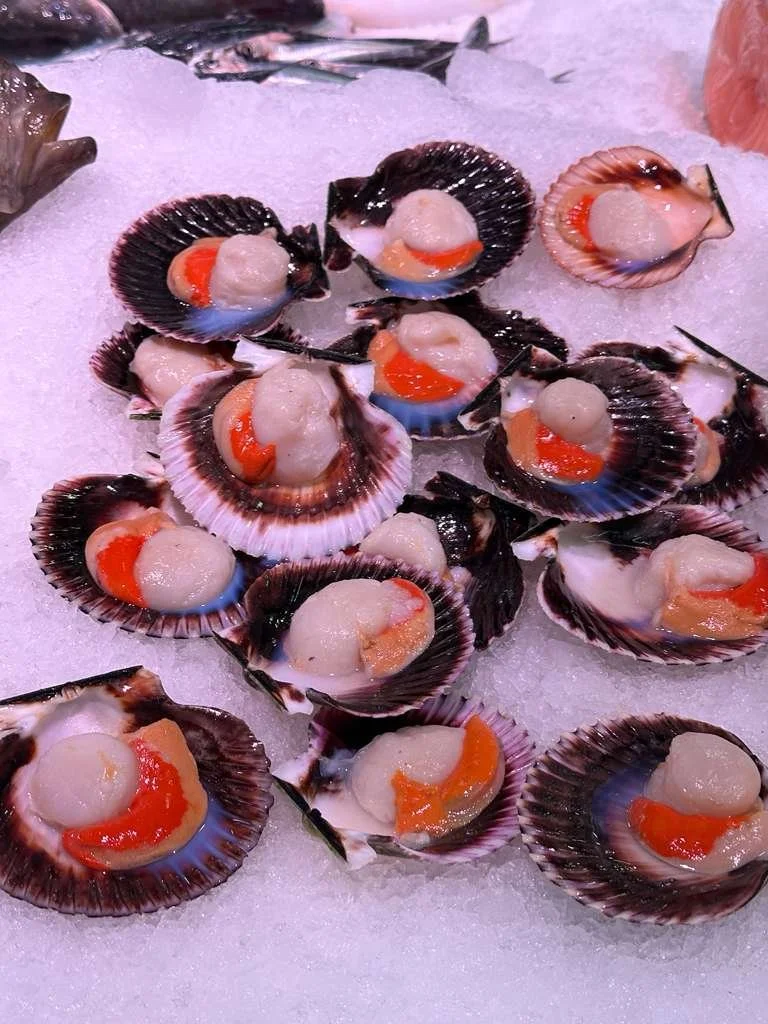
These looked so beautiful and inviting at the local market — I bought them all!
The small Spanish queen scallop, served in its shell with the coral intact
Fresh queen scallops in their pink-and-cream fan-shaped shells, the bright orange coral still attached, cooked in seven distinct ways — from the 90-second plancha to raw carpaccio to a saffron broth. This is true, unadulterated scallops: whole, in the shell, the coral preserved, minimally cooked, in their own briny juice.
Yield: Recipes serve 4 as appetizer or 2 as main (typically 12–16 zamburiñas)
Active: 10–20 min per recipe · Total: 15–30 min
Climate fit: Coastal Atlantic, Mediterranean climates; spring-autumn for fresh shellfish access elsewhere
A note from the kitchen
If you've only ever eaten the large white scallops (or sea scallops) sold shucked at American fish counters, queen scallops are a structurally different experience. Smaller, sweeter, more delicate — and crucially, sold whole in the shell with the bright orange coral (the roe sac) still attached. Most have never seen this preparation. Most American fish counters remove the coral, sell only the white adductor muscle, and discard the rest. The Mediterranean treats the coral as the prize — the most nutrient-dense, most flavorful part of the entire animal.
Zamburiñas live their lives anchored to the seafloor of cold Atlantic waters, filtering plankton and microalgae. The whole-animal approach to eating them honors what they actually are: not just a piece of muscle, but a complete organism — gills, mantle, coral, juice, and the cup of the shell that holds all of it together.
Why the coral matters. The orange roe sac contains a meaningful concentration of marine omega-3 fatty acids (DHA and EPA), vitamin A, vitamin D, zinc, selenium, iodine, copper, and the specific fat-soluble carotenoids that give it the bright orange color. In flavor terms, the coral is sweeter and more intensely briny than the white muscle — a small bite of pure ocean concentrate.
The seven recipes below all preserve the coral and use the shell as the cooking vessel. Each one takes 90 seconds to 5 minutes of cooking time. Each one demonstrates a different technique — plancha (high-heat seared), gratin (broiled), Galician-style (sweated onion + paprika), raw carpaccio, surf-and-turf with chorizo, a saffron broth with clams, and one with a black garlic butter — but all share the same structural foundation: whole shellfish, minimally cooked, in their own briny juice.
Sourcing matters more than anything. Zamburiñas should be alive when purchased — the shells should be tightly closed, or close immediately when tapped. Open shells that don't close indicate the animal is dead and should be discarded. The coral should be bright orange (not gray or brown). The smell should be of clean ocean — never fishy or ammonia-like. From a small specialty fishmonger or Spanish/Mediterranean grocer when possible; sometimes available frozen at higher-end seafood counters, in which case look for "in-shell with coral attached."
Don't overcook. The single most common error with scallops is overcooking. Zamburiñas need 90 seconds to 3 minutes maximum across any technique. The muscle turns from translucent to barely opaque — that's when they're done. Continuing to cook produces rubber. The carryover heat from the shell itself finishes the cooking after you remove them from the pan.
The shell is the serving vessel. Don't shuck and replate — the shell catches the briny juice that's structurally part of the dish. Serve directly from the shell with a small fork. Each scallop is one bite, and the presentation is beautiful.
Recipe 1 · Zamburiñas a la Plancha — Grilled Scallops with Garlic and Parsle
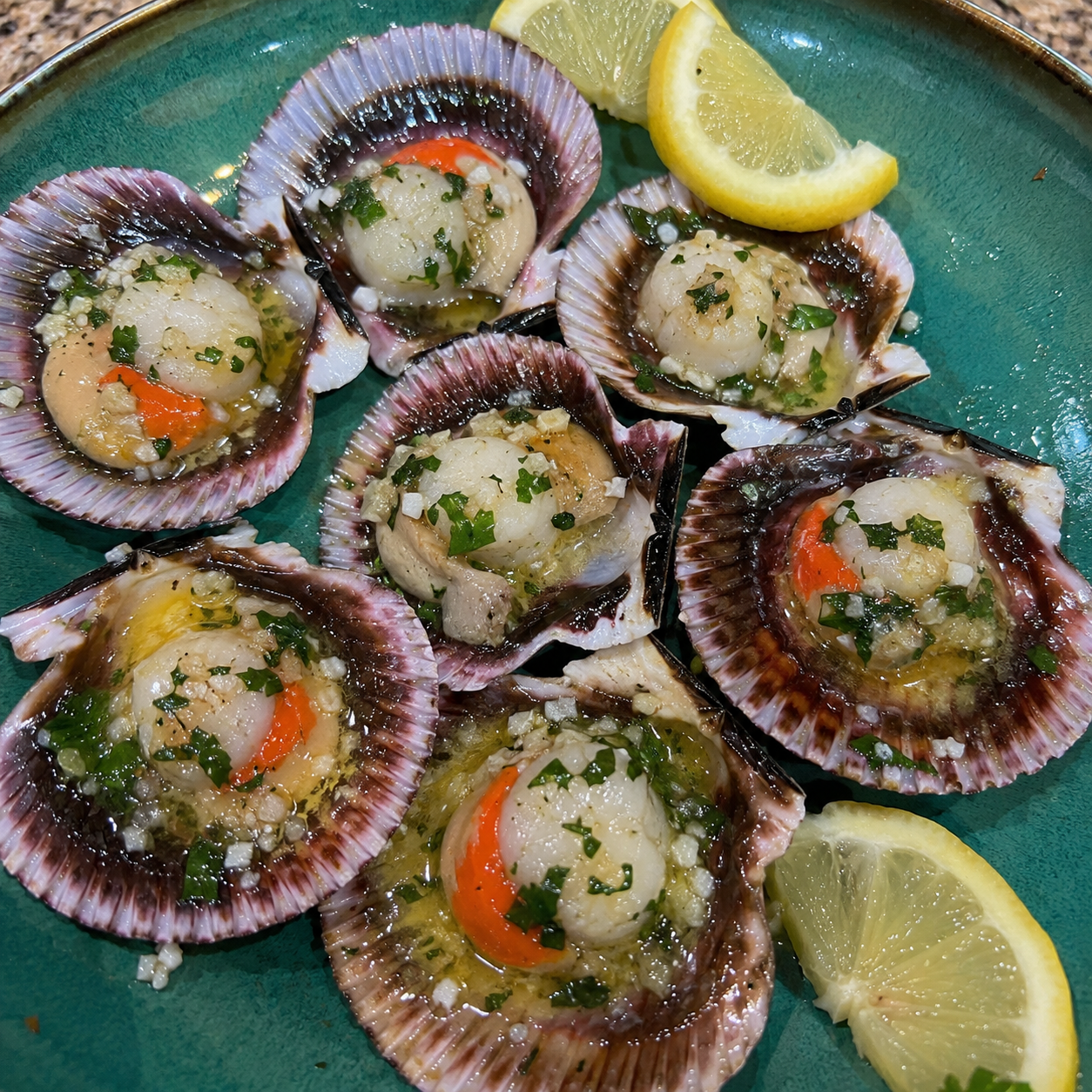
Grilled queen scallops with garlic and parsley — a simple, foundational recipe. 90 seconds on the plancha, butter and garlic added at the moment of cooking, lemon and flaky salt to finish.
Yield: 4 as appetizer / 2 as main · Active: 10 min · Total: 15 min
Ingredients
12–16 fresh zamburiñas, in the shell, coral intact
3 tbsp grass-fed butter
4 cloves garlic, very finely minced
2 tbsp fresh flat-leaf parsley, finely chopped
1 lemon (zest and wedges)
Flaky sea salt (fleur de sel)
Freshly cracked black pepper
Method
Open the shells. Using a paring knife, gently separate the top shell from the bottom — keep the scallop and coral attached to the deeper cupped shell. Rinse briefly under cold water; pat dry.
Heat a plancha (or heavy cast-iron skillet) over high heat until smoking. The pan should be screaming hot before the scallops touch it.
Place the scallops cup-side-down (the deeper shell holds the juice). After 30 seconds, add a small knob of butter (about ½ tsp), a pinch of minced garlic, and a pinch of chopped parsley to each shell, directly on top of the scallop meat.
Cook another 60–90 seconds. The scallop should be just barely opaque, the coral bright orange, the butter-juice bubbling around the edges.
Lift carefully to a plate, keeping the shells level so the juice stays in. Finish with lemon zest, a squeeze of lemon, flaky sea salt, and cracked black pepper. Serve with lemon wedges.
Eat directly from the shell with a small fork. Drink the juice from the shell at the end.
Recipe 2 · Scallops with Almond BreadcrumbS
Queen scallops baked in the shell with wine, butter, almond-flour "breadcrumb," parsley, and lemon zest — broiled 3 minutes until golden.
Yield: 4 as appetizer / 2 as main · Active: 15 min · Total: 25 min
Ingredients
12–16 fresh zamburiñas, in the shell, coral intact
3 tbsp grass-fed butter, melted
¼ cup dry white wine (or for alcohol-free, substitute fresh-pressed white grape juice + 1 tsp sherry vinegar)
3 cloves garlic, very finely minced
2 tbsp fresh flat-leaf parsley, finely chopped
1 tsp finely grated lemon zest
3 tbsp blanched almond flour (the grain-free "breadcrumb")
1 tbsp grated Idiazábal DOP or aged Manchego (optional, for browning)
Pinch sea salt
Freshly cracked black pepper
Lemon wedges, for serving
Method
Position the oven rack 6 inches from the broiler. Preheat the broiler to high.
Open the shells. Keep scallops in the cupped bottom shell. Arrange in a single layer on a rimmed baking sheet.
In a small bowl, combine the melted butter, wine, garlic, parsley, lemon zest, sea salt, and pepper. Spoon about 1 teaspoon of the mixture over each scallop.
In a separate small bowl, combine the almond flour and optional grated cheese. Sprinkle a small pinch on top of each scallop (about ¼ tsp per shell).
Broil 3–4 minutes, watching carefully, until the almond flour topping is golden and the scallop is just opaque. Don't walk away — broilers vary, and the difference between perfect and overcooked is 30 seconds.
Serve immediately, in the shell, with lemon wedges.
Recipe 3 · Paprika scallops
Sweated onion, smoked paprika, sherry vinegar, and olive oil. Served in the shell.
Yield: 4 as appetizer / 2 as main · Active: 20 min · Total: 30 min
Ingredients
12–16 fresh zamburiñas, in the shell, coral intact
3 tbsp high-quality extra-virgin olive oil
1 small yellow onion, very finely diced
2 cloves garlic, finely minced
1 tsp sweet smoked paprika
½ tsp hot smoked Spanish paprika, optional
1 tbsp aged sherry vinegar + 1 tbsp filtered water
2 tbsp fresh flat-leaf parsley, finely chopped
Sea salt and freshly cracked black pepper
Lemon wedges, for serving
Method
Open the shells, keeping scallops in the cupped bottom shell. Arrange on a rimmed baking sheet.
Heat the olive oil in a small skillet over medium-low heat. Add the diced onion and a pinch of sea salt. Sweat slowly 10–12 minutes until soft, translucent, and just beginning to caramelize.
Add the minced garlic and cook 1 minute more. Remove from heat. Stir in both paprikas (off heat — paprika burns quickly), the sherry vinegar mixture, and parsley.
Spoon about 1 tablespoon of the onion-paprika mixture over each scallop.
Broil 3–4 minutes until the scallops are just opaque and the topping is bubbling. Serve immediately in the shell with lemon wedges.
Recipe 4 · Scallop Carpaccio
Raw queen scallop carpaccio — sliced thinly across the muscle, served raw with olive oil, lemon, micro herbs, and peppercorn. The most direct way to taste the natural sweetness.
Yield: 4 as appetizer · Active: 15 min · Total: 15 min
Ingredients
8–10 very fresh zamburiñas (sushi-grade; sourcing matters more here than anywhere)
3 tbsp high-quality extra-virgin olive oil
1 tbsp fresh lemon juice
1 tsp finely grated lemon zest
Flaky sea salt (fleur de sel)
1 tsp peppercorns, lightly crushed
2 tbsp microgreens (finely minced celery leaves or fennel fronds work too)
Optional: a few thin slices of fresh fennel bulb
Edible flowers (borage, nasturtium) for finishing
Method
Source extra-fresh, sushi-grade zamburiñas — alive at purchase, used within hours. This is non-negotiable for raw preparation.
Open the shells. Detach the scallop and coral from the shell. Reserve the coral separately (it can be served alongside or finely diced into the carpaccio).
Slice the scallop muscles horizontally (across the grain) into very thin discs, about ⅛-inch thick. A very sharp knife is essential — dull knives crush the texture.
Arrange the scallop slices flat in a single layer on a chilled plate (slightly overlapping). Drizzle the olive oil and lemon juice evenly over the top. Let sit 2–3 minutes (the acid lightly cures the surface).
Finish with lemon zest, flaky sea salt, crushed peppercorns, micro herbs, optional fennel slices, and edible flowers. Serve immediately.
Optional addition: finely dice the coral and scatter as a garnish. The bright orange against the pale white meat is structurally beautiful.
Recipe 5 · SURF and TURF Scallops with chorizo
Seared queen scallops finished with crumbled chorizo and aged sherry vinegar — the classic surf-and-turf served in the shell.
Yield: 4 as appetizer / 2 as main · Active: 15 min · Total: 20 min
Ingredients
12–16 fresh zamburiñas, in the shell, coral intact
2 oz chorizo (ideally Ibérico de Bellota chorizo), finely diced
2 tbsp high-quality extra-virgin olive oil
2 cloves garlic, finely minced
1 tbsp aged sherry vinegar
2 tbsp fresh flat-leaf parsley, finely chopped
Pinch sea salt and freshly cracked black pepper
Method
Open the shells, keeping scallops in the cupped bottom shell.
In a small dry skillet over medium heat, sauté the diced chorizo 3–4 minutes until the fat renders and the chorizo crisps. Remove the chorizo with a slotted spoon and reserve. Leave the rendered chorizo fat in the pan.
Heat a plancha or heavy cast-iron skillet over high heat until smoking. Add the olive oil.
Place the scallops cup-side-down. Cook 30 seconds. Add a small pinch of garlic to each shell and a drizzle of the reserved chorizo oil. Cook another 60–90 seconds until just opaque.
Lift to a plate, keeping shells level. Top each with a small spoonful of crispy chorizo, a few drops of sherry vinegar, chopped parsley, and a pinch of sea salt. Serve immediately.
Recipe 6 · Scallops and clams in a saffron broth
Queen scallops and tiny wedge clams opened in a garlic-saffron-olive-oil broth — served in deep bowls with all the briny juice.
Yield: 4 servings as appetizer · Active: 15 min · Total: 25 min (including coquina sand-purge)
Ingredients
12 fresh zamburiñas (scallops), in the shell
1 lb fresh coquinas (wedge clams), purged
3 tbsp high-quality extra-virgin olive oil
4 cloves garlic, thinly sliced
Generous pinch saffron threads
½ cup bone broth (chicken or fish)
½ tsp sea salt
2 tbsp fresh flat-leaf parsley, finely chopped
1 tbsp fresh lemon juice
Final drizzle of high-quality olive oil
Lemon wedges, for serving
Method
Purge the coquinas in cold salted water for 30 minutes. Drain and rinse.
In a wide pan with a lid, heat the olive oil over medium heat. Add the sliced garlic and saffron threads. Sizzle until garlic is golden (1 minute).
Add the bone broth and bring to a gentle simmer.
Add the coquinas first — cover, cook 2 minutes until they begin to open.
Add the zamburiñas (in their shells) — cover, cook another 2–3 minutes until the scallop muscle is just opaque and most clams have opened.
Off heat: stir in chopped parsley, lemon juice, and sea salt. Drizzle with a final tablespoon of olive oil.
Discard any unopened shellfish. Serve in deep bowls with all the broth. Eat directly from the shells.
Recipe 7 · Scallops with black garlic butter
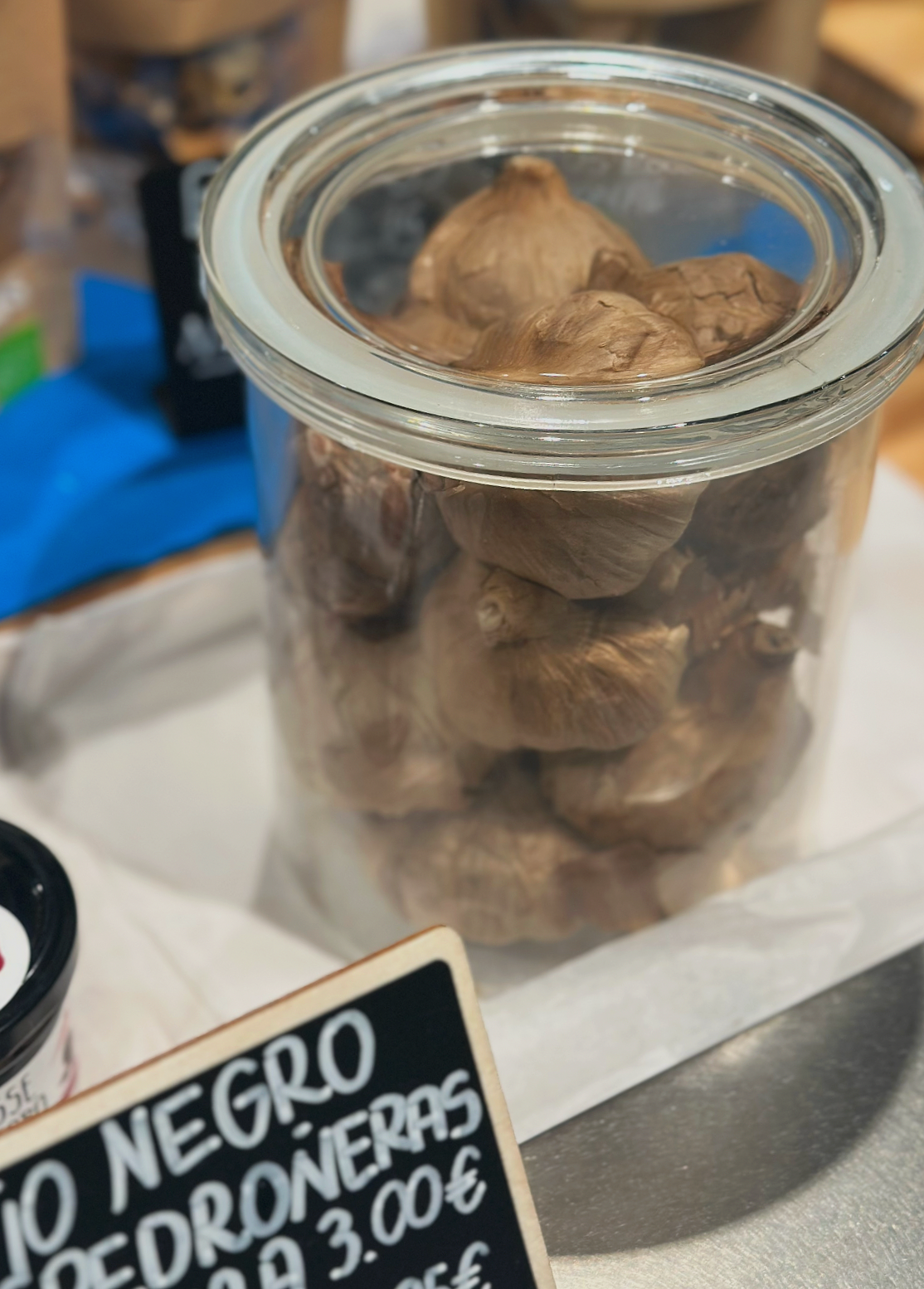
Ajo Negro de Las Pedroñeras — prized Spanish black garlic made from Ajo Morado purple garlic, grown in Las Pedroñeras, Cuenca, Spain, known as the country’s “Garlic Capital.”
Queen scallops with a black garlic butter
Yield: 4 as appetizer / 2 as main · Active: 25 min · Total: 35 min
Ingredients
12–16 fresh zamburiñas, in the shell, coral intact
2 tbsp high-quality extra-virgin olive oil
Sea salt and freshly cracked black pepper
6 cloves black garlic (fermented black garlic), mashed to a paste
¼ cup dry white wine (or substitute: ¼ cup filtered water + 1 tbsp sherry vinegar for alcohol-free)
1 tbsp white wine vinegar (or substitute apple cider vinegar)
2 tbsp finely minced shallot
4 tbsp cold grass-fed butter, cut into small cubes
1 tbsp fresh chives, finely chopped, for garnish
Edible flowers for finishing (optional)
Method
In a small saucepan, combine the wine, vinegar, and minced shallot. Reduce over medium heat until the liquid is almost gone (about 1 tablespoon remains), 3–4 minutes.
Reduce heat to very low. Whisk in the cold butter cubes one at a time, allowing each to emulsify into the sauce before adding the next. Don't let the sauce boil or it will break.
Once all butter is incorporated, whisk in the mashed black garlic paste. The sauce should be silky, glossy, and pale brown from the black garlic. Season lightly with sea salt. Keep warm over the lowest possible heat (or in a thermos for serving).
Heat a plancha or heavy cast-iron skillet over high heat. Brush the scallops in their shells with olive oil. Season lightly with sea salt and pepper.
Place shells cup-side-down on the plancha. Cook 60–90 seconds until the scallops are just opaque.
Lift to plates. Spoon 1 tablespoon of the black garlic butter over each scallop. Garnish with chopped chives and edible flowers.
Notes on black garlic: Black garlic is fermented garlic that develops a sweet, balsamic-like, deeply complex flavor over weeks of low-temperature aging. It's widely available at specialty grocers, Asian markets, and online. Its sweetness and umami pairs beautifully with the natural sweetness of zamburiñas.
Nourishment Notes
Zamburiñas are one of the most nutritionally dense small shellfish in European waters. Eaten whole — with the coral intact — they deliver a meaningfully complete nutrient profile that no muscle-only scallop preparation can match.
The white adductor muscle delivers high-quality complete protein (about 20g per 100g, with all essential amino acids), magnesium, phosphorus, potassium, and significant vitamin B12. Scallops are one of the leaner shellfish, with most of their nutritional density concentrated in micronutrients rather than fat.
The orange coral (roe sac) is the structural prize. It contains a meaningful concentration of marine omega-3 fatty acids (DHA and EPA), vitamin A, vitamin D, zinc, selenium, iodine, copper, and the specific fat-soluble carotenoids (astaxanthin and related compounds) that give it the bright orange color. The selenium content alone is notable — selenium is one of the minerals most commonly deficient in modern diets, and a small portion of coral can deliver a meaningful portion of the daily recommended intake. The iodine content is similarly significant — iodine is critical for thyroid function and is widely under-consumed in non-coastal populations.
The shellfish juice that collects in the cupped shell during cooking is structurally part of the dish. It contains concentrated brine (sodium, magnesium, calcium, potassium), trace minerals (zinc, copper, iodine), and the dissolved umami compounds (free amino acids, glutamate) that develop during cooking. Drinking the juice from the shell at the end is one of the most nutrient-dense moments of the meal.
Marine omega-3 from zamburiñas specifically is the long-chain DHA/EPA form that the body uses directly — different from the ALA form found in plant sources (walnuts, flax), which the body must convert (inefficiently). DHA is the primary structural fat of the human brain and retina; EPA carries documented anti-inflammatory effects. A serving of 6–8 zamburiñas with coral delivers roughly the same DHA/EPA content as a 4-oz portion of wild salmon.
The trace mineral profile is what distinguishes shellfish from any plant or land-animal source. Filter-feeding shellfish concentrate iodine, zinc, copper, selenium, and trace minerals from the sea water itself — a structural reason why coastal cuisines worldwide have always centered shellfish, and why landlocked populations historically struggled with mineral deficiencies that coastal populations didn't.
The freshness principle. Shellfish nutrient density degrades quickly once the animal is removed from cold water. Fresh, alive-at-purchase zamburiñas are nutritionally significantly higher in bioavailable minerals and intact omega-3 fatty acids than scallops that have been sitting on ice for 3+ days. The structural reason whole-shell sourcing matters isn't just culinary — it's nutritional.
Sourcing
Fresh zamburiñas (queen scallops):
Whole in the shell, with the coral (orange roe sac) attached. This is non-negotiable for the structural recipe. Shucked/coral-removed scallops are a different (and lesser) ingredient.
Alive at purchase — shells should be tightly closed, or close immediately when tapped.
The coral should be bright orange, never gray, brown, or with off-odor.
Should smell of clean ocean — never fishy or ammonia-like.
From a small specialty fishmonger, Spanish/Mediterranean grocer, or a coastal seafood counter when possible. Galician, Cantabrian, or Mediterranean-sourced zamburiñas are the traditional gold standard.
For coastal U.S. readers: Atlantic queen scallops (Aequipecten irradians or similar species) are a structurally similar substitute when zamburiñas aren't available.
Use within 1–2 days of purchase. Stored on ice in the refrigerator, draped with a damp cloth.
For frozen (acceptable second choice): look for "in-shell with coral attached" specifically.
Coquinas (wedge clams):
Small, sand-purged clams, alive at purchase.
Look for Donax trunculus (the species name) on the label if sourcing in Europe; in coastal U.S., small soft-shell clams (steamers) are a structurally similar substitute.
Should smell of clean ocean. Discard any with broken shells.
Grass-fed butter:
From cows on pasture year-round when possible.
Cultured butter (fermented before churning) for the deepest flavor.
Deep yellow color — the visual indicator of grass-fed dairy.
Organic when available.
Extra-virgin olive oil:
Single-estate (one farm, one variety, one harvest), harvest-dated within the last 12 months.
In a dark glass bottle.
Smell test: should smell fresh, green, slightly peppery — never musty or rancid.
Stored cool, away from light.
Spanish single-origin olive oils (Picual, Hojiblanca, Arbequina) are the traditional companion to Galician shellfish.
Spanish chorizo (for the surf-and-turf recipe):
Cured Spanish-style chorizo (sweet, smoked paprika-forward). Avoid Mexican chorizo (fresh, raw, different preparation).
Ideally Ibérico chorizo from 100% Ibérico de Bellota pork — significantly more complex flavor than industrial chorizo.
From a specialty Spanish grocer or charcuterie shop when possible.
100% pork (or pork + spices + salt + paprika); avoid chorizo with fillers, sweeteners, or "natural flavors."
Black garlic:
Fermented garlic that has been aged at low temperatures (140°F) for 30–90 days, developing deep brown-black color, sweet-balsamic-like flavor, and soft jelly-bean texture.
100% garlic — no preservatives, no added sugars, no "natural flavors."
From specialty grocers, Asian markets, or online.
Should be soft and pliable; avoid hard or dried-out cloves.
Idiazábal DOP (or aged Manchego):
The legal designation for Basque smoked sheep cheese. Aged minimum 2 months.
Raw milk when legally available.
Look for the DOP designation on the rind.
Substitute: aged Manchego DOP or Pecorino Romano.
Saffron:
The genuine spice from Crocus sativus stigmas — hand-harvested, traditionally from La Mancha (Spain), Iran, or Kashmir.
Look for whole threads, never powder (powder is frequently adulterated).
Deep crimson color, not orange or yellow.
100% saffron — no fillers or additives.
Smoked paprika (for Recipes 3 and 6):
Spanish-style smoked paprika is the structural choice — oak-smoked, deeply aromatic, distinct from Hungarian or unsmoked paprika.
Three styles to know: sweet (dulce), bittersweet (agridulce), and hot (picante). Sweet is the most versatile; hot is for when you want heat.
Look for smoked paprika that lists only paprika as the ingredient — no fillers, no anti-caking agents, no "natural flavors."
Spanish La Vera region paprikas (including those carrying DOP designation) are the traditional gold standard, but small-batch smoked paprikas from Hungarian, North African, or American producers can also be excellent — what matters is the oak-smoking and the freshness.
Should smell intensely of smoked wood — never musty, dusty, or flat. If the smell is faint, the paprika is old and has lost its aromatic compounds.
Stored cool in a sealed tin or glass container, away from light. Use within 6 months of opening for peak flavor.
Organic when possible.
Aged sherry vinegar (for Recipes 3, 5, 6, and 7):
Made from sherry wine (fortified white wine from southern Spain), aged in oak barrels minimum 6 months. Significantly more complex than commercial white wine vinegar — nutty, slightly sweet, deeply aromatic.
Look for "aged" or "reserva" on the label — aged minimum 2 years for the deeper, more concentrated flavor.
Spanish Jerez-region producers (including those carrying DOP designation) are the traditional gold standard. Smaller artisan producers in Spain, Portugal, and Italy also produce excellent aged wine vinegars worth seeking out.
100% wine vinegar — no caramel coloring, no added sugars, no fillers.
In a glass bottle, ideally dark glass.
Substitutes when sherry vinegar isn't available: aged red wine vinegar (Italian or French) or a small-batch apple cider vinegar with a splash of fresh-pressed white grape juice (mimics the slight sweetness).
Organic when possible.
Sea salt:
Baja Gold mineral sea salt (third-party tested at 29.5–31.5% sodium, harvested from the Sea of Cortez, solar-dried) or any equivalent unrefined mineral-rich sea salt for cooking.
Fleur de sel for finishing — hand-harvested by skimming the delicate top layer of French salt pans.
Storage
Live shellfish: Use within 24 hours of purchase. Store in the refrigerator on a bed of ice, covered with a damp cloth (never sealed in plastic — shellfish need to breathe).
Cooked leftovers: Not recommended. Zamburiñas are structurally a same-day food. Reheating ruins the texture and the coral's delicate flavor.
If you must save: Refrigerate cooked leftovers up to 24 hours in a glass container. Eat cold (as a salad or carpaccio-style application). Never reheat in the microwave — it makes the texture rubbery and damages the omega-3 fatty acids.
Pairs Well With
Start with these zamburiñas as the seafood opener, move to a slow-braised lamb stew as the main, and finish with a cheesecake or raw tiramisu as dessert. Add a small cheese board featuring grass-fed aged cheeses and seasonal fruits.
For seasonal context: Zamburiñas are at their peak in autumn-winter in Atlantic European waters (October–March), when the cold water concentrates the sweetness in the muscle and the coral is most developed. In tropical/subtropical climates with year-round access to imported zamburiñas (Miami, Costa Rica, Mexico City via specialty Spanish grocers), they work as a year-round occasional indulgence rather than a seasonal staple.
Why These Scallops
Real scallops are not the white discs of muscle shucked, frozen, and shipped from industrial fisheries. Real scallops are whole animals, alive in their shells, with the orange coral intact, eaten the way coastal cultures have eaten them for centuries. The structural reason to eat them this way isn't just culinary — it's nutritional, ecological, and ancestral. The coral delivers the omega-3, vitamin A, vitamin D, zinc, selenium, and iodine that the muscle alone can't. The shell-as-vessel approach honors the whole animal. The 90-second cook time preserves the delicate sweetness that defines the queen scallop. The Spanish, Galician, and Basque preparations that have evolved around this small shellfish are some of the most sophisticated simple-cooking traditions in European cuisine — and they all begin with the assumption that the whole animal, treated minimally, is the dish.
— Anna aka Food Marshall