Offal — Five Traditional Preparations for Brain, Sweetbreads, Heart & Liver
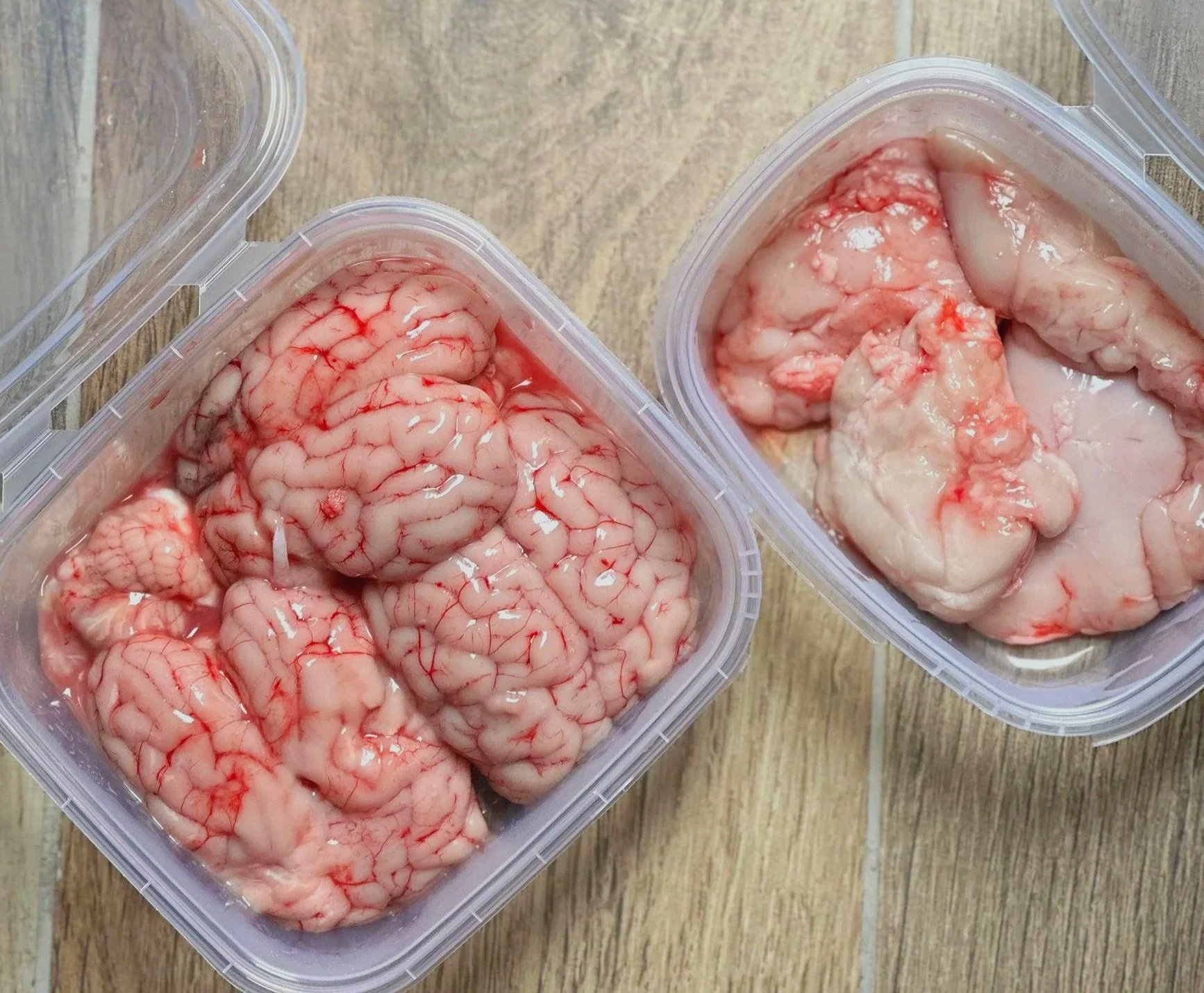
Left: veal brain; Right: veal sweetbreads — thymus/pancreas glands.
The most nutrient-dense, rich cuts of the animal — soaked properly, seared hard, served with bright acid and bitter greens
Each of the following offal preparations teaches a different technique: the cold-water soak for brain, the blanch-and-press for sweetbreads, the steak-treatment for heart, the milk-soak for liver. All four organ types (across five recipes, with the bone marrow that anchors the optional sixth course) share the same structural foundation: minimal cooking, deep mineral flavor, traditional sourcing, and the bright acid-and-bitter accompaniments that make organ meat sing rather than overwhelm. Get ready for optimal nourishment.
Yield: Each recipe serves 4 as appetizer or 2 as main
Active: 15–30 min per recipe
Climate fit: Year-round (organ meats are season-independent in any climate with access to a real butcher)
A note from the kitchen
If you grew up eating supermarket muscle meat or ground meat, organ meat may feel intimidating. It shouldn't be. The whole-animal approach to eating has anchored most human cultures for most of human history — including every cuisine that produced the food traditions we now romanticize as "European" or "ancestral." The reason organ meats fell out of fashion in the U.S. specifically has little to do with flavor or nutrition and everything to do with industrial food supply chains that profited from selling muscle and discarding the rest.
Walk into a carnicería and you'll see organ meats displayed alongside the muscle cuts. Hígado (liver), riñones (kidneys), lengua (tongue), sesos (brains), callos (tripe), mollejas (sweetbreads), manitas (trotters), rabo (tail), and carrillera (cheeks) are still everyday food, particularly in coastal Spain. The Argentine asado tradition has elevated sweetbreads to one of the most prized grilled cuts in the world. Italian, French, Mexican, and Middle Eastern cuisines all carry deep organ-meat traditions that have never gone away.
The recipes below work across three animals — veal, cow, and lamb — listed in order from smallest to largest. The technique is essentially the same; the timing and quantities scale with the size of the organ. Veal offal is the most delicate (younger animal, more tender, milder flavor); beef offal is the most robust (larger, deeper flavor, longer cooking times); lamb offal is the smallest, most concentrated, and most accessible at small butcher counters. Specifics for each animal are noted within each recipe.
A note on affordability. Here is one of the great ironies of modern eating: the most nutrient-dense foods in the entire human diet are often the least expensive cuts at the butcher counter. Beef heart, liver, kidneys, tongue, and oxtail typically sell at a fraction of the price of muscle cuts like filet, ribeye, or strip steak. The industrial food culture has trained us to pay premium prices for the least nutrient-dense parts of the animal (the muscle) while discarding or selling cheaply the most nutrient-dense parts (the organs). For families building a real-food eating practice, organ meats are genuinely one of the most affordable ways to eat ancestrally — a 1.5-pound grass-fed beef heart often costs less than a single small grass-fed steak. The traditional cultures that have always centered organ meats weren't being thrifty — they were being accurate about which parts of the animal deliver the most nourishment per dollar. Eating organs honors the whole animal AND honors the family budget.
An honest note on eating young animals.
I will say honestly: there is something that pulls at me about eating veal and lamb — animals harvested young. I feel that emotional weight, and I don't want to pretend it isn't there. But there is a nutritional reason traditional cultures have always reserved the organs of younger animals as prized food, and emerging research is beginning to articulate what those cultures knew instinctively.
The deuterium principle: younger is more nutritionally concentrated. Deuterium is a heavy isotope of hydrogen that accumulates in biological tissues over time. According to emerging research, younger animals (and younger plants) carry lower deuterium loads in their cellular water, which appears to support more efficient mitochondrial ATP production and a more concentrated nutritional matrix in the organs themselves. This is part of why veal, lamb, and milk-fed animals deliver more delicate flavor and higher concentrations of fat-soluble vitamins than mature beef — the cellular machinery is younger, less oxidatively stressed, and more nutrient-dense.
The same principle applies to plants. Three-day-old broccoli sprouts are well-documented to contain 10–100 times more sulforaphane precursors than mature broccoli florets. Young microgreens are more nutrient-dense than mature leafy greens. The youngest growth stage of plants — when cellular division is most active and oxidative stress lowest — is when the nutritional concentration peaks.
This doesn't erase the emotional weight of eating a young animal. But it does honor what ancestral food cultures have always known: when an animal (or plant) is harvested young, with respect, from a system that allows it to live a good if shorter life, that food carries a nutritional density that mature animals and mature plants cannot fully replicate.
The brain and the sweetbreads in particular are unique. The texture is fatty, custardy, almost mousse-like — closer to rich pudding than to muscle meat. When prepared correctly, the exterior is deeply caramelized and crisp; the interior is silky and warm. Eating them produces a specific sensory experience — the rapid uptake of the omega-3 fats, fat-soluble vitamins, and the dense mineral load delivers a kind of immediate cellular satisfaction.
There is also a deeper reason brain in particular feels uniquely nourishing to the nervous system. The substantia nigra — a small region of the midbrain — contains neuromelanin, a dark pigment that develops in dopamine-producing neurons. Eating animal brain delivers the building blocks (DHA, phospholipids, tyrosine, B vitamins, CoQ10) that the human brain uses to maintain dopaminergic neuron health, support neuromelanin synthesis, and protect against the kind of neuron degeneration that defines conditions like Parkinson's disease. This is one reason traditional cultures across the world have valued brain as recovery food, particularly for the elderly and those recovering from neurological stress. More on this in the Nourishment Notes section below.
A Note on Preparation — every organ asks for its own approach
"Organ meats" is a broad category, and every organ behaves differently. Liver, kidneys, brain, heart, and sweetbreads each ask for their own preparation. A few principles worth holding before you cook:
Brain wants a long soak. Brain tissue is porous, holds residual blood in its fine vasculature, and benefits from one to two hours in cold salted water (with the water changed once or twice). The soak pulls out the iron-blood that, left alone, can taste tinny and overwhelm the delicate custard texture. Cold salted water, raw milk, or lightly acidulated water (vinegar or lemon) all work. The water will pull out a pink-rust color the first round; replace it when it does. After soaking, a brief poach in lightly acidulated water firms the texture and makes the membrane easy to peel.
Sweetbreads don't need the long soak. Sweetbreads (mollejas — thymus or pancreas glands) are denser, more contained, and a long cold-water soak would only leach out their subtle sweetness. The pre-treatment is: a brief cold-water rinse, a 5-minute blanch in lightly acidulated water (vinegar + bay leaf), an ice-water plunge, a peel of the outer membrane, and a 1-hour press between two plates with a weight in the refrigerator to firm. This is the difference between a 30-second rinse-and-blanch (sweetbreads) and a two-hour cold-water soak (brain).
Kidneys behave more like brain. They want soaking in cold salted water or raw milk to draw out the urine-tinged minerality. A 1-hour soak with water changed once is typical.
Heart is the most muscle-like of all the organs. It asks for trimming rather than soaking — remove the silvery silver-skin and the white tendinous bands, then treat like steak. A hot sear, 60 seconds per side for medium-rare, and done.
Liver wants a milk soak. A 30-minute soak in raw milk mellows the iron edge significantly. Otherwise, liver is straightforward — slice 1 cm thick, sear hard, leave the center pink.
The principle across all of them: organ meat is ruined by overcooking. Treat every organ like fine steak — high heat, brief sear, the interior should remain just-cooked-through (or genuinely pink for liver and heart). The carryover heat from the pan and the resting time finishes the cooking after you've pulled them off the heat.
Recipe 1 · Brain with Butter and Lemon
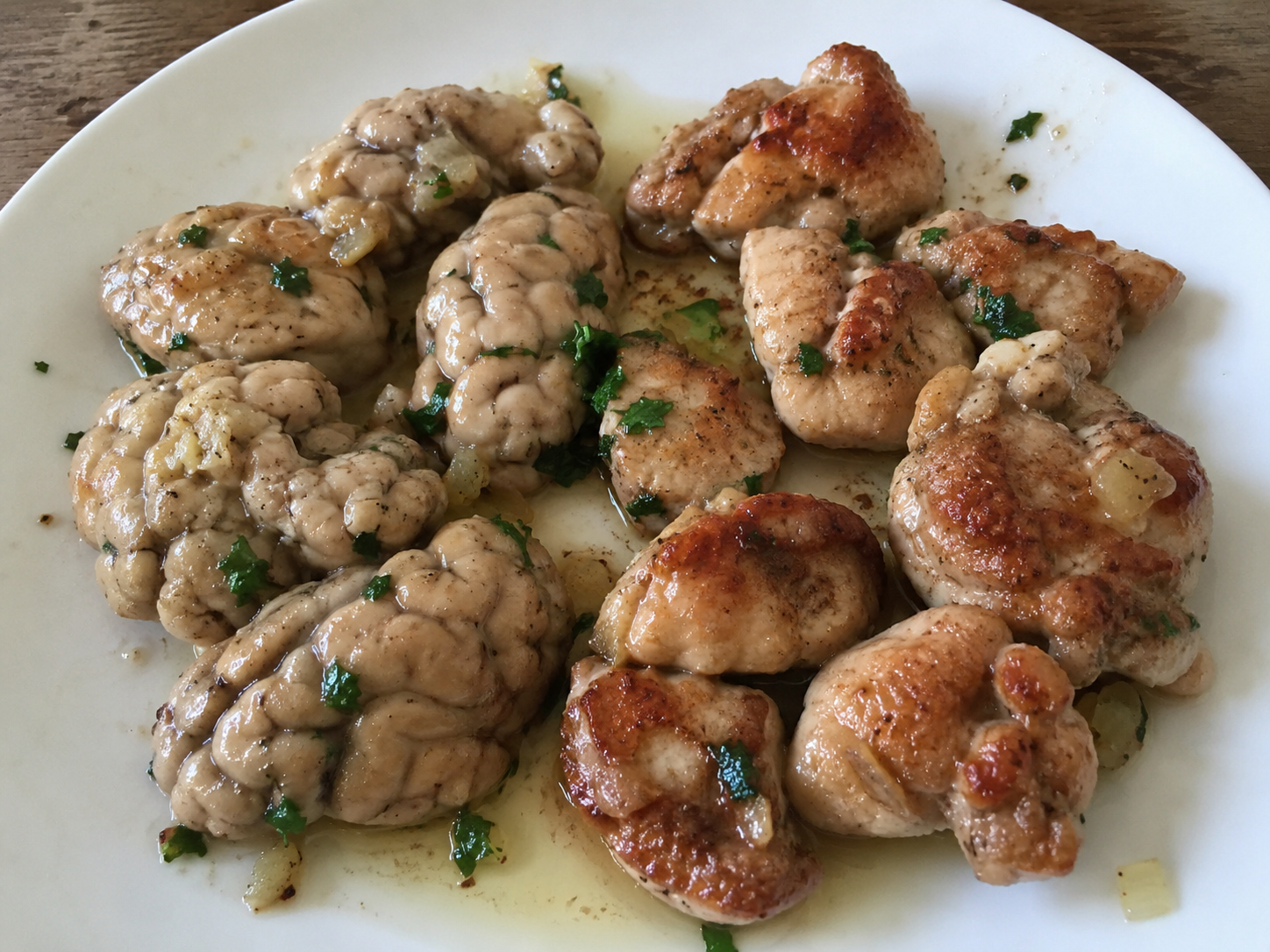
Pan-seared brain with brown butter, lemon, and parsley — the classic Spanish preparation. The exterior pale gold and crisp; the interior warm custard.
Yield: 4 as appetizer / 2 as main · Active: 15 min · Total: 2 hr 30 min (with brain soak)
Variation by animal:
Veal brain: ~300g / ½ lb. Soak 1–2 hours. Poach 5 minutes. Slice into 2 cm pieces. This is the default recipe.
Lamb brain: Smaller (~150g / ⅓ lb total — usually sold in pairs of small lobes). Reduce soak time to 1 hour. Reduce poach to 3–4 minutes. Slice into 1.5 cm pieces. Most accessible at small butcher counters and Middle Eastern/Mediterranean markets.
Beef brain: Larger (~500g / 1+ lb). Increase soak to 2–3 hours, with water changes. Poach 7–8 minutes. Slice into 2.5 cm pieces. More robust flavor; works beautifully with the brown butter preparation.
Ingredients
1 whole brain (sized per animal above)
2 tbsp aged sherry vinegar or apple cider vinegar
1 bay leaf
6 black peppercorns
3 tbsp grass-fed butter (or ghee, or tallow)
1 lemon (zest and wedges)
Flaky sea salt (fleur de sel)
Fresh flat-leaf parsley, finely chopped
Optional: 1 clove garlic, very finely minced
Method
Soak the brain. Place the brain in a glass bowl of cold salted water (1 tsp sea salt per quart of water). Refrigerate per the soak time for your animal (1 hour for lamb, 1–2 hours for veal, 2–3 hours for beef), changing the water twice. The water will pull out a pink-rust color — replace it when it does. Drain.
Poach to firm the texture. Bring a wide shallow pan of water to a bare simmer with the vinegar, bay leaf, and peppercorns. Slip the brain in gently and poach (per the time for your animal) — never let it boil. Lift out with a slotted spoon and lower into ice water for 1 minute. Drain on a kitchen towel.
Peel and slice. With your fingers, gently peel away the thin outer membrane and any visible blood vessels. The brain will be firm enough to slice cleanly. Cut into pieces per the size for your animal.
Sear. Heat the butter in a heavy cast-iron pan until just foaming and beginning to brown. Lay the brain slices in carefully. Cook 90 seconds per side until pale gold and crisp on the surface. The interior should remain warm and silky — never fully firm.
Finish. Salt only at the end (salting earlier draws out moisture and prevents the sear). Plate, drizzle the brown butter from the pan over, squeeze lemon, shower with parsley and optional minced garlic. Finish with flaky sea salt.
Eat immediately. The interior should be warm custard. Texture matters here — under-cooked is better than over-cooked.
Recipe 2 · Brain with Bone Broth
Brain poached gently in a bone-broth — the slower, gentler preparation. Served in deep bowls with the broth and a final drizzle of olive oil.
Yield: 4 as appetizer · Active: 20 min · Total: 2 hr 45 min (with brain soak)
Variation by animal:
Veal brain: ~300g, default recipe. Poach 8–10 minutes in the warm broth.
Lamb brain: ~150g. Poach 5–7 minutes. The broth-poaching preserves lamb brain's delicate flavor beautifully — arguably the best preparation for lamb brain specifically.
Beef brain: ~500g. Poach 12–14 minutes. The broth-poaching mellows the more robust beef-brain flavor and produces the silkiest texture.
Ingredients
1 whole brain (sized per animal above)
2 cups chicken, veal, or beef bone broth (preferably homemade)
2 tbsp aged sherry vinegar
4 cloves garlic, smashed
1 bay leaf
1 generous pinch saffron threads (optional)
1 tsp smoked paprika (optional)
1 tsp sea salt (Baja Gold or equivalent)
6 black peppercorns
2 tbsp high-quality extra-virgin olive oil
2 tbsp fresh flat-leaf parsley, finely chopped
1 lemon (juice and wedges)
Fleur de sel for finishing
Method
Soak the brain. Same as the brain-and-butter recipe — cold salted water for the appropriate time, changing the water twice until it runs clear. Drain.
In a wide shallow pan, combine the bone broth, sherry vinegar, smashed garlic, bay leaf, saffron, sea salt, and peppercorns. Bring to a bare simmer over medium-low heat. Cook 10 minutes to extract the saffron color and integrate the garlic.
Poach the brain. Reduce heat to barely steaming (about 170°F — never simmering). Gently lower the brain into the broth. Poach per the time for your animal — the brain will firm up but should not boil. The rule: brain should never see a rolling boil, only gentle warm-water heat.
Lift and slice. Carefully transfer the brain to a cutting board with a slotted spoon. Peel away the thin outer membrane and any visible blood vessels. Slice into 2 cm thick pieces.
Plate. Place the brain slices in deep bowls. Strain through a fine-mesh sieve and ladle generously over the brain (about ½ cup per bowl). The brain pieces should be partially submerged.
Finish. Drizzle with high-quality olive oil, shower with chopped parsley, squeeze lemon, finish with fleur de sel and the optional pinch of smoked paprika. Serve immediately, in the bowls, with spoons for the broth.
This is the more delicate of the two brain preparations — gentle and broth-forward. The grilled version is more direct and crisp.
Recipe 3 · Grilled Sweetbreads
Pan-seared sweetbreads with tallow, garlic, parsley, and lemon. The exterior deeply caramelized and crackling; the interior creamy and silky.
What sweetbreads actually are. Sweetbreads (mollejas) are not a single gland but two — the thymus and the pancreas — both prized for their rich, creamy texture and immune-supportive properties. In younger animals (veal and lamb), the thymus is large and active because it's the central organ of the developing immune system, producing the T-cells that anchor immune defense throughout life. As animals mature, the thymus shrinks and the pancreas (the digestive-enzyme-producing gland) becomes the more accessible "sweetbread." Both are silky-fatty in texture, deeply nourishing, and have been valued as recovery food and pregnancy food across traditional cultures for as long as humans have hunted animals.
Yield: 4 as appetizer / 2 as main · Active: 20 min · Total: 1 hr 30 min (with blanch + press)
Variation by animal:
Veal sweetbreads (mollejas de ternera): ~500g / 1 lb. The most prized — the thymus from young milk-fed animals, with the most delicate flavor and creamy texture. This is the default recipe.
Lamb sweetbreads (mollejas de cordero): ~300g / ⅔ lb. The thymus from young lambs — smaller, even more delicate, intensely creamy. Most commonly available at Middle Eastern, Mediterranean, and ethnic butchers. Reduce blanch time to 3–4 minutes; press only 30 minutes.
Beef sweetbreads (mollejas de res): ~600g / 1¼ lb. Usually the pancreas (since the thymus shrinks in mature animals). Slightly denser, with a more robust flavor. Increase blanch time to 7 minutes; press for the full hour. Often the most affordable option at butchers.
Ingredients
500g sweetbreads (sized per animal above)
1 tbsp aged sherry vinegar or apple cider vinegar
1 bay leaf
3 tbsp grass-fed tallow or ghee
4 cloves garlic, thinly sliced
2 tbsp fresh flat-leaf parsley, finely chopped
1 lemon (juice and wedges)
Flaky sea salt (fleur de sel)
Freshly cracked black pepper
Method
Rinse the sweetbreads. Per the Spain Basque butcher's wisdom — no long soak needed. Rinse the sweetbreads under cold water 30 seconds to remove any surface blood.
Blanch to firm and clean. Bring water with the sherry vinegar and bay leaf to a gentle simmer in a small pot. Add the sweetbreads, blanch per the time for your animal (3–4 min for lamb, 5 min for veal, 7 min for beef). Drain and plunge into ice water for 1 minute.
Peel and press. With your fingers, peel away the outer membrane and any visible fatty bits or veins. Place the cleaned sweetbreads between two plates with a weight on top (a heavy can or skillet) and refrigerate per the time for your animal (30 min for lamb, 1 hour for veal/beef). Pressing firms the texture significantly and gives the sweetbreads their characteristic crisp-creamy contrast when seared.
Slice and salt. Cut the pressed sweetbreads into 2 cm thick medallions. Salt lightly on both sides.
Optional — breaded variation (mollejas doradas style). For a crisper exterior with a richer texture, after pressing the sweetbreads and slicing into medallions: dip each medallion into a beaten egg (or 1 yolk + 1 tsp filtered water whisked together), then dredge in a 50/50 mix of blanched almond flour and cassava flour. Salt the coated medallions and proceed to the sear step. This produces a thicker, crispier crust closer to traditional Italian-style mollejas doradas — beautiful when served with lemon and salsa verde. (For strictly almond-flour-only: use a coarser almond flour and add 1 tbsp arrowroot powder for crisping.) For those who can tolerate gluten, sprouted spelt flour works great as well.
Sear hard. Heat the tallow in a heavy cast-iron pan until smoking. Add the sweetbreads in a single layer (work in batches if needed — don't crowd the pan). Sear 2 minutes per side without moving, until deeply golden brown and crackling on the surface.
Finish with garlic. In the final 30 seconds, drop the sliced garlic into the pan around the sweetbreads. Let it sizzle but not burn.
Off heat. Add chopped parsley, a generous squeeze of lemon, flaky sea salt, and cracked black pepper. Plate immediately.
The prize of this dish is the contrast: crackling crisp outside, silky creamy inside. Cutting into the medallion should reveal a tender, almost mousse-like interior. If your sweetbreads come out uniformly firm, you over-cooked or didn't press them.
If sweetbreads are unavailable at your butcher, substitute a small portion of bone marrow (tuétano) for an equally rich, similarly satisfying preparation — see Bone Marrow as Substitute note below the recipe collection.
Recipe 4 · Heart Like Steak
Pan-seared heart with smashed garlic, fresh thyme, and a finishing splash of sherry vinegar — treated like a steak, served pink in the center.
Yield: 4 as appetizer / 2 as main · Active: 20 min · Total: 40 min (including salt rest)
Variation by animal:
Veal heart (corazón de ternera): 500–700g / 1¼ lb. The most delicate — tender, mild, fine-grained. Sear 60 seconds per side. Default recipe.
Lamb heart (corazón de cordero): Small (~200–300g / ½ lb each — usually sold individually). Trim same way. Sear 45 seconds per side. The most flavor-concentrated of the three — slightly gamier, beautifully rich. Common at small butchers.
Beef heart (corazón de res): Large (1.5–2 kg / 3–4 lb). Trim same way but the heart is much thicker — slice across the grain into 1.5 cm thick steaks. Sear 90 seconds per side. The most robust and meatiest. Often the most affordable single piece of grass-fed offal at U.S. butcher counters.
Ingredients
1 heart (sized per animal above), trimmed of valves and silver skin
2 tbsp grass-fed tallow or ghee
3 cloves garlic, smashed (not minced)
4–5 sprigs fresh thyme
Coarse sea salt (Baja Gold or equivalent)
Freshly cracked black pepper
1 tbsp aged sherry vinegar
2 tbsp fresh flat-leaf parsley, finely chopped
Method
Trim the heart. Open the heart with a sharp knife and remove the white tendinous bands, silvery membrane, and any visible blood clots. What remains is dense red muscle. Slice across the grain into 1 cm thick steaks (1.5 cm for beef).
Salt and rest. Salt the heart slices generously and let them sit at room temperature 20 minutes. This draws out a small amount of moisture and seasons the meat through.
Pat dry. Before searing, pat the heart slices dry with paper towels — this is important for a clean sear.
Sear hard. Heat the tallow in a heavy cast-iron pan until smoking. Lay the heart slices in carefully. Sear per the time for your animal — they should be deep brown outside, medium-rare (still pink) inside. Heart toughens fast if overcooked; err on the side of under.
Finish in the pan. In the final 15 seconds, add the smashed garlic and thyme sprigs to the pan. Let them sizzle in the fat.
Off heat. Splash in the sherry vinegar — it will sizzle and deglaze the pan. Plate the heart slices, drizzle the pan juices and garlic-thyme oil over, shower with parsley and cracked pepper.
Heart is dense, mineral-rich, almost beefier than the rest of the animal. The texture is fine-grained and meaty when properly cooked — closer to skirt steak than to organ meat. This is the most accessible offal recipe for readers new to organ meat eating.
Recipe 5 · Hígado (Liver) and Onions
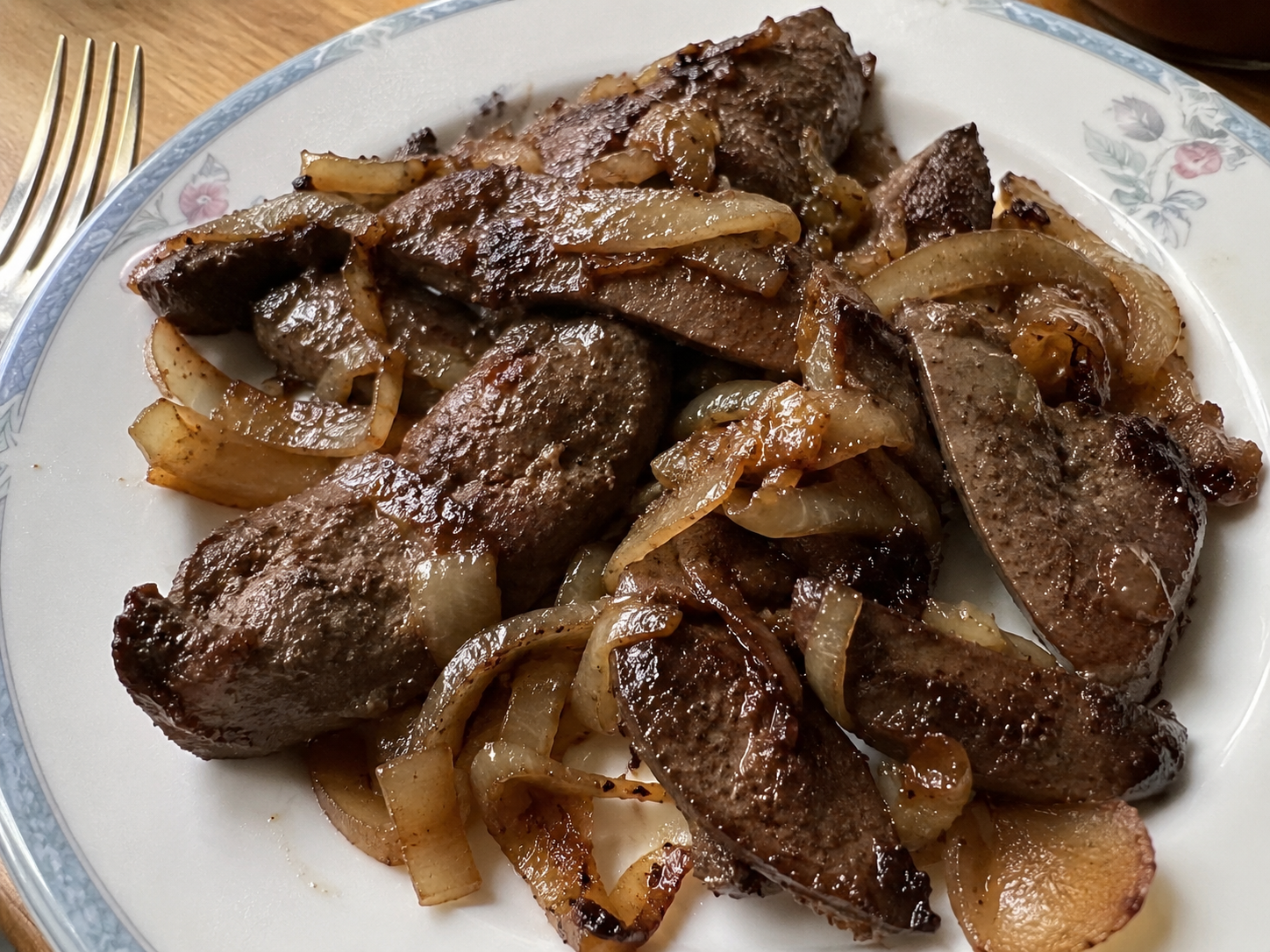
Liver — soaked in raw milk to mellow the iron, paired with deeply caramelized onions and finished with sherry vinegar and crisp sage leaves. Served pink in the center.
Yield: 4 as appetizer / 2 as main · Active: 30 min · Total: 1 hr 15 min (with milk soak + onion caramelization)
Variation by animal:
Veal/calf liver (hígado de ternera): The most delicate and prized — mild, tender, pink-burgundy. Default recipe. Slice 1 cm thick.
Lamb liver (hígado de cordero): Smaller, slightly more concentrated flavor. Soak 20 minutes in milk (less than veal). Slice 0.5 cm thick. Sear 60 seconds per side. The most flavorful — common in Middle Eastern and Mediterranean cooking.
Beef liver (hígado de res): Largest, with the most robust iron-forward flavor. Increase milk soak to 45 minutes. Slice 1 cm thick. Sear 90 seconds per side. Beef liver is the most nutrient-dense single food in the human diet —true "master multivitamin."
Ingredients
500g liver (sized per animal above), sliced per the thickness for your animal
1 cup raw milk
2 large yellow onions, thinly sliced
3 tbsp grass-fed butter
2 tbsp high-quality extra-virgin olive oil
1 tbsp aged sherry vinegar
6–8 fresh sage leaves (or thyme sprigs)
Sea salt and freshly cracked black pepper
Lemon wedges for serving
Method
Soak the liver. Place the liver slices in a glass dish and cover with the raw milk. Refrigerate per the time for your animal (20 min for lamb, 30 min for veal, 45 min for beef). The milk mellows the iron edge significantly and softens the texture. Drain and pat dry.
Caramelize the onions. In a wide cast-iron or stainless steel skillet, melt the butter over low heat. Add the sliced onions with a pinch of sea salt. Slow-cook 30–40 minutes, stirring occasionally, until deeply caramelized, dark gold, and almost jammy. This step is essential — under-caramelized onions don't deliver the sweet-savory counterpoint that makes the dish work. Move the caramelized onions to one side of the pan.
Sear the liver. Add the olive oil to the cleared space in the pan. Raise heat to high until shimmering. Salt the liver slices, lay them in (don't crowd; work in batches if needed). Sear per the time for your animal — the center should still be pink. Liver is ruined by overcooking; treat it like rare steak.
Finish. Plate the liver, pile the caramelized onions on top. Splash the sherry vinegar into the empty pan, let it sizzle for 5 seconds, pour over the liver and onions.
Crisp the sage. Drop the sage leaves into the residual fat in the pan and crisp 15–20 seconds. Scatter over the plates. Serve immediately with lemon wedges.
The slow-caramelized onions are the foundation, and they need their full 30–40 minutes.
For more recipes on liver, see our accompanying CHICKEN LIVER PATÉ and Whole-Animal Lamb Stew — Liver, Shanks & Roasted Vegetables recipes.
Bone Marrow as Substitute (or Addition)
If sweetbreads aren't available — or if you want to add a fifth course to a complete offal feast — bone marrow (tuétano) is a similar rich-fatty experience. Source 4–6 marrow bones (cut lengthwise or in 3-inch rounds) from your butcher. Roast at 450°F for 15 minutes until the marrow is bubbling and just beginning to render. Scoop the soft marrow onto cucumber rounds, grain-free crackers, or a small parsley-caper salad. Finish with flaky sea salt and a drizzle of high-quality olive oil. The same sensory satisfaction as sweetbreads — rich, fatty, deeply nourishing, almost decadent — with simpler preparation. Veal, beef, and lamb marrow bones all work; beef marrow bones are the largest and most accessible.
Nourishment Notes — why brain and sweetbreads in particular
Organ meats are the most nutrient-dense category of food in the entire human diet — and brain and sweetbreads sit at the apex even within organ meat. There's a reason traditional cultures around the world have always reserved organ meats for warriors, hunters, pregnant women, growing children, and the recovery period after birth: nothing else delivers the same density of fat-soluble vitamins, marine-grade omega-3s, complete protein, minerals, and the specific compounds that the body uses to build its own nervous system tissue and connective tissue.
Brain (sesos) — the most nutrient-dense food on Earth, by weight. Brain is approximately 60% fat by dry weight, and the fat composition is unique. About 8–10% of the total fat is DHA (docosahexaenoic acid) — the long-chain omega-3 that is the primary structural fat of the human brain and retina. By comparison, wild salmon contains around 1–2% DHA. Eating brain is the most direct dietary route to delivering DHA to your own brain tissue. Brain also contains:
Phosphatidylcholine and phosphatidylserine — the phospholipid building blocks of human brain cell membranes
Sphingomyelin — a specialized lipid found in nerve cell myelin sheaths
Cholesterol — significant, structurally important (the brain itself is 25% of the body's total cholesterol)
Vitamin B12 — at one of the highest concentrations of any food
CoQ10 — the mitochondrial cofactor critical for cellular energy
Selenium, zinc, copper, iron — at meaningful levels
This is why the sensory experience of eating brain is so distinctive. The fatty, custardy, mousse-like texture is structurally what fat-soluble brain nutrients feel like. The "lights you up" feeling that real-food eaters describe after a brain meal isn't imagination — it's the rapid bioavailable delivery of phospholipids, DHA, B12, and CoQ10 to a body that has been chronically under-supplied with them on a modern Western diet.
Brain, neuromelanin, and the dopaminergic nervous system. Deep in the midbrain lies a small region called the substantia nigra — Latin for "black substance" — named for the dark pigment that develops in its dopamine-producing neurons. This pigment is called neuromelanin, a complex compound structurally related to skin melanin but specific to the dopaminergic neurons of the human brain. Neuromelanin accumulates throughout life in healthy brains and appears to play a protective role — binding heavy metals, supporting mitochondrial function, and stabilizing the highly active dopamine-producing cells that anchor motivation, movement, and reward processing. The progressive loss of substantia nigra neurons (and their neuromelanin) is the defining feature of Parkinson's disease.
The structural reason animal brain has been valued as nervous-system support across traditional cultures lies in its raw material density. The body cannot directly absorb intact neuromelanin from food — it must synthesize its own. But the precursors and building blocks for healthy dopaminergic neurons and neuromelanin synthesis are all delivered abundantly by animal brain: tyrosine (the amino acid precursor to dopamine), L-dopa pathway cofactors (iron, copper, vitamin B6), the phospholipids that build neuron cell membranes, the DHA that supports synaptic function, CoQ10 for mitochondrial energy, and the fat-soluble antioxidants that protect against the oxidative stress that damages dopaminergic neurons.
This is one structural reason traditional cultures have consistently treated brain as food for the nervous system — for the elderly facing cognitive decline, for those recovering from neurological stress, for women in pregnancy and postpartum (supporting fetal brain development), and for warriors and hunters as recovery food. Modern neurological research is beginning to confirm what traditional food culture has always known: the building blocks of a healthy nervous system come most directly from the nervous tissue of well-raised animals.
A note on food as one pillar. Food is one pillar of mental and neurological health — alongside sleep, sunlight, movement, social connection, meaningful work, connection to nature, and reduced toxic load. But it is a profoundly important pillar. The modern epidemic of depression, anxiety, cognitive decline, and neurodegenerative disease is occurring in populations that have largely abandoned the nervous-system-supportive foods (brain, liver, egg yolks, oysters, wild fish) that ancestral cultures centered. Reintroducing these foods — even occasionally — provides the body with raw materials it has been chronically under-supplied with on a modern Western diet. Eating brain isn't a cure. But it is one of the most direct nutritional interventions available for nervous system support, and the sensory experience of eating it (the immediate cellular satisfaction, the "lights you up" feeling) is your own body recognizing nutrients it has been missing.
Upleveling toward our greatest potential. When you eat these foods AND keep an intact circadian rhythm AND nurture loving relationships AND feel purposeful AND stay connected to nature — you are genuinely upleveling yourself to your greatest potential. Each pillar reinforces the others. Real food gives the body the raw material to build a healthy nervous system; sunlight and circadian rhythm regulate when the body uses those materials; loving relationships and purpose give the nervous system reasons to flourish; nature reconnects us to the rhythms our biology evolved within. These pillars are not separate self-improvement strategies — they are one integrated way of living that our ancestors knew instinctively and that modern life has fragmented.
Why familiar feels safe — the attachment imprint of nourishment. These foods may not feel familiar to you yet. The modern industrial food system has erased two or three generations of ancestral food memory. But here is the thing about the human psyche: we can be drawn to and attracted to healthy foods. Our nervous system is nostalgic by design. Familiarity is coded as safety — at a deep cellular and emotional level, the foods that humans have eaten across most of our evolutionary history register to the body as "I survived this. This is safe. This is home." When you recreate the familiar linkage to how we evolved with these sacred foods — brain, liver, marrow, oysters, wild fish, raw dairy, fermented vegetables, bone broth — your nervous system recognizes them. You feel home in your body in a way that processed industrial food cannot replicate, no matter how engineered its hyper-palatability.
Reclaiming the true attachment imprint of nourishment from nature. What modern food marketing has done is hijack the human attachment system — replacing the deep nostalgic familiarity of real ancestral foods with the manufactured familiarity of brand logos, jingles, and childhood-conditioned sugar/seed-oil/salt combinations. We need to reclaim our true attachment imprint of nourishment from nature. We need to develop a particular flavor of nourishment — the kind that comes from real food, well-sourced, prepared simply, eaten with people we love, in environments that match our biology. Familiar is coded as safe. "I survived it" is one of the deepest signals the nervous system has. The good news: we can rebuild this attachment imprint at any age. It takes a few meals of really nourishing food, in the right setting, with the right intention — and the body remembers. The psyche remembers too. And the cellular machinery turns toward home.
DHA across the offal-and-shellfish library. Long-chain marine omega-3 DHA appears across the most nutrient-dense foods in this library — brain (8–10% of dry weight), the orange coral in zamburiñas (queen scallops), oily wild fish (salmon, sardines, mackerel), shellfish (oysters, mussels), and pasture-raised egg yolks. DHA is structurally what the body uses to build brain tissue, retinal tissue, and nerve cell membranes — and it cannot be efficiently made from plant-based ALA precursors (walnuts, flax). The traditional ancestral diet centered nervous-system-supportive foods specifically because the body required them.
Sweetbreads (mollejas) — the most underrated immune-system food. Sweetbreads are typically the thymus gland (in younger animals — veal, lamb) or the pancreas (in older animals — adult cattle). Both glands are extraordinary:
The thymus is the central organ of the developing immune system, located in the chest behind the sternum. It produces T-lymphocytes (T-cells) — the immune cells that recognize and destroy pathogens, cancerous cells, and foreign tissue. The thymus is largest and most active in childhood, gradually shrinking through adulthood. Eating thymus tissue delivers thymic peptides, nucleotides, and the specific glandular building blocks that support immune function — a tradition that predates modern immunology by thousands of years.
The pancreas is the body's primary enzyme-producing gland, delivering digestive enzymes (lipase, amylase, protease) that support digestion of fat, carbohydrate, and protein. Pancreas tissue also delivers small amounts of insulin and glucagon precursors that support blood sugar regulation.
Both glands are rich in selenium (one of the most concentrated food sources), zinc, B vitamins, CoQ10, and glutathione precursors (the master antioxidant).
The fatty, creamy texture comes from a unique lipid profile rich in phospholipids — similar in composition to brain, though less concentrated.
The traditional medical wisdom across cultures has always been: glandular tissue supports the corresponding gland in the eater. Modern nutritional research has begun to confirm this — the specific peptides, hormones (in trace amounts), and tissue-specific compounds in glandular meat support the function of the same organs in the consumer. Sweetbreads have been used as recovery food for those healing from illness, growing children, and pregnant or postpartum women for as long as humans have been hunting animals.
Heart — pure dense muscle nutrient density. Heart is the workhorse muscle that pumps blood every second of the animal's life. It is:
Extraordinarily high in CoQ10 — the mitochondrial cofactor that supports cellular energy production. Heart is one of the few foods that delivers CoQ10 at meaningful levels.
High in taurine — the amino acid critical for cardiovascular health, eye health, and electrical conductivity in the heart muscle itself.
High in L-carnitine — supports fat metabolism and energy production.
High-quality complete protein — about 26g per 100g.
Lower in fat than most cuts, mostly heme iron, zinc, selenium, and B vitamins.
Heart is the foundation of organ-meat eating for those new to it — it tastes meaty, beefy, and substantial rather than dramatically "organ" in flavor. Many traditional cultures have specifically eaten the heart of the hunted animal first, ceremonially, to incorporate its strength and resilience.
Liver — the master multivitamin. Liver is the densest single-food source of:
Vitamin A (retinol) — at concentrations many hundreds of times higher than plant-based beta-carotene sources. The retinol form is directly bioavailable; beta-carotene must be converted (inefficiently) by the body.
Vitamin B12 — at concentrations higher than any other food.
Folate — bioavailable in its natural folate form (not synthetic folic acid).
Iron — in highly bioavailable heme form.
Copper, zinc, choline, riboflavin — all at remarkable concentrations.
Vitamin K2 — present alongside vitamin A and D in synergistic ratios.
A 4-oz portion of liver delivers more than the daily recommended intake of nearly every fat-soluble vitamin, B vitamin, and several minerals. This is why traditional cultures called liver "the master multivitamin" and ate it weekly. The milk-soaked liver and slow-caramelized onions makes this nutrient-dense food genuinely delicious rather than something to choke down for the nutrition.
The synergy of eating offal together. Brain, sweetbreads, heart, and liver eaten across the same meal (or the same week) deliver a nearly complete nutritional profile — every fat-soluble vitamin, every B vitamin, complete proteins, all essential minerals, and the specific building blocks (phospholipids, glandular peptides, CoQ10, taurine, carnitine, neuromelanin precursors) that support the corresponding tissues in the eater. The traditional offal feast that ranchers, butchers, and hunters have known for generations isn't a quirky food preference — it's nutritionally one of the most complete meals a human can eat.
What to Serve With Offal
The offal plates want bright, peppery, acidic, vegetal companions to cut through the richness. All grain-free, all aligned with the natural counterpoint these dishes ask for:
Bright accompaniments to cut the richness
Sharp greens. Frisée, escarole, broccolini, broccoli raab, watercress, wild arugula, mustard greens — tossed with sherry vinegar, EVOO, Dijon, and minced shallot. Optional: shaved aged Parmesan, Idiazábal, or Manchego.
Pickled accents. Piparras (Basque green chilies), banderillas, quick-pickled radish, capers in salt, cornichons, pickled cauliflower, pickled onions. Acid cuts the fat — without pickled accompaniments, the offal can feel cloying.
Raw sauerkraut. Genuinely one of the best pickled accompaniments to organ meat — the German and Eastern European traditions have paired sauerkraut with organ meats for centuries. The live probiotic cultures support digestion of the rich meal; the cabbage's natural bitterness wakes up the palate. Look for raw, unpasteurized varieties in the refrigerated section (never shelf-stable canned).
Salsa verde. Parsley, garlic, anchovy, capers, lemon, olive oil. Especially beautiful with brain — cuts the richness directly.
Chimichurri. Parsley, garlic, oregano, chile, olive oil, sherry vinegar or lemon. Especially beautiful with sweetbreads or heart.
Fresh tomato relish. Minced tomatoes, garlic, and onion with fresh parsley or cilantro. A bright Mediterranean counterpoint to any of the four organs.
Vegetable companions
Roasted peppers. Piquillos blistered and split with EVOO and garlic. Pimientos de Gernika blistered hard with flaky salt. Padrón peppers in olive oil. The smoky sweetness sits beautifully beside organ meat.
Sautéed mushrooms. With garlic, thyme, and butter. Especially good with sweetbreads — earthy and rich.
Crispy potatoes. Roasted fingerlings, potato cakes, or hash. Brain is soft, so potatoes give texture.
Soft starches (grain-free). Roasted celeriac mash with butter and crème fraîche. Cauliflower puréed with garlic confit. Roasted parsnip with thyme. Caramelized roasted root vegetables (carrot, turnip, celeriac, sunchoke).
Bone marrow alongside. Roast a marrow bone 15 minutes at 450°F, scoop the soft marrow, eat on cucumber rounds with a small parsley-caper salad and flaky salt.
A jammy egg. A 6-minute soft-boiled or fried pasture-raised egg, cracked open over warm sweetbreads or liver. The runny yolk creates a natural sauce.
Complete plate combinations
Simple potato and offal pairing. Pan-seared brain + brown butter + lemon + parsley + crispy potatoes + arugula salad with sherry vinegar.
Crispy sweetbread plate. Pan-seared sweetbreads + fresh tomato relish + quick-pickled red onions + roasted carrots or sautéed mushrooms.
Latin-style sweetbread tacos. Sliced sweetbreads + warm corn or jicama shells + cilantro + diced onion + lime + avocado + salsa verde + pickled red onion.
Mediterranean offal plate. Brain or sweetbreads + parsley-caper salsa + tomato-cucumber salad + olives + lemony roasted potatoes.
Liver plate. Liver and caramelized onions + crisp sage + roasted parsnip + a side of raw sauerkraut.
Heart steak plate. Pan-seared heart + chimichurri + smashed potatoes + a bitter greens salad.
Sourcing
Pasture-raised veal, beef, and lamb (for all four organ recipes):
From a small local rancher who raises animals humanely — pasture-raised, milk-fed if traditional veal style, never confined in feedlots.
Heritage breeds when available (Wagyu, Angus, Hereford, Highland, Devon for beef; Dorset, Suffolk, Icelandic, Navajo-Churro for lamb).
Ask the butcher to break down a whole animal for you — including the organ meats. Most American butchers don't display organs but will source them with advance notice (24–48 hours).
Veal organ meats are at their peak when sourced from animals 4–8 months old — younger than full beef, with the delicate flavor and texture that traditional Spanish preparations expect.
Beef organ meats from grass-fed animals 18–30 months are the most commonly available — robust, deeply flavored, accessible at most farmers' market butchers.
Lamb organ meats from animals 4–12 months are the most flavor-concentrated — common at Middle Eastern, Mediterranean, and ethnic butchers.
Brain (sesos):
Whole, intact, unprocessed. Veal (~300g), beef (~500g), or lamb (~150g in pairs).
Should look pale pink-gray, with visible thin membrane.
Should smell of clean meat — never sour, ammonia-like, or fishy.
Use within 1–2 days of purchase. Stored refrigerated, draped with a damp cloth.
Ask the butcher in advance — most don't keep brain in the case but will source it with notice.
Brain sourcing safety note: U.S. and EU food safety regulations restrict the sale of brain from cattle over 30 months due to BSE/prion concerns. Veal (4–8 months) and young beef (under 30 months) are safe under current regulations. Lamb brain is unrestricted and widely available.
Sweetbreads (mollejas):
Thymus (more delicate, prized in young animals) or pancreas (slightly denser, more common in mature animals).
Pale ivory to pale pink, firm, intact.
Should smell of clean meat.
Use within 1–2 days of purchase. Or freeze (sweetbreads freeze beautifully).
Lamb sweetbreads are the most widely available at small butchers; veal sweetbreads require advance order; beef sweetbreads are common at Latin and Eastern European butchers.
Heart (corazón):
Whole, intact, with the major valves and connective tissue visible (you'll trim these yourself). Veal (~500g), beef (1.5–2 kg), lamb (~200–300g).
Deep red, firm, dense.
Should smell of clean meat.
Use within 2–3 days of purchase. Freezes beautifully.
Beef heart is one of the most affordable single pieces of grass-fed offal at U.S. butchers — often a fraction of the price of muscle cuts.
Liver (hígado):
Calf's liver (veal): the mildest, most delicate, most prized.
Beef liver: more robust, larger, highest in vitamin A.
Lamb liver: smaller, more concentrated, more common at ethnic butchers.
Deep red-burgundy color, smooth surface, glistening.
Should smell of clean meat — never fishy, sour, or with off-odor.
Use within 1–2 days of purchase. Can be frozen.
Raw milk (for liver soak):
From cows on pasture year-round when legally available. State-by-state legal availability varies; check realmilk.com.
If unavailable, minimally-pasteurized full-fat milk from grass-fed cows.
Avoid ultra-pasteurized milk entirely.
Grass-fed butter, tallow, ghee:
From cows on pasture year-round when possible.
Cultured butter (fermented before churning) for the deepest flavor.
Deep yellow color — the visual indicator of grass-fed dairy.
Tallow: rendered from grass-fed beef or veal fat. Stable at high heat, traditional cooking fat across cattle-eating cultures.
Aged sherry vinegar:
Made from sherry wine, aged in oak barrels minimum 6 months. Significantly more complex than commercial white wine vinegar — nutty, slightly sweet, deeply aromatic.
Look for "aged" or "reserva" on the label — aged minimum 2 years for the deeper, more concentrated flavor.
Spanish Jerez-region producers (including those carrying DOP designation) are the traditional gold standard.
Substitutes when sherry vinegar isn't available: aged red wine vinegar (Italian or French) or a small-batch apple cider vinegar with a splash of fresh-pressed white grape juice.
Smoked paprika:
Three styles to know: sweet (dulce), bittersweet (agridulce), and hot (picante). Sweet is the most versatile.
Look for smoked paprika that lists only paprika as the ingredient.
Spanish La Vera region paprikas (including those carrying DOP designation) are the traditional gold standard, but small-batch smoked paprikas from Hungarian, North African, or American producers can also be excellent.
Saffron:
The genuine spice from Crocus sativus stigmas — hand-harvested, traditionally from La Mancha (Spain), Iran, or Kashmir.
Whole threads only — never powder (powder is frequently adulterated).
Deep crimson color, not orange or yellow.
Sauerkraut (for the pickled accompaniment):
Raw, unpasteurized, live-culture only. From the refrigerated section, never shelf-stable canned.
Single-ingredient when possible (just cabbage + salt), or with traditional additions (caraway seeds, juniper berries, dill).
Organic when possible.
Sea salt:
Baja Gold mineral sea salt (third-party tested at 29.5–31.5% sodium, harvested from the Sea of Cortez, solar-dried) or any equivalent unrefined mineral-rich sea salt for cooking.
Fleur de sel for finishing.
Storage
These recipes are best eaten same-day, fresh from the pan. Organ meats lose their delicate texture significantly with refrigeration and don't reheat well.
If you must save: Refrigerate cooked leftovers up to 24 hours in a glass container. Eat cold (sweetbreads especially are good cold, sliced thin over a bitter greens salad). Never reheat in the microwave — it ruins the texture entirely.
Uncooked organ meats: Use within 1–2 days of purchase (brain and liver are most delicate). Heart and sweetbreads can be frozen successfully; brain and liver lose texture significantly when frozen.
Pairs Well With
For the table: A pot of strong herbal tea (thyme, rosemary, or sage tea for the digestive support), sparkling water with lemon and fresh herbs, or a cup of warm bone broth. The mineral richness of organ meat asks for clean, simple table beverages.
For a complete offal feast: Build a 4-course progression — start with the brain in caldo (lightest), move to the sweetbreads (richer), then the heart (most muscle-like, the bridge), finish with the liver-and-onions (deepest flavor). Add a roasted marrow bone as a fifth element if you want a complete whole-animal demonstration. Serve with the sharp greens, sauerkraut, pickled accents, and roasted peppers above.
For a land-to-sea and full farm-to-table experience: Pair the offal plate with seafood dishes as a starter (anchovies, Zamburiñas (Queen Scallops) post, or sardines). Add a small cheese board with aged cheeses, and finish off with a cheesecake with seasonal fruits, such as these recipes: Blueberry Cheesecake, Raw caramel apple cheesecake, Butterscotch Caramel Mini Cheesecakes, Raw Macadamia-Mango Cheesecake Bars, Raw Cheesecake Slices with Raspberry and Blackberry Swirl.
Why These Cuts
Real eating doesn't begin and end with muscle. The traditional cuisines that produced the food cultures we now romanticize all centered organ meats — Spanish, French, Italian, Mexican, Middle Eastern, Japanese, Argentine, German, Eastern European, Scandinavian. The reason is that organ meats deliver nutritional density that muscle cannot, and a sensory satisfaction that nothing else replicates. The fatty, custardy texture of brain delivering DHA and neuromelanin precursors directly to your own nervous system. The crisp-and-creamy contrast of pan-seared sweetbreads delivering thymic peptides and glandular building blocks. The mineral depth of heart delivering CoQ10 and taurine. The almost-medicinal richness of milk-soaked liver with caramelized onions delivering vitamin A retinol and B12 at concentrations no plant food can match. Eating organs — minimally cooked, with bright acid, bitter greens, and probiotic sauerkraut to cut the richness — is one of the most direct ways to reconnect with whole-animal eating, with ancestral nutritional density, and with the foods the human nervous system was built to receive.
— Anna aka Food Marshall