Spinach Feta Chicken Meatballs with Tzatziki, Slaw, and Crispy Cauliflower
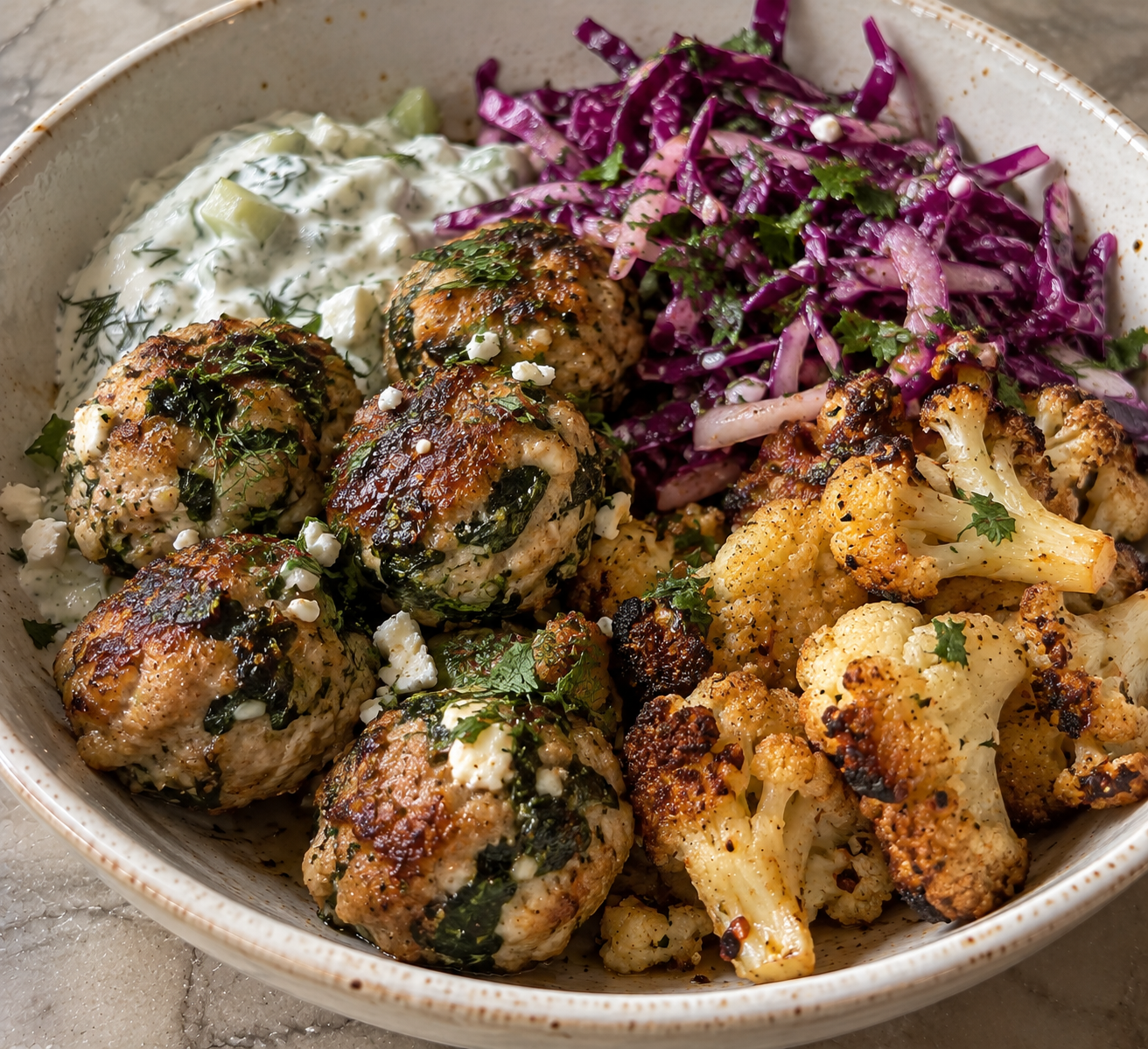
Greek-style chicken meatballs packed with spinach, feta, lemon, and herbs, served with cool tzatziki, a quick purple cabbage slaw, and crispy spiced cauliflower.
Yield: Serves 4 · Active: 30 min · Total: 50 min · Year-round, and especially fresh in summer, when cucumbers and dill are at their peak · Cuisine: Greek · Best eaten: early evening
Ingredients
Spinach feta meatballs
8 oz frozen spinach, thawed and squeezed very dry
1 lb pasture-raised ground chicken (thigh meat stays juiciest)
1 cup crumbled feta
1 pasture-raised egg, lightly beaten
3 garlic cloves, minced
1 small bunch scallions, finely chopped
1 small bunch flat-leaf parsley, finely chopped
Zest of 1 lemon
½ tsp Baja Gold sea salt (the feta is salty) and black pepper
Optional: 2–3 tbsp blanched almond flour, if the mixture is too soft
2 tbsp extra virgin olive oil, for searing
Tzatziki
1 small cucumber, grated and squeezed dry
1 cup whole-milk Greek yogurt (or coconut yogurt, for dairy-free)
1–2 tbsp fresh dill, finely chopped (or mint)
2 garlic cloves, finely grated
1 tbsp extra virgin olive oil
Juice of ½ lemon
Pinch of Baja Gold sea salt and black pepper
Purple cabbage slaw
3 cups shredded purple cabbage
2 tbsp extra virgin olive oil
2 tbsp raw apple cider vinegar
½ tsp Baja Gold sea salt
Crispy cauliflower
1 head cauliflower, cut into florets
2 tbsp extra virgin olive oil
Optional: 1 tsp harissa (homemade, from my Harissa-Marinated Sirloin), for heat
½ tsp ground cumin
½ tsp Baja Gold sea salt
Method
Roast the cauliflower. Heat the oven to 425°F. Toss the cauliflower with the olive oil, harissa (if using), cumin, and salt, and spread it on a parchment-lined sheet pan. Roast 25–30 minutes, turning halfway, until deeply caramelized and crisp at the edges.
Mix the meatballs. Gently combine all the meatball ingredients except the searing oil, just until mixed; overworking makes chicken meatballs tough. If the mixture is too soft to hold its shape, add the almond flour.
Shape. With damp hands, roll into golf-ball-sized meatballs.
Cook. Heat the olive oil in a large skillet over medium-high heat. Cook the meatballs in batches for 8–10 minutes, turning often, until browned all over and 165°F inside. Or bake them on a parchment-lined sheet pan at 400°F for about 20 minutes.
Make the tzatziki. Stir together the squeezed cucumber, yogurt, dill, garlic, olive oil, lemon juice, salt, and pepper.
Make the slaw. Whisk the olive oil, vinegar, and salt in a bowl. Add the cabbage, and massage it with your hands for 1 minute, until it softens slightly.
Serve. Pile the meatballs over the slaw, with the crispy cauliflower alongside, and tzatziki for dipping or spooning over the top.
Chop and wait: Cut the cauliflower and shred the cabbage 30 minutes before cooking or dressing them, so their sulforaphane has time to form.
Storage
Meatballs: refrigerated up to 3 days, or frozen up to 3 months.
Tzatziki: refrigerated up to 5 days.
Slaw: refrigerated up to 2 days.
Best assembled fresh, but the components make a wonderful meal-prep bowl.
Nourishment Notes
Why squeeze the spinach? It’s the step that decides whether these meatballs hold together. Thawed frozen spinach holds a surprising amount of water, often half a cup per package, and wet spinach makes meatballs that won’t brown and fall apart in the pan. Squeeze it in a clean towel until no more water comes out.
Feta and spinach — a classic pairing across Greece and the Balkans, from Greek spanakopita to Albanian byrek me spinaq and Turkish ıspanaklı börek. In these meatballs, the feta adds salt, tang, and richness that keeps them juicy.
Tzatziki — one of the great Greek mezze sauces, with cousins across the region: Turkish cacık, Iranian mast-o-khiar, and Indian raita. They all share thick yogurt, cucumber, garlic, a fresh herb, and often olive oil. The ratio matters: about half as much squeezed cucumber as yogurt keeps it thick and creamy.
Pasture-raised chicken — complete protein, niacin, B6, selenium, and choline. Thigh meat keeps the meatballs juicy.
Spinach — folate, vitamin K, magnesium, and iron. Pairing it with lemon helps your body absorb that iron.
Feta and Greek yogurt — calcium, protein, and live cultures. Traditional feta is made from sheep’s milk, or a blend of sheep’s and goat’s milk, which many people find easier to digest.
Purple cabbage and cauliflower — vitamin C, vitamin K, fiber, anthocyanins (in the purple cabbage), and glucosinolates, which your body turns into sulforaphane, supporting estrogen metabolism.
Fresh herbs — parsley, dill, and scallions bring vitamin K, vitamin C, and a fresh, bright flavor.
Extra virgin olive oil — oleic acid and polyphenols, plus it helps you absorb the vegetables’ fat-soluble nutrients.
As a circadian food, this is a light, protein-rich early dinner. It’s a year-round meal, and especially refreshing in summer, when cucumbers and dill are at their best.
For your cycle: The cabbage and cauliflower support estrogen metabolism in the follicular and luteal phases, and the protein, calcium, and folate make this a nourishing meal in any phase.
Sourcing
Ground chicken — pasture-raised, ideally thigh meat, from a local farm or White Oak Pastures
Eggs — organic and pasture-raised, from a local farm
Feta — traditional sheep’s milk or sheep-and-goat’s milk feta, packed in brine
Greek yogurt — organic, whole-milk, and plain, with live cultures, like Maple Hill or Straus
Spinach — organic frozen spinach (or 1 lb fresh spinach, wilted and squeezed)
Cabbage, cauliflower, cucumber, herbs, scallions, garlic, and lemons — organic, from a farmers’ market
Raw apple cider vinegar — organic, with the mother (Bragg)
Spices — organic and non-irradiated cumin
Extra virgin olive oil — organic, single-estate, harvest-dated, in dark glass
Salt — Baja Gold sea salt
— Anna aka Food Marshall