Tuscan Meat Ragù
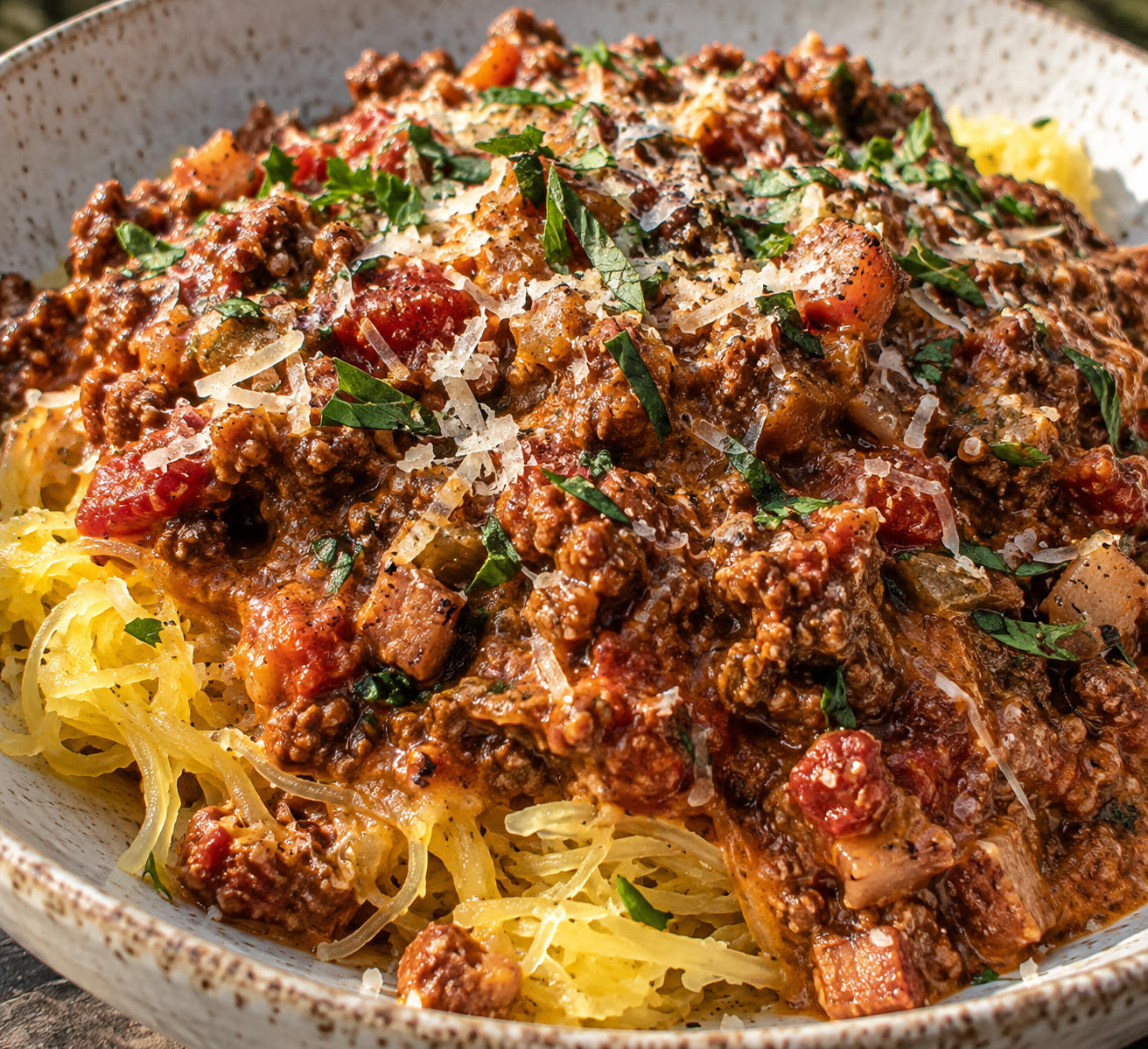
A rustic Tuscan-style ragù of grass-fed beef and lamb, pancetta, San Marzano tomatoes, red wine, and fresh herbs, slowly simmered for hours, with optional cream and nutmeg. Serve it over spaghetti squash, cauliflower mash, zucchini noodles, or ribbons of greens.
Yield: Serves 6, with leftovers · Active: 30 min · Total: 3 hours · Best in North America in fall and winter · Best eaten: early evening (and even better the next day)
This is the heartier, more pastoral cousin of my Meat Ragù Bolognese. The two share the same idea, ground meat slowly simmered in tomatoes and aromatics, but they differ in the meat and the region. Bolognese, from Emilia-Romagna, is beef-only or beef and pork, finished with milk. This Tuscan-style version adds grass-fed lamb to the beef, along with pancetta, San Marzano tomatoes, a red wine reduction, and an optional finish of cream and nutmeg.
The lamb is what makes this version special. Lamb and sheep's milk have long been part of rural Tuscan cooking, especially in the south, and lamb and beef together make a deeper, richer, more interesting ragù than beef alone. If you can't find lamb, ground pork is the classic substitute, for a more Bolognese-style result. Don't skip the pancetta: its rendered fat and savory depth are the foundation of the sauce. (Bacon works in a pinch, but its smokiness tastes more American than Italian.)
Like the Bolognese, this ragù needs a long, gentle simmer: at least 2 hours, and ideally 3, with the longer simmer giving a much deeper flavor. It's a Sunday-afternoon cooking project, not a weeknight dinner. Make a double batch: it freezes beautifully for up to 3 months, and gives you several meals ready in 15 minutes.
Ingredients
Meat
1 lb grass-fed ground beef
1 lb grass-fed ground lamb (or pasture-raised ground pork)
4 oz pancetta, finely diced
2 tbsp extra virgin olive oil
Aromatics and sauce
1 large yellow onion, finely chopped
2 large carrots, finely chopped
2 celery stalks, finely chopped
6 garlic cloves, minced
2 tbsp tomato paste
1 can (28 oz) San Marzano tomatoes, crushed by hand
1 cup dry red wine (a Tuscan red like Chianti), or ¾ cup bone broth plus 1 tbsp red wine vinegar, for alcohol-free
2 cups chicken bone broth
2 bay leaves, 4 sprigs fresh thyme, and 2 sprigs fresh rosemary
1 tsp Baja Gold sea salt and ½ tsp freshly cracked black pepper
Optional: ¼ cup grass-fed cream and ¼ tsp freshly grated nutmeg
Serve over (choose one)
Roasted spaghetti squash
Cauliflower mash
Zucchini noodles
Sautéed collard greens, sliced into ribbons
Garnish: fresh basil, grated Parmigiano-Reggiano, and cracked black pepper
Swaps: Use ground pork in place of the lamb, for a more Bolognese-style ragù. For a wild game version, ground wild boar or venison is wonderful, and true to Tuscany's Maremma region, known for its wild boar.
Method
Render the pancetta. Heat the olive oil in a Dutch oven over medium heat, add the pancetta, and cook 5 minutes, until crisp and rendered.
Cook the vegetables. Add the onion, carrots, celery, and a pinch of salt, and cook 8–10 minutes, until soft and lightly caramelized. Add the garlic for 1 minute.
Brown the meat. Push the vegetables to one side, add the beef and lamb, and brown them 8–10 minutes, breaking them up with a wooden spoon. Stir everything together.
Build the sauce. Stir in the tomato paste and cook 2 minutes, until it darkens. Pour in the wine and simmer 5 minutes, until the sharp alcohol smell fades. Add the tomatoes with their juices, the broth, bay leaves, thyme, rosemary, salt, and pepper.
Simmer slowly. Lower the heat to very low, partly cover the pot, and simmer 2–3 hours, stirring occasionally. The longer it simmers, the deeper the flavor.
Finish (optional). In the last 30 minutes, stir in the cream and nutmeg, for a richer, Bolognese-style ragù.
Season. Remove the bay leaves and herb stems, and adjust the salt and pepper.
Serve over your choice of base, topped with fresh basil, grated Parmigiano, and cracked pepper.
Storage
Refrigerated up to 5 days (it's even better the next day), or frozen up to 3 months in airtight containers. For 12 or more guests, double or triple the recipe.
Nourishment Notes
This is Italian home cooking at its best: patience and good meat, simmered slowly. Grass-fed beef and lamb together bring heme iron, zinc, B12, B6, and creatine, plus two complementary flavors: lamb's richer, gamier depth and beef's hearty backbone. Pasture-raised meat also has more omega-3s, CLA, and fat-soluble vitamins than grain-finished meat.
Pancetta, Italian dry-cured pork belly, is the backbone of a traditional ragù, with its rendered fat and deep savory flavor. The soffritto of onion, carrot, and celery, cooked slowly until soft and sweet, is the classic flavor foundation of Italian cooking. A quick sauté leaves you with chopped vegetables, while a slow one builds real depth.
Tomatoes bring lycopene, which becomes much more absorbable when cooked for hours with fat. San Marzano tomatoes are a prized Italian variety grown in the volcanic soil near Mount Vesuvius, and the genuine DOP-certified ones have a deeper flavor and lower acidity than most canned tomatoes. Red wine adds depth and polyphenols, and most of its alcohol cooks off over the long simmer. Bone broth adds glycine, proline, and gelatin, and thyme, rosemary, and bay bring rosmarinic acid, carnosic acid, and aromatic depth. The optional cream and nutmeg nod to the Bolognese tradition, and either can be skipped.
The bases: spaghetti squash is the closest to pasta, cauliflower mash is the most luxurious, zucchini noodles are the lightest, and sautéed collard greens are the most nutrient-dense. Rotate them with the seasons.
For your cycle: The beef and lamb's heme iron, zinc, and B12 make this especially restorative during the menstrual phase, and the slow-simmered broth and warming richness are grounding in the luteal phase.
Sourcing
Ground beef and lamb — grass-fed and grass-finished, from US Wellness Meats, White Oak Pastures, or a local farm
Ground pork, wild boar, or venison (if swapping) — pasture-raised pork, or wild game from a trusted source
Pancetta — from heritage pork, like La Quercia (Iowa), with no added sugar
San Marzano tomatoes — San Marzano DOP, with the DOP seal on the can
Tomato paste — organic, in glass, with no added sugar (Bionaturae or Jovial)
Red wine (optional) — organic, dry Tuscan red, with low added sulfites if possible
Bone broth — homemade (see my Broths 101), or Bonafide Provisions (organic, sold frozen)
Onions, carrots, celery, garlic, herbs, and basil — organic, from a farmers' market
Cream (optional) — raw or organic, grass-fed cream
Nutmeg — whole, organic, and non-irradiated, grated fresh
Parmigiano-Reggiano — DOP, aged 24+ months, made from raw milk by law
Extra virgin olive oil — organic, single-estate, harvest-dated, in dark glass
Salt — Baja Gold sea salt
— Anna aka Food Marshall